Can someone become Jewish? The short answer is yes, with the right guidance, commitment, and time. Jewish conversion, traditionally called giyur, is a formal process that transforms not only religious practice but also personal identity, community belonging, and daily life. This article offers a practical, comprehensive guide to conversion, explaining how one can become Jewish through different paths and what to expect along the way. Whether you are asking can someone become Jewish for personal, spiritual, or relational reasons, this guide aims to help you navigate the steps with clarity and respect for tradition.
Judaism recognizes two dimensions of belonging: lineage and choice. While most Jews are identified by birth (often through the mother in traditional law), it is possible for a non-Jew to become Jewish through a formal conversion process. The question “can someone become Jewish” is answered affirmatively in most Jewish communities, but with important caveats about who recognizes a conversion and what it entails.
Key concepts to keep in mind include:
Identity and covenant: In Jewish thought, becoming Jewish involves entering into a covenant, committing to Jewish life, and accepting the responsibilities of living as part of the Jewish people.
Denominational differences: Different branches of Judaism—Orthodox, Conservative, Reform, and Reconstructionist—have distinct requirements, standards, and interpretations of Jewish law (halacha) for conversion.
A personal journey: The path toward becoming Jewish is as much about learning, community integration, and heartfelt intention as it is about ritual milestones.
If you are considering conversion, you may hear variations of the same question in different communities, such as “could I become Jewish through a traditional route?”, “is conversion open to non-religious seekers?”, or “how long does giyur take?”. While the specifics vary, the underlying principle remains consistent: a sincere commitment to Jewish life, studied guidance, and a formal acceptance by a recognized rabbinic authority are essential components of the process.
Conversion is not a one-size-fits-all process. The path you choose will influence the requirements, the duration, and the nature of the commitments you undertake. Here are the major streams and what they typically entail.
Orthodox Judaism
In Orthodox circles, giyur is governed by strict criteria and the authority of a qualified beit din (rabbinic court). Typical expectations include:
Comprehensive and rigorous study of Jewish law, Hebrew, and Jewish texts.
Demonstrated commitment to observing Jewish life, including posture toward Shabbat, kashrut, and daily prayer.
Male converts are usually required to undergo brit milah (circumcision) or, if already circumcised, the hatafat dam brit (symbolic drop of blood) if appropriate.
Proof of sincere acceptance of the mitzvot (commandments) and a beit din’s acceptance based on questions and observation of the candidate’s practice.
Orthodox conversion is widely recognized within Orthodox communities and, in many cases, within broader Jewish life, though there can be regional variations in recognition by diverse communities. The process is often lengthy, spanning many months to a few years, depending on prior knowledge, language, and personal circumstances.
Conservative Judaism
The Conservative movement also emphasizes traditional halacha but typically applies it with flexibility and pastoral care. The giyur process in Conservative communities often includes:
Structured study that covers Jewish law, holidays, lifecycle events, Hebrew, and history.
Commitment to a lifestyle that reflects Jewish law as interpreted within Conservative tradition.
Validation by a beit din that is recognized by Conservative authorities.
Male converts generally undergo brit milah or hatafat dam brit if needed; female candidates participate in the same examination of practice and faith.
Conservative conversions are often recognized in Conservative and many non-Orthodox communities, and sometimes accepted by Orthodox communities on a case-by-case basis, depending on local standards and rabbinic oversight.
Reform Judaism
In Reform Judaism, the approach to conversion has traditionally prioritized personal belief and commitment to Jewish life over strict halachic criteria. Typical features include:
Study focused on Jewish history, ethics, and modern practice; acceptance of diverse paths within Reform observance.
Often includes a public declaration of commitment and participation in Jewish community life.
Male circumcision is welcomed but not always required beyond symbolic ritual; in some Reform circles, circumcision is not mandatory for conversion if the candidate is not seeking medical intervention.
Beit din guidance is provided by Reform rabbis and scholars who assess readiness to join the Jewish people in the Reform framework.
Reform conversions are widely recognized within Reform and many liberal Jewish communities. Recognition by Orthodox communities varies, and some Orthodox rabbis may not regard Reform conversions as valid for purposes of traditional halachic standards.
Reconstructionist Judaism
Reconstructionist Judaism emphasizes Jewish continuity, culture, and practice with a modern, inclusive stance. The conversion path typically includes:
In-depth study of Jewish history, values, rituals, and communal life.
Commitment to living a Jewish life that reflects Reconstructionist values.
Beit din guidance from Reconstructionist rabbinic leadership.
Conversions through Reconstructionist communities are generally recognized within Reconstructionist settings and many wider circles that value inclusive and modern Jewish identity. Recognition by other streams depends on the context and the views of individual communities.
In summary, can someone become Jewish through these pathways? Yes, but the path you choose will affect the specifics of your studies, the criteria you must meet, and how your conversion is received in various Jewish communities. The most important first step is to engage with a rabbi or a Conversion Committee within the community you feel drawn to, so you can determine the best fit for your background, goals, and values.
The Conversion Process: A Practical Roadmap
While every path has its own particularities, most modern conversion processes share a practical structure. The following roadmap outlines a typical sequence and what to expect along the way.
Self-reflection and initial exploration: Ask yourself why you want to become Jewish, what practices you are willing to adopt, and how you envision life within the Jewish community. Consider meeting with a rabbi to discuss goals and to learn about the local options.
Finding a community and rabbinic guidance: Choose a kehillah (community) that aligns with your values and consider the denomination that best fits your outlook. A rabbi or conversion committee will guide you through the process.
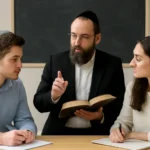
Begin formal study: Enroll in introductory and then advanced courses covering Jewish history, holidays, prayer, and ethics. Expect regular study sessions, often weekly, supplemented by home study and reading assignments.
Practice and observance: Start incorporating Jewish practices into daily life—blessing, Shabbat observance, holiday preparation, dietary laws (kashrut) where applicable, and liturgical participation.
Documentation and interviews: Your progress will be assessed through interviews with the rabbi and, in many cases, through a formal assessment by a beit din.
Beit din evaluation: A small panel of rabbis will ask questions about your understanding, commitment, and practice. They assess sincerity and knowledge, not perfection.
Intake and enrollment in mikveh: If the beit din approves, you will complete the process with a ritual immersion in a mikveh. For male converts, brit milah or hatafat dam brit is typically arranged before or in conjunction with the immersion, depending on the denomination and circumstances.
Post-conversion inclusion: After immersion and formal acceptance, you participate in Jewish life as a member of the community with ongoing study and practice. Some communities mark the occasion with a ceremony or reception.
Expected timelines can vary widely. Orthodox conversions may span 1–3 years or more, while Conservative and Reform pathways often range from several months to a couple of years. Personal readiness, prior knowledge, language fluency (Hebrew), and the pace of the rabbinic authority all influence the duration.
What Happens in the Beit Din and the Mikveh?
The beit din is a panel of knowledgeable and trusted rabbis who evaluate a candidate’s readiness. Expect thoughtful questions about:
Your understanding of Jewish beliefs and practices.
Your motivation for conversion and commitment to Jewish life.
Your ability to observe the commandments in daily life and during lifecycle events.
Your involvement with the Jewish community and willingness to participate in Jewish communal life.
The mikveh is a ritual immersion that symbolizes rebirth as a Jew. For men, immersion is usually paired with circumcision if not already completed; for women, the immersion is the central ritual of the conversion ceremony. In most streams, immersion is the final, transformative act that seals the conversion, with the beit din’s blessing and confirmation.
Circumcision and the Male Conversion Path
For male candidates, a brit milah is generally a prerequisite unless there is a documented medical reason to forgo it. If the person is already circumcised and there is a concern about the ritual, some authorities permit hatafat dam brit—a symbolic drop of blood—rather than a second circumcision. The exact requirements depend on the denomination and the local rabbis. If you are considering conversion as a male, discuss with your rabbi early on to understand the expectations for your community.
Studying Toward Conversion: What You’ll Learn
No matter the path, effective conversion requires comprehensive study and immersion in Jewish life. Courses typically cover:
Jewish history and thought: Key events, texts, and ethical traditions that shape Jewish life.
Shabbat and festival observance: Practices, preparations, and the meaning behind weekly and annual holidays.
Prayer and Hebrew basics: Core prayers, blessings, and the ability to participate in synagogue life.
Kashrut and daily life: Understanding dietary laws, dairy and meat separation, and how to manage in contemporary settings.
Lifecycle rituals: Birth, coming of age, marriage, mourning, and memorial practices.
Jewish law and ethics: Practical guidance for everyday decisions in light of tradition.
Be prepared for a mix of textual study, experiential learning, and community participation. Some candidates also learn Hebrew conversationally to engage in prayer and study more deeply.
Practical Considerations: Timing, Costs, and Community
Beyond religious and philosophical questions, practical realities shape the conversion journey. Here are some things to consider as you plan.
Time and commitment: A sincere conversion demands ongoing study and sustained practice over months or years, not a quick change of status.
Cost: There can be fees for classes, private tutoring, and rabbinic oversight, as well as potential costs for a mikveh and travel. Ask about a transparent budget with your rabbi or the conversion committee.
Community fit: Some communities are more open to new participants, while others require longer-term affiliation or local residency before formal acceptance.
Documentation and recognition: Your conversion needs to be recognized by the community you intend to be part of, especially if you plan to marry, work, or move within Jewish networks or countries that have denominational recognition criteria.
When you ask “is conversion possible for me?”, consider your personal situation, your willingness to engage with the community, and the guidance you receive from a rabbi who knows your locale and denomination.
Becoming Jewish is not simply an event at the mikveh; it marks the beginning of a lifelong journey. Post-conversion life involves sustained involvement in Jewish practice, learning, and community service. Key aspects include:
Regular participation in Jewish life: Attendance at synagogue services, study groups, and lifecycle events.
Observance: Applying the mitzvot within your community context, including Shabbat, holidays, and everyday ethics.
Community leadership and service: Many new Jews take on roles in community organizations, education, and outreach efforts.
Family and identity: If you have children, you’ll consider how to educate them about Jewish life and how to celebrate their own milestones within the tradition.
Continued learning: Ongoing study and mentorship help deepen your understanding and practice over time.
Recognition of your conversion within the broader Jewish world can depend on the denominational framework of the community you join and the standards of local authorities. It’s wise to discuss long-term goals with your rabbi to ensure alignment and support in your plans for the future.
Conversion is a nuanced and sometimes emotionally charged topic. Here are answers to common questions and clarifications of common myths, to help you separate misperceptions from practical realities.
Can someone become Jewish after being raised in another faith? Yes—through a formal conversion process, carefully guided by a rabbi and the community you join.
Is conversion accepted by all Jewish communities? Recognition varies by denomination and local authorities. An Orthodox beit din usually requires stricter criteria than Reform or Reconstructionist paths, and some communities may not recognize a given conversion.
Do I have to convert to marry a Jewish person? In many cases, marriage within Jewish communities requires that one partner be Jewish by birth or through a recognized conversion, but norms vary by community and denomination. Always consult with the rabbi of the specific community you are considering.
Is there a single way to convert? No. Each denomination has its own standards and processes. The right path depends on your beliefs, goals, and the religious community you wish to join.
What if I’m already familiar with Jewish practices? You may be asked to undertake formal study to ensure you have a solid foundation in the official practices you’ll follow, regardless of prior knowledge.
How long does it take? It varies widely—shorter tracks may take months in Reform or Conservative communities; more traditional Orthodox paths often take longer and involve more formal study and assessment.
Resources and Next Steps
If you are asking how can I begin this journey?, here are concrete steps to take to move forward with confidence and care:
Reach out to a welcoming synagogue or Jewish community: Many communities have outreach rabbis or conversion committees who can outline the local process and connect you to study opportunities.
Find a rabbi whose approach aligns with your values: It is important to work with a rabbi who can provide mentorship, answer questions, and guide you through the process in a humane and respectful way.
Attend introductory classes or courses: Look for programs that cover essential topics in Jewish history, holidays, prayer, and life-cycle events, as well as the specific requirements for conversion in that community.
Begin a practical plan for immersion and practice: Plan your study schedule, practice routine, and participation in community life to build habit and familiarity with Jewish life.
Ask about timelines, costs, and expectations up front: Clarity on these aspects helps you prepare and reduces stress during the process.
Keep an open mind about denomination and recognition: If you are flexible, you may find communities where you can grow more quickly or with stronger mentorship that matches your goals.
Finally, remember that the journey to becoming Jewish is deeply personal and inherently communal. It is not only about a formal ceremony and ritual immersion but about integrating into a vibrant and living tradition. The invitation to join the Jewish people is extended through communities, and the sincerity of your commitment is what ultimately sustains you in this new life.
There is no universal “right time” that applies to everyone. Some people feel drawn to Israel or a particular community and begin the process promptly; others may take longer to discern their path and gather resources. The most important factors are:
The depth of your personal motivation
Your consistency in study and practice
Your readiness to participate in the life of the community and accept the responsibilities of Jewish living
The guidance and support you receive from a rabbi or conversion committee
If you are asking could I become Jewish in a way that respects my background and beliefs?, the answer is often yes, with careful alignment to a community and a path that honors both your integrity and the integrity of Jewish law and tradition.