The journey to Judaism conversion is a personal, communal, and spiritual process that can take different shapes depending on the community you join. This article provides a comprehensive, step-by-step guide to the conversion to Judaism, clarifying common paths, requirements, and expectations across major denominations, while highlighting practical advice for prospective converts. Whether you are seeking conversion to Judaism because of faith, ancestry, marriage, or a sense of belonging, understanding the framework helps you make informed choices and pursue a meaningful path.
Step 1: Understanding the Landscape — Denominational Variation
One of the most important early decisions for someone considering Judaism conversion is choosing the rabbinic or communal framework that aligns with their beliefs and practices. The Jewish world comprises several streams, each with its own standards for study, observance, and the final act of conversion. While there are shared core concepts, the requirements and experiences can differ significantly.
Orthodox Judaism
Rigorous adherence to halacha (Jewish law) as interpreted by Orthodox authorities.
Most Orthodox programs require milah (brit milah) for male candidates who are not circumcised, or hatafat dam brit (a symbolic drop of blood) if already circumcised.
Final acceptance is by a beit din (rabbinic court) that includes reliable Orthodox rabbis, and the convert’s commitment to observe the commandments is examined.
Mikvah immersion (ritual immersion) is a standard part of the process for nearly all candidates.
Conservative Judaism
Generally accepts conversions performed according to the guidelines of Conservative authorities, with a focus on sincerity and ongoing Jewish law observance.
Male candidates may also undergo brit milah or hatafat dam brit if not already circumcised, though practices may vary by community.
Beit din supervision emphasizes halachic competence and commitment, with a structured study and practice plan.
Reform Judaism
Often emphasizes personal autonomy in belief and practice; conversion programs focus on Jewish identity, ethics, and community belonging rather than strict halachic requirements.
Ritual requirements such as circumcision are typically not mandated by Reform authorities, though male candidates who are not circumcised might choose to undergo milah for personal or historical reasons.
The beit din in Reform communities can be more flexible, and programs may be shorter or tailored to the candidate’s goals and learning style.
Other paths
Reconstructionist and other progressive movements may offer their own guidance, with an emphasis on modern Jewish identity, culture, and ethics.
In some cases, you may encounter a more informal pathway through a local rabbi’s guidance before formal affiliation with a denomination.
Regardless of denomination, it is essential to understand that a formal Judaism conversion is not a casual commitment. It is a life-changing decision that typically involves sustained study, ritual immersion, and a formal declaration before a rabbinic court. Prospective converts should seek a rabbi or spiritual mentor who can provide accurate information about their specific community’s expectations and timelines.
Step 2: Finding a Guide and Building Community
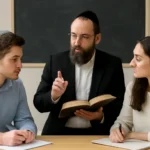
Before any study begins in earnest, most prospective converts begin by finding a guide—a rabbi, teacher, or mentor—and an in-person community where they can learn and participate. The quality of the mentor, the fit with the community, and the quality of the learning environment are often as important as the content of the curriculum.
Contact a local synagogue or Jewish learning center to inquire about conversion programs and acceptance criteria.
Request an informational meeting to discuss goals, background, and questions about the process.
Ask about time commitments, required readings, and the expected pace of study.
Find a community where you feel welcomed and supported in your religious journey, even if you are exploring different denominations.
During the inquiry phase, you may learn about the kinds of study tracks available, including structured courses, one-on-one learning, and experiential learning through participation in holidays, lifecycle events, and daily prayer. It’s common to switch teachers or even the denomination early on if you realize a better fit exists. The central aim at this stage is to establish trust with a mentor and to begin developing a personal practice that feels authentic and sustainable.
Step 3: The Inquiry and Preparation Phase — Designing Your Path
The inquiry period is sometimes called a “get-to-know-you” phase, but it also serves as the foundation for the formal conversion path. During this stage, you will build a customized plan that outlines study topics, practice goals, and the milestones that lead toward eligibility for the beit din. The exact structure can vary, but common elements include:
Introductory conversations about beliefs, values, and intentions.
A formal or informal assessment of Jewish knowledge and comfort with prayer and holidays.
A personalized study plan covering core topics such as Torah, Jewish history, Jewish ethics, liturgy, and practical living in a Jewish household.
Participation in community life: attending services, observing Shabbat and holidays, and engaging with other members.
Progress reviews with feedback from the mentor or rabbi to ensure readiness for the next stage.
During preparation, you should expect to encounter both intellectual and experiential elements of Jewish life. You’ll explore questions like:
What does it mean to live as a Jew in daily life and in community contexts?
How does one observe the commandments (mitzvot) in a way that is meaningful today?
What are the practical implications of kashrut (dietary laws), Shabbat, and holidays within your chosen community?
Step 4: The Study and Practice Phase — Building Knowledge and Habit
The core of the conversion journey is the sustained period of study and practice. This phase typically lasts several months to a few years, depending on the denomination, the individual’s prior knowledge, and the pace set by the mentor. The learning covers a broad set of topics designed to prepare you for a sincere and informed commitment to Jewish life.
Core areas of study
Jewish texts and foundations: Torah, Jewish holidays, and core prayers.
Jewish history, including major milestones such as the exile, the rabbinic era, and modern Jewish communities.
Key symbols, rituals, and life cycle events (birth, marriage, mourning).
Overview of halacha (Jewish law) and how it interacts with modern life.
Liturgy and prayer: understanding siddur (prayer book), blessings, and the structure of services.
Ethics and values: tzedakah (charity), gemilut hasadim (acts of loving-kindness), and social responsibility.
The learning may occur through formal classes, private lessons, text study in pairs, and experiential learning through participation in synagogue life and community events. In many programs, you will also practice living according to the mitzvot in a way that is practical and sustainable for your daily life. This helps deepen your connection to Jewish tradition while developing a sense of belonging within the community.
Step 5: Ritual Preparations — The Physical and Spiritual Milestones
As you deepen your learning, several ritual milestones mark the journey toward formal acceptance. The specifics can differ by denomination, but several rituals are broadly recognized across paths toward conversion to Judaism.
Brit Milah and Hatafat Dam Brit
For male candidates who are not circumcised, a brit milah (ritual circumcision) is typically required. If there is already a circumcision, a symbolic procedure known as hatafat dam brit (a drop of blood) may be performed instead, recognizing the covenant.
In many Orthodox programs, this is a non-negotiable element; Conservative and Reform programs may have variations or alternatives, depending on circumstances and community standards.
Mikvah Immersion
All or nearly all conversion paths include immersion in a mikvah (ritual bath) as a rite of renewal and commitment to Jewish law and life.
Immersion is both a symbolic and experiential step, representing a transition into a new spiritual status and a commitment to live as a Jew.
These ritual steps symbolize serious commitment and are typically accompanied by prayers and supportive guidance from your mentor or rabbi. The timing and sequencing of these rites are coordinated with the beit din (rabbinic court) and can vary by community.
Step 6: The Beit Din — Rabbinic Court and Final Acceptance
The beit din is a panel of respected rabbinic authorities who evaluate the candidate’s knowledge, sincerity, and readiness to assume a Jewish life. The beit din process is designed to ensure that the conversion is genuine and rooted in a real commitment to living as a Jew.
What to expect in the beit din
Interviews that explore your beliefs, intentions, and understanding of Jewish customs, ethics, and practice.
Discussion of how you plan to incorporate Jewish life into daily routines, worship, and community participation.
A review of your study log, questions from the candidate, and evidence of learning and observance.
After a successful meeting with the beit din, you may receive a formal declaration of conversion. Depending on the community, the beit din may require completion of all ritual steps (milah/hatafat dam brit and mikvah) before the conversion is considered complete. In some cases, a partial or conditional acceptance is granted pending the final ritual steps.
Once the beit din approves the conversion, you receive a formal conversion certificate or recognition as a Jew according to the community’s standards. It is common for the new identity to be celebrated with family and the community, and to begin participating actively in synagogue life and lifecycle events as a Jew.
Step 7: After the Conversion — Living as a Jew
Receiving Jewish status is the beginning of ongoing life within a Jewish community. The post-conversion phase focuses on integration, continued learning, and active participation. Key areas of life after conversion include:
Engagement with the synagogue and community programs, including prayer services, study groups, and volunteer opportunities.
Observance of holidays, Shabbat, and daily routines in alignment with the chosen denomination’s practices.
Participation in lifecycle events such as naming, weddings, and mourning within the Jewish community.
Continued study and ethical growth, including learning about Jewish law, ethics, and community leadership.
Identity and family life: determining how to name children and how to discuss Jewish identity with family and friends.
It is common for converts to establish ongoing relationships with mentors and to participate in adult education programs, Hebrew language study, and other activities that deepen engagement with Jewish life. Converts often report a sense of belonging and purpose that grows as they invest in community and practice.
Step 8: Common Questions, Myths, and Realities
Many prospective converts have similar concerns. Here are some frequently asked questions and the realities behind them:
How long does the conversion take? Timelines vary widely by denomination, from several months to a few years. Commitment and learning pace are critical factors.
What happens if I don’t complete every ritual? Most communities require the essential steps (study, mikvah, and, for males, circumcision if needed) for final acceptance. Some paths may allow for conditional acceptance with ongoing commitments.
Will my family accept the conversion? Family dynamics differ. Some families are supportive, while others require time to understand the change. Community support and education can help.
Is conversion recognized by all Jewish communities? Recognition can depend on the denomination and the broader Jewish community. Some families or institutions may require disclosure and context for acceptance.
What about Israel and the beit din? Israel has its own Rabbinate and recognition processes, which can differ from diaspora communities. If you plan to live in Israel, you may encounter additional requirements or considerations.
Step 9: Practical Tips and Checklists for Prospective Converts
To help you stay organized and focused, here is a practical toolkit you can adapt to your situation. Use it as a working guide throughout your conversion to Judaism.
Documentation and initial steps
Prepare a short personal statement outlining your journey, motivations, and goals as a future Jew.
Compile contact information for potential mentors and synagogues, including meeting times and availability.
Keep a learning log or journal documenting topics studied, questions raised, and reflections on practice.
Identify a primary teacher and a back-up mentor in case of scheduling changes.
Questions to ask your rabbi or mentor
Which denomination and program best align with my beliefs and lifestyle?
What are the expected time commitments and the structure of study?
What are the essential rituals I should expect (milah/hatafat dam brit, mikvah) and when do they occur?
What is the role of the mikvah in this community, and where is it located?
What will be expected of me in the beit din, and who will be on the panel?
Timeline planning tips
Set realistic milestones for study completion, ritual steps, and conversations with the beit din.
Build time into your schedule for holidays, Shabbat observance, and community events.
Anticipate adjustments; some steps may move faster or slower depending on personal circumstances and denominational norms.
Glossary: Key Terms You May Encounter
Giyur — the Hebrew term for the process of converting to Judaism.
Beit Din — the rabbinic court that reviews, tests, and approves the conversion.
Brit Milah — circumcision ceremony for male converts who are not yet circumcised.
Hatafat Dam Brit — symbolic drop of blood performed if the male candidate is already circumcised.
Mikvah — ritual bath used for purification and renewal within conversion and other rites.
Shabbat — the Sabbath, a central weekly observance in Jewish life.
Kashrut — the set of dietary laws and guidelines observed by many Jews.
Mitzvot — commandments or good deeds in Judaism.
Siddur — a Jewish prayer book used in daily and ritual prayer.
Halacha — Jewish law and its legal rulings and interpretations.
Beit Knesset — synagogue congregation or house of assembly for prayer.
Final Thoughts — Choosing Your Path and Embracing the Journey
Embarking on Judaism conversion is a deeply personal choice that intertwines intellect, spirituality, and community belonging. The process is designed to ensure that a prospective convert is prepared to live as a Jew in accordance with the responsibilities and joys of Jewish life. The details vary by denomination and community, but the core elements—learning, ritual, mentorship, community involvement, and a formal acceptance by a rabbinic court—are common threads across paths toward conversion to Judaism.
As you begin this journey, remember that it is not a race but a relationship—between you and the Jewish tradition, between you and the community, and between your evolving sense of self and your commitment to Jewish living. With thoughtful preparation, patient learning, and supportive mentorship, you can find a path that resonates with your beliefs and fosters a durable sense of belonging in the Jewish people.