Find Jewish Ancestors: A Practical Guide to Tracing Jewish Genealogy
Tracing Jewish lineage combines curiosity with method. For many researchers, the journey is as meaningful as the destination: uncovering how a great‑grandparent lived, where they came from, and how family stories intersect with historical events. This practical guide offers a structured approach to finding Jewish ancestors, locating Jewish records, and building a credible family history. You will encounter name variations, language shifts, and archival gaps, but with patience and the right resources, you can assemble a coherent picture of your Jewish heritage.
Why Jewish Genealogy Has Unique Challenges
Genealogy is never a straight line, but certain features of Jewish history create distinctive hurdles and opportunities. Large migrations, the devastation of communities during the Holocaust, and centuries of name changes and language transitions (Latin, Hebrew, Yiddish, Ladino, etc.) can complicate identification but also offer clues. Some immediate factors to consider when you begin your search include:
Patronymics and surname variations: Names were often recorded differently in different countries, and many Jewish families adopted surnames only in the 19th or 20th centuries. Variants, transliterations, and anglicizations are common (e.g., Cohen/Coen/Coen, Levi/Levy/Levi, or city-based surnames like Frankfurt, Kalish, or Fromer).
Language shifts: Records may appear in Hebrew, Yiddish, Russian, Polish, German, Ladino, or other languages. Understanding common terms in these languages can unlock key clues.
Religious and civil record gaps: Jewish ritual life (ketubot, shtarot, mikvaot) and community archives sometimes complement but also replace civil records, depending on the era and country.
Holocaust disruptions: The Shoah created profound gaps in vital records for many communities. Yet, survivor lists, transport records, and postwar reunions preserved traces for researchers.
Diaspora patterns: Large Jewish diasporas in Eastern Europe, Western Europe, the Middle East, North Africa, and the Americas mean you may need to consult multiple archives to trace a single ancestor.
Starting Points: Define Your Research Goals
Before you plunge into records, outline your objectives. A clear plan helps prevent information overload and guides your use of sources. Consider these starting questions:
What do you know already? Names, places, and dates from relatives or old letters can anchor your research.
Which Jewish traditions or communities does your family trace to? Ashkenazi, Sephardi, Mizrahi, or a mix can influence where records are located and what archives are most productive.
What is your geographic focus? Where ancestors lived can determine whether you search in parish records, civil registries, or synagogue archives.
Are you seeking just a direct line or also collateral lines? Extending to aunts, uncles, and cousins can yield valuable context and clues.
Document your goals in a simple project plan: a family tree sketch, a list of target records, and a timeline. The plan can evolve, but a roadmap keeps you focused and saves time.
Building a Baseline: Collecting Family Fragments
Most successful family historians begin with what they already have—a set of letters, photographs, documents, and oral histories. These fragments often contain perishable clues about places, occupations, and family names. Practical steps to capture and organize these materials include:
Interview living relatives (parents, siblings, cousins, aging family members). Ask open questions about places of birth, churches or synagogues, and any stories about migration.
Preserve documents like birth certificates, passports, naturalization papers, marriage licenses, and old school reports. Make digital copies when possible and label them with context (who, what, where, when).
Scan photographs and attempt to read inscriptions on back of photos for dates and locations. Reverse-image searches can reveal studio locations and deduce timeframes.
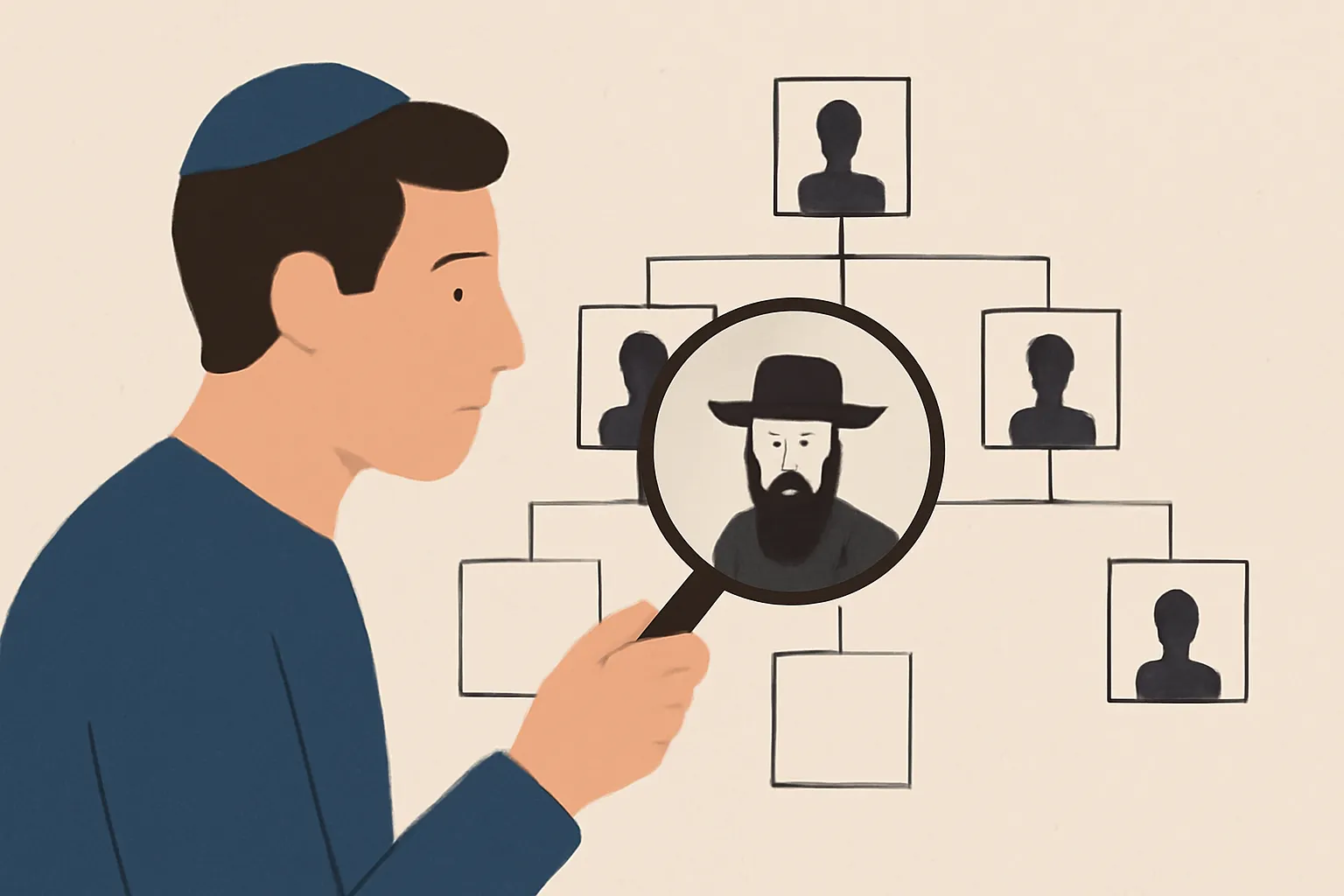
Construct a basic family tree with the information you collect, even if incomplete. A visual schema helps you spot gaps and plan targeted searches.
Note languages and scripts on records. A document in Yiddish handwriting may require specialized transliteration to interpret correctly.
Vital Records and Civil Registries: The Core Skeleton
Vital records are the backbone of genealogical research. In Jewish genealogy, civil registration systems in different countries often contain gaps due to political changes or wars, but even partial records can illuminate a family’s path. When searching for ancestors, prioritize the following categories:
Birth, marriage, and death records (vital records) from civil authorities. Look for civil registries in the country where an ancestor lived, such as parish registers in Catholic/Protestant areas that might have Jewish lines interwoven, or civil registers introduced in the 19th century in places like the Austro-Hungarian Empire, Poland, or Russia.
Naturalization records and immigration documents. These can confirm origins and provide addresses, occupations, and family members, especially for Jews who fled persecution or economic hardship.
Emigration and immigration documents such as ship manifests, border crossing lists, and passenger passenger lists. These sources often reveal ports of entry, destinations, and the names of family members traveling together.
Municipal registers and school records that document residents, occupations, and parental names, which might be the keys to unlock a family’s origin.
Synagogue and ritual records when available. Births and weddings recorded by a synagogue can be particularly valuable in communities where civil registration was sporadic or unreliable.
Practical tip: when searching civil records in a Jewish genealogical context, you may encounter variations such as alternate spellings, the use of patronymics, or the shift from given names to Hebrew equivalents for ceremonial purposes. Always search with multiple spellings and consider variations in both given names and surnames.
Religious and Community Archives: Jewish-Specific Sources
Beyond civil records, religious and communal archives offer a treasure trove of information. These often contain records that are not available elsewhere and include special collections that preserve community life, rabbinic correspondence, and ritual documentation. Important sources include:
Ketubot and marriage contracts that often list both families, the synagogue, and the date of the ceremony. Ketubot can provide ancestral links and confirm spouses’ names and origins.
Synagogue membership rolls and burial records. These can indicate where a family lived and when they attended, sometimes yielding neighborhood and street information.
Rabbis’ correspondence and community ledgers, which may contain notes about residents, ceremonies, or disputes that mention names and places.
Yeshiva and school records that provide information about education, language, and movements between communities.
Organizational and benevolent society records (e.g., charitable societies, youth groups) which can trace family membership and social networks across generations.
Access to these archives often requires in-person visits or partnerships with local researchers. In many regions, archivists can guide you to digitized materials or microfilm collections that are available through national libraries or university libraries.
Digital Resources: Online Databases and Portals
Digital tools have transformed Jewish genealogy by consolidating records from multiple countries and languages. The following resources are widely used and frequently updated. They are excellent starting points for searching for Jewish ancestors and expanding your family tree.
JewishGen (jewishgen.org) – A cornerstone of Jewish genealogy with databases, family finder, surname projects, and a robust discussion community. JewishGen hosts local project databases for towns (shtetl) and a Genealogy Bank for synagogue and civil records. It is especially valuable for Ashkenazi lineages and for genealogists researching Eastern European towns.
Yad Vashem Archives (yvng.yadvashem.org or yadvashem.org) – The World Holocaust Remembrance Center offers holocaust-related records and name indexes, including the Shoah Victim Names Database, survivor lists, and memorial information. This resource is indispensable for tracing branches affected by the 20th‑century catastrophe.
The Central Archives for the History of the Jewish People (CAHJP) – Based in Jerusalem, with collections covering centuries of Jewish life. CAHJP materials include manuscripts, rabbinic correspondence, and community records that can illuminate family histories across centuries.
National and regional archives – National libraries and archives frequently host digitized civil records, synagogue minutes, and municipal documents. Use country‑specific portals to locate local sources (e.g., Poland’s State Archives, Russia’s National Archives, Germany’s Federal Archives, etc.).
FamilySearch (familysearch.org) – A free, comprehensive portal with indexed civil records, parish records, and user-contributed family trees. FamilySearch is especially strong for late 19th and early 20th‑century records in Europe and the Americas and often provides digitized images linked to individuals.
Ancestry.com – A subscription service with a vast collection of civil registrations, passenger lists, newspapers, and church records. When researching Jewish ancestors, search for both standard spellings and localized spellings of surnames and places.
MyHeritage – Offers DNA testing and a large collection of historical records and family trees. It’s particularly useful for connecting with distant cousins who may have already documented parts of your family.
Genealogy discussion forums and town projects – Community knowledge can reveal local naming conventions or overlooked archives. The discussion boards on JewishGen and regional groups can be surprisingly productive for niche towns and families.
Tip: when exploring online databases, use multiple search strategies: combine given name variants, patronymics, place names in local languages, and known life events (birth, marriage, migration). Document every search with a date and the results to avoid repeating fruitless queries.
Genetic testing can complement documentary research by confirming relationships, identifying distant cousins, and suggesting possible surnames or geographic origins. But be aware of its limitations and ethical considerations. Useful types of genetic data include:
Autosomal DNA tests (the standard test for most consumer kits) can reveal connections across all ancestral lines and help locate relatives within a few generations.
Y‑DNA tests trace direct paternal lines and can be informative for patrilineal surnames, especially among Ashkenazi families where lineages may be well described in historical records.
mtDNA tests trace direct maternal lines and may be relevant when your maternal line is sparsely documented in records.
Important cautions: DNA can suggest possible connections but cannot by itself provide an exact genealogical tree. It should be used in conjunction with traditional records. Privacy, consent, and the potential for ambiguous results are realities of genetic testing, so approach DNA with clear research questions and respect for living relatives’ comfort levels.
Strategies for Effective Searches: Practical Tactics
Developing a search strategy reduces frustration and increases the odds of success. Below are practical tactics tailored to Jewish genealogy research:
Focus on place-based searches—Identify shtetls (small towns) or cities of origin in your family lore. Once you know a town, you can work outward: local civil and religious archives, synagogue histories, and town records often yield the most actionable clues.
Use alternate spellings and transliterations—Name spellings vary by country and language. Create a list of plausible variants for given names (e.g., Sarah, Sara, Sara, Sora) and surnames (e.g., Kohn, Cohen, Coen; Levy, Levy; Blumenthal, Blumenfeld).
Cross-reference languages—A record may appear in Polish, Russian, Hebrew, or Yiddish. Use translations to interpret terms like “born in,” “daughter,” or “married” in each language.
Build a timeline—Create a chronological framework for each ancestor: birth, marriage, migration, occupation, and death. Timelines help reveal gaps and cross‑links between records.
Leverage collateral lines—Parents, siblings, aunts, uncles, and cousins can provide clues that lead to new records. Sometimes collateral lines are better documented than direct ancestors.
Document your sources meticulously—Whenever you find a record, record its repository, catalog number, date, language, and any ambiguities. This practice is essential for verifying conclusions and sharing your work with others.
Stay organized with a robust filing system—Digital folders, a persistent naming convention, and a genealogy software or a cloud spreadsheet help you keep track of documents, notes, and sources.
Organizing Your Research: Tools and Workflows
A well-organized workflow accelerates discovery and minimizes confusion. Here are recommended tools and best practices:
Genealogy software (e.g., RootsMagic, Legacy Family Tree, Family Tree Maker) allows you to build trees, attach sources, and generate reports. Look for software that supports multiple family lines, notes, and media attachments.
Online family trees can be a springboard for collaboration. When you use platforms like FamilySearch, MyHeritage, or Ancestry, be mindful of duplication and verify any user-submitted data against primary sources.
Media management—Store scanned documents, photographs, and transcripts with descriptive metadata. Attach Digital copies to the corresponding individuals in your tree to preserve context.
Transliteration and translation logs—Maintain a log of how names and terms were transliterated and translated. This helps maintain consistency as you review records from multiple languages.
Collaborative research—If possible, partner with a local researcher or a genealogical society that specializes in Jewish ancestry. Collaboration can uncover archives you might not access on your own.
Case Studies: Real-World Scenarios and How to Tackle Them
Illustrative scenarios help translate theory into action. Here are two concise case studies that reflect common challenges and how to address them.
Case Study 1: The Ashkenazi Persistent Surname and a City of Origin
Situation: An individual knows a grandfather hailed from a town in Poland and carried the surname Weinstein, but civil records in that town are scarce due to wars. The researcher suspects multiple spelling variants and a possible widow’s marriage record that changed surnames.
Approach: Begin with JewishGen databases for that town, looking for ketubot and synagogue records. Search for surname variants Weinstein, Weinstein, Wienstein, Webenstein and the town’s alternate spellings in Polish, Yiddish, and German.
Next, check naturalization, passenger lists, and 19th‑century censuses in nearby cities or counties where Jews with that surname historically resided.
Cross‑reference a potential maternal line from the same family (collateral lines) to identify marriage records or family clusters that share locations.
Use Yad Vashem’s index to search for victims or survivors with the same surname and place of origin; sometimes these datasets reveal extended family connections or migration routes.
Situation: A researcher suspects Sephardic ancestry from a Mediterranean town with a history of Spanish/Portuguese Jewish presence, where records are often in Ladino or Hebrew and may exist in diaspora archives rather than civil records.
Approach: Search for Sephardic ritual communities and shtetl-like towns known for Sephardic populations in the Ottoman Empire and its peripheries. Look for ketubot in local archives, as well as diaspora community records in Jerusalem, Salonika (Thessaloniki), and North African cities.
Check language variants and identify common Ladino terms for life events (nacido/nacida, casado/a). This helps in recognizing records that have Ladino or Spanish spellings.
Consult JewishGen’s Sephardic and Ladino Projects and explore library catalogs and special collections in national libraries for rare manuscripts and family letters.
Ethics, Privacy, and Responsible Research
Genealogy involves sharing personal information about living relatives and sensitive historical topics. The ethical dimension is especially pronounced in Jewish family history, given the potential for sensitive wartime data and diaspora identities. Consider the following principles as you conduct research:
Respect privacy—Be mindful of the wishes of living relatives when sharing family information online or in public trees.
Obtain permission when sharing sensitive stories—Memories of trauma, relocation, or discrimination deserve careful handling and consent from those affected.
Acknowledge uncertainty—When evidence is inconclusive, clearly label conclusions as hypotheses and document the basis for your interpretation.
Attribute sources—Always record where information came from, including the archive, database, or interview name. This transparency helps future researchers validate findings.
Case-Making: How to Present Your Findings
When you reach meaningful conclusions in your research, organize your narrative into a clear, evidence-based story. A well‑constructed family history should include:
Family tree diagrams showing connections across generations with sourced facts attached to each person.
Documented narratives about migration patterns, occupations, religious affiliations, and community roles, grounded in primary sources where available.
Contextual history—A brief overview of the areas and time periods your ancestors lived in, including political changes that may affect record availability.
Appendices with a glossary of terms (e.g., ketubah, shtetl, mazel tov), a list of variants for key surnames and places, and a catalog of sources used.
Developing a Jewish Genealogy Toolkit
Over time, you’ll accumulate a toolkit of resources, strategies, and contacts. Build yours around these core components:
Resource map—A catalog of archives, libraries, synagogues, and community organizations relevant to your family’s origins.
Name variant dictionary—A living document that lists spelling variants across languages and time periods for the most common given names and surnames in your family.
Record gap tracker—A log noting where records are missing, what you’ve searched, and what remains to be checked in future visits or online queries.
Timeline and locality map—A visual representation of where ancestors lived at different times, helping to identify new regional archives to search.
Research contacts—A directory of archivists, local genealogists, and Jewish community organizations who can assist with difficult records or language barriers.
Frequently Asked Questions: Quick Answers for Common Scenarios
To wrap up, here are concise responses to frequent questions about finding Jewish ancestors and building a credible family history:
What if I find conflicting birthplaces? Consider the possibility of moved family members, adoption of a more general city name, or transcription errors. Compare multiple sources and favor primary records where possible.
How do I know if a record is authentic? Cross-check details like names, dates, and places across several independent sources. Authentic records typically align with the historical context of the period and place.
What should I do with sensitive information about living relatives? Prioritize consent and privacy. Share only what is appropriate and ensure living relatives can opt out if they prefer.
When should I hire a local researcher? If you encounter language barriers, restricted archives, or the need for on-site authentication, a local researcher or a genealogical society can be invaluable partners.
Conclusion: A Lifelong Journey of Discovery
Finding Jewish ancestors and tracing Jewish lineage is a journey that blends detective work with cultural heritage. The process requires patience, a methodical approach, and a willingness to explore a mosaic of records across languages, borders, and historical eras. By combining oral history, civil and religious records, digital databases, and, when appropriate, DNA testing, you can assemble a richer, more accurate account of your family’s story. Remember that each leaf uncovered in the archive is a step toward understanding your roots, your community, and the threads that connect you to generations past.
As you continue your work, stay curious, stay organized, and stay respectful of the communities whose histories you are studying. Even when records are fragmentary, careful documentation, clear sourcing, and thoughtful interpretation will yield a compelling narrative that honors your Jewish ancestors and preserves their memory for future generations.