Overview: Jewish Last Name Search and Why It Matters
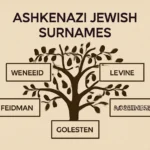
Jewish last name search is a journey into how names were formed, recorded, and passed down through generations across diverse communities. Whether you are tracing a lineage from Ashkenazi roots in Central Europe, Sephardic or Mizrahi lines from the Iberian Peninsula or the Middle East, or simply exploring the origins and meanings of a surname you encountered, understanding the factors that shaped Jewish surnames can illuminate family history in profound ways. In this article, we explore variant terms such as Jewish surname search, Jewish family name research, and surname etymology for Jews, to provide a comprehensive guide for researchers at every level.
A competent Jewish last name search combines historical context, linguistic insight, and careful archival work. By learning how surnames originated, how they were assigned or adopted by different legal regimes, and how they traveled with migrations, you gain a framework for interpreting names you encounter. This article uses a wide lens—covering patronymics, toponymics, occupational names, descriptive nicknames, and religious or tribal identifiers—so you can approach searching Jewish surnames with confidence and method.
Origins of Jewish Surnames
The origins of Jewish surnames are not a single story, but a tapestry woven from law, language, geography, and culture. In many parts of Europe and the Middle East, Jews lived under different civil authorities and often adopted names under pressure from government registries. Across centuries, some families kept traditional given names, while others received or created hereditary surnames that helped authorities distinguish individuals in censuses, tax records, and official documents.
Historical context: legal surname adoption
A turning point for Jewish surname formation occurred in the late 18th and 19th centuries, when many states required permanent family names for taxation, conscription, and civil administration. In places like the Habsburg Empire, Prussia, Russia, and parts of the Ottoman-influenced world, authorities asked or mandated Jews to adopt fixed surnames. This process often resulted in a mix of patronymic names, toponymic names (based on places), and occupational or descriptive surnames.
As a result, some families retained traditional biblical or Hebrew identifiers in combination with newly assigned surnames, while others formed entirely new family names that persisted across generations. When you conduct a search for Jewish last names, you are often tracing the way a surname emerged under specific political regimes and how it traveled with migration.
Language and culture shaping names: Yiddish, Hebrew, German, Slavic influences
The languages spoken by Jewish communities heavily influenced surname formation. In Ashkenazi communities, Yiddish and Germanic roots produced many surnames with phonetic and semantic features that scholars can recognize today. In Sephardic and Mizrahi communities, Spanish, Hebrew, Ladino, Arabic and local languages interplayed to create distinct surname families. This linguistic diversity means that a surname may look different depending on which genealogical archive you consult and which language the name was written in at the time.
Common surname types: patronymic, toponymic, occupational, descriptive
Broadly speaking, Jewish surnames fall into several categories:
Patronymic surnames—derived from a father’s given name, such as Jacobson (son of Jacob) or Abramson.
Toponymic surnames—based on a place or geographical association, such as Berliner (from Berlin) or Horowitz (associated with a town name or region historically linked to a family).
Occupational surnames—reflecting a trade or craft, such as Schmidt/Schmied (smith), Fischer (fisher), or Tanner (tanner).
Descriptive or nickname-based surnames—describing a trait, color, or character, such as Roth (red), Gross (big), or Klein (small).
Religious or tribal identifiers—names tied to priestly or Levite lineages (for example, Kohen), or to common Jewish given-name traditions that later became hereditary.
When «ben»/»bar» appear and matronymics
Some surname traditions preserve a patronymic marker that literally means “son of” in Hebrew. In biblical and liturgical usage, you might encounter ben (son of) or bat (daughter of). While these appear more often in given names, you may also see ben- or bat- components in surnames, especially in communities that preserved older naming conventions or in modern Israeli naming practices where given names carry paternal references. In a Jewish surname search, identifying these elements helps distinguish a patronymic origin from a later, hereditary surname.
Patterns by Jewish Communities
Ashkenazi surname patterns
Ashkenazi families, historically centered in Central and Eastern Europe, exhibit a broad range of surname types shaped by Germanic and Slavic languages. Typical features include:
Germanic suffixes such as -mann, -stein, -berg, -wald, and -witz.
Latinized or Hebrewized forms where Yiddish orthography interacts with German spellings.
Toponymic clusters tied to towns or regions in present-day Germany, Poland, Lithuania, Ukraine, and beyond.
Sephardic and Mizrahi surname patterns
Sephardic families, with historic roots in the Iberian Peninsula and across the Mediterranean, often reflect Spanish, Ladino, Turkish, Arabic linguistic influence. Look for:
Historically rabbinic or family line references tied to communities such as Toledo, Lisbon, Salonika, and Constantinople.
Distinctive Sephardic surnames that may incorporate geographical elements (e.g., Toledano, de Leon, Abulafia), with variable anglicized spellings in diasporic records.
Influence from Arabic or Hebrew naming conventions where applicable, especially in communities in North Africa and the Middle East.
Mizrahi and other regional patterns
Mizrahi Jewish communities across the Middle East and Central Asia have naming histories shaped by regional languages such as Persian, Arabic, Turkish, and Hebrew. Surnames in these communities may reflect
ancestor lineages, occupations, or geographic origins, and can be adapted differently in diaspora contexts than their original forms.
How to Start a Jewish Last Names Search
Prepare baseline information
Before you begin a search for Jewish surnames, assemble what you know:
Known given names, nicknames, or initials
Approximate dates or regions of origin (towns, provinces, empires)
Any variations you’ve seen in spellings or transliterations
Family stories or anecdotes that hint at language or migration paths
Leverage archival records
Archives are the backbone of a comprehensive family name research. Consider sources such as:
Civil registration records, census lists, and emigration documents
Synagogue and community “kehillot” records, including births, marriages, and deaths
Wills, probate records, and land records where available
Yizkor books, memorial rolls, and community histories that mention family names
Consult online databases and libraries
A broad array of online tools supports Jewish surname search and surname etymology. Popular and reputable avenues include:
JewishGen and its surname project databases, which compile surname histories, variant spellings, and origin notes
Yad Vashem and other Holocaust-related archives that document names, families, and lineages
Major genealogical portals such as Ancestry, MyHeritage, and FamilySearch with Jewish-related collections
National or regional archives and university libraries with Jewish metadata
Handling transliteration and name variants
Transliteration—from Hebrew, Yiddish, Ladino, or Cyrillic scripts into Latin letters—creates many spelling variants. A successful surname search often requires considering alternate spellings, phonetic twins, and historical orthographies. Common strategies include:
Looking for phonetic cousins, such as Jacobson vs. Jakobson, Levi vs. Livi
Cross-referencing towns and regions with multiple spellings (e.g., Lublin vs. Lubin)
Consulting original language sources when possible (Hebrew, Yiddish, Ladino, Russian, Polish, German)
Documenting findings
Maintain a clear record of each surname investigation. A well-kept documentation process helps you track derivations, sources, and uncertainties:
Record source names, dates, and citations for every claim
Note the variant spellings discovered along the way
Identify gaps and hypotheses to test in later research sessions
Ethical and privacy considerations
Genealogical research intersects with living individuals and sensitive family histories. Exercise discretion when sharing or publishing findings about living relatives, and respect privacy norms. Where possible, obtain consent before disseminating personal information from online family trees or archives.
Common Surname Examples and Their Origins
Below is a representative sampling of surname types you might encounter during a Jewish last name search, along with brief notes on their likely origins. These examples illustrate surname etymology for Jews and highlight how names can signal language roots, region, or occupation.
Patronymic surnames
Jacobson — likely derived from a father named Jacob; common in Ashkenazi communities
Abramson — son of Abram; another classic patronymic form
Levi/ Leviov — sometimes used as a patronymic by families tracing paternal lineages to the Levite priestly class
Ben-David — literally “son of David,” reflecting a Hebrew patronymic in a surname
Toponymic surnames
Berliner — from Berlin; a common toponymic in Ashkenazi communities
Horowitz — historically linked to a place name and family lineage; widespread across Eastern Europe
Prague or Prager — association with Prague; often seen in Sephardic and Ashkenazi contexts
Polonsky — indicates regional or family ties to a geographic origin
Occupational surnames
Fischer — fisherman or fisher; common in German-speaking Jewish communities
Schmidt / Schmied — smith; widespread in German-speaking areas
Kohen — priestly designation that sometimes appears as a surname, reflecting tribal status
Weaver — a descriptor of an ancestral craft in some families
Descriptive or nickname-based surnames
Roth — often meaning “red” in German or a metaphorical descriptor in some regions
Gross / Grossman — “big,” “great,” or an extended form
Klein / Kleinman — “small” or a derivative family name
Sephardic and Mizrahi examples
Toledano — commonly associated with the city of Toledo; a valued Sephardic surname
de Leon — a geographic or geographic-origin surname seen in Sephardic lineages
Abulafia — a historically significant family name with roots in Jewish communities across the Mediterranean
Cohen — a priestly designation widely adopted in many Jewish communities
Notes on variation and interpretation
It is common to encounter multiple spellings for the same family surname due to transliteration and regional practices. For example, Jacobson may appear as Jakobson, Jacobsohn, or Jacobs, depending on language, era, and family preference. When you perform a comprehensive Jewish surname search, it is prudent to record and compare all plausible variants and to search within a range of dates to capture historical spellings.
Tools and Resources for Jewish Name Research
An effective Jewish surname search uses a mix of primary sources, secondary references, and community knowledge. The following categories summarize practical resources researchers frequently rely on.
Major online databases
JewishGen—the leading portal for Jewish genealogy, with surname projects, town directories, and message boards
Yad Vashem Names Database—a searchable memorial database with affected family names linked to the Holocaust era
FamilySearch—large global records collection that includes Jewish civil registrations, cemetery records, and synagogue records
Ancestry and MyHeritage—subscription-based platforms with digitized records and user-contributed trees
Specialized reference works
Regional histories and surname dictionaries that document Ashkenazi and Sephardic naming patterns
Academic studies on language influence in surnames, including Yiddish, Hebrew, German, and Slavic linguistic interfaces
Libraries and archives
National libraries and university archives hosting genealogical collections for Jewish communities
Local archives in regions with large Jewish populations (e.g., Poland, Lithuania, Ukraine, the Balkans, Spain, Turkey, Israel)
Practical search strategies
Start with a core surname and expand to plausible variants and related forms
Cross-reference associated towns, regions, or ancestral given names
Track migrations and diasporic waves that could explain name changes or new spellings
Practical Guidelines for Interpreting Surname Meanings
Decoding the meaning of a Jewish surname involves a careful synthesis of linguistic, geographic, and historical clues. Here are practical guidelines to interpret surname meanings responsibly and accurately.
Context matters: language and region
A surname’s form often reflects the dominant language of a region at the time the name was adopted. For Ashkenazi names, Germanic spellings and Yiddish phonology are common. For Sephardic names, Spanish, Ladino, Arabic, or Turkish influences may appear. Cross-checking the regional context can clarify whether a name is primarily linguistic (phonetic adaptation), geographic (town or region), or occupational.
Patronymics vs. hereditary surnames
Distinguish between a patronymic origin (son of …) and an established hereditary surname. If a name appears as a direct derivative of a father’s given name, it likely began as a patronymic that later became fixed as a family surname. If the name points to a place, profession, or clan, it likely started as a hereditary surname from the outset or became fixed early.
Common pitfalls
– Avoid assuming a surname is exclusively Jewish without corroborating evidence. Names like Stein, Gold, or Geller can appear in non-Jewish contexts as well. Always check Jewish communal and genealogical sources.
– Be cautious with toponymic names that may derive from multiple towns or regions with similar spellings. Look for corroborating records that tie the surname to a specific locale.
– Recognize that some ancestors adopted or were assigned new surnames due to juridical orders; a name could be semi-foreignized or altered by the registrar’s language.
Documenting uncertainties
When a surname’s origin remains uncertain, document the ambiguity clearly and note potential hypotheses. Include references to supporting records or language analyses, and outline the next steps to validate or refine the interpretation.
Case Studies: How to Analyze a Surname
Case Study 1: The surname «Berliner»
Suppose you encounter the surname Berliner in an Ashkenazi family record. Step-by-step interpretation might look like:
Identify possible language roots: German-speaking areas used “-er” to denote inhabitants of a place (Berliner = a resident of Berlin).
Check geographic connection: Berlin is a plausible origin for families who lived in or near Berlin or who were assigned the name during a registry process.
Explore migration history: If records show movement from German-speaking lands to Poland, Lithuania, or beyond, the name could carry a German linguistic imprint with diaspora adaptation.
Review variant spellings: Look for Berliner, Berliner with different vowels or diacritical marks in neighboring archives.
Case Study 2: The surname «Toledano»
For a Sephardic surname like Toledano, the analysis might proceed as:
Identify potential geography: The suffix evokes Toledo, Spain, a historic Sephardic center.
Consider Ladino transliteration: The name may appear in different spellings depending on how scribes recorded it in charters or ships manifests.
Cross-reference family narratives: Community histories and emigration records can confirm connections to Iberian roots.
Case Study 3: The surname «Cohen»
The widely distributed surname Cohen has a known tribal meaning in Jewish tradition (priestly lineage). Your analysis would consider:
Judaism-specific lineage: Acknowledge its priestly origin in biblical and rabbinic literature.
Distribution patterns: Recognize that Cohen appears across Ashkenazi, Sephardic, and Mizrahi communities, sometimes alongside regional surname forms.
Potential confusions: In non-Jewish contexts, Cohen might be a shortened form of other surnames; verify through records that explicitly tie the person to Jewish community institutions when possible.
Ethical and Practical Considerations for Researchers
Conducting a Jewish surname search is both an art and a science. Respect for living relatives, careful interpretation of sources, and transparent methodology are essential. Consider the following:
Always verify information against primary sources when possible, not just secondary summaries.
Acknowledge variant spellings and transliterations to avoid premature conclusions.
Maintain sensitivity around family histories that may involve tragedy or delicate personal narratives.
Share findings responsibly, giving proper citations and acknowledging uncertainties.
The Jewish last name search is a dynamic field that blends linguistic analysis, historical context, and genealogical detective work. By understanding the origins and meanings behind surnames, researchers can unlock clues about migration, community identity, and family stories that have persisted across generations. Whether you prefer to describe your project as Jewish surname etymology, Jewish family name research, or last name genealogy, the path typically involves starting with what you know, widening the circle of records you consult, and staying curious about how language, law, and culture shaped the names that define a family today.
If you are just beginning a search for Jewish last names, consider reaching out to community archives, joining online surname projects, and connecting with genealogists who specialize in Jewish lines. With patience, method, and reliable sources, you can build a richer, more accurate picture of your family’s surnames and origins.