The story of Jewish Mexico—often discussed under the broader headings of Mexican Jewry or the Jewish communities of Mexico—is a rich palimpsest of migration, adaptation, and contribution. Across centuries, the people who identify as Judíos mexicanos have shaped urban life, art, scholarship, business, religion, and philanthropy while negotiating the pressures of integration and the persistence of distinctive communal traditions. In English-language histories, you will encounter terms like Jewish life in Mexico, Mexican Jewish communities, and the Jewish population of Mexico, all of which point to a tapestry that includes Sephardic and Ashkenazi roots, and smaller streams of Mizrahi and other Jewish groups.
The geography of this community is concentrated but diverse. In contemporary times, the largest concentrations are found in major urban centers, especially the capital, Mexico City, with vibrant synagogues, schools, and cultural organizations. Other significant clusters appear in Monterrey, Guadalajara, and border or tourist-adjacent cities such as Tijuana, Ciudad Juárez, and Merida. Throughout this article, we will use variations of Jewish Mexico and Mexican Jewry to emphasize the spectrum of experiences within this community, and we will describe how a people’s history becomes part of the broader national story.
Historical Roots: From Crypto-Judaism to Modern Diaspora
Colonial era and the beginnings of Jewish presence
The earliest documented traces of Jewish life in the region that is now Mexico intersect with the broader history of the Iberian and Atlantic worlds. While large-scale Jewish settlement did not take root immediately in the colonial era, there were families and individuals who maintained traces of Jewish practice or memory through the centuries. In many cases, Sephardic families—Jews expelled from the Iberian Peninsula in the late 15th century—found ways to navigate life under Spanish and later Mexican rule. Over time, these families and their descendants contributed to the cultural and economic fabric of the colony, often adapting ritual forms and community structures to fit local circumstances.
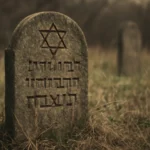
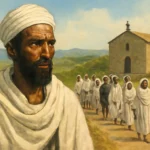
A profound and debated chapter in the history of Latin American Jewish life is the phenomenon of crypto-Judaism, sometimes called anusim, in which people practiced elements of Judaism in secret in response to persecution or pressure to convert. In the Mexican context, scholars point to oral histories, family traditions, and ritual remnants that indicate that some descendants maintained Judaic customs beneath the surface of broader society for generations. The story of crypto-Judaism in Mexico is part of a wider Latin American pattern, and it informs later awakenings of Jewish identity as immigration and travel increased in the 19th and 20th centuries.
Although precise numbers from the colonial period are scarce, the long arc of history shows that the Mexican world gradually became a space where people of Jewish origin could persist, adapt, and eventually organize as formal communities with houses of worship, schools, and social networks. This laid the groundwork for the later migrations that would transform Mexican Jewry into a robust and visible presence in the country’s social, cultural, and economic life.
19th and 20th centuries: waves of immigration and community formation
The modern story of Jewish Mexico begins in earnest with waves of immigration that correspond to wider global patterns of Jewish migration. In the 19th century, various European Jewish groups—predominantly Ashkenazi communities from Central and Eastern Europe—began arriving in increasing numbers. They were joined by Sephardic families who had long-standing ties to Iberian and Mediterranean trading networks. The new arrivals sought opportunities in commerce, industry, and professional life, and many established families and organizations that would anchor later generations.
The early 20th century saw additional inflows from different regions, including Mizrahi communities from the Middle East and Mediterranean, as well as Jews fleeing persecution or economic hardship in Europe and the Ottoman Empire. In Mexican Jewry, these diverse streams contributed distinct religious customs, liturgical languages, and educational traditions, enriching the communal life of the country. Over time the community built synagogues, Jewish schools, welfare organizations, and cultural centers that served both religious and secular aims.
Beyond formal institutions, the diaspora experience shaped how the Mexican Jewish community understood its relation to broader Mexican society. Engagement with Mexico’s performing arts, universities, and business circles allowed Jewish families to participate fully in national life while maintaining a sense of shared identity and continuity with ancestral traditions. The result is a dynamic, multilingual, and multiethnic texture that characterizes the Jewish presence in Mexico today.
Communities and Geography: Where Jewish Life Flourishes
Mexico City: the heart of Mexican Jewry
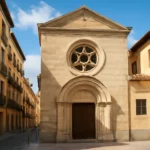
Mexico City is the epicenter of the Jewish communities of Mexico, hosting a dense network of synagogues, schools, charities, and cultural organizations. The capital’s vibrancy reflects a long history of urbanization and social mobility that attracted diverse Jewish groups. In the metropolis, Spanish-speaking Jewish communities have interacted with Hebrew-language education and liturgical customs imported from Europe and the Middle East. The city’s institutions provide a spectrum of religious expression—from traditional congregations to more progressive communities—while also serving as a hub for Jewish arts, journalism, and scholarship.
Other major centers: Monterrey, Guadalajara, and border cities
Beyond the capital, several regional centers sustain significant Jewish Mexico life. Monterrey has long hosted a prosperous community with schools, kosher markets, and cultural events that reflect regional industry and philanthropy. Guadalajara maintains a rooted Jewish presence that contributes to the city’s cultural and educational landscape. Across the northern border, Tijuana and Ciudad Juárez have populations shaped by cross-border commerce, while coastal and southern towns maintain smaller but resilient communities. In these locales, synagogues, mikvehs, and Jewish cultural centers often collaborate with national and international partners to sustain education and social services.
Smaller communities and the spectrum of connection
In addition to the large urban centers, the broader Mexican Jewish world includes smaller towns and communities with specialized religious schools, youth groups, and charitable organizations. Some communities flourish with supportive family networks, while others maintain a more modest footprint but hold a strong sense of communal identity. Across these places, the shared heritage of Judíos mexicanos—from Sephardic to Ashkenazi roots—persists in liturgy, life-cycle events, and communal memory.
Cultural Life, Religion, and Education
Liturgy, ritual life, and religious schools
The religious landscape of Mexican Jewry is diverse, reflecting the converging streams of Sephardic, Ashkenazi, and other Jewish traditions. Congregations often offer a range of services, including traditional Friday and Saturday worship, holiday observances, and life-cycle ceremonies such as Bar/Bat Mitzvah and weddings conducted under kosher dietary rules. Jewish day schools and supplementary religious schools provide Hebrew-language education, Bible and Talmud study, and modern civic and ethical instruction. Across this sector, the goal remains to cultivate a sense of Jewish identity that is both rooted in Torah and oriented toward participation in broader Mexican society.
Hebrew education is complemented by other linguistic and cultural programs. In many communities, Hebrew language instruction is offered through formal schools and through after-school programs, while Ladino and Yiddish—historically significant in Sephardic and Ashkenazi circles—appear in cultural activities, literature, and music. The bilingual or multilingual character of Judíos mexicanos often includes Spanish, Hebrew, and, in some communities, Ladino or other languages used in family life.
Cultural institutions, education, and youth
A robust ecosystem of cultural centers, libraries, and youth programs sustains Mexican Jewish life. Cultural events often feature lectures on Jewish history in Mexico, exhibitions of Jewish art, and collaborations with Mexican universities and archives. Youth movements and school clubs provide opportunities for leadership development, community service, and engagement with contemporary social issues. These educational efforts help ensure a pipeline of future leaders who can navigate both the Jewish tradition and modern Mexican citizenship.
Foodways, holidays, and everyday life
Food and ritual are a vivid way that the Jewish communities of Mexico express identity. Kosher markets and restaurants appear in larger cities, offering typical Jewish dishes adapted to local ingredients and tastes. The repertoire of holiday foods—matzah, challah, brisket, latkes for Hanukkah, and seasonal pastries—blends with Mexican flavors, producing unique culinary fusions. Throughout the year, holiday celebrations such as Passover, Hanukkah, Purim, and Rosh Hashanah are observed in homes and synagogues alike, often with community-wide meals and charitable collections that reflect the pairing of tradition with social responsibility.
Economy, Philanthropy, and Social Life
Business and professional contributions
The Jewish communities of Mexico have made meaningful contributions to the country’s economy and professional life. Across various sectors—commerce, medicine, law, education, media, and the arts—members of the Mexican Jewish community have built enterprises and built reputations that reinforce a legacy of entrepreneurship and social engagement. Philanthropy has played a central role, with Jewish organizations funding hospitals, schools, scholarships, and social services that reach beyond the Jewish community to Mexican society at large. This philanthropic ethos is often framed as a shared responsibility in line with broader Latin American Jewish values of tikkun olam—repairing the world.
Interfaith collaboration and public life
A defining feature of Judíos mexicanos is their engagement with interfaith dialogue and civic life. In Mexico’s plural society, Jewish communities have sought constructive relationships with Roman Catholic churches, Protestant congregations, Muslim communities, and secular institutions. This interfaith work includes educational exchanges, cultural programs, and joint humanitarian initiatives, reinforcing a broader Mexican commitment to coexistence, mutual respect, and social harmony.
Cuisine, Holidays, Language, and Daily Life in Mexican Jewish Culture
Food as a weekly and festive practice
Food traditions in the Jewish communities of Mexico reflect both diaspora influences and local Mexican ingredients. Staples such as matzah, challah, latkes, and gelatin-free meals for kosher observance appear alongside regional Mexican dishes adapted to Jewish dietary laws. Bakers, grocers, and home cooks collaborate to create meals that honor Sabbath and festival requirements while also celebrating the flavors of Mexican life.
Language and education in daily life
Language use among Mexican Jewry typically includes Spanish as the everyday language, with Hebrew taught in schools and used in liturgy. In some communities, older generations retain elements of Ladino or Yiddish in family stories, songs, or reference materials. This linguistic blend mirrors the history of migration and the ongoing effort to preserve heritage while participating fully in modern Mexican society.
Notable Figures, Milestones, and Public Memory
Public life and representation
The story of Jewish Mexico includes a number of individuals who have represented the community in public life, scholarship, and leadership. While the most famous names may be widely recognized in global Jewish and Mexican contexts, the broader narrative emphasizes the everyday leadership of rabbis, educators, therapists, physicians, businesspeople, and social workers who work within the framework of Mexican citizenship. The shared memory of the Jewish communities of Mexico is carried forward by congregations, schools, and cultural centers that document milestones, preserve historical archives, and celebrate generations of achievement.
Museums, archives, and memory projects
Across the Jewish world of Mexico, museums and archives preserve a record of migration patterns, religious practice, and community life. Exhibitions and programs often explore topics such as early immigrant communities, the development of education and welfare institutions, and the interplay between Jewish and Mexican identities. These memory projects contribute to a deeper public understanding of how Mexican Jewry has shaped and been shaped by Mexico’s national history.
Contemporary Challenges and Opportunities
Security, tolerance, and social change
Like Jewish communities around the world, the Jewish communities of Mexico face ongoing challenges in ensuring safety and resilience for places of worship, schools, and cultural centers. Efforts to safeguard community spaces, promote tolerance, and respond to incidents of antisemitism require coordination with national authorities, international Jewish networks, and local civil society. At the same time, the Mexican context offers opportunities for interfaith cooperation, multilingual education, and cross-cultural exchange that enrich both the Mexican Jewish community and the wider population.
Intergenerational continuity and identity
A central issue for Judíos mexicanos is how to sustain religious practice, language, and social bonds across generations. This involves investing in Jewish day schools, adult education, youth programs, and community events that help younger members feel a sense of belonging and responsibility while embracing modern life in Mexico. The balance between tradition and modernity is a defining feature of Mexican Jewry’s ongoing evolution.
Glossary of Key Terms About Jewish Mexico
Mexican Jewry — another way to refer to the Jewish communities of Mexico, emphasizing the collective Jewish life within the country.
Jewish Mexico — a common phrase used in English-language writing to describe the national community and its regional variations.
Judíos mexicanos — the Spanish-language term often used in Brazilian, Latin American, and Mexican sources to describe the same population.
Sephardic — Jews tracing origins to Spain, Portugal, North Africa, and the Middle East, whose traditions shape a segment of the Mexican Jewish heritage.
Ashkenazi — Jews whose ancestry is rooted in Central and Eastern Europe, another influential stream within Mexican Jewish life.
crypto-Judaism — the historical practice of Judaic traditions in secrecy during periods of persecution, a topic of study within the colonial-to-modern transition in Mexico and Latin America.
synagogues — the centers of worship and community life for many Judíos mexicanos, often serving also as social and educational hubs.
kosher — dietary standards adhered to by many in the community, guiding food preparation and consumption in daily life and holidays.
Conclusion: A Living, Evolving Jewish Mexico
The history, culture, and communities of Jewish Mexico reveal a living tapestry where memory and innovation intertwine. From the early whispers of crypto-Judaism to the vibrant Mexican Jewish communities of today, the narrative demonstrates how a people can maintain continuity with ancestral traditions while engaging with the broader currents of a national life. Whether through prayers in a city synagogue, the education of children in Hebrew and Spanish, or the generosity of philanthropic programs that support both Jewish and non-Jewish neighbors, the story of the Jewish world in Mexico is ultimately a story about coexistence, resilience, and shared humanity. In the pages of history and in the streets of contemporary cities, Mexican Jewry continues to contribute to the cultural richness and social vitality of Mexico as a whole.