Forgotten Jewish Histories: An Introduction to Untold Stories of Resilience and Identity
In the vast tapestry of world history, certain threads are tucked away, waiting to be pulled into the light by careful scholarship,
curious readers, and community memory. What we often call forgotten Jewish histories are not merely footnotes to a grand narrative —
they are living demonstrations of resilience, adaptation, and the stubborn persistence of identity in diverse landscapes.
From the littoral shores of the Indian Ocean to the foothills of the Caucasus, and from small-town shtetls to remote desert enclaves, there exist forgotten Jewish narratives that reveal how people built communities, negotiated faith with local customs, and preserved language,
ritual, and art under pressures of exile, migration, discrimination, and sometimes liberation.
This article surveys some of these less-remembered chapters—places and peoples whose Jewishness is not always visible in popular histories,
yet whose stories illuminate the broader arc of Jewish life in diaspora. By foregrounding these histories, we invite readers to see how hidden Jewish histories, obscured Jewish legacies, and shadowed Jewish stories have shaped
modern identities and moral imaginations. We will travel through continents and centuries, highlighting the threads that connect forgotten Jewish communities with today’s conversations about memory, belonging, and justice.
Throughout, this piece uses a few guiding ideas: memory matters even when no grand monument marks it; languages preserve heritage even when they sound foreign to the dominant culture; and stories of ordinary people—rabbi, shopkeeper, farmer,
artist, student—reveal the extraordinary power of ordinary courage. The goal is not to romanticize the past, but to recognize
the seriousness with which unremembered Jewish voices confronted uncertainty and forged durable identities.
The Silk Roads of Memory: Forgotten Jewish Diasporas Across the Indian Ocean
Long before global airlines stitched the world together, forgotten Jewish communities moved along the longer routes of trade,
migration, and conversion. The Indian Ocean basin became a corridor where Jewish traders, artisans, and scholars met
local rulers, weaving a distinctive set of practices, languages, and religious understandings. In this arena, several forgotten Jewish narratives stand out for their longevity, their moments of crisis, and their quiet
persistence.
Co chin Jews of Malabar: A Bridge Between Cultures
The Cochin Jews of Kerala are among the oldest continuous Jewish communities in the Indian subcontinent. Their story blends
Sephardic and Mizrahi influences with local Malayali culture, producing unique liturgical melodies, culinary customs, and
forms of social mutual aid. The community’s hidden histories include periods of prosperous trade,
religious tolerance under various Indian rulers, and later adaptation to the pressures of colonial rule and mass emigration.
Key features of this lineage include the Paradesi Synagogue in Kochi, which stands as a physical monument to a long shared memory.
Yet the daily life of Cochin Jews—how they negotiated interfaith marriages, how their youth engaged with modern schooling,
and how they preserved Hebrew script and religious calendars in a multilingual setting—offers a lens into the broader theme of forgotten Jewish narratives as indigenous, deeply rooted, and legally complex.
Bene Israel and the Inland Dialogues: From Maharashtrian Villages to Global Cities
The Bene Israel of Maharashtra claim a heritage that they say reaches back to ancient times, with legends of arrival by sea
during the era of the Assyrian and Babylonian exiles or, in other traditions, through later traders who settled along Indian coasts.
Scholarly work has explored how this community’s forgotten Jewish identities were shaped as they navigated caste hierarchies,
inclusion in Indian society, and later the pull of migration to Israel and other destinations in the wake of persecution.
In the villages and towns where Bene Israel communities lived, language and ritual shifted in response to local speech— marathi and
Marathi-Brahmin sensibilities mingled with Hebrew prayers and Judeo-Portuguese or Judeo-Marathi terms. The result is a forgotten Jewish narrative about adaptation and resilience, and a reminder that Jewish life has never been a single
template but a constellation of local practices and shared commitments.
Baghdadi and Local Sephardic Connections: Global Networks, Local Realities
The 18th and 19th centuries saw a wave of Baghdadi Jewish migration into Indian trading ports, where merchants brokered
connections with Europe, the Middle East, and East Asia. In places like Bombay (Mumbai) and Calcutta (Kolkata), Baghdadi
communities created synagogues, schools, and social clubs that helped anchor Jewish life in a setting of rapid urban modernization.
These forgotten diasporic connections are important not just for their economic networks, but for showing how Jewish
communities could thrive by weaving together multiple linguistic and religious strands—Arabic, Hebrew, Judeo-Indic languages, and
local vernaculars—into a living memory culture that could sustain itself across generations.
Forgotten Jewish Narratives in Africa: From Ethiopia to Zimbabwe
The African continent hosts a range of forgotten Jewish histories that illuminate how Jewish practice and identity could
take root in very different ecologies—savanna and highland, urban centers and remote villages, multilingual marketplaces and
quiet synagogues. These stories demonstrate that resilience in the Jewish tradition often grew from adaptation to local
environments and to new political realities.
Beta Israel of Ethiopia: Ancient Roots, Modern Transformations
The Ethiopian Jewish community, traditionally known as Beta Israel, has a history that many scholars trace to antiquity,
with complex ritual practices and a distinctive calendrical rhythm. The exodus from Ethiopia to Israel in the late 20th century,
through operations like Moses and Solomon, highlighted a dramatic moment of rescue but also underscored a much longer history
of identity formation under often difficult political circumstances.
Within the broader narrative of forgotten Jewish lives, Beta Israel offers a powerful case study in assimilation and
self-definition. The community’s music, liturgy, and social organization reveal a unique synthesis of Jewish law with Ethiopian cultural
patterns, creating a forgotten Jewish identity that continues to influence diaspora communities today.
Lemba of Southern Africa: A Genetic and Cultural Dialogue
The Lemba people of southern Africa have generated significant scholarly interest for claims of ancient
Jewish ancestry. Their genealogies, rituals, and some dietary and measurement practices reveal a forgotten Jewish heritage
encoded in oral histories and symbolic acts. While genetics has offered partial corroboration for some lineages, the broader story
is about how communities interpret lineage, legitimacy, and belonging in the present moment.
The Lemba case demonstrates how a forgotten Jewish narrative can be interpreted through both anthropology and genetics,
prompting ongoing conversations about what it means to be part of a people when that identity sits at the intersection of myth, memory,
and science. It also reminds us that unremembered voices can challenge simplified histories by insisting on lived
experience as the measure of belonging.
Hidden Histories in Europe, the Near East, and the Caucasus
Across Europe, the Middle East, and the Caucasus, there exist forgotten Jewish histories that illuminate how Jewish life
persisted in villages and towns often bypassed by the bigger story of national narratives. These accounts include smaller sister
communities, marginal synagogues, and pockets of literacy that endured despite upheavals, expulsions, and assimilation pressures.
Mountain Jews and the Caucasus: The Solidarity of a Remote Diaspora
The Mountain Jews of the Caucasus—centering in regions like Dagestan, Azerbaijan, and nearby lands—developed a distinct
liturgical life, language (Judeo-Tat and related forms), and a tradition of caravan diplomacy that connected them with broader Jewish
and non-Jewish networks. Their forgotten narrative includes periods of relative autonomy under local Muslim and Christian
rulers, a resilient craft economy, and vibrant family life that preserved a sense of community across centuries.
Judeo-Arabic and Judeo-Persian Traditions: Script, Song, and Custom
In several Arab-speaking and Persian-speaking Jewish communities, languages such as Judeo-Arabic and Judeo-Persian carried
sacred and secular knowledge. These forgotten linguistic legacies include unique liturgical commentaries, poetry,
and practical texts that guided daily life, commerce, and religious observance. The persistence of writing in Hebrew script for
non-Hebrew languages demonstrates a stubborn commitment to Jewish literacy even when the spoken language around the community shifted.
Forgotten Narratives in the Balkans and Anatolia
In the Balkans and parts of Anatolia, long-standing forgotten Jewish communities interacted with Ottoman rule, Balkan nationalism,
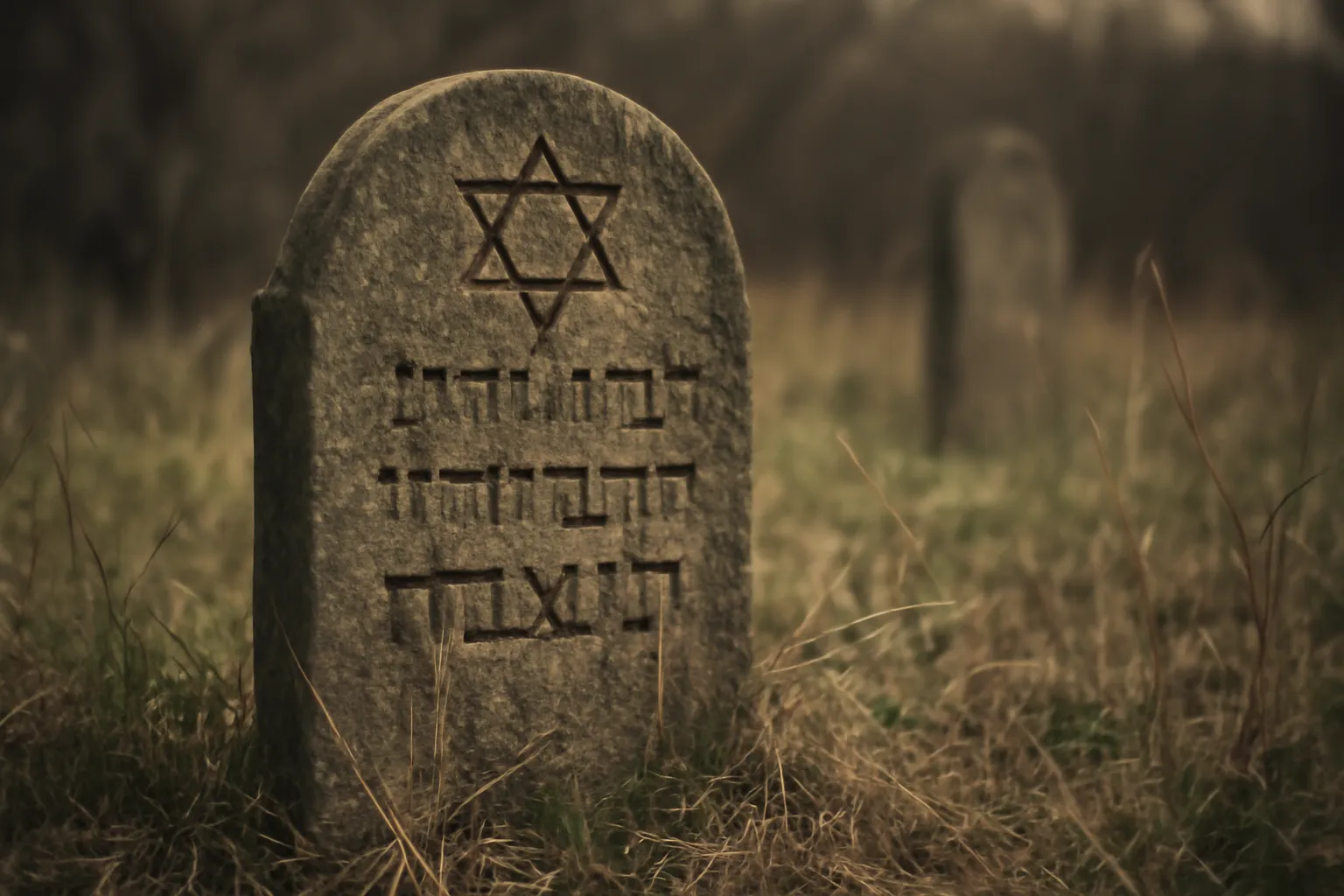
and later modern nation-states. Their cemeteries, mikvehs, and schools underscore how Jewish life could endure amid shifting political
orders and evolving identities. These histories remind us that resilience often takes the form of careful stewardship of ritual spaces,
language, and forms of mutual aid within tight-knit neighborhoods.
Forgotten Arts: Music, Theater, and Sacred Texts That Shaped Identity
While political events frequently grab headlines, the forgotten Jewish arts lie in the daily rituals of living
memory. Music, theater, and manuscript culture offered ways to sustain identity when outside pressures pressed in.
The following outlines illustrate how art becomes a repository of memory and meaning.
Klezmer revival and Yiddish theater: Even when waves of assimilation pressed communities toward
language shift, musicians and playwrights kept alive a repertoire that spoke of homeland and longing, producing a forgotten Jewish cultural archive that later inspired international audiences.
Liturgy and song: In small synagogues across the world, prayer melodies traveled with merchants and scholars,
creating a shared auditory language that bridged diverse languages and customs. These forgotten liturgical forms
serve as a sonic map of diaspora experience.
Textual preservation: In many communities, handwritten commentaries, prayer books, and letters circulated
in environments where printing presses were scarce. The survival of these texts—often in Judeo-Arabic, Judeo-Persian, or
Hebrew script—constitutes a forgotten textual legacy that scholars continue to study.
Gendered Experiences and Quiet Strengths
Across different settings, women played crucial roles in maintaining households, transmitting ritual knowledge, and organizing
charitable networks. The forgotten Jewish women of various communities often served as custodians of family stories,
keepers of devotional songs, and organizers of schooling for children. Their contributions form a substantial part of the
broader memory culture that sustains Jewish life in diaspora, even when official histories do not always
recognize their leadership.
Oral Histories and Archival Gaps
Because many communities lacked continuous access to formal archives, much of what is known about these hidden Jewish histories
comes from oral testimony, ritual practice, and the careful archiving by descendants and local scholars. This creates both a richness
and a fragility: memories are powerful, but they require deliberate work—transcription, translation, and cross-cultural collaboration—
to move from personal recollection to public knowledge.
Preservation, Memory, and the Work of Reclaiming Forgotten Jewish Histories
If these stories have remained forgotten or fragmented, there is growing energy around projects that aim to
illuminate, preserve, and celebrate them. Museums, libraries, digital projects, and community organizations are increasingly
committed to collecting oral histories, mapping synagogues and cemeteries, and presenting cross-cultural histories that
emphasize shared humanity rather than difference.
Modern memory institutions are not neutral containers; they shape how future generations will understand the past. The new
generation of forgotten Jewish histories projects emphasizes accessibility, multilingual transcription,
and collaboration with communities. Online archives, documentary films, and interactive maps enable researchers and lay readers
to explore diaspora routes, synagogue architectures, and the social networks that sustained communities across oceans and continents.
Local communities frequently take the lead in naming and reclaiming their forgotten Jewish identities.
Youth programs, language revival classes, and oral history circles help maintain culture while connecting younger generations
with elders who carry the memory of place, custom, and practice. These initiatives demonstrate how memory work is both
a historical task and a living, intergenerational project.
Scholarly Inquiry and Responsible Memory
Researchers and educators have a responsibility to approach forgotten Jewish histories with humility and
rigor, acknowledging biases, acknowledging gaps, and centering voices that have been marginal in dominant narratives.
Interdisciplinary collaboration—history, anthropology, linguistics, theology, and musicology—helps build a more nuanced
portrait of Jewish life as it diversified across time and place.
Why Remember the Forgotten? The Ethics and the Promise
Remembering forgotten Jewish histories serves several ethical and educational ends:
Justice and dignity: Acknowledging communities that suffered discrimination or erasure honors their memory and humanizes their experiences.
Complexity over monoliths: Recognizing diversity within Jewish life counters simplistic stereotypes and shows how faith, culture, and language can coexist.
Better pedagogy: Teaching these histories provides learners with skills in critical thinking, source analysis, and cross-cultural empathy.
Inspiration for resilience: Stories of adaptation and mutual aid offer powerful models for navigating present-day challenges.
The work of uncovering forgotten narratives is not about reifying the past as an isolated monument; it is about
integrating those memories into a living conversation about belonging, rights, and cultural continuity. Each recovered piece
of memory—whether a liturgical cadence, a family letter, a preserved cemetery, or a village tale—becomes a seed for
future generations to grow a more inclusive and informed public sphere.
Conclusion: Toward an Inclusive Panorama of Jewish Life
The archive of forgotten Jewish histories is not finished; it is expanding as communities, scholars, and
institutions collaborate to recover and reinterpret sources. By listening to forgotten voices,
we gain a richer sense of how Jewish life has been exercised in countless settings—how it has endured, evolved, and
contributed to global culture in ways that are sometimes quiet, sometimes dramatic, but always meaningful.
As readers, we can support this enterprise by seeking out diverse sources, visiting Jewish museums that feature lesser-known
communities, supporting oral history projects, and learning about languages and musical traditions that might seem distant
but are deeply connected to a shared humanity. When we acknowledge the forgotten narratives that lived
alongside the well-known chapters, we honor the resilience that has defined Jewish identity across time and space.
In the end, the untold stories of resilience are not distant curiosities; they are part of the moral fabric
of global memory. They remind us that identity is not a fixed passport but a living conversation—one that crosses borders,
time, and generations. The work of remembering what was once forgotten is, in truth, a work of
care for the present and a gift to the future.
Let this article be a reading list rather than a conclusion: a doorway into a broader library of forgotten Jewish histories,
inviting readers to explore further, ask new questions, and participate in the ongoing project of memory that sustains
human dignity and shared destiny.