Throughout Jewish history, the image of a lit candelabrum has stood as a powerful symbol of faith, tradition, and continuity. From the seven-branched lampstand described in the ancient Israelite temples to the modern nine-branched menorah used during Hanukkah, the Jewish candelabrum—often referred to in English as a menorah or, in the holiday context, a hanukkiah—functions on multiple levels: as a liturgical object, a cultural emblem, and a bridge between ancient ritual and contemporary life. This article explores candelabra Judaism in depth—its history, meanings, and the rich symbolism attached to the Jewish candelabrum across eras, communities, and belief practices.
Overview: What is the Jewish candelabrum and why it matters
In traditional Jewish usage, the term menorah designates the seven-branched lampstand that appeared in the portable sanctuary of the wilderness and later in the Temple in Jerusalem. The phrase Hanukkah menorah or hanukkiah refers specifically to the nine-branched candelabrum used during the Festival of Lights, Hanukkah, commemorating the rededication of the Second Temple and the miracle of the oil that burned for eight days. While these two terms are related, they describe distinct objects with unique purposes, histories, and theological resonances. Across Jewish communities—Orthodox, Conservative, Reform, and secular—these candelabra illuminate not only space but also questions of memory, identity, and liberty.
History of the candelabrum in Jewish tradition
The history of the Jewish candelabrum stretches from biblical times to modern symbolic representations. It intersects sacred liturgy, temple ritual, diaspora life, and public art. The following subsections trace the major historical trajectories of the candelabrum and its meanings in different periods.
Ancient origins: the seven-branched lampstand
The Tabernacle and the Temple: The seven-branched lampstand was crafted as part of the portable Tabernacle (Mishkan) in the desert, according to biblical instruction. Its design was explicit: a solid core with six branches and a central shaft, each branch bearing a lamp. This lampstand symbolized divine guidance, holiness, and the presence of God among the Israelites during their wanderings and eventual settlement.
Symbolism of light: Light in ancient Near Eastern cultures often stood for wisdom, revelation, and the divine presence. In Jewish tradition, the lamps were not mere decoration but sacred instruments lit each day to illuminate the sanctuary and to carry the people’s prayers to heaven.
Temple era permanence: When the First Temple stood in Jerusalem, the menorah burned within the sanctified space, tended by the Levitical priesthood. The lampstand’s ritual maintenance was a regular and deliberate act, reflecting a covenantal relationship between God, the priests, and the people.
Second Temple period and the aftermath
Second Temple era: After the return from exile and the rebuilding of Jerusalem, the menorah continued to serve as a central liturgical object, even as other cult images were avoided in various periods of restraint or controversy. The menorah’s image persisted in ritual manuals and descriptions of how the Temple’s spaces were arranged.
Destruction and diaspora: Following the destruction of the Second Temple in 70 CE, the physical menorah ceased to function in a liturgical sense, but its symbolic weight intensified in Jewish memory. The seven-branched lampstand appeared in art, manuscripts, and later in synagogue architecture as a memory of the Temple and a symbol of national endurance.
From ritual to ritualized memory: rabbinic and medieval perspectives
Rabbinic literature: Talmudic and later rabbinic texts refer to the menorah in the context of Temple service, but they also reframe its meaning for the post-Temple era. The lampstand becomes a touchstone for themes of purity, divine presence, and the proper ordering of worship.
Medieval Jewish art and manuscripts: The seven-branched lampstand appears in illuminated manuscripts and church-and-synagogue architecture in the Middle Ages as a symbol of wisdom, divine illumination, and the continuity of Jewish practice even in exile.
Modern revival and symbolism in contemporary Judaism
Synagogue architecture: In many synagogues today, the Menorah is a visible reminder of the Temple and a symbol of illumination within the sanctuary. Some modern designs reinterpret the seven branches in stylized forms, aligning ancient symbolism with contemporary aesthetics.
Public memorials and art: The seven-branched lampstand has been rendered in sculpture, fountains, and mosaics around the world, signaling a shared memory of Jewish history and a commitment to human dignity and spiritual light.
Educational and ritual instruction: In classrooms, museums, and religious education settings, the seven-branched menorah helps teach about biblical origins, ritual discipline, and the continuity of Jewish life through centuries of change.
Meaning and etymology: terms and concepts surrounding the candelabrum
Language helps shape how a sacred object is understood. The Jewish candelabrum is known by several terms in Hebrew and English, each reflecting a facet of its identity and use.
Menorah: The standard term for the seven-branched lampstand of biblical origin. In English, “menorah” is often used to refer generically to a candelabrum, but in Jewish law and tradition, it typically denotes the seven-branched lampstand used in the Temple and described in biblical literature.
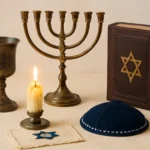
Hanukkiah (Hanukkah menorah): A nine-branched candelabrum used specifically during the Jewish festival of Hanukkah. Eight lamps represent the eight days of the miracle of oil, plus a ninth lamp, the shamash, used to light the others. In modern practice, this object is central to Hanukkah rituals in homes and communities around the world.
Ner Tamid (eternal light): Although not the same as the menorah, the Ner Tamid is a related liturgical lamp kept burning in synagogues to symbolize the eternal divine presence. It complements the menorah’s memory of the Temple by offering a continuous reminder of ongoing worship and moral responsibility.
Other terms: Some languages and traditions describe the menorah with adjectives like “ancient lampstand” or “Temple lamp,” highlighting the object’s sacred ancestry and its role as a link between past and present.
Symbolism and theology: what the candelabrum represents
The symbolism of the Jewish candelabrum goes beyond ritual function. Its multiple branches, materials, and liturgical usage encode a layered set of theological and ethical meanings.
Divine presence: The lampstand’s original function was to illuminate the Holy Space in the Temple, symbolizing God’s presence among the people. The light is not merely decorative; it is a visible sign of covenantal relationship and divine guidance.
Wisdom and revelation: Light is commonly associated with knowledge and revelation. The menorah’s flames symbolize how divine truth dispels darkness and how moral insight should illuminate human life.
Seven vs nine: structure as a metaphor
Seven branches: The seven-branched menorah embodies completeness in ancient Jewish symbolism—reflecting creation (the seven days) and wholeness in the ceremonial order of the Temple.
Nine branches (Hanukkiah): The Hanukkah menorah’s eight lights plus the shamash represent the miracle of oil for eight days. The additional branch (shamash) also symbolizes service and the instrumental role of leadership in guiding the light to others.
Light as memory and resilience
Memory: For many Jews, the menorah is a mnemonic object, keeping the memory of Temple ritual, rededication, and historical survival alive in the diaspora.
Resistance and hope: Hanukkah’s narrative—often summarized as a miracle of oil—embodies resistance to oppression and the rededication of religious life. The hanukkiah turns the window into a public declaration of autonomy, courage, and spiritual endurance.
Design, form, and variations of the candelabrum
Designs of the Jewish candelabrum vary widely to reflect different historical periods, artistic styles, and communal needs. The core ideas—light, sanctity, and memory—remain constant, while the outward forms adapt to place and purpose.
The seven-branched menorah of ancient temples
Construction and form: The biblical description emphasizes a central shaft with six branches, each holding a lamp. The design is often interpreted as symmetric and balanced, with a central axis symbolizing a center from which radiates light to the world.
Materials and ritual use: In the Temple, the menorah was crafted from gold, fashioned with careful artistry, and maintained by priests. Its lamps were filled with olive oil, and the angle and flame were regulated to ensure purity and regular illumination.
The Hanukkah menorah and its unique features
Eight nights, one light per night: The hanukkiah features eight branches for the eight nights of Hanukkah, plus a ninth helper candle, the shamash, used to light the others. This structural choice encodes a narrative of increasing illumination across the festival.
Shamash as liturgical instrument: The shamash is often positioned higher or lower than the other candles and serves a practical purpose—lighting the others without diminishing the sanctity of each blessing and the miracle being remembered.
Materials and styles: Hanukkah menorahs come in countless materials—metal, glass, ceramic, wood—and in styles ranging from minimalist modern to highly decorative. Some communities favor metal forms reflecting traditional aesthetics, while others embrace contemporary interpretations that merge art with ritual function.
Ner Tamid and other related lamps
Ner Tamid: The eternal light is typically housed near the ark in a synagogue and is not part of the Hanukkah or Temple lampaund’s structure; rather, it is a symbol of continuous divine presence and perpetual worship.
Home candelabra traditions: In homes, lamp stands and candelabra may be used to commemorate Shabbat, holidays, or family milestones. While the home menorah for Hanukkah is nine-branched, other home candelabra might draw on the seven-branched symbolism for decorative or educational purposes.
Ritual use: where and how the candelabrum appears in Jewish practice
Across communities, the candelabrum appears in diverse contexts—synagogues, homes, museums, and public spaces—each adding a layer of meaning to the central idea of light as a sign of Jewish life and memory.
Synagogue settings
Seven-branched menorah in the sanctuary: In many synagogues, a seven-branched menorah or menorot become focal points of the sanctuary interior, sometimes flown in symbolic form as a menorah sculpture or integrated into architectural elements.
Liturgical symbolism: The menorah in the synagogue can be a visual reminder of the Temple’s original service, while serving as a symbol of wisdom, justice, and the illumination of Torah study.
Public memory: The presence of the menorah in worship spaces reinforces Jerusalem-centered memory and the continuity of Jewish ritual across generations.
Home rituals and family life
Shabbat and holiday lighting: Some families incorporate menorah lighting as a way to mark Sabbath or special occasions, connecting domestic ritual with the broader symbolism of light in Jewish tradition.
Hanukkah celebrations: The hanukkiah is central to Hanukkah rites, with families reciting blessings, lighting candles in a specific order, and often sharing foods fried in oil—echoing the oil miracle and the festival’s historical memory.
Educational opportunities: The lighting of the hanukkiah offers opportunities to teach children about history, ethics, and the values of perseverance, justice, and gratitude.
Public art and national memory
Monuments and emblems: Many public spaces display menorah-inspired designs as a sign of cultural heritage and resilience. In some cases, national or city symbols incorporate menorah imagery as part of civic memory and cross-cultural dialogue.
Museums and scholarship: Exhibits about the Temple, Hanukkah, or Jewish liturgical life frequently feature menorah artifacts, enabling visitors to engage with material culture and spiritual symbolism.
The cultural and ethical dimensions of candelabrum symbolism
The candelabrum’s meaning is not limited to ritual correctness; it also speaks to larger questions about identity, memory, and social justice. Across centuries, communities have used the image of light to articulate values, respond to oppression, and imagine a more luminous world.
Continuity: By preserving the memory of the Temple through symbols like the menorah, Jewish communities affirm continuity—a living link between ancestors and descendants.
Education: The menorah serves as a teaching tool, guiding discussions about history, ethics, and religious law. It invites learners of all ages to connect past narratives with present responsibilities.
Light as justice and peace
Ethical illumination: The metaphor of light extends to moral clarity: just laws, the pursuit of knowledge, and the responsibility to repair the world (tikkun olam) are framed as duties that illuminate the path to justice.
Interfaith and intercultural dialogue: The universal appeal of light has facilitated conversations about shared values across faiths. The menorah can serve as a bridge in pluralistic spaces, inviting dialogue about spiritual light and human dignity.
Myths, misconceptions, and clarifications
As with many long-standing symbols, a few misunderstandings have lingered about the Jewish candelabrum. Clear distinctions help readers understand the object’s authentic roles across history and practice.
Misconception: All menorahs are the same: There are important differences between the seven-branched menorah of Temple origin and the nine-branched hanukkiah used for Hanukkah. They serve different liturgical purposes and carry distinct histories.
Misconception: Hanukkah and the Temple are unrelated: Hanukkah is connected to the Temple story through the rededication of the Temple and the oil miracle. The hanukkiah memorializes that event, while the seven-branched menorah represents the original Temple lampstand.
Misconception: The shamash is optional: In most traditional hanukkiah setups, the shamash is essential. It is used to light the other candles, preserving the sanctity of each flame and maintaining the ritual order.
Educational and artistic reflections on candelabrum traditions
Educators, curators, and artists have engaged with the Jewish candelabrum to explore themes of light, memory, and resilience. The following observations highlight how the menorah and hanukkiah function beyond mere ritual objects.
Educational programs: Museums and Jewish cultural centers often design programs around the menorah, using its biblical roots to teach about ancient religious practices, Diaspora experiences, and the evolution of Jewish liturgy.
Artistic experimentation: Contemporary artists reinterpret the menorah’s form, creating installations that preserve symbolic meaning while inviting new interpretations—often commenting on freedom, inclusion, and human rights.
Community identity: In diverse communities, the menorah becomes a unifying symbol that honors shared heritage while allowing for stylistic plurality in design and use.
Conclusion: The enduring light of candelabra Judaism
The history, meaning, and symbolism of the Jewish candelabrum reveal a rich tapestry of ritual practice, memory, and ethical aspiration. Whether seen as a liturgical instrument in the Temple tradition, a family-centered Hanukkah object, a public emblem in art and architecture, or a symbol in education and dialogue, the candelabra Jewish tradition embodies a core conviction: light can transform space, memory can sustain a people, and faith can illuminate a path toward justice and dignity for all humanity. By exploring the menorah in its ancient form and its modern incarnations—the hanukkiah, the Ner Tamid, and related liturgical lamps—we gain a fuller understanding of how Jewish communities have used light to express faith, sustain hope, and inspire ethical living across time and place.