The world of Judaism artefacts encompasses a rich spectrum of objects, symbols, and ceremonial items that connect believers to tradition, memory, and community. From the sacred scrolls that carry the Torah to the daily implements that accompany Shabbat and festival rituals, Jewish objects serve as tangible links to faith, history, and identity. This guide offers an expansive overview of Jewish ceremonial items and symbols, highlighting their meanings, functions, and variations across communities. Whether you are a student of religious studies, a museum visitor, or a curious reader, you will find in these pages a detailed map of Judaism artefacts and their significance in Jewish life.
In the broadest sense, Judaism artefacts are materials that embody sacred texts, ritual practice, memory, and communal belonging. They can be liturgical objects used in prayer, sacramental items associated with life-cycle events, household items that shape daily devotion, or artful pieces that celebrate communal stories. Important distinctions exist between ritual objects (used in worship or rites of passage) and cultural or historical artifacts (that reflect a community’s aesthetic, regional styles, or archival evidence). Yet the boundaries between these categories are fluid: a ceremonial cup used for Kiddush may also be treasured as a family heirloom; a Torah cover can be a work of textile art with historical embroidery; and a menorah can be both a ritual lamp and a timeless symbol in Jewish identity.
Across diverse Jewish communities—Ashkenazi, Sephardi, Mizrahi, Ethiopian, and others—the vocabulary of artefacts expands to include regional variants, languages, materials, and stylistic influences. However, certain objects recur in most traditions because they encode core beliefs about covenant, memory, sanctity, and the rhythm of the religious year. The following sections explore these objects in a structured way, offering practical descriptions, symbolic meanings, and notes on care and interpretation.
Sacred texts and scrolls: the core of Jewish continuity
Torah scrolls and the Aron Kodesh (the Ark)
At the center of Jewish ritual life stands the Torah—the five books of Moses. In most synagogues, the physical Torah scroll is housed in a sanctuary cabinet called the Aron Kodesh or Ark, which is often elaborately decorated. The scroll itself is a hand-written parchment inscribed by a scribe in a meticulous, ritual process. The text is read from a specific column layout, with cantillation marks guiding the chanting during services. When teaching about Judaism artefacts, the Torah scroll is often the most emblematic object because it embodies revelation, law, and communal responsibility.
Torah scroll (Sefer Torah): a long parchment roll containing the five books—Genesis, Exodus, Leviticus, Numbers, and Deuteronomy.
Torah mantle (Mantle): a decorative cloth cover that protects and adorns the Torah scroll.
Keter Torah (crown) or other adornments: often used to embellish the Torah case or cover as a symbol of reverence and crown-like honor.
Yad (Torah pointer): a slender pointer used to read the Torah without touching the parchment, preserving its sanctity.
Megillot, haftorot, and scroll inscriptions
Beyond the Torah itself, other scrolls and inscribed texts carry special significance. The Megillot are five scrolls read on specific holidays (Esther for Purim, Ruth for Shavuot, Ecclesiastes for Sukkot, Lamentations for Tisha B’Av, and Song of Songs for Passover in some traditions). Scrolls and sacred writings often appear in rolls or bound volumes and can be housed in custom cases or display cabinets within synagogues and museums. The haftorah portion—prophetic readings after the weekly Torah portion—may be printed in books or bound as special scrolls for study.
Prayer garments and ritual attire: clothing and accessories that frame devotion
Tallit and tzitzit: fringed prayer shawls
The tallit is a rectangular prayer shawl worn during morning services and certain holidays. Along its edges are the tzitzit, fringes mandated by the Torah as a tactile reminder of divine commandments. Different communities have varied customs for the color, material, and stripe patterns; some use white shawls with blue or black tzitzit, while others may incorporate richer fabrics for special occasions. The tallit bag and also the tallit clips or retaining ribbons protect and organize the garment when not in use. This family of objects—garment and tassels—embodies the meditation on commandments and the physical reminder of covenant.
Tallit (prayer shawl)
Tzitzit (fringes) on the corners of the tallit or on a separate garment
Tallit bag (to store and transport the shawl)
Tallit clips or ribbons
Tefillin: tephillin and their leather boxes
Tefillin (phylacteries) are small black leather boxes containing parchment scrolls inscribed with verses from the Torah. They are bound to the arm with leather straps and worn during weekday morning prayers, serving as a physical reminder of the divine commandments binding heart and mind. The tefillin are among the most recognizable Judaism artefacts due to their distinctive shape and ritual use. Note the difference between the shel rosh (head tefillin) and shel yad (arm tefillin), both parts integral to the practice.
Shel yad (arm tefillin)
Shel rosh (head tefillin)
Leather straps and knots with traditional arrangements
Case and bag for storage and transport
Mezuzah: doors, words, and doorway protection
Placed on the doorposts of Jewish homes, the mezuzah is a small capsule or parchment scroll inscribed with selected Torah verses (notably the Shema). It serves as a daily reminder of faith and obligation. The mezuzah is a vivid example of how Judaism artefacts inhabit everyday space, turning ordinary doorways into thresholds of memory and sanctity. Many families craft or commission ornate mezuzot (plural of mezuzah) with leather, metal, wood, or ceramic cases that reflect personal taste and heritage.
Mezuzah scroll (klaf) inside a case
Mezuzah case in metal, wood, ceramic, or glass
Paraded or painted mezuzot for festive or commemorative purposes
Home and life-cycle objects: bringing sanctity into daily living
Shabbat candles and havdalah sets
Observant households light Shabbat candles on Friday evening to usher in the Sabbath with peace and light. The candleholders themselves can range from simple glass candlesticks to ornate brass or ceramic pieces passed down through generations. At the close of Shabbat, the havdalah ceremony uses a multi-wicked candle, a spice box (besamim), and a cup of wine to mark the separation between sacred time and the ordinary week. In many households, these elements become cherished Judaism artefacts with generations of memories attached.
Shabbat candlesticks (nerot/shabbat lamps)
Candle snuffer or tray
Havdalah candle with multiple wicks
Besamim (spice box) and spices
Wine cup for Havdalah
Kiddush cup: sanctifying wine and memory
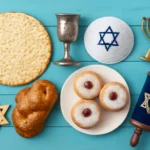
The Kiddush cup is a ritual cup used to sanctify wine during Shabbat and festive meals. It can be exquisitely crafted from metal, glass, ceramic, or precious materials, sometimes engraved with family names, motifs, or Hebrew inscriptions. The Kiddush cup is a Judaism artefact that couples everyday dining with spiritual intention, turning meals into occasions of blessing and gratitude.
Kiddush cup in metal or glass
Gravures and inscriptions on the cup’s surface
Wine ritual as a binding moment in family and community life
Purple, gold, and everyday objects: challah boards and Matzah plates
A Challah board or Challah cover frames the bread on Shabbat, while a Matzah plate is used during Passover to hold unleavened bread. These objects are part of the home’s sacred rhythm, transforming meals into a public reenactment of Israel’s journey and a reminder of ethical imperatives such as hospitality and kindness. In many households, these pieces are as decorative as they are functional, blending artistry with devotion.
Challah board or Challah cover
Matzah plate for Passover
Passover seder plate with the symbolic foods
Festivals and symbols: visual language of Jewish celebrations
Hanukkah menorah and festival lights
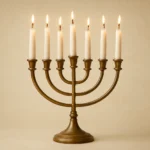
The Hanukkah menorah (hanukkiah) is a special candelabrum with nine branches: eight for each night of Hanukkah and one center candle—the shamash—to light the others. The menorah is a powerful emblem of perseverance, rededication, and the miracle associated with the Jewish festival of lights. Styles range from traditional silver or brass to contemporary designs that reflect community identity and artist collaboration. The menorah is a recurring Judaism artefact in homes, synagogues, and public spaces, often passed down as a family heirloom.
Hanukkah menorah with nine branches
Shamash candle used to light the others
Decorative designs in metal, wood, ceramic, or glass
Sukkah, etrog, and lulav: the festival of booths
During Sukkot, worshippers dwell in a temporary hut called a sukkah. The etrog (citron) along with the lulav (palm frond) and other agricultural branches form a ritual bundle used in a palm-frond procession and blessing. The Sukkah itself becomes a portable sanctuary where families eat and celebrate, turning ordinary living space into a microcosm of the wilderness journey. These festival artifacts illuminate how material culture encodes memory of exile, providence, and communal hospitality.
Sukkah (temporary dwelling for the festival)
Etrog (citron)
Lulav (palm frond) and hadas (myrtle) and aravah (willow)
Sukkah decorations and ritual items inside
Shofar: the ram’s horn and awakening call
The shofar is a ram’s horn blown during certain services, notably during the month of Elul and on Rosh Hashanah. It is one of the oldest and most recognizable Judaism artefacts, symbolizing renewal, divine sovereignty, and the call to repentance. The sound of the shofar invites reflection and spiritual awakening, bridging ancient practice with contemporary life. In some communities, shofar craftsmanship is a revered craft, with different shapes and materials and perhaps a particular tradition of blowing technique.
Shofar horn or ram’s horn
Blowing techniques vary by tradition
Sometimes accompanied by ceremonial shofar stands or cases
Life-cycle objects and ceremonial works: marking milestones
Ketubahs, marriage contracts, and wedding ritual items
The ketubah is the Jewish marriage contract that outlines obligations between spouses. It is often exhibited or stored as a cherished document, and it may be artistically embellished with calligraphy, symbolism, and familial motifs. The ketubah is complemented by wedding ritual items such as the chuppah (wedding canopy), the yichud room traditions, and a variety of ceremonial objects that signal the transition into married life. Collectively, these Judaism artefacts reflect not only religious obligations but also the social and artistic imagination of a community during significant life events.
Ketubah (marriage contract)
Chuppah (wedding canopy)
Wedding ketubah art and keepsakes
Bar and Bat Mitzvah: ritual objects for coming of age
As individuals reach the age of religious maturity, certain objects acquire particular significance. A Bar Mitzvah or Bat Mitzvah ceremony often features a child reading from the Torah, wearing a new or traditional kippah (yarmulke) or tallit, and receiving blessings that reaffirm communal responsibility. A tallit bag or a decorative tefillin case might accompany the ceremony, making these items both functional and commemorative Judaism artefacts.
Kippah (skullcap) for all generations
Tallit worn or gifted for the ceremony
Tefillin or tefillin bag for the rite of passage
Memorabilia such as photos and certificates linked to the event
Arts, jewelry, and decorative objects: the aesthetics of Jewish heritage
Torah covers, mantles, and textile arts
Textile arts in Jewish life include exquisite Torah covers, mantles, and embroidered pieces that celebrate the sacred text. In many communities, the embroidery features motifs like stars, pomegranates, or the Star of David (though the latter is a symbol with broader cultural resonance). The careful design of these fabrics demonstrates how Judaism artefacts can be both devotional tools and works of art, combining faith with craftsmanship and family memory.
Torah covers in fabrics and embroidery
Mantles for the Torah scroll
Textile art featuring biblical verses or motifs
Crowns, breastplates, and ceremonial metalwork
In traditional and communal settings, ceremonial metalwork includes torah crowns (Keter Torah) and other adornments used to honor sacred scrolls. These pieces may be heirlooms or commissioned works by synagogues and artists. The broader category of ceremonial metalware includes Kiddush cups, spice boxes, menorot, and ritual objects with symbolic engravings or inscriptions. The metalwork often reflects regional styles and historical periods, providing a visual thread through generations of Jewish communities.
Torah crowns (Keter Torah)
Torah mantles and coverings
Kiddush cups and ceremonial metalware
Jewelry and talismans: personal symbols of faith
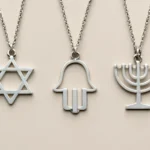
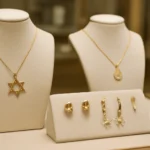
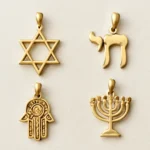
Jewish jewelry—engraved mezuzot pendants, chai symbols, or doves and pomegranates—serves as a personal expression of faith and cultural memory. While some pieces are worn for daily devotion, others may be treasured family heirlooms or gifts for life milestones. The Jewish jewelry tradition demonstrates how Judaism artefacts operate at the intersection of devotion, memory, and fashion, often carrying Hebrew inscriptions or motifs that speak to origins and values.
Mezuzah pendants or necklaces
Chai symbols and other Hebrew motifs
Family heirloom jewelry with religious inscriptions
Preservation, education, and disposal: caring for artefacts
Care, handling, and display
Proper care of Judaism artefacts—whether in a synagogue, a museum, or a private home—ensures their continued safety and meaning. Guidance often emphasizes minimal handling, proper storage environments, and respectful display, especially for fragile parchment scrolls, textiles, and metalwork. Museums and houses of worship may have conservation programs, archival conditions, and digitization initiatives to balance accessibility with preservation. When caring for these artefacts, it is essential to preserve not only the object but also its stories and the communities that use it.
Documentation of provenance, maker, and ritual use
Digitization to widen access while protecting originals
Ethics, provenance, and respectful display
Because Judaism artefacts often carry religious significance and family histories, it is important to be mindful of provenance and consent, especially with sacred items and heirlooms. Ethical display practices include contextual storytelling, avoiding misrepresentation, and ensuring that objects are presented with the reverence they deserve. Museums and educational centers increasingly collaborate with Jewish communities to ensure that artifacts are shown with accuracy, sensitivity, and respect for living traditions.
How artefacts vary by community: regional and cultural breadth
The vocabulary and form of Jewish objects differ across communities, reflecting historical experiences, material resources, and aesthetic preferences. This diversity is a strength of Judaism artefacts, illustrating how faith adapts to place while preserving a shared core. Some of the notable variations include the following:
Ashkenazi ceremonial items often reflect Central and Eastern European traditions, with metal and enamel work, glassware, and textural motifs common to these regions.
Sephardi and Mizrahi communities frequently incorporate Mediterranean materials, calligraphic scripts in Ladino or Hebrew, and ornate designs that echo Andalusian, North African, or Middle Eastern influences.
Ethiopian Jewish artefacts bring distinctive forms of religious art, such as unique scroll cases, wood-carved pieces, and traditional textiles that reflect Ethiopian cultural heritage.
Israeli and diaspora contexts often fuse modern industrial materials with ancient forms, producing contemporary interpretations of classic items like menorahs, Kiddush cups, and Torah covers.
Glossary of key terms
To help navigate the language of Jewish artefacts, here is a concise glossary of terms frequently encountered in discussions of Judaism objects and symbols:
Torah – the five books of Moses; scripture central to Jewish law and tradition.
Aron Kodesh – the Ark where Torah scrolls are kept in a synagogue.
Yad – the Torah pointer used when reading the scroll.
Tallit – a prayer shawl worn during morning services.
Tzitzit – fringes on the corners of tallit or other garments.
Tefillin – phylacteries worn during weekday prayers.
Mezuzah – a parchment scroll inside a protective case mounted on doorposts.
Kiddush cup – a cup used for sanctifying wine in ritual blessing.
Hanukkah menorah – the nine-branched lamp used during Hanukkah.
Seder plate – a plate holding symbolic foods for Passover.
Challah board – a board or cover for the Shabbat bread.
Besamim – spice box used in Havdalah or Shabbat rituals.
Ketubah – Jewish marriage contract.
Chuppah – wedding canopy used in Jewish weddings.
Closing reflections: the living meaning of Judaic objects
Jewish artefacts are not merely relics of the past. They are living conduits for memory, learning, and community life. Each object tells a story—from a scroll’s careful handwriting to a family’s chosen design for a Kiddush cup. The study of Judaism artefacts invites us to see how material culture mediates belief: how a simple ritual item can become a doorway to theological reflection, how a ceremonial piece can strengthen family ties, and how the shared vocabulary of symbols can unite people across generations and continents. By paying attention to the diversity of Jewish objects and the meanings attached to them, we gain a deeper appreciation of how faith, art, history, and daily life intersect in Jewish communities around the world.