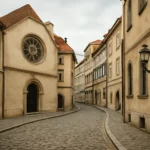
The Jewish Museum Paris Marais, officially the Musée d’art et d’histoire du Judaïsme, is one of the most important cultural institutions in Europe dedicated to Jewish history, culture, and religion. Nestled in the lively Marais neighborhood, this museum offers a deep dive into centuries of Jewish life in France and beyond, while also serving as a gateway to the broader heritage of Judaism in Europe. If you are planning a visit, you will find a carefully designed experience that blends historical context, artistic expression, and human stories. This article provides practical visiting tips, highlights from the collection, and suggestions for getting the most out of your time in the Marais.
The Paris Jewish Museum in the Marais is housed in a historic building in one of the city’s oldest and most vibrant districts. The Marais, a neighborhood that blends medieval streets with cosmopolitan energy, is renowned for its Jewish quarter, traditional bakeries, lively markets, and a remarkable array of synagogues, kosher shops, and cultural institutions. The museum’s setting in the Marais places it at the crossroads of centuries of Jewish life in Paris and contemporary, diverse urban culture. In this context, the MahJ serves not only as a repository of objects but as a living space for dialogue, education, and reflection.
For visitors who are exploring the Marais, the museum can be read as part of a broader journey: a stroll along Rue des Rosiers, a glance into historic synagogues, and a pause at cafés and bookshops that have long supported Jewish culture in Paris. The museum’s location supports a multifaceted experience—between art, history, religious practice, and community life. Whether you are a student of history, an art enthusiast, a traveler curious about Jewish heritage, or a local resident seeking deeper understanding, the MahJ provides a structured lens through which to view the Jewish contribution to French and European society.
What to Expect: The Permanent Collection and Core Themes
The permanent collection of the Jewish Museum Paris in the Marais is designed to illuminate the long arc of Jewish life—from ancient rituals to modern-day customs, across a range of geographic regions. The exhibitions emphasize both continuity and change: how communities preserve tradition while adapting to new social, political, and cultural contexts. The collection is organized around several core themes that are useful to keep in mind during your visit:
History and migration—artefacts and narratives that trace Jewish presence in Europe, North Africa, the Middle East, and beyond. You will encounter objects that tell stories of migration, settlement, and the evolution of communities under shifting political regimes.
Ritual life—items central to daily practice, ceremonies, and rites of passage. Expect to see sacred objects that illuminate how memory, tradition, and faith express themselves in material form.
Art and material culture—a diverse array of decorative arts, manuscripts, textiles, and illustrated works. The collection highlights the aesthetic dimensions of Jewish culture and its interactions with broader art movements.
Education and learning—the role of study, prayer, and scholarship in shaping Jewish life. Education emerges as a through-line, linking families, schools, and communities across generations.
Within these themes, you will often encounter curated displays that juxtapose artifacts with contextual panels, multimedia elements, and interpretation that helps non-specialists understand the objects’ significance. The aim is not only to show what Jews owned or used, but to reveal the stories behind the objects—the people, the communities, the rituals, and the shared history that binds a complex cultural tapestry.
While the arrangement of exhibits can change with rotations and new acquisitions, several areas are repeatedly highlighted in the museum’s programming as touchstones for visitors:
Historical galleries that present broad timelines, from ancient to modern periods, with emphasis on how French and European contexts intersect with Jewish life.
Ritual objects such as menorahs, mezuzahs, Torah cases, and ceremonial items that embody the aesthetic and spiritual dimensions of Judaism.
Textual heritage including manuscripts, printed works, and letters that reflect the intellectual tradition and literacy within Jewish communities.
Community life and everyday objects that show how family life, commerce, education, and social networks shaped daily Jewish experience.
In addition to the permanent galleries, the MahJ frequently hosts temporary exhibitions that explore specific themes, artists, or moments in Jewish history. These rotating displays provide opportunities to encounter fresh perspectives and new scholarship, often drawing on partnerships with other museums and academic institutions around the world.
Visiting Tips: Planning Your Trip to the MahJ in the Marais
To make your visit to the Marais Jewish Museum as smooth and rewarding as possible, here are practical tips that address planning, pacing, and what to focus on during your time inside. Remember that details like hours and pricing can change, so it’s wise to check the museum’s official site before you go.
Check hours and tickets in advance. Opening hours can vary by season and by special exhibitions. Buying tickets ahead of time online can save you waiting time, particularly during weekends or holiday periods. The museum often offers different ticket options, including combined or discounted rates for students, seniors, or families.
Plan for a minimum two-hour visit. A thorough exploration of the permanent collection, plus a look at any temporary exhibitions, typically requires careful pacing. If you are visiting with kids or a group, you might want to allocate more time for discussions and interpretation panels.
Consider a guided or audio-guided experience. The MahJ offers guided tours and audio guides in several languages, including English and French. A guided visit can provide deeper context for the objects and help you connect artifacts to broader historical narratives.
Study the map and plan routes inside. The layout of the museum is designed to guide you through historical themes in a logical progression. Start with the historical galleries to build a framework, then move to ritual objects and manuscripts for closer study.
Be mindful of photography rules. In many museums, including the MahJ, photography may be restricted for certain displays or objects. Look for posted guidance and respect any prohibitions, especially around sensitive artifacts and liturgical items.
Use the information panels. The interpretive labels are crafted to be informative for general audiences; take a moment to read them aloud or discuss them with companions to enhance understanding of the context and significance.
Combine your visit with a stroll through the Marais. The surrounding neighborhood is a treasure trove of Jewish culture, architecture, and cuisine. After the museum, you can explore the famous Rue des Rosiers, sample kosher pastries, or visit other synagogues and cultural spaces in the area.
Accessibility and facilities. Many museums in Paris offer accessible entrances, restrooms, and seating areas. If accessibility is a concern, contact the museum ahead of your visit to confirm accommodations and services for visitors with mobility needs or other requirements.
Highlights to Look For: What Makes the MahJ Stand Out
While every visitor’s interests differ, there are several enduring highlights that consistently make a visit to the Parisian Jewish Museum in the Marais memorable. These are not only about the objects themselves but about the educational and emotional resonance they carry:
Storytelling through objects. The museum emphasizes narrative-driven displays that connect artifacts to human experiences—migrant journeys, worship practices, family life, and community resilience.
Exposure to a broad geographic spectrum. Although based in Paris, the collection highlights Jewish life across Europe, the Mediterranean, and the diaspora, illustrating how local experiences fit into global historical patterns.
Interaction with religious and artistic traditions. Visitors gain insight into how Judaism shapes ritual, scholarship, and art, from manuscripts to ceremonial objects and beyond.
Educational programming. The museum offers workshops, lectures, and family activities designed to engage learners of all ages and backgrounds.
Architectural context. The building itself—the historic setting within the Marais’ urban fabric—adds a layer of cultural significance to the visit. The juxtaposition of old and new inside the space mirrors the theme of continuity and change in Jewish life.
Seasonal and Special Exhibitions
Special exhibitions at the MahJ can illuminate topics that align with contemporary concerns or celebrate anniversaries and milestones in Jewish culture. These temporary displays often involve loans from other institutions and may feature multimedia components that bring historical themes to life. If timing allows, plan your trip to coincide with a temporary exhibition to access fresh perspectives and newly interpreted materials.
The Marais district, where the MahJ is situated, is a living tapestry of architecture, commerce, and culture. A visit to the Jewish Museum Paris Marais can be complemented by an exploration of nearby synagogues, bakeries offering traditional pastries, and historical sites that shed light on the Jewish history of Paris. Here are some ideas to enrich your day:
Rue des Rosiers and the Jewish quarter. This iconic street is lined with kosher eateries, falafel spots, and shops that carry Judaica and Jewish-themed literature. It’s an excellent starting point for a walking tour of the Marais’s Jewish heritage.
Synagogues and community spaces. The Marais hosts several historic synagogues, each with its own architectural and cultural significance. If you plan a broader visit, you may wish to inquire about guided tours that include access to spaces that are sometimes open to the public.
Cafés and patisseries. After a thoughtful museum visit, you can enjoy a leisurely break at a café or bakery that serves traditional Jewish-inspired treats or contemporary French pastries in a neighborhood atmosphere.
Nearby museums and historic sites. The Marais is home to a rich ecosystem of cultural institutions, including art museums, historical houses, and small galleries that complement the MahJ’s themes.
Practicalities: Getting There, Timing, and Accessibility
To make the most of your trip, consider these practical aspects about logistics, transport, and accessibility. They can help you plan efficiently and avoid common snags that sometimes accompany museum visits in a bustling urban zone like the Marais.
Getting there. The MahJ is best reached by public transport. In Paris, the Marais is well served by several Metro lines and bus routes. If you are staying in central Paris, a short walk from major stations can connect you to the neighborhood quickly. The Marais is also a pleasant area for a walking exploration from a central hub like the Île de la Cité or Bastille, depending on your itinerary.
Best times to visit. Weekdays during late morning or early afternoon often provide a quieter experience than peak weekend hours. If you are visiting during school holidays or around major holidays, consider going early or late to minimize crowds.
Tickets and passes. Check whether the museum offers a combined ticket with other cultural sites in the area, or discounts for students, seniors, or families. Online purchases can streamline entry and sometimes include language options for tickets and information.
Accessibility. If accessibility is a concern, contact the museum in advance to confirm elevator access, seating, and accommodations for visitors with mobility, vision, or hearing needs. Many museums in Paris strive to be accessible, though older buildings may have architectural constraints.
Facilities on-site. Expect a clean, well-maintained facility with a shop that sells literature, Judaica, and gifts related to Jewish heritage, as well as a café or refreshment area in some seasons. If you want to browse before or after your visit, the shop is a good place to continue your exploration.
Educational Value: Why the MahJ Matters for Students, Families, and Curious Travelers
Whether you are visiting for academic reasons, educational purposes, or simple curiosity, the Musée d’art et d’histoire du Judaïsme in the Marais offers a rich learning experience. Here are several reasons why it stands out as an educational stop:
Contextual storytelling. The museum is organized to connect objects with the lived realities of people, communities, and movements. This makes historical information tangible rather than abstract.
Cross-cultural perspectives. By presenting Jewish history in relation to broader European and Mediterranean contexts, the MahJ invites visitors to understand intercultural interactions, exchanges, and tensions that shaped the modern world.
Family-friendly learning. The museum offers family-oriented activities, guided child-friendly tours, and interactive components designed for younger visitors without sacrificing depth for adults.
Public programs and debates. Lectures, film screenings, and discussions provide avenues for exploring contemporary themes in religion, identity, memory, and heritage.
Language and Interpretive Resources
For international visitors, language access is an important consideration. While the primary language of interpretation in the museum is French, the MahJ typically offers:
English-language materials and occasional guided tours in English.
Audio guides in multiple languages, enabling visitors to explore at their own pace and on their own terms.
Educational handouts and captions designed to be accessible to non-specialists, with clear explanations of historical periods, objects, and themes.
What to Read Before You Go
If you want to enrich your experience even before stepping into the Marais museum, a few preparatory readings can frame what you will see. These suggestions are not required, but they can deepen understanding and appreciation:
Overviews of Jewish history in France. A concise guide to the long presence of Jewish communities in French towns and cities, including periods of coexistence, tension, and resilience.
Art and liturgy in Jewish culture. Introductory texts on ritual objects, synagogue art, and manuscript culture provide a useful backdrop for the material you encounter in the galleries.
Modern Jewish life and memory. Readings on how memory, memory-making, and commemoration shape contemporary Jewish communities in Europe and abroad.
Nearby Attractions for a Fuller Marais Day
As you plan your visit to the Jewish Museum in Paris, consider pairing the experience with other nearby sites and experiences in the Marais. This not only makes efficient use of time but also provides a richer sense of the neighborhood’s history and contemporary vibrancy.
Historic synagogues. The Marais hosts several historic places of worship that reflect the community’s architectural and religious diversity. Guided visits can provide insights into different traditions and their evolution in Paris.
Jewish literature and culture bookstores. Independent bookshops in the area often carry Judaica, poetry, history, and literature by Jewish authors from France and around the world.
Delicatessens and bakeries. The Marais is famous for its kosher eateries and traditional Jewish baked goods, offering a tangible taste of cultural heritage.
Conclusion: Why a Visit to the Jewish Museum Paris Marais Is Worthwhile
A visit to the Marais Jewish Museum is more than an excursion into a static collection of objects. It is an invitation to engage with memory, identity, and history in a space that foregrounds dialogue and education. For those who are curious about Jewish life in France and in a broader European context, the MahJ offers a compelling synthesis of artifacts, stories, and expert interpretation. The museum’s location in the historic Marais district adds a tangible layer of immersion, connecting the gallery to the living culture around it—the streets, the markets, the synagogues, and the diverse communities that continue to shape the city.
Whether you arrive as a scholar, a family with children, a casual traveler, or a student of architecture and culture, you will likely leave with a greater understanding of how Jewish history is woven into the fabric of Paris and Western civilization. The Jewish Museum Paris in the Marais is not only a repository of objects but a dynamic space for learning, reflection, and exchange—an essential stop for anyone seeking a nuanced portrait of Jewish heritage in Europe.
To recap, when you plan your visit to the Paris Jewish Museum in the Marais, keep in mind a few core ideas: explore the permanent collection to trace the arc of history; check for current exhibitions to catch fresh interpretations; participate in guided experiences for deeper insight; and take time to enjoy the surrounding Marais, whose living culture enhances every object you encounter inside the museum. The combination of education, culture, and community makes the Jewish Museum Paris Marais a standout destination for learning and discovery.