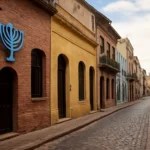
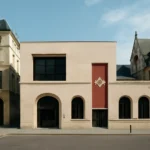
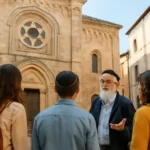
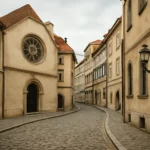
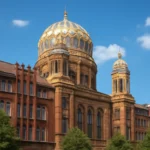
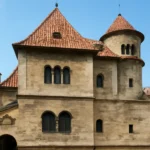
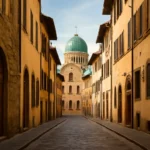
Across the broad cultural landscape of Buenos Aires, the Jewish Museum Buenos Aires stands as a thoughtful steward of memory, culture, and learning. Also known in Spanish as Museo Judío de Buenos Aires, this institution offers visitors a window into the diverse experiences of Jewish communities in Argentina and beyond. The Buenos Aires Jewish Museum, sometimes referred to by its acronym JMBA, presents a careful synthesis of history, art, religion, and daily life. In this article, you will find an expansive overview of its history, a tour through its exhibits, and practical visiting tips designed to help travelers, students, and curious locals plan a meaningful visit. Whether you know the museum as Jewish Museum of Buenos Aires or as Museo Judío de Buenos Aires, the aim remains the same: to illuminate the Jewish experience in Argentina and to foster dialogue across communities and generations.
The history of the Jewish Museum in Buenos Aires is best understood as a narrative of community memory, education, and the desire to preserve a rich, multifaceted identity within the Argentine metropolis. Like many national Jewish museums around the world, the Buenos Aires Jewish Museum emerged from concerted efforts by local congregations, cultural organizations, and philanthropists who recognized the importance of documenting and sharing the experiences of Jewish life in Argentina. Across decades, the institution grew from modest initiatives into a formal cultural center that welcomed researchers, families, and travelers seeking context and connection.
Origins and founding
The roots of the JMBA trace back to mid-20th-century efforts to create a dedicated space for Jewish memory in the capital city. The founders imagined a place where artifacts, documents, and testimonies could be preserved for future generations.
Early endeavors often centered on collecting objects of daily life, ritual items, and photographs that documented the diverse ways of being Jewish in Argentina—from Ashkenazi and Sephardic traditions to newer immigrant communities from different regions.
Over time, partnerships with synagogues, schools, libraries, and other cultural institutions helped the collection broaden its scope, enabling exhibits that speak to both continuity and change in Jewish life in the southern cone.
Architectural and curatorial evolution
Architecture and curation have played important roles in shaping the museum’s public face. The building and its interiors have adapted to evolving methods of interpretation—balancing didactic displays with spaces intended for reflection, scholarly work, and temporary exhibitions. The Buenos Aires Jewish Museum has periodically refreshed its galleries to highlight core themes while preserving a stable core of essential artifacts. Through its architecture and design, the institution itself communicates a narrative about memory, continuity, and the responsibilities of a living culture.
Impact of historical events on the institution
Argentina’s Jewish community has faced moments of tragedy, resilience, and renewal. The late 20th century, in particular, brought events that shaped public memory and policy. The Museum in Buenos Aires has engaged with these chapters—whether through exhibitions that address persecution, diaspora, or the legacy of the Holocaust, or through programs that honor victims and survivors. In this sense, the JMBA functions not only as a repository of objects but as a site for education, dialogue, and reconciliation. Visitors may encounter materials and narratives that illuminate how communities respond to catastrophe, preserve memory, and sustain cultural life in the face of adversity.
Thematic arc and mission in recent decades
In recent years, the Jewish Museum Buenos Aires has emphasized a few consistent pillars: memory and remembrance, cultural exchange, and education for younger generations. The institution seeks to tell stories of migration, adaptation, and contribution—how Jewish families arrived in Argentina, how their traditions took root, and how they helped shape the broader social, artistic, and civic life of Buenos Aires. By presenting a range of voices—artists, scholars, survivors, and community leaders—the museum contributes a nuanced record that complements other national museums and international Holocaust education centers. Think of the Buenos Aires Jewish Museum as a venue where the past is made legible for the present and where visitors can reflect on universal questions about identity, belonging, and memory.
Exhibits and Collections
The JMBA hosts a rich mix of permanent displays and temporary exhibitions designed to illuminate Jewish life in Argentina and the wider world. The collection often unfolds across several thematic strands, inviting visitors to explore religion, history, art, and daily life through concrete objects and compelling stories. The Jewish Museum in Buenos Aires uses artifacts, documents, and multimedia to tell a broader story of community formation, diaspora, and cross-cultural exchange.
Permanent collections and core areas
Religious and ritual objects: Torah scrolls, Torah pointers (yads), menorahs, ketubot (marriage contracts), and ceremonial objects that reveal the texture of Jewish worship and family life.
Historical photographs and documents: Images and archival materials that trace the journey of Jewish families in Argentina—from immigration and settlement to participation in national life.
Everyday life and material culture: Everyday objects, clothing, toys, and household items that illustrate domestic rituals, celebrations, and intergenerational memory.
Art and culture: Works by Jewish and non-Jewish artists that engage with Jewish themes, identity, and the visual conversation between different cultural horizons.
Temporary exhibitions and rotating programs
In addition to its enduring core displays, the Museum of Buenos Aires offers rotating exhibitions that respond to current research, anniversaries, and global conversations about Jewish history and culture. These programs often bring in guest curators, scholarly talks, and collaborative projects with other museums, universities, and cultural centers. Such temporary showcases can cover topics as varied as the history of Jewish cuisine, Sephardic influences in Latin America, the art of letter writing in Yiddish and Hebrew, or contemporary Jewish life in the Americas. The flexibility of the Buenos Aires Jewish Museum makes it a living space for inquiry rather than a static archive.
Oral histories, archives, and digital access
Oral history projects provide first-person testimony that complements objects and documents, offering nuanced perspectives on memory, migration, and family history.
Archival materials are often preserved to support researchers, students, and genealogists exploring Jewish roots in Argentina and the diaspora.
Digital access and online catalogs expand reach beyond the physical galleries, enabling remote learners to engage with selections from the collection and information about upcoming exhibitions.
Visiting the Jewish Museum Buenos Aires
If you are planning a visit to the Jewish Museum in Buenos Aires or seeking information on JMBA hours and access, this section offers practical guidance, expectations for a meaningful experience, and suggestions for a well-paced itinerary. The Buenos Aires Jewish Museum is commonly experienced as part of a broader cultural day in the city, with nearby synagogues, cultural centers, and public spaces that complement the learning environment inside the galleries.
Location, access, and getting there
While exact street addresses can change or update, the JMBA is located in a neighborhood with easy access to public transit, making it feasible to combine a visit with other nearby cultural sites. If you are traveling from outside the city, consider using a combination of bus, subway, and pedestrian routes to reach the museum’s doorstep. For many visitors, walking through a historic district before or after the museum visit enhances the sense of place and time, connecting the galleries with the city’s architectural heritage.
Hours, tickets, and planning your visit
Typical guidance suggests checking the official museum website or contacting the museum directly for the most up-to-date hours. Museums of this kind often operate with seasonal variations, weekend schedules, and occasional closures for private events or maintenance. Budget time not only for the galleries but for reading labels, listening to audio guides or engaging with multimedia installations. Tickets are commonly available at the door or online, and some programs offer reduced prices for students, seniors, or members of partner organizations. If you are visiting with a large group or as part of an educational program, inquire about group rates and guided tours.
Guided tours and educational programs
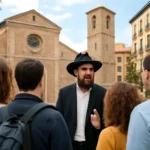
Guided tours—led by docents, educators, or researchers—offer deep dives into the themes of memory, migration, and cultural identity. These tours can be tailored for different audiences, from families with children to university students and scholars. In addition to guided options, the museum often hosts lectures, panel discussions, film screenings, and workshops addressing topics such as Jewish history in Argentina, Holocaust education, and cross-cultural exchange. For teachers and school groups, the Buenos Aires Jewish Museum frequently provides curriculum-aligned activities and hands-on experiences that enrich classroom learning.
Accessibility and visitor services
Accessibility for visitors with mobility impairments or other access needs varies by building and layout. If you require accommodations, it is best to contact the museum in advance to arrange accessibility options.
There may be a small shop and a reading room or archive space where visitors can consult reference materials or purchase related publications.
Photography policies typically allow non-flash photography in public galleries, but always check posted guidelines to avoid disrupting exhibitions or violating copyright rules.
Nearby experiences and extension ideas
After exploring the Jewish Museum Buenos Aires, consider a stroll through surrounding neighborhoods that are home to synagogues, kosher markets, and Jewish cultural organizations. The city often presents opportunities to connect with different strands of Jewish life in Argentina—voices from Ashkenazi, Sephardic, and Mizrahi communities, as well as contemporary artists and writers who explore Jewish identity in Latin America. A wider itinerary might include visits to neighboring cultural institutions, Jewish historical centers, or literary venues that foster cross-cultural conversation. In total, a day devoted to the Museo Judío de Buenos Aires and its surroundings can illuminate both memory and modern life in the Argentine capital.
Why Visit: What You Can Learn and Experience
Visiting the Buenos Aires Jewish Museum is more than seeing a collection of objects. It is an immersive encounter with a living history, where the past informs present-day identity and how communities imagine the future. For many visitors, the Jewish Museum in Buenos Aires offers a compact, focused examination of themes that resonate globally: migration, memory, resilience, and the dialogue between tradition and modernity. The exhibits can help you understand how Jewish-origin communities have contributed to Argentine society—economically, artistically, academically, and civically—while also acknowledging the universal challenges and opportunities that arise from diaspora life. The institution’s offerings aim to foster empathy, curiosity, and critical thinking about the ways communities preserve memory, recreate ritual, and participate in broader civic life.
Key themes often highlighted in the exhibits
The intertwining of personal memory and public history, especially as it relates to family archives and community records.
The continuity of ritual life across generations, including celebrations, rites of passage, and the continuity of language and liturgy.
The role of Jewish artists, scholars, and educators in shaping Argentine culture, as well as the transnational connections that bind the diaspora.
Critical reflection on periods of hardship, persecution, and adversity, paired with stories of resilience and survival.
Intersections between Jewish life and broader social histories in Latin America, including immigration patterns and integration into national narratives.
What to Know Before You Go: Practical Tips
To get the most from your visit to the JMBA, consider a few practical tips. Whether you are a historian, a casual traveler, a teacher planning a field trip, or a student undertaking research, these pointers can help you plan a richer experience.
Plan ahead and confirm details
Always verify hours, admission, and any special events on the museum’s official site or by contacting the staff. Schedules can change due to holidays, renovations, or programming decisions.
Check whether there are guided tours available in your language, as well as any family-friendly programs or accommodations for students and researchers.
If you are traveling with a group, ask about group rates and the possibility of arranging a private or themed tour that matches your interests (for example, a focus on Holocaust education, Sephardic traditions, or contemporary Jewish art).
What to bring and how to document your visit
Bring a notebook or digital device if you plan to take notes for a class or personal study. Many exhibits include labels with dates, places, and context that can inform a research project.
Comfortable footwear and weather-appropriate clothing are recommended for a self-paced exploration of galleries and outdoor surroundings if you plan a full day in the area.
Photography policies vary by gallery, so check signage before taking photos. In some cases, no flash photography is allowed, and some exhibits may be restricted.
Learning opportunities and enrichment
Consider pairing your visit with a stop at a nearby cultural site or library to broaden your understanding of Jewish literature, history, and memory in Argentina.
Look for accompanying programming such as lectures, film screenings, or artist talks that may align with your interests in social history, memory studies, or religious practice.
Variations on the Theme: Semantics and Nomenclature
Throughout this article, you may notice several ways to refer to the same institution. This is deliberate, because the Jewish Museum Buenos Aires is known by a few common names that reflect linguistic and cultural diversity, as well as different translation conventions. Some common variations include:
JMBA, an acronym widely used in English-language guides and museum communications.
Museo Judío de Buenos Aires, the museum’s name in Spanish, which is often used in local contexts and in Argentina’s media.
Buenos Aires Jewish Museum, an English-language rendering used in international tourism materials and scholarly references.
Jewish Museum in Buenos Aires and Jewish Museum of Buenos Aires, alternative English constructions frequently seen in catalogues and publications.
In some contexts you might also encounter references to the Buenos Aires Jewish Cultural Center or to related institutions within the same network, reflecting collaborations and shared programming in the city’s Jewish life.
Connecting with the Community: The Broader Context
Visiting the JMBA places you in a continuum of Jewish cultural and historical activity in Argentina and the Southern Cone. The museum acts as a bridge among generations, between memory and contemporary life, and between local experiences and global Jewish history. It sits alongside synagogues, schools, archives, and cultural organizations that together make up a dynamic ecosystem devoted to education, mutual understanding, and shared memory. If you leave with a deeper sense of how Argentine Jews shaped and were shaped by the society around them, you have engaged with the museum’s broader mission: to illuminate stories that matter and to invite ongoing conversation about identity, memory, and belonging.
Beyond the galleries: engagement and outreach
Educational outreach programs connect schools and families with history through hands-on activities, storytelling, and interactive exhibits.
Public programs—lectures, panel discussions, and cultural events—offer opportunities to hear from historians, artists, and community leaders about topics spanning history, philosophy, and social memory.
Collaborations with other cultural institutions help situate the museum’s content within broader Latin American and global contexts, enriching the narrative with cross-cultural perspectives.
Conclusion: Why the Jewish Museum Buenos Aires Matters
In a city as cosmopolitan and historically layered as Buenos Aires, the Jewish Museum Buenos Aires serves a vital role in preserving memory while inviting new generations to engage with the past in a way that informs the present. The institution’s history is a story of communal effort, resilience, and a shared commitment to education. Its exhibits weave material culture, testimony, and art into a narrative that is both particular to Argentina and relevant to global audiences. And as a destination for visiting tips, the museum offers a thoughtful, welcoming environment where visitors can reflect on identity, memory, and the complex histories that shape modern societies. Whether you arrive as a curious traveler, a student researching Jewish life in Latin America, or a scholar of diaspora studies, the Buenos Aires Jewish Museum invites you to explore, observe, and participate in a living conversation about memory and meaning.
If you would like to know more, consider consulting the museum’s official communications for the latest exhibition schedules, lecture series, and educational programs. The JMBA is a place where history is not only stored away in cases and labels but is continually interpreted, reinterpreted, and reimagined for new generations hungry for knowledge, context, and connection. In this sense, a visit to the Jewish Museum in Buenos Aires is more than a tour—it’s a pathway into a vibrant community’s memory and a doorway to broader questions about culture, heritage, and humanity.