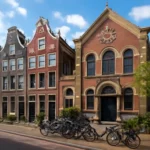
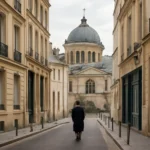
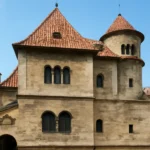
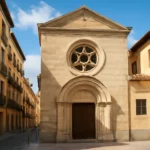
The Jewish Quarter Vienna, known locally as the Judenviertel, or more broadly as the Jüdisches Kulturviertel in English parlance, is a historic and living district in the heart of Austria’s capital. Spanning parts of the inner city and adjacent neighborhoods, this area carries centuries of Jewish life, resilience, culture, and memory. Today, the quarter is both a reminder of a vibrant, once-dynamic community and a thriving hub for museums, memorials, learning, and culture. Visitors walk a fine line between remembering the past and engaging with a contemporary Jewish community that continues to contribute to Vienna’s plural identity. In this article you will discover the history of the Jewish Quarter, the sights and institutions that define it, and visiting tips to help you plan an informed, respectful, and rewarding visit.
History, memory, and transformation: Vienna’s Jewish Quarter through the ages
Medieval beginnings and the formation of a distinct quarter
Jews first settled in Vienna in the medieval period, attracted by trade and the opportunities of a European capital at the crossroads of empire. By the late Middle Ages, this community had established a recognizable Judenviertel in and around what later became known as Judenplatz. The quarter grew with synagogues, schools, and charitable institutions, reflecting a life that was at once vibrant and fragile—often constrained by the legal and social boundaries imposed on minority communities.
Storms, expulsions, and the long arc toward emancipation
Vienna’s Jewish story is marked by episodes of persecution as well as gradual emancipation. The 15th and 16th centuries saw expulsions and pressure that reshaped the community’s footprint in the city. Yet the 18th and 19th centuries brought historical changes as reforms opened doors for Jews to participate more fully in civic life. The Emancipation era, championed in part by enlightened rulers, allowed for the modernization of religious life, education, and business that would leave a lasting imprint on the quarter and the broader city.
From flourishing streets to wartime devastation and postwar memory
The 19th and early 20th centuries brought a period of cultural flourishing, with new synagogues, schools, and community organizations shaping a modern urban Jewish life. The Stadttempel and other centers served as both religious and cultural beacons. The Holocaust years of the 1930s and 1940s devastated the Jewish community in Vienna. Deportations, destruction, and the erasure of many institutions left a fragile remnant after 1945. In the decades that followed, the city and its international partners shaped a robust memory culture, integrating memorials, museums, and education into the urban fabric.
Revival, memory, and a living cultural quarter
Since the late 20th century, the area around Judenplatz and the surrounding streets has re-emerged as a center of Jewish life, memory, and culture. The Jüdisches Museum Wien and a cluster of institutions—together with the Holocaust memory spaces, memorial libraries, and cultural programs—create a cultural quarter that welcomes visitors while honoring the past. Today, the Jewish quarter in Vienna is not only a place of remembrance but also a forum for new Jewish-Austrian dialogues, art, and learning that engages locals and travelers alike. This transformation is visible in the careful preservation of historic streets, the adaptive reuse of former communal spaces, and the ongoing work of the Israelitische Kultusgemeinde Wien (IKG) in serving the spiritual and cultural needs of the community.
Key sights and landmarks in Vienna’s Jewish Quarter
Judenplatz and the Nameless Library: memory in stone and light
The heart of the Jewish quarter is often identified with Judenplatz, a square that has become a powerful symbol of memory in Vienna. The place is defined by the juxtaposition of a medieval atmosphere—narrow lanes, quiet corners, and historic façades—with a modern, contemplative memorial landscape. The site houses the Nameless Library, Rachel Whiteread’s acclaimed Holocaust memorial, which presents a hollowed-out library with rows of empty, inverted books. This stark, poetic intervention invites visitors to reflect on the loss of a population and the erasure of a centuries-old tradition of study, learning, and culture. Nearby, you’ll find traces of the old Judengasse and the story of the medieval Jewish community that once thrived here. The Judenplatz area is therefore both place and memory—an arrangement of spaces that makes history tangible for those who walk its paths.
The Stadttempel and the synagogue precinct: continuity in a city center
The Stadttempel—Vienna’s main synagogue—stands as a central religious and architectural landmark within the Jewish Quarter. Rebuilt and adapted through the centuries, it embodies the delicate continuity of Jewish religious life in a city that has seen profound upheavals. The synagogue complex is part of a broader precinct of Jewish religious life and culture in the capital, including access to facilities for worship, study, and community events. For visitors, the Stadttempel offers a window into contemporary ritual life and the ongoing life of a community that remains deeply rooted in the center of Vienna.
Museums, cultural institutions, and the Jewish Cultural Quarter
The area around Judenplatz now encompasses a cluster of institutions that together form the Jewish Cultural Quarter. The Jüdisches Museum Wien is a cornerstone, presenting exhibitions that explore the long arc of Austrian Jewish history, including everyday life, rituals, and the experiences of different generations. The museum’s programs often pair with temporary exhibitions, multimedia installations, and educational activities designed for visitors of all ages. Alongside the museum are other cultural spaces, archives, and libraries that support research, conversation, and public programming. The quarter thus becomes a living laboratory for those who want to understand how Jewish life has shaped Vienna—and how Vienna, in turn, has shaped Jewish life.
Historical streets and architectural conversations
Beyond the institutions, the historic streets—with their stonework, ironwork, and well-preserved façades—offer a tangible sense of the daily rhythms of past and present. Walking through the Judengasse area, visitors can imagine the social life of shops, homes, and synagogues that once formed the backbone of a thriving community. Contemporary urban design and restoration work have allowed these streets to speak to visitors about continuity, memory, and change, illustrating how a city can preserve memory while remaining a dynamic, modern place to live and visit.
Visitor routes: a concise cultural itinerary
For travelers who want a focused but meaningful encounter, a compact itinerary can begin at Judenplatz, proceed to the Nameless Library, then move to the Stadttempel, and finally visit the Jüdisches Museum Wien or nearby cultural spaces in the Jewish Quarter. This sequence provides a narrative arc—from memory and tragedy to continuity and cultural life—while allowing time for reflection in between sites. If you have more hours, consider a guided tour or a candlelight or film program that is sometimes offered by the Jewish Cultural Quarter or the museum network.
Walking routes, tours, and immersive experiences
Guided tours and expert introductions
Many visitors find that a guided walk helps to contextualize what they see in the Jewish Quarter. Reputable guides often focus on the Judenplatz, the Nameless Library, the Stadttempel precinct, and the surrounding streets, weaving in historical events, architectural details, and contemporary community life. Guided tours may be offered in multiple languages and can include admission to selected museums or memorial spaces as part of the package. If you prefer self-guided exploration, reputable museums and cultural centers commonly provide audio guides or printed guides that enrich your experience with background stories, maps, and timelines.
Special programs and cultural events
Throughout the year, the Jewish Cultural Quarter hosts programs that highlight literature, film, music, and pedagogy. These events can provide a deeper, more intimate understanding of the Jewish experience in Vienna, both historical and contemporary. Attending an opening, a concert, or a lecture can turn a standard visit into an engaging encounter with living culture and memory. Plan ahead to catch exhibitions, artist talks, or family programs that suit your interests and schedule.
Combining a visit with other central Vienna sights
Because the Jewish Quarter sits at the city center, it pairs well with a broader exploration of Vienna’s historic core. You can link a Judenplatz stroll with a walk along the Graben, a visit to Stephansdom, or a stop at coffee houses and shops along the Ringstraße. This makes for a comfortable, musically rich, and architecturally rewarding day or half-day in the city, with memory and culture threaded throughout.
Practical visiting tips for the Jewish Quarter Vienna
When to visit and how long to stay
Most travelers find that a half-day to a full day offers a satisfying overview of the Jewish Quarter’s cultural landscape. If you are drawn to memory spaces, plan extra time for Nameless Library and the Judenplatz. To combine cultural immersion with other Vienna highlights, allocate a morning or afternoon and weave in a longer stroll through nearby districts. The seasons—spring and fall especially—provide comfortable weather for walking tours and outdoor reflections in Judenplatz and the surrounding streets.
Getting there: accessibility and transport
The heart of Vienna is highly walkable, and the Judenviertel sits within easy reach from many central hubs. A stroll from Stephansdom (St. Stephen’s Cathedral) will place you in the Judenplatz area in under 15 minutes on foot. Public transport is reliable, with tram and subway connections reaching nearby squares and streets. If you decide to use transit, consult real-time maps and service notices for any scheduled maintenance or changes. The quarter is accessible to most visitors; if you have mobility needs, plan ahead to connect with facilities that can accommodate wheelchairs or mobility devices at or near the major sites.
Respectful behavior and photography
As a living neighborhood with religious and memorial functions, the Judenviertel requires respectful conduct. In memorial spaces such as the Nameless Library area, maintain a quiet tone and observe any posted guidelines. Outside spaces and courtyards are generally open for strolling and photography, but inside museums and certain religious sites, photography policies may vary—always check and follow staff directions. Dress conservatively for sacred spaces, and be mindful of services that may be underway in synagogues or community centers.
Food, drink, and café culture
Vienna offers a mix of culinary options around the city center, including places where visitors can enjoy traditional Austrian pastries and modern cuisine. In the Jewish Quarter vicinity, you may find eateries that reflect broader European Jewish gastronomic influences, including bakeries and eateries with options suitable for various dietary needs. If you are seeking a specifically kosher experience, ask at museum information desks or contact the Israelitische Kultusgemeinde Wien for recommendations about nearby establishments and hours. Even without a dedicated kosher restaurant, the area is convenient for a mid-morning coffee, a lunch break, or a post-tour snack before continuing your exploration of central Vienna.
Children, education, and family visits
Families may especially appreciate the museum exhibitions and memorial spaces that present history in accessible formats. Interactive displays, children’s programs, and guided tours focused on younger audiences can bring the material to life in memorable ways. If you are traveling with students or younger learners, check ahead for family-friendly tours, workshops, or school programs offered by the Jewish Museum Wien or partner institutions in the Jewish Cultural Quarter.
Why a visit to Vienna’s Jewish Quarter matters
The Jewish Quarter Vienna is not merely a historical site; it is a continuous, evolving conversation about memory, identity, and plural heritage in a modern European capital. By understanding the history of the Judenviertel and by engaging with its sights and institutions, visitors gain insight into how Jewish life has endured, adapted, and contributed to Vienna’s broader cultural tapestry. The Nameless Library and other memorial spaces bring a century-spanning story to life, while the Jüdisches Museum Wien and the Jewish Cultural Quarter demonstrate that learning, culture, and community are ongoing processes. If you travel to Vienna with curiosity and respect, a visit to this pocket of the city can illuminate both past wounds and present hopes, offering a nuanced understanding of how urban spaces can remember and reform at once.
In summary, the Vienna Jewish Quarter—also described as the Judengasse district or the broader Jewish Cultural Quarter—is a compact but expansive archive of human experience. It tells stories of emancipation and exile, of scholarship and commerce, of despair and resilience. From the Nameless Library to the Stadttempel and the Jüdisches Museum Wien, the quarter invites visitors to walk through time with their eyes open and their minds ready for memory, conversation, and discovery. By exploring this area, travelers participate in a living dialogue about how a city remembers its past while building a future that includes diverse communities, ideas, and voices.