Jewish people in Amsterdam have a long and complex history that mirrors the broader currents of European Jewry over centuries. From early Iberian Sephardic communities who shaped trade and culture in the Dutch Republic to the deep scars and stubborn resilience of the Amsterdam Jewish community during the Holocaust, the story of Jews in the Dutch capital is a testament to endurance, adaptation, and cultural contribution. This article offers a sustained portrait of the Jewish people in Amsterdam—their origins, institutions, rituals, everyday life, and the ways in which a once-sizable community has remained a living presence in the modern city. By tracing history, culture, and community, we gain a clearer sense of how the Jewish population in Amsterdam has shaped and been shaped by this urban center.
Origins and early presence: the seeds of a community
The roots of the Jewish people in Amsterdam reach back to darker centuries of European history, but the decisive arrival of a resolute, educated, and entrepreneurial group came with the Sephardic Jews who fled Iberia in the late 16th and early 17th centuries. These Sephardic Jews in Amsterdam arrived after long journeys across the Iberian diaspora and the broader Atlantic world, bringing with them networks of commerce, letters, and religious practice that would help the city become a beacon of relative tolerance in an era of religious strife.
In this era, the Jewish people in Amsterdam adopted a distinctive blend of religious identity and civic participation. The community built synagogues, schools, and charitable institutions that allowed them to preserve ritual life while contributing to the economic and intellectual life of the city. Among the most enduring legacies of this period is the establishment of a formal Jewish community that could articulate its needs to local authorities and to the broader Dutch society. The story of the Jews in Amsterdam from this era is inseparable from the Dutch Republic’s reputation for relative religious tolerance, mercantile openness, and a civically engaged citizenry.
The Dutch Golden Age, learning, and the Sephardic contribution
As Amsterdam grew into a trading metropolis during the Dutch Golden Age, the Jewish community of Amsterdam found opportunities to participate in commerce, finance, and the arts while maintaining vibrant religious and educational institutions. The presence of Jews in Amsterdam contributed to the city’s cosmopolitan character, and the interplay between Jewish values and Dutch republican ideals helped shape conversations about liberty, pluralism, and the rights of minority communities.
A pivotal figure in this period was Menasseh ben Israel, a leading rabbi and intellectual who played a significant role in advocating for the readmission of Jews to England and, more broadly, in shaping debates about Jewish resettlement within enlightened European polities. His work is emblematic of how the Amsterdam Jewish community connected with transnational networks of learning, printing, and scholarly exchange. The Sephardic legacy in Amsterdam was complemented by Ashkenazi families who joined later, creating a layered and diverse Jewish population in the Dutch capital.
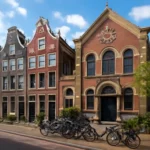
In religious and cultural terms, this era saw the emergence of institutions that would anchor Jewish life for generations. The Portuguese Synagogue (Esnoga), founded by the Sephardic community, became a central house of worship and a symbol of the enduring presence of the Jewish people in Amsterdam. The building stood as a landmark of Sephardic tradition, while the broader Amsterdam Jewish community created schools, libraries, and charities that reflected a commitment to education, literacy, and communal solidarity.
Culture, learning, and daily life: institutions and everyday practice
The culture of the Jewish people in Amsterdam has always included a strong emphasis on study, family, and communal responsibility. Jewish education, both religious and secular, cultivated a sense of shared identity that could adapt to changing social contexts. A variety of synagogues, study houses, and community centers offered space for prayer, study, and social life. The interplay between the Jewish population in Amsterdam and the wider city created a dynamic cultural scene—one that included ritual life, language, and a distinctive culinary and artisanal heritage.
Among the tangible markers of Amsterdam’s Jewish culture are ritual baths (mikvaot), kosher butchery and bakery options, and educational facilities that supplied Hebrew instruction and secular schooling. The city’s museums and cultural institutions, while not exclusively Jewish, preserve and showcase the contributions of the Jewish people in Amsterdam to Dutch culture as a whole. The story of the Jews of Amsterdam thus lies not only in religious life but also in the everyday practices that kept a minority community vibrant within a vibrant city.
World War II, the Holocaust, and the fate of the Amsterdam Jewish community
The darkest chapter in the history of the Jewish people in Amsterdam arrived with the Nazi occupation and the systematic persecution that followed. Amsterdam’s Jews faced exclusion, confiscation of property, forced identification, and, eventually, deportation to concentration and extermination camps. The city’s care for its Jewish residents—then and after—was transformed by the war into a crucible of resistance, remembrance, and loss.
A central site in the wartime history of the Amsterdam Jewish community was the Hollandse Schouwburg (Dutch Theatre) on Plantage, which functioned as a central deportation venue. Families gathered there under extraordinary stress, and the memory of these events remains a powerful reminder of the fragility of Jewish life in Europe during the 1940s. Another key element was the fate of the Jewish people in Amsterdam who were sent to transit camps such as Westerbork before their ultimate destinations. The grim statistic is that a large majority of Amsterdam’s Jewish population perished in the Shoah, a tragedy shared by communities across the Netherlands and Europe.
The war left deep scars in the city’s Jodenbuurt (the Jewish Quarter), where synagogues, schools, and neighborhoods were damaged, closed, or repurposed. Yet even in the shadow of horror, acts of courage and solidarity by Dutch citizens and members of the Amsterdam Jewish community helped sustain memory and resilience. Survivors returned, rebuilt, and reimagined their lives in a changed city, maintaining religious life, cultural activity, and social networks in new forms.
Post-war revival, memorials, and the Jewish Cultural Quarter
In the decades following liberation, Amsterdam’s Jewish community rebuilt institutions and reestablished communal life. The revival focused on healing memory and creating spaces for education, commemoration, and cultural exchange. A landmark development was the creation of the Jewish Cultural Quarter (Joods Cultureel Kwartier) in central Amsterdam. This cluster includes the Jewish Historical Museum (Joods Historisch Museum), devoted to telling the story of Jewish life in the Netherlands; the National Holocaust Museum and other institutions that explore memory, history, and the human consequences of persecution.
The Portuguese Synagogue, a cornerstone of the Amsterdam’s Jewish community, remained active and became a site not only for worship but also for education and guided tours. The reconstruction of the Esnoga and its continued role in Jewish liturgy signify how the legacy of the Jewish people in Amsterdam persists in built form and living tradition. In parallel, small synagogues and community centers continued to serve diverse segments of the Jews in Amsterdam, including Orthodox, Conservative, Reform, and secular congregants.
Contemporary life: Amsterdam’s Jewish community today
The current landscape of the Jewish people in Amsterdam is characterized by diversity, openness, and a continued commitment to education and culture. The city hosts a range of congregations, schools, and cultural organizations that reflect the pluralistic nature of modern Jewish life. Within Amsterdam, you can encounter the Jewish population in the capital in daily life, in synagogues across different streams of Judaism, and in a network of youth programs, adult education, and social services.
In contemporary Amsterdam, you will find the Amsterdam Jewish community engaging with issues of memory and identity, while also participating fully in the cultural, academic, and culinary life of the city. The city’s public life—museums, libraries, and universities—often intersects with the story of the Jewish people in Amsterdam, highlighting how minority communities contribute to broader civic and cultural ecosystems.
Key institutions, figures, and landmarks
The life of the Jewish people in Amsterdam has been shaped by a variety of institutions and individuals who left lasting legacies in religion, philosophy, science, and arts. Important landmarks include:
Portuguese Synagogue (Esnoga) – a historic house of prayer and a symbol of Sephardic heritage in the Dutch capital.
Jewish Historical Museum (Joods Historisch Museum) – part of the Jewish Cultural Quarter, telling the story of Jewish life in the Netherlands through centuries.
National Holocaust Museum – a place of memory and education about the Shoah, located within the broader Holocaust remembrance landscape of Amsterdam.
The Amsterdam Jewish Community Centers and multiple synagogues across streams of Judaism – serving Orthodox, Conservative, Reform, and secular Jews.
The Westerbork- and Holocaust-related memorials in and around Amsterdam’s urban and rural landscape, which connect the local history to national and international memory work.
Notable figures tied to the Amsterdam Jewish story
The history of the Jewish people in Amsterdam includes notable thinkers, merchants, and artists who contributed to the broader currents of European thought. Among them:
Baruch Spinoza – a 17th-century philosopher born in Amsterdam to a Sephardic Jewish family, whose rationalist approach to religion and ethics seeded debates that would echo for centuries in philosophy and modern thought.
Menasseh ben Israel – a prominent rabbi and scholar who played a major role in reestablishing Jewish life in the Netherlands and in dialogues about religious freedom in Europe.
Saul Levi Morteira – a leading rabbi in the 17th century who helped shape communal life and education in the early Amsterdam Jewish community.
Daily life, rituals, and language: living as a Jewish community in a modern city
For many, the Jewish people in Amsterdam navigate a modern urban environment while preserving ritual and communal life. Observance of Shabbat, kashrut, Passover, and other holidays continues to anchor many families, even as daily life in a big city encourages adaptation and integration with the wider culture. The Jewish community often engages in interfaith dialogue, cultural exchange, and educational outreach, reflecting a commitment to communal welfare and public life.
In practical terms, life in Amsterdam for the Jews of Amsterdam can involve visits to synagogues, community centers, and Jewish schools; participation in religious festivals; and involvement in social and cultural events that strengthen community bonds. Food heritage, language, and ritual practice together create a living tapestry of Jewish life that remains visible in neighborhoods, markets, and institutions around the city.
Memory, memorialization, and education: teaching future generations
A core responsibility for the Jewish people in Amsterdam and for Dutch society is memory work—ensuring that the lessons of the Shoah and the broader history of Jewish life in the city are accessible to younger generations. Museums, memorials, and educational programs play central roles in this effort. Through guided tours, school partnerships, and public programming, residents and visitors alike can engage with the stories of the Jewish population in Amsterdam, the wartime persecution, and the resilience that followed.
The Jewish Cultural Quarter serves not only as a cultural hub but also as a forum for dialogue about memory, identity, and culture. By presenting exhibitions that cover everyday life, religious practice, and history, the quarter helps illustrate how the Jewish community in Amsterdam has endured through upheaval and change.
Demography and diversity within the community
Today’s Amsterdam Jewish community is diverse in practice and perspective. The population includes people who identify with traditional, Orthodox, reform, and secular expressions of Judaism, as well as individuals who engage with Jewish history and culture without strict religious observance. This diversity reflects broader trends in European Jewish life, where communities balance continuity with transformation, secularization, and new waves of immigration and return. The city’s openness and high quality of life have helped sustain a vibrant Jews in Amsterdam population that continues to contribute to the city’s cosmopolitan identity.
The modern demographic picture is also shaped by migration, diaspora connections, and ongoing religious education. Families choose Amsterdam for its educational opportunities, resources, and social networks, while larger European and global Jewish communities maintain links through travel, study, and collaborative cultural projects.
Culture, arts, and the broader context of Jewish life in Amsterdam
The presence of the Jewish people in Amsterdam has enriched the city’s culture in ways that extend beyond the religious sphere. Artists, writers, musicians, and scholars associated with the Amsterdam Jewish community have contributed to Dutch culture and global intellectual life. This cultural flow includes literature, music, theater, and exhibitions that foreground Jewish life in the Netherlands and beyond.
Alongside formal institutions, daily life in Amsterdam’s neighborhoods includes kosher markets, Jewish bookstores, and family-owned businesses that reflect a continuity of tradition while embracing modern urban life. The interaction between the Jewish people in Amsterdam and neighbors from a wide range of backgrounds underscores a city that values pluralism and shared civic space.
Timeline overview: milestones in the history of Amsterdam’s Jewish community
Arrival of Sephardic Jews in Amsterdam during the late 16th and early 17th centuries, establishing a thriving Sephardic Jewish community.
Construction of the Portuguese Synagogue and the formal organization of a recognized Jewish community in Amsterdam.
Golden Age contributions in commerce, learning, and culture, including figures like Menasseh ben Israel.
World War II and the widespread deportations that decimated the Jewish population in Amsterdam and shattered communities in the Jodenbuurt.
Post-war revival, the creation of the Jewish Cultural Quarter, and the renewal of communal life through museums, schools, and synagogues.
Contemporary era: a diverse, resilient, and outward-looking Amsterdam Jewish community integrated into the city’s civic and cultural life.
Frequently asked questions about Jews in Amsterdam
Below are a few common inquiries and concise answers that reflect the overarching narrative of the Jewish people in Amsterdam:
Where is the historic center of Jewish life in Amsterdam? The Jodenbuurt, in and around the historic center of the city, including sites like synagogues and related cultural institutions in the Jewish Cultural Quarter, is central to the legacy of the Jews in Amsterdam.
What are major institutions preserving Jewish life in Amsterdam? The Portuguese Synagogue, the Jewish Historical Museum, and the National Holocaust Museum are among the key sites that sustain memory and culture for the Jewish population in Amsterdam.
Has the Jewish community in Amsterdam recovered after the war? Yes, through education, cultural programming, and community-building initiatives, the Jewish people in Amsterdam rebuilt networks and institutions, while honoring the past.
Conclusion: a living history in a modern city
The story of the Jewish people in Amsterdam is not merely a historical account but a living narrative that continues to shape and be shaped by the city. From the earliest Sephardic communities who forged new economic and cultural paths to the modern presence of a diverse and dynamic Amsterdam Jewish community, the arc is one of persistence, adaptation, and faith in the value of pluralism. As a city, Amsterdam preserves memory through its museums and memorials, while fostering a future in which the Jewish people in Amsterdam and their neighbors collaborate to build a more inclusive and enlightened urban culture. The story of Jews in Amsterdam thus offers not only a window into a distinctive community, but also a lens through which to understand the broader story of European cities negotiating tradition and modernity in an interconnected world.