The story of Jewish Spain — also known as Sephardic Spain or the broader history of Spanish Jewry — spans more than two millennia on the Iberian Peninsula. From ancient communities in the Roman era to the flowering of science, poetry, and philosophy under the Islamic caliphates, through the dramatic upheavals of the Reconquista and the eventual expulsion in 1492, and finally to the global diaspora of Sephardic Jews who preserved a distinctive language, culture, and identity, this is a story of resilience, exchange, and enduring memory. This article delves into the historical arc, the cultural richness, and the enduring Sephardic heritage that continues to illuminate Jewish history and world culture today.
Historical Overview: the long arc of the Jewish presence in the Iberian Peninsula
The history of Jewish life in Spain did not begin or end with a single event. It is a layered narrative that reflects broader Mediterranean dynamics: trade networks, religious and philosophical ferment, and shifting political authorities. In broad strokes, the story unfolds through several intertwined chapters:
Ancient and Roman Iberia: Jewish communities existed in the Iberian Peninsula before the rise of Islam, participating in commerce and learning along the southern shores and inland cities.
Visigothic era and early obstacles: After the fall of the Western Roman Empire, Christian Visigothic rule brought periods of persecution and pressure on Jewish communities, while others managed to maintain religious life and scholarship in relative but fragile safety.
Al-Andalus and the Golden Age: With the Muslim conquest of Hispania in the early 8th century, the Iberian Peninsula became a crossroads of cultures. In many cities, Al-Andalus offered space for Jewish scholars, poets, physicians, and merchants to contribute to science, philosophy, and letters.
Reconquista and convivencia debates: Over several centuries, Christian kingdoms progressively retook the land. The idea of a period of convivencia — cultural coexistence — is debated among historians, but it is clear that Jewish communities navigated a complex political landscape with varying degrees of protection and restriction.
Expulsion and crypto-Jewish survival: In 1492, the Catholic Monarchs issued the Alhambra Decree ordering the departure of practicing Jews from Spain. Some chose exile, others converted outwardly while maintaining Jewish practices in secret as conversos or crypto-Jews.
Diaspora and enduring Sephardic identity: The descendants of these communities spread across the Mediterranean and beyond, carrying with them the legacy of Sephardic heritage, the Judeo-Spanish language, and a distinctive liturgical and cultural repertoire.
Al-Andalus: the Golden Age of Jewish Spain
The period often described as the Golden Age of Jewish life in the Iberian Peninsula was not a single uninterrupted era, but a time when cities like Córdoba, Toledo, Granada, and Seville became centers of learning, translation, and creative expression under successive Islamic dynasties and taifa kingdoms. In this era, Jewish scholars and poets infused intellectual life with connections to the broader Arab world, and then later, to Christian Europe through translation movements.
Jewish communities in the Iberian Peninsula predate the largest wave of medieval Jewish scholarship in Al-Andalus. In the centuries after the Roman era, Jewish life persisted in diverse urban and rural settings, contributing to the social and economic fabric of Iberian cities. When Muslim rule expanded, Iberian Jews found new opportunities to study, write, and teach in Hebrew and Judeo-Arabic, while engaging with local cultures and languages.
Life under Muslim rule
Under Al-Andalus, Jews often enjoyed a protected status as dhimmim in many districts, participating in the translation movement and in the exchange of ideas across religious communities. The multicultural atmosphere fostered a remarkable synergy: theologians debated philosophy with Muslim scholars, physicians translated and commented on classical texts, and poets experimented with forms that blended Hebrew, Arabic, and Romance elements.
Contributions and key figures
The Iberian Sephardic scholarly tradition produced figures whose influence extended beyond the peninsula. In the most cited examples:
Hasdai ibn Shaprut served as a courtier and renowned diplomat in the Caliphate of Córdoba, promoting learning and scientific exchange between Jewish communities and the broader Islamic world.
Judah Halevi, a major poet and philosopher, wrote some of the most celebrated Hebrew poetry while engaging with debates about faith, exile, and identity.
Samuel HaNagid (Shmuel HaNaggid) was a prominent Jewish vizier and poet in the court of Granada, directing administrative matters while composing elegant liturgical and secular Hebrew poetry.
Moses Maimonides (Rambam) was born in Cordoba and became one of the era’s most influential Jewish sages, whose philosophical and medical writings shaped Jewish and non-Jewish thought for centuries.
In addition to these luminaries, Toledo emerged as a nexus of translation, where Jewish, Christian, and Muslim scholars worked to render classical and Arabic scientific and philosophical texts into Latin, helping to seed the European Scholastic tradition. This phase of the Sephardic cultural flourishing facilitated exchanges that altered scientific method, jurisprudence, and literary expression across Europe.
The convivencia and its debates
The notion of a long period of convivencia — peaceful coexistence and mutual cultural exchange among Muslims, Christians, and Jews — has become a popular, if contested, frame for understanding medieval Iberia. Proponents point to simultaneous religious minorities contributing to urban economies, culture, and scholarship. Critics argue that it oversimplifies conditions on the ground, noting episodes of tension, coercion, and occasional violence, as well as shifts in power that often changed the balance of protections for Jewish communities.
In many urban centers, Jewish life thrived under varying degrees of tolerance, with rights, protections, and taxes depending on the reigning ruler.
The translations and scholarly collaborations that occurred in places like Toledo illustrate how cross-cultural exchange can produce lasting intellectual legacies.
Religious and cultural hybridity emerged in literature and liturgy, with moaxajas (Hebrew-Arabic poems) and other forms reflecting a synthesis of traditions.
Bibliographic debates aside, the cultural memory of the Iberian Jewish community in the medieval era remains a powerful emblem of shared intellectual horizons, even as later centuries brought more severe restrictions and expulsions for many Sephardic communities.
Expulsion, crypto-Judaism, and the aftermath for the Iberian Jewish world
The late medieval and early modern periods brought shifting political winds. In 1492, the Alhambra Decree, issued by the Catholic Monarchs, ordered the departure of practicing Jews from Spain. This dramatic event did not erase the Sephardic identity but rather dispersed it across the Mediterranean basin and beyond. For some, conversion to Catholicism offered a path of survival, while others preserved Jewish practice in secret as conversos or crypto-Jews, maintaining rituals and memory under constraint.
Consequences for Spanish society and for global Jewish history
The expulsion reshaped demographics, economies, and cultural life. Jewish scholars, traders, and artisans who left Iberia often carried knowledge and networks to the Ottoman Empire, North Africa, Italy, the Low Countries, and the Americas. In many places, Sephardic liturgy, Judeo-Spanish (Ladino), and Sephardic family and community practices found new homes and adapted to local environments. The story of the Sephardic diaspora is inseparable from the broader history of Jewish migration in the post-1492 world.
The term Sephardic is not merely a label for a historical moment; it describes a living tradition that continued to evolve after 1492. The Sephardic diaspora carried with it a distinctive linguistic and cultural repertoire, including the Judeo-Spanish language, known as Ladino, as well as liturgical forms, music, cuisine, and family customs. This heritage remains a vital link among communities across the Mediterranean, the Middle East, and beyond.
Ladino and the linguistic footprint of this heritage
Ladino, a form of Judeo-Spanish written in Hebrew script, developed as Jewish communities adapted to new worlds while preserving core elements of medieval Iberian Spanish. It flourished in the Ottoman Empire, the Balkans, North Africa, and parts of Western Europe, becoming a vehicle for storytelling, poetry, prayer, and daily life. Ladino preserved older Spanish forms, while absorbing influences from Turkish, Hebrew, Arabic, Greek, and other languages encountered through diaspora networks.
In oral and written forms, Ladino carried cultural memory of Iberian towns, synagogues, and social customs that dated back to medieval Spain.
Literary genres in Ladino include mecenazgo poems, proverbs, travelogues, and narratives reflecting the experience of exile and adaptation.
Musical traditions, including religious and secular songs, often blended versions of traditional Spanish melodies with Sephardic liturgy and regional rhythms from host lands.
Cultural practices, liturgy, and daily life
The Sephardic repertoire in the centuries after 1492 shows remarkable adaptability. Common threads across diaspora communities include:
Liturgy and prayer that retain Hebrew roots while incorporating cultural and linguistic variations from host communities.
Religious customs for life-cycle events, holidays, and Sabbath practices that blended Iberian tradition with local influences.
Education and learning as central values, with emphasis on study of Jewish law, poetry, philosophy, and biblical commentary.
Art and music that reflect a synthesis of Iberian, Mediterranean, and Near Eastern aesthetics.
Sephardic heritage: places and people beyond the Iberian shores
After expulsion, the geographic reach of the Sephardic world expanded dramatically. Some of the most consequential hubs for the Spanish Jewish diaspora included:
The Ottoman Empire: cities like Constantinople (Istanbul) and Izmir hosted thriving Sephardic communities that preserved language and customs and contributed to cartography, medicine, and commerce.
North Africa: communities in Tunis, Algiers, and Casablanca maintained Ladino and Judeo-Arabic traditions while engaging with local cultures.
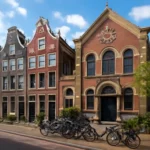
Southern Europe: pockets of Sephardic life in places such as Venice, Florence, and the Netherlands interacted with Christian and Jewish states, influencing trade networks and scholarship.
The Americas: some Sephardic families reached the Caribbean and the Americas, contributing to early commercial networks and bringing their distinctive liturgical and culinary practices to new lands.
Cultural legacies in the Iberian Peninsula and in modern Spain
The Sephardic heritage continues to shape the cultural memory and historical understanding of Spain and its Jewish past. In contemporary Spain, there is renewed interest in documenting and recovering the legacy of medieval Jewish life, including architectural remnants, literatures, and inscriptions that testify to a long and varied history of Jewish presence.
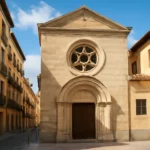
Historical sites in Toledo, Córdoba, and Granada retain synagogues and other architecture that reveal the once-dense presence of Iberian Jews and their communities.
Academic and cultural programs explore topics such as translation traditions, medieval philosophy, and the cross-cultural exchanges that characterized Spanish Jewish history.
New generations of scholars and educators work to present a nuanced view of Sephardic memory, emphasizing both the achievements of the past and the complexities of religious and cultural coexistence in Iberia.
The living memory of the Sephardic-spanish continuum
Importantly, the trajectory of Sephardic memory is not confined to distant medieval past. It informs contemporary Jewish identity in Europe, the Americas, and the Middle East, while also enriching discussions about interreligious dialogue, multilingualism, and migratory cultures. The enduring notion of Spanish Jewish heritage thus operates on multiple planes: as a historical record, as a source of linguistic and artistic inspiration, and as a living tradition that connects communities across time and space.
Key themes in the study of Jewish Spain
Readers approaching the topic of Spanish Jewry should pay attention to several central themes that recur across scholarship and public understanding:
Continuity and rupture: Jewish life in the Iberian Peninsula shows both continuity through centuries of linguistic and ritual adaptation and rupture through expulsions and forced conversions.
Intercultural exchange: The Iberian experience was a crucible of exchange among Jewish, Christian, and Muslim populations, yielding advances in science, philosophy, and arts.
Language as memory: Ladino and Judeo-Spanish serve as living archives of a culturally rich Sephardic tradition.
Memory and restoration: In modern times, efforts to preserve synagogues, manuscripts, and archival material contribute to a more complete portrait of Sephardic history.
Reflecting on a long arc: lessons from Jewish Spain
The saga of historical Jewish communities in Spain offers a powerful case study in how minority communities navigate changing political orders while preserving identity and contributing to the public sphere. It highlights the potential for intellectual and cultural flourishing within pluralistic contexts and also reminds us of the fragility of minority rights in times of upheaval. For students of history, religious studies, and cultural memory, the story of Sephardic heritage encourages careful, nuanced exploration of sources, contexts, and the voices of those who lived through these dramatic centuries.
Practical entries for readers curious about Jewish Spain today
For readers who wish to explore this topic in a more applied or experiential way, consider the following avenues:
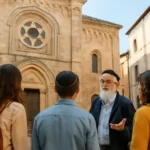
Visit historic synagogues and museums in Toledo, Córdoba, and Granada to see architecture, inscriptions, and artifacts that reveal diverse Jewish life in medieval Spain.
Explore the translation movements and the role of Toledo as a bridge between Islamic and European scholarship.
Engage with Ladino literature and music to experience the linguistic memory of the Sephardic diaspora.
Read contemporary scholarship that presents multiple perspectives on the convivencia debate and its legacy for modern intercultural dialogue.
The history of Jewish Spain remains a living field of study and a source of cultural reflection for people around the world who value the interplay of faith, learning, and human resilience. By tracing the arc from ancient communities through the Golden Age of Al-Andalus, the upheaval of expulsion, and the enduring ripples of Sephardic heritage in the present day, this article has offered a panoramic picture of a complex and inspiring chapter in world history.