Judaism and Art: The Intersection of Faith and Creativity
Art and Judaism have long shared a mutually influential relationship. Far from existing in isolation, the artistic impulse has often acted as a vessel for memory, devotion, and communal identity, while Judaism has supplied a rich reservoir of themes, narratives, and symbols that inspire and challenge artists. This article surveys the deep connections between Judaism and art, from the illuminated manuscripts of medieval communities to contemporary works that engage with history, ethics, and spirituality. It considers how creative expression within Jewish life has confronted questions about representation, sanctity, memory, and social justice. In doing so, we will see how the spectrum of Jewish artistic practice stretches across ritual objects, architectural space, visual arts, and performative traditions, illustrating the enduring vitality of this intersection.
Historical roots: from sacred texts to visual practice
Long before modern museums existed, Judaism fostered forms of art that were inseparable from daily life and liturgy. The earliest expressions can be found in textual artistry—silversmithing, calligraphy, and manuscript illumination—where beauty served as an aid to memory and devotion. The Hebrew Bible itself, as a collection of sacred narratives and laws, became a source of imagery and metaphor that later generations translated into visual form in various communities. Among the most enduring devices of Jewish artistic practice is the intertwining of text and image, a feature seen most clearly in illuminated ketubot (marriage contracts), marginal drawings, and micrographic inscriptions that hide letters within forms.
Manuscript illumination is a hallmark of medieval and early modern Jewish art, where decorative initial letters, pen flourishes, and geometric motifs embellished religious texts and prayer books.
Micrography—the technique of using tiny Hebrew letters to form pictures—demonstrates the ingenuity with which Jewish artists navigated the commandment against graven images while still creating meaningful and aesthetically compelling works.
Ritual objects such as Torah mantles, Torah crowns, and mezuzah cases fused craftsmanship with theology, turning everyday or ceremonial objects into expressive carriers of faith.
In Sephardic and Ashkenazic communities, the liturgical season and life-cycle events provided recurring occasions to employ and adapt artistic forms. Haggadot (illustrated Passover books) and prayerbooks often carried elaborate iconography, while synagogue interiors gradually developed spaces in which geometry, color, and symbol guided communal prayer and contemplation. The very acts of writing and decorating—scribal work, script, calligraphy, and decorative arts—demonstrate a continuity between Judaism and the handmade, a relationship that would be reinforced through centuries of diaspora and adaptation.
Architectural and ritual spaces as expressions of faith
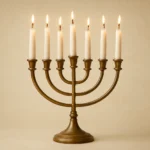
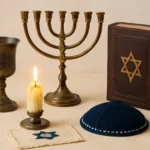
In every era, the built environment of Judaism has served as a canvas for artistic expression and theological reflection. The synagogue, as a communal house of worship, is an architectural form through which faith, memory, and aesthetic sensibility converge. The emphasis on the ascribed meaning of space—where the Torah ark, bimah, and lectern become focal points—has inspired a distinctive lineage of design and decorative arts. Ritual objects—such as Torah scrolls, menorahs, mezuzot, and Shabbat lamps—function as portable or fixed artworks whose beauty reinforces their spiritual function.
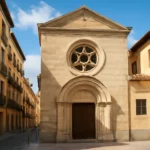
In synagogue architecture, geometric patterns, arches, and inscriptions reflect halakhic guidelines and spiritual symbolism, often creating an atmosphere that invites meditation and communal encounter.
Torah covers and mantles are not merely protective garments for sacred scrolls; they are themselves artistic expressions of reverence, with embroidery, metalwork, and textile design that narrate biblical or liturgical motifs.
The mezuzah, a small parchment affixed to doorposts, embodies the idea that daily life is permeated by sacred text, and its physical presentation is often enhanced by careful craftsmanship.
Across Jewish communities, architectural and ritual design has frequently engaged in dialogue with the surrounding cultures while maintaining a distinctive sense of Jewish identity. This exchanges has produced hybrid forms in which tradition and innovation meet, producing spaces and objects that are both sacred and aesthetically compelling. The result is a lineage of artistic practice that speaks to memory and belonging as much as to beauty and technique.
Artistic boundaries, theology, and the stewardship of representation
Judaism has a complex conversation with images, iconography, and representation. The Second Commandment’s admonition against idolatry has historically shaped Jewish attitudes toward art that depicts divine beings or worshipful scenes. There was caution around graven images, and some periods emphasized aniconism in certain contexts. Yet Jewish communities did not retreat from imagery; they redefined what images could be and how they could serve spiritual aims. This negotiation produced a vibrant tradition of textual and visual artistry that often used abstraction, symbolism, and allegory to convey transcendent ideas without violating sacred prohibitions.
Key ideas in this area include:
The use of text as image: Hebrew letters arranged to form patterns, scenes, or abstract shapes, turning language itself into a form of artistic representation.
Symbolic color and geometry: The color palette and geometric motifs often encode theological meanings or memory of biblical events.
Ritual fidelity and aesthetic innovation: The desire to honor sacred objects and rituals while expanding the expressive range of Jewish art within acceptable religious boundaries.
In the modern era, debates about representation have taken on new dimensions as Judaism confronts questions of secular imagination, universal human rights, and interfaith dialogue. Artists and thinkers have responded by seeking works that illuminate ethical concerns, preserve memory, and celebrate resilience, while respecting religious values and community sensibilities. The result is a pluralistic field in which creative expression can flourish in dialogue with faith, history, and social responsibility.
Illuminated manuscripts, print culture, and the revival of Jewish visual language
From late medieval to early modern times, Judaism produced a remarkable corpus of illuminated manuscripts, Haggadot, prayer books, and textual art that demonstrates the synthesis of devotion and art. The Haggadah, in particular, became a primary site for Jewish graphic artistry. Pages were often enriched with borders, historiated initials, and scenes drawn from biblical narratives, the Exodus, and the Passover ritual. The practice of transforming texts into visible, tactile beauty helped make liturgy accessible across generations and languages, turning reading into a communal act enriched by imagery.
In addition to manuscripts, the rise of printed materials and the professionalization of book arts allowed for broader dissemination of Jewish visual language. The evolution of typography, woodcut and copperplate engraving, and later lithography provided new tools for artists and printers to encode Jewish stories, ethics, and memory for a wider audience. Through these channels, Judaism continually extended its aesthetic vocabulary while preserving its distinct symbolic lexicon.
From Chagall to Samuel Bak: modern and contemporary voices in Jewish art
Two strands of 20th- and 21st-century Judaism and art stand out for their international resonance and their deep engagement with memory, exile, and faith. They demonstrate how creative expression can become a form of witness, critique, and spiritual search.
Marc Chagall (1887–1985): A bridge between tradition and modernity
Marc Chagall, a Russian-born Jewish artist who spent much of his life in France, became one of the most beloved spokespeople for Jewish and biblical imagery in modern art. His paintings, stained glass, and mosaic works repeatedly conjure scenes from Jewish folklore, biblical narratives, and liturgical life. Chagall’s art often blends dreamlike form with a lyrical sense of memory, inviting viewers to contemplate the sacred in everyday life. His stained-glass windows for synagogues and churches around the world, including the Cathedral of Metz and the Barnes Foundation in Philadelphia, demonstrate how Jewish visual language could inhabit diverse spaces while maintaining a distinctive spiritual composure. For many, Chagall’s work embodies the idea that Judaism and the universal language of color and form can be deeply harmonious.
Arthur Szyk (1894–1951): Illumination and political art in the 20th century
Arthur Szyk was a Polish-born Jewish artist whose illuminated manuscripts and political drawings helped shape public perception of Jewish identity and the Holocaust era. Szyk revived the medieval illuminated tradition with a modern conscience, crafting images that fused typography, heraldic symbolism, and potent political commentary. His works, including images critical of Nazism and calls for human rights, show how Jewish art can function as moral testimony and advocacy. Szyk’s clear lines, intricate borders, and dense iconography demonstrate a commitment to beauty as a vehicle for truth, memory, and social conscience.
Samuel Bak (born 1933): Memory, ethics, and the Holocaust in painting
Samuel Bak, a Holocaust survivor who became a pioneering painter of existential Jewish themes, turned memory into metaphor. His canvases frequently depict ruined interiors, vacant tableaux, and fragile figures that speak to the moral and spiritual crisis of persecution and displacement. Yet Bak’s work also embodies restoration and hope—an insistence that art can translate collective pain into insight, and memory into responsibility. Bak’s fusion of biblical allusion with modern allegory invites viewers to wrestle with questions of guilt, courage, and moral memory in a way that remains accessible across generations.
Nahum Gutman and the Israeli artistic revival
Nahum Gutman, an Israeli painter and sculptor, used vibrant color and a keen sense of urban and historical memory to depict life in the Yishuv and the early State of Israel. Gutman’s art often emphasizes public space, archeology, and the everyday rhythms of Jewish life in the land, offering a distinctly Israeli lens on universal concerns such as homeland, memory, and the complexity of urban culture. His works show how Judaism can be expressed through national revival and a new language of place, while keeping moral and spiritual inquiry at the center of artistic practice.
Global diversity: Jewish communities, aesthetics, and praxis
The Judaism world is not monolithic in its artistic expressions. Across diasporic cultures—Ashkenazi, Sephardi, Mizrahi, Ethiopian, and others—artistry has carried different textures, materials, and motifs, while sharing core themes: memory, covenant, justice, and human dignity. Each cultural milieu has produced unique forms of art that speak to the lived experience of Jewish communities within their historical and geographic contexts.
Sephardic and Mizrahi communities often emphasize richly patterned textiles, liturgical music, and intricate calligraphy in the service of maintaining ancestral languages and ritual practices within diverse Mediterranean and Middle Eastern settings.
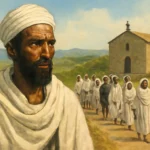
Ethiopian Judaism (Beta Israel) has its own visual and musical vocabulary, blending biblical storytelling with Ethiopian artistic conventions. Painted manuscripts, church-like iconography adapted for Jewish purposes, and distinctive ritual objects reflect a unique synthesis of Jewish faith with local culture.
Ashkenazi, Central and Eastern European communities historically produced generation-spanning manuscript art, carved objects, and, later, modernist painters who used Jewish themes to interrogate memory and persecution.
In modern Israel and in diaspora centers, contemporary artists of Jewish faith or heritage engage with conflicts, memory, and identity through various media—painting, sculpture, photography, performance, and digital art. The broader Jewish art world continues to explore how tradition can speak to urgent questions about migration, justice, memory, and the future of communities in a rapidly changing world.
Jewish art in practice: from the ritual to the gallery
The practical side of Judaism and art can be appreciated in a number of forms, each contributing to communal life, education, and cultural flourishing. Here are some illustrative dimensions:
Ritual objects—Torah covers, menorahs, mezuzot, tallit kippot, and seder plates—are crafted to honor sacred traditions while reflecting aesthetic sensibilities and local materials.
Synagogue decoration—mosaics, frescoes, stained glass, and carved wood or stone elements—create an atmosphere of reverence and belonging, guiding prayer and study.
Calligraphy and typography—Hebrew script as visual art, often used in ceremonial texts and architectural inscriptions, preserves linguistic beauty and spiritual emphasis.
Manuscript and book arts—from illuminated haggadot to modern Hebrew books, the textual form becomes a visual experience that communicates theology and ethics through design.
Public art and museum exhibitions—artists address historical traumas, memory, and ethical questions in public spaces and galleries, inviting dialogue among diverse audiences.
These practices show that Judaism embraces a broad spectrum of art forms, each with its own purposes—devotional, didactic, commemorative, or expressive—while maintaining a shared sense of responsibility to tradition and community.
Educational and communal implications: art as learning and memory
Art plays a central role in Jewish education and communal memory. The visual dimension of religious instruction helps learners engage with stories, laws, and values in ways that complement textual study. Museums, schools, and community centers frequently deploy art-related programs to foster conversations about history, ethics, and identity. Key themes include:
Memory and witness: Artistic productions, especially those addressing the Holocaust and displacement, serve as memorials and moral testimonies, helping ensure that atrocities are neither forgotten nor repeated.
Ethics and justice: Visual narratives encourage reflection on responsibility to the vulnerable, human rights, and social action within Jewish ethical frameworks.
Identity and belonging: Art enables individuals and communities to explore what it means to be Jewish in a global context, balancing continuity with adaptation.
Cross-cultural dialogue: Jewish art often engages with other traditions, fostering mutual understanding while preserving distinct religious and cultural identities.
Educational programs frequently include workshops on manuscript illumination, kalligraphy, textile arts, and architectural drawing within synagogues. By combining hands-on practice with historical study, learners experience the way Judaism and art illuminate one another.
Contemporary conversations: innovation within tradition
Today, Judaism and art are alive in galleries, sanctuaries, performance spaces, and online platforms. Contemporary Jewish artists often pursue questions of memory, exile, identity, and social responsibility, drawing on a reservoir of sacred texts, rabbinic midrash, and communal history. They might:
Reinterpret biblical narratives through abstract or interdisciplinary media, inviting new ways of listening to ancient stories.
Use ritual objects as sculptural elements to explore the boundaries between sacred and secular life.
Address contemporary politics and ethical dilemmas using symbolic imagery rooted in Jewish ethics and memory.
Experiment with typography and language, honoring Hebrew and other languages as living means of expression.
Across the spectrum of denominations—Orthodox, Conservative, Reform, and Reconstructionist—the engagement with art varies, reflecting differences in interpretation and practice. Nevertheless, it is common to find passionate commitment to beauty, craftsmanship, and meaning in many Jewish communities. The creative impulse remains a powerful way to articulate spiritual longing, communal memory, and the search for justice in the modern world.
Denominational and cultural variations in approach to art
Different Jewish communities have nuanced relationships with art, shaped by theological, cultural, and historical factors. Some general trends include:
Orthodox communities often emphasize the sanctity of space and ritual accuracy, yet still maintain vibrant traditions of Jewish calligraphy, decorative arts, and carefully crafted ritual objects that honor tradition while allowing for beauty within accepted boundaries.
Conservative and Reform movements may place greater emphasis on using art to teach, inspire, and engage with broader audiences, sometimes embracing more avant-garde or diverse media in sacred or educational settings.
Reconstructionist and secular Jewish communities frequently foreground art as a means of creative inquiry, cultural memory, and social commentary, with strong participation in contemporary visual and performing arts.
Regional and cultural differences—Sephardic, Ashkenazi, Mizrahi, Ethiopian, and other traditions—contribute distinctive aesthetics, materials, motifs, and narrative priorities, enriching the global panorama of Jewish art.
These variations illustrate how the core values of Judaism—memory, covenant, justice, and community—translate into diverse artistic languages. The result is a global conversation about faith and creativity that respects differences while seeking common ground in moral imagination and spiritual meaning.
Preservation, stewardship, and the future of Jewish art
The preservation of Judaism’s artistic heritage is a shared responsibility among museums, libraries, synagogues, and communities worldwide. Digitization projects, cataloging of illuminated ketubot, and conservation of ritual objects ensure that future generations can study and appreciate the aesthetic and historical dimensions of art within a Jewish frame. At the same time, living communities continue to commission new works, commission artists for sacred spaces, and support education that integrates aesthetics with ethics.
Looking ahead, several trajectories seem likely to shape the ongoing relationship between Judaism and art:
Interdisciplinary collaborations that combine visual arts with Jewish liturgy, philosophy, and ritual studies to create immersive experiences for learning and worship.
Expanded global voices from marginalized or diaspora communities that bring fresh stories, techniques, and mediums to Jewish storytelling.
Digital and multimedia art that explores memory, trauma, and resilience in ways that are accessible to international audiences.
Continued dialogue between tradition and innovation, balancing reverence for historic forms with experimentation that invites new understandings of faith and identity.
In sum, the relationship between Judaism and art is not merely historical but dynamically ongoing. It enables communities to encounter sacred questions visually and experientially, to teach younger generations through beauty and craft, and to bear witness to ethical commitments through powerful imagery and narrative.
Conclusion: a living conversation between faith and form
From illuminated manuscripts and ritual objects to great modern paintings and public memorials, the Judaism–art relationship is a living conversation about who we are, where we come from, and what we owe to others. It is a conversation guided by memory and hope, discipline and imagination, reverence and critique. By recognizing the ways in which Judaism has historically used art to articulate the sacred and to challenge injustice, we gain a richer, more nuanced understanding of both fields. This intersection invites us to see faith not as a static creed but as a dynamic, evolving practice in which creativity serves as a vehicle for meaning, community, and moral courage.
Whether through the glow of candlelight on Shabbat, the careful stitching of a Torah mantle, the line of a manuscript, or the bold gesture of a modern installation, Judaism and art continue to illuminate one another. They remind us that beauty can be a form of devotion, that memory can be a catalyst for justice, and that the human drive to create can coexist with deep spiritual discipline. In this mutual illumination lies a powerful invitation: to see Judaism not only as a tradition to be studied, but as a living, evolving field in which faith and creativity enrich each other—today, tomorrow, and beyond.