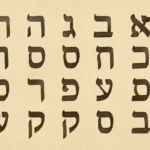
Hebrew Artwork encompasses a broad spectrum of visual traditions that weave together language, sacred function, and aesthetic expression. From the early illuminated manuscripts of medieval Yiddish and Hebrew printers to contemporary installations that fuse typography with sculpture, Jewish art and Hebrew calligraphy offer a window into how communities have conjured meaning from letters, verses, and motifs. This guide, titled Hebrew Artwork: A Complete Guide to Jewish Art & Calligraphy, surveys the history, techniques, styles, and practical considerations that shape modern practice while honoring the deep roots of tradition. Whether you are a student of art history, a practicing scribe, a collector, or simply curious about how Hebrew letters function as visual symbols, this article lays out the vocabulary, methods, and possibilities of Hebrew handwriting in art, Judaic illustration, and related forms of Kabbalistic engraving.
Art that centers the Hebrew alphabet appears under many names. Depending on context, you may encounter:
Hebrew art or Hebrew lettering art—a broad umbrella for works that foreground the Hebrew script as visual form.
Jewish art or Judæaic art—culturally specific terms that include image, symbol, and lettered design in broader religious or secular contexts.
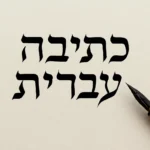
Hebrew calligraphy—the practice of forming graceful, precise letters, often with historical scripts or contemporary stylistic experiments.
Judaic illumination or illuminated manuscripts—historic manuscript decoration that includes Hebrew text, decorative borders, and gold or pigment work.
Hebrew script art—artworks where the Hebrew alphabet is the main design element, either as typography or stylized glyphs.
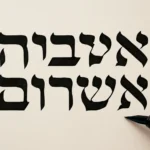
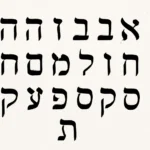
Square script (Ashuri)—the classic block-style Hebrew letters used in Torah scrolls, mezuzot, and many works of art.
Rashi script—a semi-cursive Hebrew script historically used in commentaries and some printed material, sometimes appearing in decorative pieces for contrast.
Beyond these labels, you will encounter variations of Hebrew artwork that emphasize different goals: liturgical beauty, scholarly illustration, personal devotion, or social commentary. Terms such as mezuzah art, Torah cover design, tefillin box art, k’tonet (prayer shawl) embellishment, and cantillation ornament describe specific formats within the broader field. The common thread is that language—often the sacred language of the Hebrew Bible—serves as a visual language that communicates meaning as powerfully as the words themselves.
Script and typography as artistic media
In Hebrew artwork, script is not merely an instrument of reading but a design element. Artists deploy typography in a spectrum ranging from authentic calligraphic rendering to abstract lettering that hints at letter shapes while prioritizing balance, rhythm, and color. Some works embrace ancient calligraphic styles—for instance, square Ashuri script that mirrors the lettering found in scrolls—while others experiment with modern sans-serif or decorative fonts reinterpreting traditional forms for contemporary aesthetics.
Historical overview of Hebrew artwork
The journey of Hebrew artwork stretches from ancient manuscript traditions to present-day studio practice. Understanding this arc helps readers appreciate how techniques, materials, and religious sensibilities influenced what could be depicted, inscribed, or illuminated.
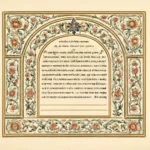
Before the invention of the printing press, Jewish scribes and artists collaborated to decorate manuscripts with intricate borders, marginalia, and sometimes full illustrations. In permanence, Jewish scribal art placed the Hebrew text at center stage and treated the page as a sacred surface. The illuminations often included gold leaf, vegetal pigments, and geometric or floral motifs that framed sacred verses. This tradition established a model for later Torah scroll decoration, mezuzah parshiyos, and haggadah ornamentation.
Renaissance and Sephardic influence
During the medieval and early modern periods, Jewish communities across the Mediterranean and the Near East developed vibrant calligraphic schools that blended local artistic motifs with Hebrew letterforms. Sephardic communities contributed elegant, fluid scripts and richly colored backgrounds, while Ashkenazi centers favored more angular forms. The result was a diverse tapestry of Hebrew manuscript art and liturgical art that would inform later printing and ornamentation.
Print culture and the rise of illustrated bibles
The advent of printing allowed Hebrew typography to spread more widely, while artists explored illustrated Bible editions and Haggadah books with elaborate borders and typography. These printed objects preserved the aesthetic language of earlier scribal arts while introducing new materials, such as better paper, lithography, and later color illustration.
Modern and contemporary movements
In the 19th and 20th centuries, artists began to treat Hebrew letters as autonomous forms, not solely as conveyors of textual meaning. Movements in Jewish modernism and later Israeli art embraced abstraction, typography-as-art, and cross-cultural dialogue. In recent decades, contemporary Judaic artists have integrated digital media, sculpture, glass, metal, and wood with Hebrew typography to create immersive works that speak to diaspora, memory, and identity.
Techniques, tools, and materials in Hebrew artwork
The physical realization of Hebrew artwork depends on a blend of traditional craft and modern technology. Here is a practical overview of common tools, surfaces, and methods used by artists and calligraphers.
Reed pens (keren) and calamus for broad strokes and textured lines
Quills or metal nibs for precise, delicate lines
Ink variations—carbon-based black ink, iron gall for aging, and colored inks for decorative work
Brushes for washes, backgrounds, and shading in illuminated pieces
Materials and surfaces
Parchment or vellum for durable, luminous pages
Paper ranging from handmade sheets to archival stock for posters and prints
Wood, metal, glass, and ceramic surfaces for three-dimensional or relief-based work
Leather and fabric for cover designs, bindings, and textile art
Techniques in practice
Illumination—applying gold leaf or metallic pigments to highlight letters or borders
Gilding—techniques to apply gold leaf with size and burnishing to produce a reflective surface
Illusory lettering—creating depth and shadow to give letters a sculptural feel
Gold and lapis pigment—expensive pigments used in ceremonial objects and high-end art
Digital lettering—vector-based designs, typography-inspired works, and screen printing of Hebrew text
Hebrew script styles and their artistic applications
Script in Hebrew artwork is not a single monolithic form. Artists select or invent scripts to convey mood, time period, or cultural significance. Here are some common styles and how they are used in art.
Square script (Ashuri)
Also known as Ashuri, this is the canonical script used in Torah scrolls and mezuzot. Its geometric, legible lines make it a natural anchor for architectural or ceremonial art where authority and tradition must be read clearly. In artistic contexts, Ashuri is often used for bold titles, monumental inscriptions, or decorative borders that echo liturgical manuscripts.
Rashi script
A cursive or semi-cursive Hebrew script historically used in commentaries. In art, Rashi script provides a contrasting texture to Ashuri. Artists may pair Ashuri for primary text with Rashi for marginalia, glosses, or caption material, creating a layered, scholarly look.
Many modern Hebrew artworks experiment with stylized lettering that bends the rules of conventional scripts. These images may imitate brush lettering, geometric abstraction, or calligraphic hybridity to evoke mood rather than strict legibility. In contemporary Judaic art, this freedom is common and often intentional, signaling renewal and dialogue with global design trends.
Motifs and symbols frequently found in Hebrew artwork
The symbolic vocabulary of Hebrew artwork blends script with iconic Jewish motifs. These symbols can be sacred, didactic, or decorative, and they often carry layered meanings drawn from scripture, liturgy, and tradition.
Liturgical and ceremonial motifs
Torah scrolls—visual references to the five books of Moses, often paired with script and marginal decoration
Tefillin and mezuzah—objects that anchor daily ritual life, frequently depicted in art to remind of commandments
Chalice, goblet, and wine imagery—symbolizing libation, blessing, and sacred meals
Iconic Jewish symbols
Star of David (Magen David)—a geometrical symbol widely used in decorative work and branding of Judaic art
Menorah—the seven-branched lamp often appears as a central motif in liturgical art and public sculpture
Hamsa—an amulet-like motif depicting an open hand, commonly integrated into textiles and wall art
Kabbalistic and mystical imagery
Tree of Life (Etz Chaim)—a popular symbol in Jewish mysticism and visual art that connects verses, sefirot, and spiritual paths
Cosmograms and sigils—geometric designs linked to numerology and the deeper layers of Torah interpretation
Tehillim and Te’amim—psalms and cantillation marks sometimes appear as ornamental features to reflect musicality and voice
Educational and community-focused motifs
Educational quotes from Torah or rabbinic literature inscribed in decorative lettering
Maps of the Holy Land and mizrachs (east walls) that anchor rooms or synagogues in place and memory
Contemporary Jewish art and modern calligraphy
The late 20th and early 21st centuries have seen a surge of experimentation in contemporary Judaic art and Hebrew typography. Artists frequently blend traditional Hebrew letterforms with new media—acrylics, neon, glass mosaic, laser-cut wood, and digital printmaking. This era is defined by a willingness to cross disciplinary lines, create inclusive dialogue, and explore identity through language and form.
Cross-cultural influences
Many artists draw inspiration from global typography and graphic design while anchoring their work in Jewish tradition. The resulting pieces may feature bold color fields, modular Hebrew letters, or text-based installations that invite the viewer to consider language as a bridge between memory and present experience.
Digital and synthetic media
Digital lettering allows for rapid iteration of Hebrew word forms, while digital fabrication enables precise laser-cut text on wood, acrylic, or metal. Artists also employ 3D printing to create sculptural letters that project a tactile presence, inviting interaction and study.
Community-based and social projects
In many communities, Hebrew calligraphy is used to teach, memorialize, and celebrate. Projects may involve schools, synagogues, and museums commissioning works that combine text with imagery to tell local histories or commemorate events. This ongoing living practice keeps Hebrew lettering meaningful in everyday spaces as well as in galleries.
Contexts and uses of Hebrew artwork in life and worship
Hebrew artwork appears in a wide range of contexts beyond the gallery wall. Its presence often signals reverence, learning, and communal memory, whether in sacred objects, public art, or personal expression.
The field includes both historic masters and contemporary practitioners who have helped shape how Hebrew text is imagined as art. While not an exhaustive roster, the following examples illustrate the range of approaches.
Historical scribes and illuminators whose work on Torah scrolls, Haggadot, and ketubot established standards for legibility, ornament, and sacred proportion
Modern Judaic painters who incorporate Hebrew lettering into abstract and figurative imagery, often addressing memory, homeland, or spirituality
Contemporary calligraphers who use traditional tools side-by-side with digital or mixed-media methods to explore language as form
In addition to individual artists, many studios, Jewish cultural centers, and religious communities foster educational programs that teach Hebrew script craft, manuscript illumination, and the history of Kabbalistic iconography. If you are building a personal library or considering a commissioning project, connecting with a teacher or curator who specializes in these disciplines can yield deep historical knowledge as well as practical design guidance.
Getting started: a beginner’s guide to creating Hebrew artwork
Whether you want to produce a small wall piece or a complete suite of liturgical items, beginning with a solid foundation in Hebrew scripts and composition will help your work endure. Here is a practical pathway for aspiring artists and calligraphers.
Foundational study
Study the Ashuri script as the basic form for sacred text, paying attention to proportion, spacing, and stroke order
Learn basic cantillation marks (te’amim) if you intend to work with biblical text or liturgical readings
Review Torah scroll etiquette and traditional sizes to understand how text and space interact in ritual objects
Materials and setup
Choose a reliable pen or brush that suits your preferred line weight
Use archival ink and paper or parchment suited to your intended final form
Prepare a clean workspace with good lighting and a comfortable writing surface
Practice plans
Copy short verses or verses with decorative borders to train spacing and rhythm
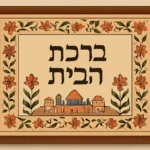
Experiment with border motifs—floral, geometric, or symbolic—to complement the text
Try mixed media by adding gold leaf, pigment washes, or subtle textures
Project ideas for beginners
A small framed piece featuring a favorite verse in Ashuri with a decorative border
A mezuzah cover design that harmonizes script, motif, and color
A poster or print illustrating a concept (e.g., peace, learning, justice) with Hebrew lettering integrated as art
Resources, learning paths, and recommended reading
To deepen your understanding of Hebrew artwork and Jewish calligraphy, a combination of primary sources, modern teaching, and museum collections is valuable. The following categories and examples can guide your exploration.
Primary texts and historical references
Medieval and early modern manuscripts and printed texts that illustrate how Hebrew letters served both theology and decoration
Guides on Torah scroll preparation and mezuzah script to understand the standards of orthodox practice
Educational resources
Workshops and courses offered by art schools, synagogues, and Jewish cultural centers
Online tutorials and video demonstrations focusing on Hebrew handwriting and illumination
Exhibitions and collections
Museums with Judaic art collections often host exhibitions on religious typography and manuscript illumination
Private and public collections featuring contemporary Judaic graphic design and Hebrew letterforms
Conclusion: embracing the breadth of Hebrew artwork
Hebrew artwork sits at the crossroads of language, devotion, and visual craft. From the precise geometry of Ashuri letters to the expressive freedom of contemporary typography, the field invites both reverent study and personal experimentation. Whether you are drawn to liturgical decoration, illuminated manuscripts, public sculpture, or digital lettering, the essential ideas remain consistent: letters carry weight, color can tell a story, and design can amplify meaning. By exploring the historical roots, mastering the basic techniques, and engaging with current practices, you can participate in a living tradition that continues to evolve while honoring ancient paths.
If you leave this guide with one takeaway, let it be the understanding that Hebrew artwork is not only about beautifying text. It is a way to preserve memory, express identity, and communicate reverence through form. As you encounter or create Hebrew letters in art, you join a tradition that has connected people to Torah, to community, and to each other across generations.