God Almighty Hebrew: Meaning, Origins, and Biblical Usage
The phrase God Almighty in Hebrew-speaking contexts is most closely associated
with the name El Shaddai. This combination of two short Hebrew units—El, a
generic term for deity, and Shaddai, an epithet whose exact roots are debated—appears in the
Hebrew Bible as a title that emphasizes power, sufficiency, protection, and covenantal blessing. In
English translations, the expression often appears as “God Almighty” or “the Almighty God”,
and in some older renderings as Jehovah or Jehovah‑El Shaddai depending on the tradition. This article surveys the meaning of El Shaddai, its origins, and its biblical usage, while also situating it within the
broader family of Hebrew epithets for the divine.
Key Hebrew Terms and the Epigraphic Family
To understand God Almighty Hebrew in context, it helps to map the lexical family of terms that appear in
the Hebrew Bible to describe the divine. The most important members of this semantic family include El, Elohim, Shaddai, and YHWH, along with related titles such as Adonai, El Elyon, and El Olam.
El and Elohim
The term El is a generic Semitic word for god and occurs throughout the ancient Near East as a
title for high deities. In the Hebrew Bible, El can function as a proper name of the God of Israel when
capitalized or as a poetic or general term for deity when used in combination with other epithets. The plural form Elohim appears frequently in the Bible and, in a number of passages, denotes the singular God of Israel when
paired with singular verbs and adjectives. The use of Elohim highlights the ancient notion of a supreme
divine being who stands above the many regional deities of the surrounding cultures, while the surrounding
narrative identifies this one God with the God of Abraham, Isaac, and Jacob.
In discussions of the God Almighty idea, Elohim often frames the broader theological context: the God who is
creator, judge, and sustainer of creation, whose power is both comprehensive and binding for humanity.
Shaddai and the controversial Shaddai root
The epithet Shaddai (often rendered “Almighty”) accompanies El to form El Shaddai. The exact etymology of Shaddai is a matter of scholarly debate. Some scholars propose a root related to shad (breast) or shadad (to be sufficient), while others connect it with imagery of nourishment, protection, or
mountains. Another hypothesis ties the term to fertility cults in the broader ancient Near East, yet in the
Biblical manuscripts it functions primarily within a monotheistic framework to designate the all-sufficient
power of the God of Israel. The combination El Shaddai thus communicates both sovereignty and
care—an omnipotent Lord who blesses, sustains, and sustains the covenant with Abrahamic ancestors.
YHWH and Adonai as complementary divine names
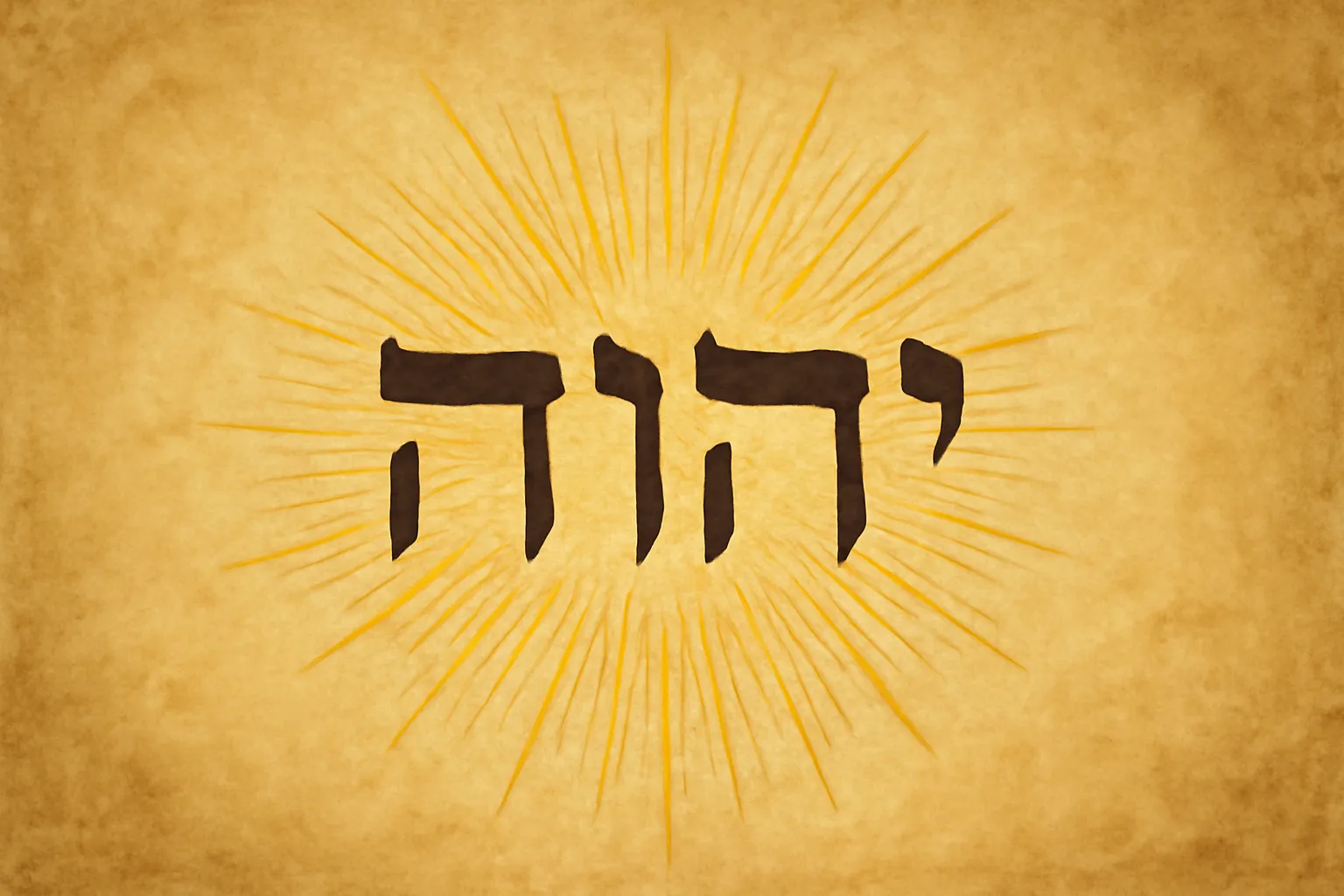
The personal name of the God of Israel is YHWH (often vocalized as Yahweh by modern scholarship). This Tetragrammaton passed
through the Mosaic tradition and became the central personal name by which the biblical tradition
speaks of the God who reveals himself to Moses and enters into covenant with the people of Israel. In Jewish
practice, the divine name is treated with great reverence, and vocalization is substituted with Adonai (the Lord) during reading. In English translations, YHWH is typically rendered as “the LORD”, while Adonai
stands in for the spoken name throughout liturgy and study.
The relationships among these terms—El, Elohim, YHWH, Adonai—are essential for
understanding how the concept of God Almighty fits into the broader scriptural portrait. In many passages, El or Elohim is coupled with the personal name YHWH to emphasize both transcendence
and divine presence: God as the transcendent creator, and God as the immanent interlocutor of humanity within the
covenant framework.
Origins of the Epithets: Ancient Contexts and Theological Development
The origin of El Shaddai lies at the crossroads of ancient Near Eastern religion and early Israelite faith.
Several lines of evidence illuminate its development and the way it functions in the Hebrew Bible.
Canaanite and regional backgrounds: The element El appears across various Northwest Semitic languages, reflecting a shared
cultural memory of a high or supreme deity. In Canaanite and related traditions, deities with a similar title
often held cosmological or royal significance. The biblical author(s) borrowed this linguistic and cultic framework and
reoriented it around the Israelite God who acts within history and covenant loyalty.
Power and sufficiency motifs: The epithet Shaddai contributes a theological emphasis on divine power, sufficiency, and
protection. In the Genesis narratives, for example, the human-divine relationship is clarified not merely by worship
but by a tangible display of blessing, fertility, and protection that underscore God’s ability to accomplish what
is promised. This aligns with a broader ancient Near Eastern pattern where a supreme deity embodies the source of abundance
and security for the people.
Transition within Israelite theology: Over time, the Israelite faith moved toward a more explicit monotheism, while
retaining a rich vocabulary of divine epithets. The use of El Shaddai alongside YHWH reflects
a layered theology in which God’s power (Almighty) and his personal relationship with the patriarchs and the
people are both foregrounded.
Textual distribution: The phrase is not uniformly distributed across the Biblical corpus. It is most recognizable
in early Genesis passages and appears in other disputed places, signaling a particular devotional and covenantal
emphasis rather than a systematic doctrinal name in all periods.
Biblical Usage of El Shaddai: Where and How It Appears
The biblical usage of El Shaddai is concentrated in a handful of contexts, with Genesis being especially notable.
In Genesis 17:1, when Abraham is aged and the divine covenant is reaffirmed, the text uses the phrase to
underscore the divine source of blessing and the boundless power by which the promises will be realized. A related
appearance occurs in Genesis 28:3, where the same epithet is employed to describe a divine blessing bestowed upon
Jacob, linking the patriarchal line to the fulfillment of the covenant. A third notable occurrence appears in Genesis
35:11, where El Shaddai again blesses and reminds the patriarch of his role in a vow-bound future.
Outside Genesis, the term surfaces less frequently but remains a valuable pointer to the divine attributes that
the biblical authors wished to emphasize: God as the Almighty who intervenes decisively in history,
who provides nourishment, protection, and prosperity to the faithful, and who sustains the moral and familial
arc of the people Israel. In the poetic and prophetic books, other epithets—such as El Elyon (the Most High) and El Olam (the Everlasting God)—work in concert with El Shaddai to sketch a composite portrait of
divine sovereignty and longevity.
Theological and Literary Significance of the God Almighty Epithet
The combination of El plus Shaddai carries rich theological weight. It signals that the God of Israel is not
merely a local deity or a tribal ancestor’s memory, but the transcendent creator and supreme ruler
who can be trusted to fulfill promises, protect the vulnerable, and stand firm against chaos. In biblical
narrative, this is more than a noun phrase; it is a programmatic statement about the nature of God and the
ethical demands placed on God’s people.
Relationships with YHWH and the covenant framework
The God Almighty designation does not stand alone; it interacts with the personal, covenantal name YHWH. In several passages, the God who reveals himself to Moses as YHWH is also described with
epithets like El Shaddai, reinforcing that the God who speaks from the burning bush is the same
God who creates, blesses, and sustains. The phenomenology of revelation—how God appears, speaks, and acts—
often carries both a personal address (YHWH speaking to people) and a cosmic assertion of power (Shaddai acting
in history).
Translations, Interpretations, and Theological Nuance
How scholars translate and interpret El Shaddai affects how readers understand Israelite faith and its
neighbors. In English Bibles, the conventional rendering is “God Almighty”, but translators sometimes
render it as “the Almighty God” or “God, the Almighty” depending on syntactic needs in a given verse. This
choice can subtly affect emphasis, shifting focus toward divine power, divine sufficiency, or the
protective, covenantal aspects of God.
Etymological debates aside, the conceptual import is clear: El Shaddai names a God whose authority is unbounded, whose
faithfulness underwrites the promises to Abraham, and whose governance shapes the destinies of nations. In
scholarly discussions, the phrase is often cited as a crucial instance where Israelite monotheism expresses
itself through a typology of power and blessing rather than through a single, exclusive name.
Cross-Religious Reception: Judaism, Christianity, and Beyond
Across religious traditions, the El Shaddai epithet has had a durable cultural resonance. In Jewish liturgical and
exegetical traditions, the term is read within the larger tapestry of divine names, where reverence for YHWH coexists with the respectful use of epithets that capture God’s character. The sobriquet El Shaddai is sometimes used in devotional poetry and liturgy to evoke awe at God’s omnipotence,
while still anchoring devotion in the God who remembers and blesses the patriarchs.
In Christian interpretations, El Shaddai has often been translated to highlight God’s omnipotence and
gracious provision. The phrase appears in doctrinal discussions about divine sovereignty and the sufficiency of grace.
Yet in all traditions, scholars note the risk of conflating ancient Near Eastern concepts of fertility or mountain cults
with the biblical portrayal of a single, personal God who acts in history and who is revealed in covenant fidelity.
El Shaddai is sometimes rendered “God Almighty”, sometimes “Almighty God”, and occasionally as a more expansive phrase
emphasizing power and blessing.
Shaddai by itself can appear as an attributive quality of the divine, often with adjectives or verbs that emphasize
sustenance, protection, or abundance.
El as a robust, preeminent divine title appears in other compound forms like El Elyon (Most High) or El Olam (Everlasting God),
underscoring that Hebrew poetry and prose deploy a rich onomastic lexicon to describe the divine.
The Hebrew practice of naming God with epithets like El Shaddai stands in a broader ancient milieu. In several neighboring
languages, deities bore titles that combined a generic divine term with a climactic attribute (for example, a high god plus a
power-related attribute). The biblical authors, however, recast these forms in an Israelite theological frame that
emphasizes exclusive worship of the God of Abraham, Isaac, and Jacob. In this sense, El Shaddai and related
epithets function as integrative theological devices: they place God within a single, comprehensive ethical and covenantal plan
while still allowing readers to reckon with his majesty and omnipotence.
For students of the Hebrew Bible, paying attention to terms like El Shaddai is a way to notice nuance in the text’s
portrayal of God. It invites readers to ask:
How does El Shaddai interact with YHWH in a given passage, and what does that reveal about divine identity?
In what contexts does the text privilege a sovereign, all-encompassing power over a more intimate, personal form of divine
relationship?
What is the role of blessings, covenants, and promises in passages that employ El Shaddai as a primary descriptor?
How do translators’ choices shape the reader’s perception of God’s nature—omnipotence, faithfulness, or both?
The expression God Almighty in Hebrew—often rendered El Shaddai—is a compact, powerful label that encapsulates
a multi-faceted view of the divine. It communicates strength, sufficiency, and covenantal blessing,
set within a narrative framework that places the patriarchs at the center of God’s purposes for a world that God
governs. The origins of this epithet lie in the interplay of regional religious ideas and the evolving self-understanding
of Israel’s God as revealed in history and covenant. Its use in Genesis and a few other biblical settings anchors a
theological message about power exercised with fidelity: a God who is both omnipotent and bound to the promises
made to the ancestors.
Studying the biblical usage of El Shaddai alongside other divine names helps illuminate the Isaiah‑like
tension that pervades the Hebrew Bible: God’s sovereignty and God’s presence with humanity. It also highlights how
the biblical authors used a rich tapestry of epithets to portray a single, coherent divine reality without reducing
mystery to a single label. In religious practice today, the phrase remains a potent reminder that the God of the
Bible is described not only as the lawgiver or judge but as the source of blessing, the sustainer of life, and the
one who fulfills promises across generations.