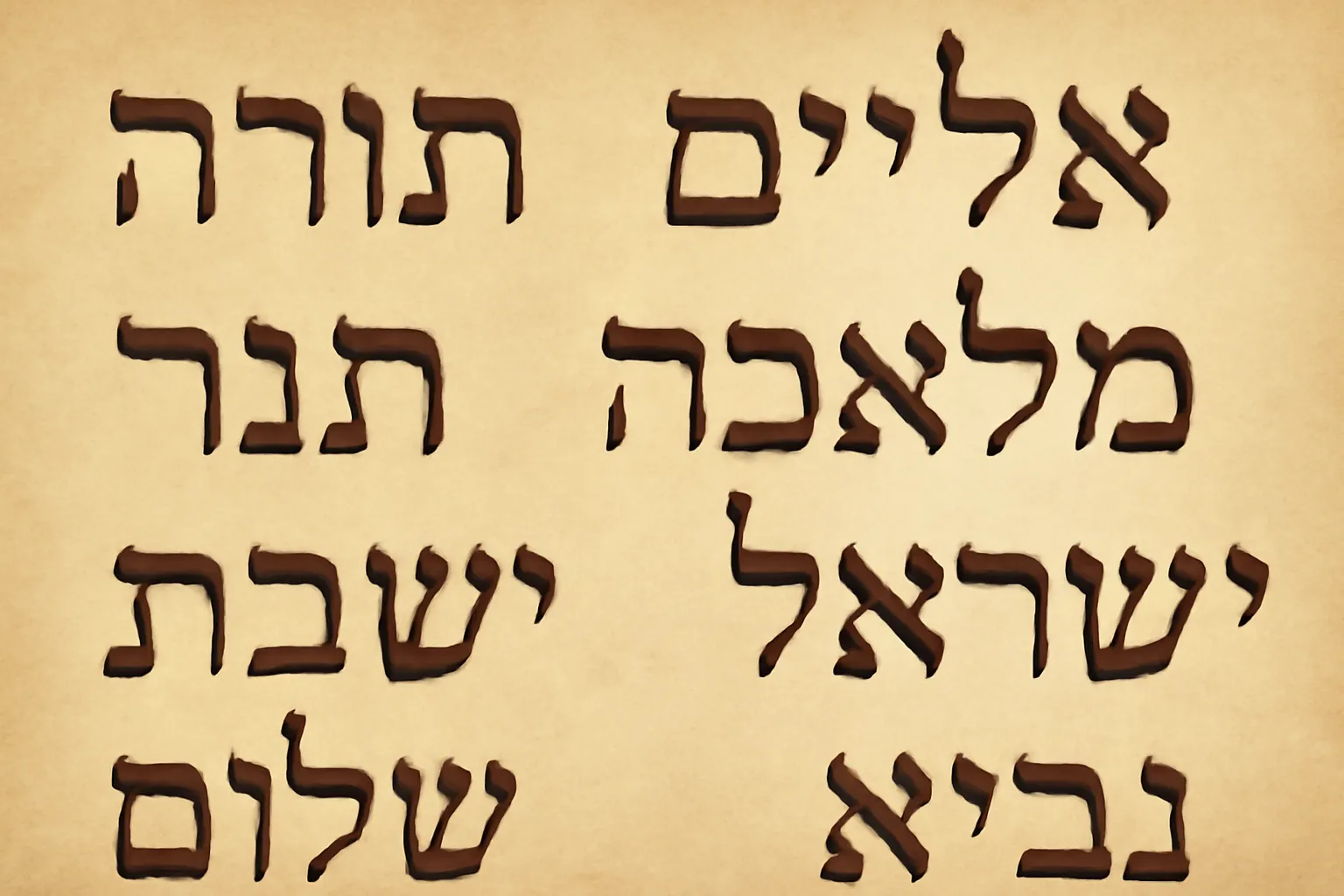
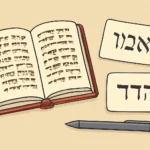
Hebrew is the original linguistic thread running through much of the Bible, weaving meaning from the roots of words to the broad themes of creation, covenant, justice, and worship. This article offers an in-depth glossary of key Hebrew biblical terms—with etymology, semantic breadth, and typical usages in Scripture. For readers new to the language, a glossary provides anchor points; for seasoned students, it offers nuance and cross-cultural resonance. Each term is presented with its Hebrew spelling, a transliteration, a concise definition, and a note on how the word functions in biblical texts. Bolded terms highlight core ideas you’ll encounter as you read.
YHWH is the most distinctive proper name for God in the Hebrew Bible. The Tetragrammaton (a term meaning “four-letter name”) signals a personal, covenantal God rather than a generic title. In most English translations you’ll see “the LORD” (in all caps) where YHWH appears in the text. Jewish tradition reads the divine name with reverence and substitutes Adonai (“the Lord”) or HaShem (“the Name”) in prayer and public reading to avoid pronouncing the sacred syllables. The root is often associated with existence and eternality—“He is,” “He will be,” and the idea that God’s being precedes and outlasts creation. In narrative material, YHWH frames the God of Israel as a personal, relational, and faithful partner in the covenants to come.
Elohim (אֱלֹהִים) — God, the Divine Council, and Creator Power
The term Elohim appears with plural form but is grammatically singular when referring to the God of Israel in most biblical contexts. This plural form often signals majesty, sovereignty, and a sense of divine courtroom authority. In Genesis 1, for example, Elohim speaks creation into being. The word can also designate mighty beings or false gods in plural contexts, but when paired with singular verbs, it most often denotes the one true God. The semantic range includes omnipotence, creative power, and divine sovereignty, making Elohim a central term for discussing God’s authority over universe and history.
El (אל) and El Shaddai (אֵל שַׁדַּי) — General Godhood and the Almighty
El is a generic term for “god” or “deity” in the broader ancient Near Eastern milieu, but biblical usage often root-connects to the God of Israel, especially in compound names (El Elyon, El Roi, El Olam). The compound El Shaddai (often translated as “God Almighty”) underscores power, protection, and covenantal blessing. In poetic or prophetic contexts, you’ll find El paired with attributes to describe God’s nature, including strength, faithfulness, and eternal presence. The idea of a singular, sovereign deity is reinforced when El appears alongside terms for justice and mercy.
Adonai (אֲדוֹנָי) — Lord (Priestly and Liturgical Reading)
Adonai is the spoken substitute for the divine name in Jewish worship and liturgy. In editorial use, the translators render Adonai as “the Lord” with capitalization patterns to signal a reverent reading of YHWH. The linguistic root relates to rulership and mastership; in biblical contexts it is used both for God and, in ethical or legal instruction, to indicate proper authority. Adonai thus embodies both governance and relational care—God’s mastery coupled with a call to faithfulness in covenant life.
El Elyon and El Olam — God Most High and Everlasting God
These compound divine names appear in Genesis and other books to emphasize distinct facets of God’s character. El Elyon means “God Most High” and highlights God’s supremacy over all nations and powers. El Olam translates as “the Everlasting God,” underscoring eternity and steadfast faithfulness across generations. Both forms enrich the biblical portrait of God as transcendent yet involved in human history.
Yahweh’s various titles — Covenant God, Shepherd, and Deliverer
Beyond the central name, biblical authors use a suite of honorifics and descriptors derived from the divine name, including El plus a descriptor (e.g., El Shaddai, YHWH-Rapha for “the Lord who heals,” though the latter is more common in later liturgical tradition). These titles help readers recognize God’s roles in creation, revelation, deliverance, and moral order. In reading, track how one attribute or title suits the Biblical speaker’s situation—whether yearning for mercy, seeking justice, or praising God’s faithfulness.
Covenant, Law, and Instruction
Brit — Covenant
The concept of a brit is foundational in biblical narrative and law. A brit marks a binding relationship—between God and humans, between tribes, or within families. The language of covenant governs promises, stipulations, blessings, and warnings. Phrases such as “I will remember my brit” evoke faithfulness across generations. The term carries ethical weight: to belong to the covenant world means living under divine instruction and the community’s communal or liturgical life. Notably, biblical covenants are often sealed with signs (the rainbow, circumcision, or the land itself) and enforced through prophetic or priestly voices when fidelity wavers.
The word Torah literally means “teaching” or “instruction,” but in biblical usage it often functions as the body of divine revelation given through Moses and summarized in the Pentateuch. The sense of Torah includes principles, statutes, case laws, and wisdom literature—an integrated guide for worship, ethics, and civil life. When you encounter phrases like Torah of Moses or “according to the Torah,” recognize a framework that binds the people to God’s will, invites obedience, and shapes communal identity.
Mitzvah — Commandment and Duty
One mitzvah is a divine command; many such duties form a system around worship, purity, dietary practices, ethical behavior, and social justice. The plural mitzvot appears frequently in rabbinic and biblical texts to describe the comprehensive set of obligations binding the people to their God and neighbors. A common way to approach mitzvah is to read it alongside the ethical outcomes it aims to cultivate—justice, mercy, and the flourishing of the community.
Brit Milah and other covenanted signs
The biblical concept of a brit is sometimes celebrated with signs or ritual acts. Brit Milah (“covenant of circumcision”) is a specific example in Genesis that marks a generational pledge. While the ritual details belong to later interpretive eras, the theological claim remains: physical signs in Scripture often reflect spiritual commitments and social responsibilities, binding people to God’s promises.
Ruach denotes “spirit” or “wind” and functions in multiple layers. It can signal divine action (God’s ruach moving over creation in Genesis 1) or human spirit (courage, breath, or inspiration). In prophetic and poetic contexts, ruach often plays a role in empowerment, revelation, or judgment. The phrase Ruach HaKodesh (the Holy Spirit) arises as a theological development that personifies God’s life-giving presence in the community and individual believers.
Nephesh — Soul, Life, and Self
Historically diverse in meaning, nephesh commonly translates as “soul” or “life.” It can refer to a living being (the nefesh of a person) or to life itself as a whole. The depth of nephesh is shown in expressions about desiring, grieving, or choosing; it marks the center of personal identity in the biblical world. In studies of biblical anthropology, distinguishing nephesh from other dimensions such as ruach and lev (heart) helps readers appreciate the nuanced Hebrew concept of personhood.
Chayim — Life
Chayim literally means “life.” In proverbs, psalms, and narrative, chayim often appears in blessings or cautions about how choices affect one’s life and the community’s future. The word underlines that biblical life is relational, meaningful, and oriented toward God’s purposes rather than mere biological existence.
Tselem — Image; the Image of God
The phrase Tselem Elohim—“the image of God”—appears in the creation narrative to convey humanity’s unique place in creation. Being made in God’s image signals intrinsic dignity, stewardship, and relational capacity. The concept expands in later wisdom and prophetic literature to discuss how human beings reflect God’s character through justice, mercy, creativity, and faithful living. readers often notice that the biblical authors tie tselem to vocation—participating in governance of creation and representing God in communal life.
Ethics, Justice, and Mercy
Chesed — Loving-Kindness, Mercy
Chesed is a central ethical term capturing steadfast love, mercy, loyalty, and faithfulness in action. It is not merely feeling; it is concrete behavior toward neighbors, the vulnerable, and the community. In the prophetic literature, chesed often contrasts with ritualism, reminding readers that the God of Israel values mercy as a social force that sustains justice and human dignity.
Tzedek (righteousness) and Mishpat (justice) appear together as twin poles in many biblical books. Tzedek connotes right ethical conduct—fidelity to God’s standards in personal and communal life. Mishpat concerns the right ordering of society—laws, processes, and verdicts that protect the weak and ensure fair treatment. Together they form a vision of a society aligned with God’s character, where moral integrity governs political structures, economic arrangements, and communal relationships.
Rachamim is tender mercy, often connected to a fatherly or gentle response to hurt, vulnerability, or sin. The biblical writers attach rachamim to God’s governance and to human conduct toward others, urging a posture of mercy that mirrors divine compassion. In liturgical and wisdom contexts, readers see how mercy enlarges the possibilities for reconciliation and restoration in a broken world.
Avodah — Worship and Service
The term avodah covers labor in service to God, including temple worship, priestly duties, and the broader sense of “work” offered to God as an act of devotion. The ethical dimension of avodah extends beyond ritual performance to include how one treats others and cares for the vulnerable, reinforcing that sincere worship translates into just action in the world.
Language, Text, and Divine Communication
Peshat and Derash — Plain Sense and Interpretation
In biblical interpretation, readers often differentiate between the peshat (the straightforward, literal sense) and derash (the interpretive or homiletic sense). The peshat seeks the surface meaning of a text within its historical and literary context, while derash explores deeper implications, ethical lessons, or theological themes that emerge through guidance and commentary. These terms help readers engage with the Bible not only as a repository of facts but as a living conversation about God’s purposes for humanity.
Kethiv and Qere — Written vs. Read Texts
In textual study, you will encounter the terms ketiv (“written”) and qere (“read”). In some biblical manuscripts, the text as written (ketiv) differs from how it was read aloud (qere). Studying these variants reveals scribal transmission concerns, interpretive traditions, and linguistic nuance. Engaging with ketiv and qere invites readers to consider why a text might be read one way that diverges from its printed form and how communities resolved these tensions in worship and study.
Tanakh and the Canon
The term Tanakh refers to the Hebrew Bible’s threefold division: Torah (Law), Nevi’im (Prophets), and Ketuvim (Writings). This compact name emphasizes the literary and theological unity of Scripture from an ancient Hebrew perspective. When you encounter discussions of passages across the Tanakh, you are tracing threads that connect Genesis to Chronicles, poetry to prophecy, and law to wisdom—each contributing to a cohesive vision of God’s activity in history.
Shabbat (the Sabbath) stands as a weekly covenantal sign—rest, worship, and renewal. Its cadence marks boundaries between ordinary days and holy time, inviting communities to cease from labor and to remember creation and redemption. The practice of Shabbat shapes social life, family rhythms, and liturgical prayer, reinforcing the idea that time itself is sanctified when oriented toward God’s purposes.
Pesach, Shavuot, and Sukkot — The Passover, Weeks, and Tabernacles
These three pilgrimage feasts anchor Israel’s liturgical calendar. Pesach (Passover) remembers liberation from Egypt and is rich in symbolism about sacrifice, redemption, and divine protection. Shavuot (Weeks) celebrates harvests and the giving of Torah on Sinai, highlighting receptivity to divine revelation. Sukkot (Tabernacles) commemorates God’s provision and protection during the wilderness years. Each festival uses specific signs, meals, and rituals to teach enduring lessons about faith, community, and God’s faithfulness across generations.
Beit HaMikdash and Temple Language
Terms describing the sanctuary and its services—such as the Beit HaMikdash (Temple) in Jerusalem—reflect the centrality of sacrificial worship and priestly mediation in biblical life. While the precise historical temple’s destruction and rebuilding shape later interpretation, the theological impulse remains: a place where humanity meets the divine, where prayer and sacrifice converge, and where justice and mercy shape communal life.
Practical Ways to Use Hebrew Biblical Terms
Build a vocabulary list: Create flashcards for each term with the Hebrew spelling, transliteration, and a concise definition. Include a note on typical contexts and a sample verse reference.
Trace roots to understand semantic breadth: Many terms derive from shared roots (for example, Shalom relates to wholeness and peace). Notice related words (shalem, shalem, shilom) and how they expand meaning in different texts.
Identify semantic fields: Group terms by themes such as divine action (Elohim, Ruach), human response (Avodah, Tzedek), or ethical conduct (Chesed, Mishpat). Seeing patterns helps in interpretation and memory.
Read with textual devices in mind: When you encounter ketiv and qere notes, pause to consider why a text might have variant readings and how editors present meaning to readers and worshipers.
Contextualize by corpus: Compare how a term functions in law codes (Leviticus, Deuteronomy), poetry (Psalms, Job), and prophetic books. You’ll note cross-genre consistency and divergence in emphasis.
Practice pronunciation and liturgical usage: While pronunciation in ancient Hebrew is not fully recoverable, modern scholarly transliterations and medieval/late antique cantillation marks provide a guide for reading and hearing the text as a community would have heard it in worship or study.
To deepen your understanding beyond a glossary list, consider parallel-study approaches: examine how a single term functions in multiple books, map occurrences of a term on a concordance, and read scholarly articles or commentaries that discuss the linguistic nuances of biblical Hebrew. For example, exploring how Tsedek and Mishpat are deployed in prophetic literature reveals the social justice dimension of biblical ethics, while studying Ruach across Genesis, Prophets, and Writings illuminates the evolving portrayal of God’s life-giving presence.
Notes on Variations and Translation Nuance
Hebrew terms do not map perfectly onto any single English word. The same Hebrew term can carry several closely related meanings depending on context, syntax, and cultural setting. Translators often choose the sense that best preserves theological intent, narrative force, and literary texture. For instance, Torah is not simply a law code; it is teaching, direction, and counsel—an integrated way of life. Similarly, chesed involves steadfast loving-kindness that is faithful and active, not merely a feeling of goodwill. Being mindful of these nuances will help you read biblical text with greater sensitivity to language and to the people who produced and maintained these texts across centuries.
When you encounter a term with multiple feasible renderings, ask three questions: (1) What is the grammar and root meaning in Hebrew? (2) What is the function of the term in the sentence or verse? (3) How do the surrounding words shape its interpretation? Answering these questions often clarifies why translators choose a particular English word while preserving the term’s depth.
Selected Glossary (Quick Reference)
YHWH — The personal name of God; covenantal God; often read as Adonai in liturgy.
Elohim — God, supreme power; can be plural in form but singular in meaning when referring to the God of Israel.
El — General term for deity; used in compound names to express various attributes of God.
El Shaddai — God Almighty; emphasizes power and sufficiency.
Adonai — Lord; spoken substitute for YHWH in reading and prayer.
Brit — Covenant; binding relationship with God and community.
Torah — Law, instruction, teaching; the foundational divine revelation for Israel.
Mitzvah — Commandment; duty and ethical obligation.
Brit Milah — Covenant of circumcision; symbolic sign of fidelity to the covenant, especially in Genesis and later tradition.
Chesed — Loving-kindness; steadfast mercy and faithfulness in action.
Tzedek — Righteousness; right conduct in alignment with God’s standard.
Mishpat — Justice; right ordering of community life and legal judgments.
Ruach — Spirit, wind, breath; divine and human dimensions of life and revelation.
Rachamim — Compassion; mercy that responds to human vulnerability with care.
Nefesh — Soul or life; a core term for personhood and vitality in narrative and law.
Chayim — Life; the fullness of living in relation to God and neighbor.
Tselem — Image; the divine imprint on humanity, implying dignity and vocation.
Shalom — Peace, welfare, wholeness; a holistic blessing for individuals and communities.
Shabbat — Sabbath; sacred time for rest, worship, and renewal.
Pesach, Shavuot, Sukkot — Passover, Weeks, and Tabernacles; major biblical festivals with theological and historical significance.
Tanakh — The canonical collection: Torah, Nevi’im, and Ketuvim; the Hebrew Bible as a coherent corpus.
Conclusion
Hebrew biblical terms carry more than lexical information; they convey a worldview—of covenant, holiness, justice, and life oriented toward God. By paying attention to roots, contexts, and relationships among terms, you gain a richer reading experience that respects the texture of biblical language. This glossary offers a structured pathway into that texture, helping you recognize recurring ideas, interpret key verses with greater accuracy, and appreciate how the biblical authors used language to point readers toward faithfulness, mercy, and loving-kindness in community with God and one another.
As you continue to study, keep a spirit of curiosity and humility. The Bible’s languages reward careful listening: a word’s meaning may widen as it travels through poetry, prophecy, and law, and its impact can resonate differently in a psalm of praise, a prophetic rebuke, or a legal code. The terms above are not an exhaustive inventory; rather, they are a map to guide you through the most influential concepts that have shaped Jewish and Christian thought for millennia. May your journeys through Hebrew biblical terms illuminate the text and deepen your understanding of its enduring message.