Biblical Hebrew Reader: What this guide aims to equip you to do
A guided pathway for developing reading competence in the Hebrew Bible starts with appreciating the difference between modern Hebrew and Biblical Hebrew, and then building a stable toolkit of letters, sounds, grammar, vocabulary, and reading strategies. A biblical hebrew reader is someone who can approach a Hebrew text with enough linguistic and contextual awareness to grasp basic meaning, appreciate syntax and nuance, and make careful, responsible translations or interpretations. This article explores how to cultivate that expertise, from the alphabet to the cadence of cantillation, from morphology to textual variants. Whether you prefer to call yourself a reader of Biblical Hebrew, a Hebrew Bible reader, or a biblical Hebrew literacy learner, the core goal remains: to approach the text with clarity, patience, and a growing sense of how the language shapes meaning.
Foundations: Alphabet, pronunciation, and script
Before you can read the Bible in its original language, you must become comfortable with the foundational script and its vocalization. The classical Biblical Hebrew tradition uses consonantal letters combined with optional vowel points and cantillation marks. The modern reader benefits from understanding how these pieces inform pronunciation, phonology, and rhythm, even when a print edition omits vowels.
The Hebrew Alphabet (Aleph-Bet)
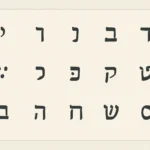
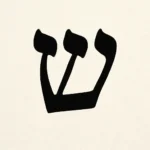
The Hebrew alphabet consists of 22 letters. Unlike the Latin alphabet, Hebrew is written right-to-left. Several letters have different forms in print versus script, and some letters can take a dagesh (a dot) inside the letter to indicate a doubled consonant or a hard pronunciation. While not all vowels are written as letters, the consonantal system is the backbone of Biblical Hebrew, and recognizing common letter shapes helps you begin to identify roots and patterns quickly.
Vowel notation and cantillation marks
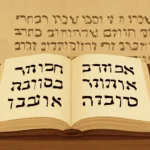
In full vocalization, niqqud (vowel points) indicate vowels: a, e, i, o, u sounds, sometimes as long or short variants. In most modern Hebrew editions you will not see niqqud, but many biblical texts—especially study editions—include them to aid learners. Alongside vowels, the cantillation marks (the te’amim) guide rhythm, phrasing, and syntactic boundaries. Cantillation helps you discern sentence structure, coordinate phrases, and distinguish poetry from prose. A Biblical Hebrew reader should learn to read aloud with the cantillation cadence in mind, while also being able to parse the syntax when cantillation is not present or when you encounter manuscripts without it.
Textual sources and editions
Understanding the textual basis for your reading helps you recognize variants, notes, and editorial choices that affect interpretation. The core text for most readers is the Masoretic Text (MT), which is preserved and transmitted with diacritical marks and cantillation by the Masoretes. The standard critical edition for study is often referred to as the Biblia Hebraica Stuttgartensia (BHS), which aligns the MT with significant manuscript witnesses and scholarly apparatus. When you read Biblical Hebrew, you may also encounter other editions such as the LXX (Septuagint) in parallel readings, the Dead Sea Scrolls evidence in some books, or modern critical editions that note variant readings.
A proficient biblical hebrew reader builds a repertoire that blends linguistic analysis with contextual interpretation. The following skills form the backbone of effective reading practice:
Deciphering roots and patterns in Qal, Niphal, Piel, Pual, Hiphil, Hophal, and Hithpalpel forms
Recognizing construct state (smikhut) and definite state with the article
Parsing parts of speech—nouns, adjectives, pronouns, prepositions, conjunctions
Interpreting verb stems and conjugations in context to determine tense, aspect, voice, and mood
Using lexicons and grammar guides to verify usage, nuance, and semantic range
Cross-checking translations with concordances and parallel passages to arrive at a responsible meaning
Reading with cadence by applying cantillation to bracket phrases and clauses
Grammar and morphology essentials
To become a capable reader of Biblical Hebrew, you need a working understanding of key grammatical constructs. Biblical Hebrew differs in many ways from Modern Hebrew; its verbs and nouns operate within distinct syntactic patterns and stem families.
The verb stems (binyanim) you should know
The system of binyanim (stems) shapes meaning and voice. The most common are:
Qal – simple active voice (the basic stem)
Niphal – passive or reflexive (often with a passive meaning in narrative text)
Piel – intensive or iterative action (causative or emphatic)
Pual – passive counterpart of Piel
Hiphil – causative action (cause someone to do something)
Hophal – passive counterpart of Hiphil (being caused to do something)
Hitpael – intensive or reciprocal action with reflexive nuance
When you encounter a verb form, try to identify its binyan, stem, and binyan-vowel pattern. This will often reveal the speaker’s intention (state, action, command, or description) and help you render a faithful sense in your language.
Nominals: nouns, adjectives, and construct state
Nouns in Biblical Hebrew engage with gender (masculine/feminine), number (singular/plural), and definiteness (with or without the definite article). The construct state (smikhut) is a key feature in Hebrew noun phrases, often signaling possession or a close relationship between two nouns. Adjectives agree with nouns in gender and number and typically follow the noun they modify, though order and emphasis can vary in poetry and emphasis structures.
Reading strategies: step-by-step approaches
Developing a reliable approach to reading Biblical Hebrew involves practical steps you can apply to any passage. The goal is to extract meaning while staying faithful to linguistic and textual context. The following strategy is designed for steadily increasing proficiency and confidence.
Initial pass: surface meaning and pronunciation
Skim the text to identify paragraph breaks, verse structure, and any obvious proper names.
Note the definite article (ha-) and any pronouns attached to nouns or verbs.
Identify the main verbs and subjects to form a rough sense of who is doing what.
Practice with resources: interlinears and glossaries
Use interlinear Bibles to align Hebrew words with English glosses and grammatical notes.
Consult grammars (e.g., A Grammar of Biblical Hebrew, Gesenius’ Hebrew Grammar) for explanations of unusual forms.
Employ concordances to locate recurring words and themes.
Tools, resources, and practice
A successful reader relies on a blend of traditional study aids and modern technology. Below is a curated toolkit you can adapt to your study style and goals.
Printed grammars and lexicons for deep dives into grammar and semantics
Digital interlinears and parallel Bible editions for quick cross-checks
Expanded BHS editions with apparatus and textual notes
Software tools (e.g., Accordance, Logos, BibleStudy plugins) for parsing, tagging, and lexical lookup
Audio resources for listening to cantillation and pronunciation, aiding auditory memory
Common challenges and how to overcome them
Even experienced readers encounter recurring hurdles. Here are some typical difficulties and practical strategies to address them.
Vowel restoration and diacritics: If niqqud is absent, rely on morphological patterns, word shape, and context. When niqqud is present, use it as a clue, not a crutch.
Unfamiliar roots: Build a personal root map by grouping related verbs; memorize series of common roots and their derivatives.
Complex syntax: In long sentences, break down clauses using punctuation cues from cantillation and discourse markers; annotate subjects, verbs, and objects first.
Poetic parallelism: In poetry, parallel lines reinforce meaning; watch for word pairs and repeated imagery rather than expecting a strictly linear narrative.
Textual variants: When editors disagree, consult multiple editions and manuscript evidence; note how variant readings might affect meaning.
Reading poetry vs. prose in Biblical Hebrew
The Bible contains both prose narrative and poetry. The two modes demand different reading habits and interpretive emphasis.
Poetry: cadence, imagery, and parallelism
In biblical poetry, parallelism—where one line echoes or expands on the previous line—drives meaning more than strict syntactic order. Look for:
Corresponding clauses in lines that echo or contrast
Metaphorical language and symbolic imagery
Intensified diction and repeated sound patterns
Prose: narrative structure and conditional clauses
Prose tends to prioritize sequence, causation, and direct speech. Key strategies include identifying the main action, tracking subject-verb agreement, and using conjunctions to map cause-and-effect relationships.
Consistency matters more than intensity. Here are practical, repeatable exercises you can perform weekly to strengthen your skills as a biblical hebrew reader.
Daily word study: pick five verbs daily, identify their binyan, and write a short sentence using each form.
Verse parsing: take a short verse, parse each word, and label its role (subject, verb, object, modifier).
Lexicon check: for key words, consult two lexicons and note semantic ranges and typical contexts.
Construct state practice: create noun phrases in construct state and practice translating possessive relationships.
Cantillation reading: when you have access to cantillations, rehearse aloud to feel the rhythm and group phrases sensibly.
Becoming a skilled Hebrew Bible reader is a gradual process. Here are principles to sustain growth over months and years:
Set realistic milestones—e.g., “read one chapter per week with commentary and glosses.”
Prioritize consistency over occasional bursts of study; even 20–30 minutes most days yields progress.
Embrace intertextual comparison—for example, compare themes in similar passages across books to see how language reinforces ideas.
Annotate regularly with notes on grammar, lexical choices, and textual nuances to create a personal reference.
Engage with community—discussion groups, tutors, or study partners can provide accountability and new insights.
Final tips for every biblical Hebrew reader
As you continue to develop as a reader of Biblical Hebrew, keep the following practical reminders in mind:
Know your limits—some passages use archaic phrasing or unusual vocabulary; acknowledge when you need to consult resources or return later.
Balance translation with interpretation—aim for faithful translation that captures nuance while preserving readability in your target language.
Keep a language notebook—log roots, stems, key exceptions, and insights from scholarly notes.
Practice listening—listening to recited cantillation or audio readings can improve pronunciation and intonation, which in turn aids comprehension.
Be mindful of textual tradition—understand that editors and manuscripts reflect historical reception; this awareness enhances responsible interpretation.
Glossary of essential terms for the Biblical Hebrew reader
To support your learning, here is a concise glossary of terms you will encounter often. Use this as quick reference in your studies.
Masoretic Text (MT) – the authoritative Hebrew text of the Jewish Bible as established by Masoretes.
Biblia Hebraica Stuttgartensia (BHS) – a standard scholarly edition of the MT with critical apparatus.
Niqqud – vowel points used to indicate Hebrew vowel sounds.
Te’amim – cantillation marks guiding pronunciation and syntax.
Binyanim – the stem-family system of Hebrew verbs (qal, niphal, piel, pual, hiphil, hophal, hitpael).
Smikhut – the construct state, showing a close syntactic relationship between two nouns.
Definite article ha- – the prefix that marks definiteness on a noun in Hebrew.
Qal, Niphal, Piel, Pual, Hiphil, Hophal, Hitpael – principal verb stems with distinct meanings and voices.
Interlinear Bible – a tool that presents the original Hebrew text with aligned word-for-word translations and notes.
Whether you are just beginning your journey as a biblical hebrew reader or you are seeking to deepen an established practice, the essential aim remains: to read with fidelity to the text, to understand how language shapes meaning, and to grow in both linguistic skill and spiritual or scholarly insight. With patience, steady study, and the right set of tools, you can move from recognizing individual letters to grasping the larger syntax, imagery, and narrative power of the Hebrew Bible.