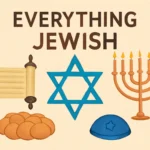
Welcome to a deeper look at Judaism through a lens of curiosity and playfulness. This article presents 12 surprising facts that illuminate facets of Jewish life, belief, practice, and history that many people find fascinating. Each fact is designed to be both informative and engaging, offering a mix of historical context, cultural insight, and practical detail. Whether you are new to studying Judaism or looking for intriguing tidbits to share, you’ll find material here that broadens your understanding of this ancient yet continually evolving tradition.
Every week, the Jewish calendar offers a dedicated pause from ordinary life: Shabbat. This is not merely a day of rest; it is described in Jewish thought as a gift of time that invites reflection, family, and spiritual renewal. Shabbat begins on Friday sunset and ends on Saturday night, marked by special rituals, prayers, and meals.
Candle lighting typically signals the start of Shabbat. In many homes, the lighting of two candles by the woman of the house is a cherished ritual that welcomes a peaceful atmosphere.
Work and certain kinds of labor are traditionally refrained from, creating a distinct environment of rest and reframing daily priorities.
Families often share a three-meal Shabbat, with particular songs and blessings that celebrate creation, freedom, and community.
At sundown on Saturday, Havdalah ceremonies separate the sacred time of Shabbat from the ordinary week ahead, often using a candle, wine, and spices.
The practical structure of Shabbat—candles, blessing over bread (_challah_), rest, prayer, and family togetherness—helps many Jews recharge emotionally and spiritually. It also functions as a weekly reminder of the themes of creation and liberation that thread through Jewish history. In short, Shabbat is a recurrent invitation to pause, connect, and renew.
Fact 2: The Hebrew Calendar Is Lunar-Solar and Surprisingly Complex
Overview
The timing of Jewish holidays is guided by a carefully calibrated lunar-solar calendar, not a simple solar or lunar system alone. This design keeps the months aligned with the moon while ensuring that major festivals fall in their appropriate seasons. The calendar features a 19-year cycle with leap years that insert an extra month, ensuring that agricultural and seasonal observances stay in sync with the solar year.
There are 12 months in a common year and 13 months in a leap year. The leap year means Adar II is added to accommodate the lunar cycle.
Months include Nisan, Iyar, Sivan, Tammuz, Av, Elul, Tishrei, Cheshvan, Kislev, Tevet, Shevat, and Adar (plus Adar II in leap years).
Key holidays cluster in the month Tishrei (Rosh Hashanah, Yom Kippur, Sukkot), which gives this period its own rhythm and sense of rhythmically monumental time.
Because the lunar cycle runs about 11 days shorter than the solar year, a formed system of postponements and adjustments keeps festivals in their intended seasons. This keeps the year feeling both cyclical and anchored in nature.
The Hebrew calendar’s complexity is a testament to a long-standing effort to harmonize religious life with the rhythms of the natural world. It also reflects a broader tradition of precise, scholarly work that has been central to Jewish communities for millennia.
Fact 3: Kosher Living Is About Much More Than Pork
Overview
Kashrut, the set of Jewish dietary laws, is often summarized in popular conversation as “no pork.” The reality runs far deeper, encompassing cleanliness criteria, slaughter standards, and the separation of meat and dairy. The aim is to bring intention and mindfulness to eating, aligning daily meals with principles of holiness and ethical discipline.
Only clean animals that both chew their cud and have split hooves may be eaten; examples include cows and sheep, but not pigs, for instance.
Fish must have fins and scales to be considered kosher, which excludes shellfish and many other sea creatures.
The famed rule of meat and dairy separation means they cannot be cooked or eaten together, and many households maintain separate utensils, pots, and even dishwashers.
In addition, many foods require hechsher (kosher certification) to verify production under kosher supervision, especially wine, processed foods, and restaurant meals.
Kashrut is a practical framework that shapes daily life in profound ways. It creates opportunities for communal dining, ritualized meals, and ongoing education about foods’ origins, production methods, and ethical considerations.
Fact 4: Bar Mitzvah and Bat Mitzvah as Milestones of Coming of Age
Overview
A defining coming-of-age moment in Judaism is the Bar Mitzvah for boys and the Bat Mitzvah for girls. Traditionally celebrated when a child reaches the age of 13 (Bar Mitzvah) or 12–13 (Bat Mitzvah, depending on community), this rite marks the moment when a young person becomes morally and ritually responsible for observing the mitzvot.
The occasion often involves a child reading a portion of the Torah aloud in synagogue during a public service, a practice known as making an aliyah.
In many communities, the ceremony includes a blessing, a speech, and a celebration with family and friends, highlighting both tradition and personal growth.
Some movements, like Reform and Conservative communities, emphasize an inclusive model where girls often participate in similar rites and responsibilities as boys.
Beyond the public ritual, the Bar/Bat Mitzvah is a moment to commit to ongoing study, community service, and a more engaged role within Jewish life.
The Bar Mitzvah and Bat Mitzvah are not just parties; they symbolize a lifelong commitment to learning, DUTY, and community. They also serve as gateways to deeper engagement with Torah study, prayer, and Jewish history.
Fact 5: The Torah and the Talmud—Written Law and Oral Law
Overview
Judaism’s legal and interpretive framework rests on two interconnected pillars: the Torah (the written law) and the Talmud (the oral law). The Torah comprises the Five Books of Moses, while the Talmud—two editions in history (Babylonian and Jerusalem) and their commentaries—contains rabbinic deliberations, interpretations, and legal rulings that have guided generations.
The Written Law provides foundational narratives, commandments, and ethical teachings that shape Jewish belief and practice.
The Oral Law elaborates and analyzes those commandments, offering methods for applying them in diverse circumstances.
The Talmud’s central themes include questions of ritual practice, civil law, ethics, and the process of interpretation itself, illustrating how living tradition engages with new situations.
There are two principal Talmuds: the Babylonian Talmud and the Jerusalem Talmud, each with its own dialects, debates, and interpretations.
Together, the Torah and the Talmud form a dynamic continuum of law and commentary. This relationship enabled Judaism to adapt as communities encountered new cultures and changing times, while remaining anchored in a shared scriptural core.
Fact 6: The Revival of the Hebrew Language Is a Remarkable Story
Overview
Hebrew’s revival from liturgical and scholarly language to a living, spoken tongue is one of the most remarkable linguistic shifts in modern history. Powered by a movement in the late 19th and early 20th centuries, modern Hebrew became the national language of Israel and a unifying medium for Jewish communities around the world.
Key figures, including Eliezer Ben-Yehuda, dedicated themselves to expanding vocabulary and creating everyday usage for Hebrew in homes, schools, media, and government.
Today, Hebrew is used in literature, film, science, and technology, as well as everyday conversation in Israel and diaspora communities.
Ancient Biblical Hebrew coexists with modern usage, and many prayers retain historical language that connects contemporary worship with ancient texts.
Aramaic, another ancient Semitic language, appears in classical Jewish sources like the Talmud, enriching the linguistic tapestry of Judaism alongside Hebrew.
The Hebrew revival illustrates a powerful idea in Jewish life: language can be a vessel for identity, continuity, and renewal. The revival also enabled a more vibrant cultural exchange between Jewish populations across continents.
Fact 7: The Synagogue—Architecture, Space, and Community
Overview
The synagogue, or shul, is more than a place of prayer. Its architectural elements—Ark, Bimah, and the minyan—create a focused environment for communal worship, Torah study, and life-cycle events.
The Ark (Aron Kodesh) houses the Torah scrolls, symbolizing sacred or holy space and the central role of Torah in worship.
The Bimah is a raised platform from which Torah reading and certain prayers are led, emphasizing communal participation.
A minyan—the traditional quorum of 10 adults—is required for certain prayers in many communities, underscoring the social dimension of Jewish worship.
Different movements (Orthodox, Conservative, Reform, and others) vary in layout, gender roles, and musical styles, reflecting diverse approaches to worship within Judaism.
Beyond the ritual components, synagogues serve as hubs for education, charity, and social life. They are spaces where languages, tunes, and customs from different Jewish cultures converge, illustrating the pluralistic nature of contemporary Jewish practice.
Fact 8: The Life-Cycle Milestones Shape Jewish Identity
Overview
Jewish life is marked by a series of life-cycle milestones that connect individuals to family, community, and tradition. These rites and ceremonies span birth, adulthood, marriage, and death, and they often involve the wider community in meaningful ways.
Brit Milah (circumcision) is traditionally performed on the eighth day after birth for boys, signaling the covenant with God.
Simchat HaBayit and naming ceremonies for girls, along with occasions like baby naming, welcome the newest members of the community.
Wedding rituals, including the ketubah (marriage contract) and the rabbinic blessing under a canopy (chuppah), symbolize partnership, responsibility, and joy.
Funeral rites and mourning practices, such as keriah and shiva, offer structured ways to grieve within a Jewish ethical framework.
These milestones create repeating anchors in a person’s life, reinforcing a sense of belonging and continuity across generations. They also reflect Jewish values around family, memory, and communal responsibility.
Fact 9: Hanukkah Is a Festival of Light, Not a Biblical Holiday
Overview
Hanukkah is widely observed and beloved, yet it is not among the core biblical festivals. It commemorates the rededication of the Second Temple in Jerusalem after the Maccabean Revolt and the miracle of the oil that burned for eight days. The festival’s glow—symbolized by the menorah—remains a vivid reminder of resilience and faith.
The menorah is lit for eight nights, with a new candle added each evening.
The holiday blends historical memory with a sense of miraculous possibility, making it accessible to children and adults alike.
Traditional foods include latkes (potato pancakes) and sufganiyot (jelly-filled donuts), connecting celebration with shared taste and family rituals.
Though its date shifts yearly, Hanukkah generally falls in December, giving it a wintertime mood of warmth and light in many communities.
Hanukkah’s enduring appeal lies in its story of perseverance and its family-centered rituals. It showcases Judaism’s ability to turn historical memory into a living, luminous practice that spans continents and generations.
Fact 10: Prayer Tools That Tie Belief to Daily Practice
Overview
Jewish prayer and ritual are enriched by tangible objects that link ideas to action. The use of tzitzit, tefillin, and the mezuzah are among the most visible ways that observance is enacted in everyday life.
The tzitzit are fringes attached to garments as commanded in the Torah, serving as a constant reminder of God’s commandments.
Tefillin (phylacteries) are small leather boxes containing scripture, bound on the arm and forehead during weekday morning prayers as a sign of devotion and focus.
The mezuzah is a parchment scroll affixed to doorframes, inscribed with the Shema and positioned to remind inhabitants of God’s presence as they enter and exit spaces.
Many communities also observe the kaddish and other prayers that accompany daily or weekly services, connecting personal life with communal worship.
These ritual tools illustrate how Judaism weaves belief into concrete practice. They also offer a tangible way for people of different ages to engage with tradition and to remember the covenant at the heart of Jewish life.
Fact 11: The Linguistic Tapestry of Judaism—Hebrew, Aramaic, Yiddish, and Ladino
Overview
Judaism is not monolingual; it has historically thrived at the crossroads of cultures and languages. In addition to Hebrew, which remains central to liturgy and national identity, other languages have played vital roles in Jewish life, including Aramaic in the Talmud, Yiddish among Ashkenazi communities, and Ladino among Sephardic and Mizrahi Jews.
Aramaic appears extensively in classical rabbinic literature, adding depth to legal discussions and ritual explanations.
Yiddish blends Germanic roots with Hebrew and Slavic elements, shaping a vibrant literary and cultural world for centuries.
Ladino reflects the Sephardic experience in the Iberian diaspora, preserving unique customs, poetry, and philosophy.
Meanwhile, Modern Hebrew has become a living language used in education, media, technology, and daily speech, creating a bridge between ancient texts and contemporary life.
The linguistic diversity in Judaism reflects adaptability, resilience, and a long history of diaspora communities negotiating identity through language. It also highlights how language can be a carrier of memory, ritual, and innovation across generations.
Fact 12: A Rich Mosaic of Movements and Traditions
Overview
Judaism today comprises a rich mosaic of movements and communities, including Orthodox, Conservative, Reform, and Reconstructionist branches, plus numerous Karaite and cultural groups. This diversity reflects how Jewish life adapts to local contexts while honoring shared sources.
Orthodox Judaism emphasizes traditional observance and the central authority of rabbinic interpretation.
Conservative Judaism seeks a middle ground, balancing tradition with modern scholarship and inclusive practices.
Reform Judaism prioritizes individual autonomy, modern interpretations of practice, and often gender-inclusive rituals.
Other communities highlight unique customs, such as Sephardic, Ashkenazi, and Mizrahi traditions, each with distinct liturgical tunes, cuisines, and legal rulings.
This convergence of voices and practices demonstrates that Judaism is not a single, static system but a living tradition with multiple lanes of expression. The variety ensures that diverse communities can connect, study, pray, and celebrate in ways that feel authentic while maintaining core commitments to ethics, learning, and memory.
Closing Reflections: Why These Surprising Facts Matter
The twelve facts above offer more than trivia; they illuminate how Judaism has endured while remaining flexible enough to absorb new ideas, cultures, and technologies. From the weekly cadence of Shabbat to the linguistic renaissance of Hebrew, from sacred texts to the everyday act of affixing a mezuzah, Jewish life embodies a dynamic interplay between continuity and change.
As you explore these facets, consider how ritual, language, community, and law work together to form a durable, evolving identity. The twelve surprising facts we examined are not just curiosities; they are windows into a tradition that has continually found new ways to be relevant, humane, and meaningful across continents and centuries.