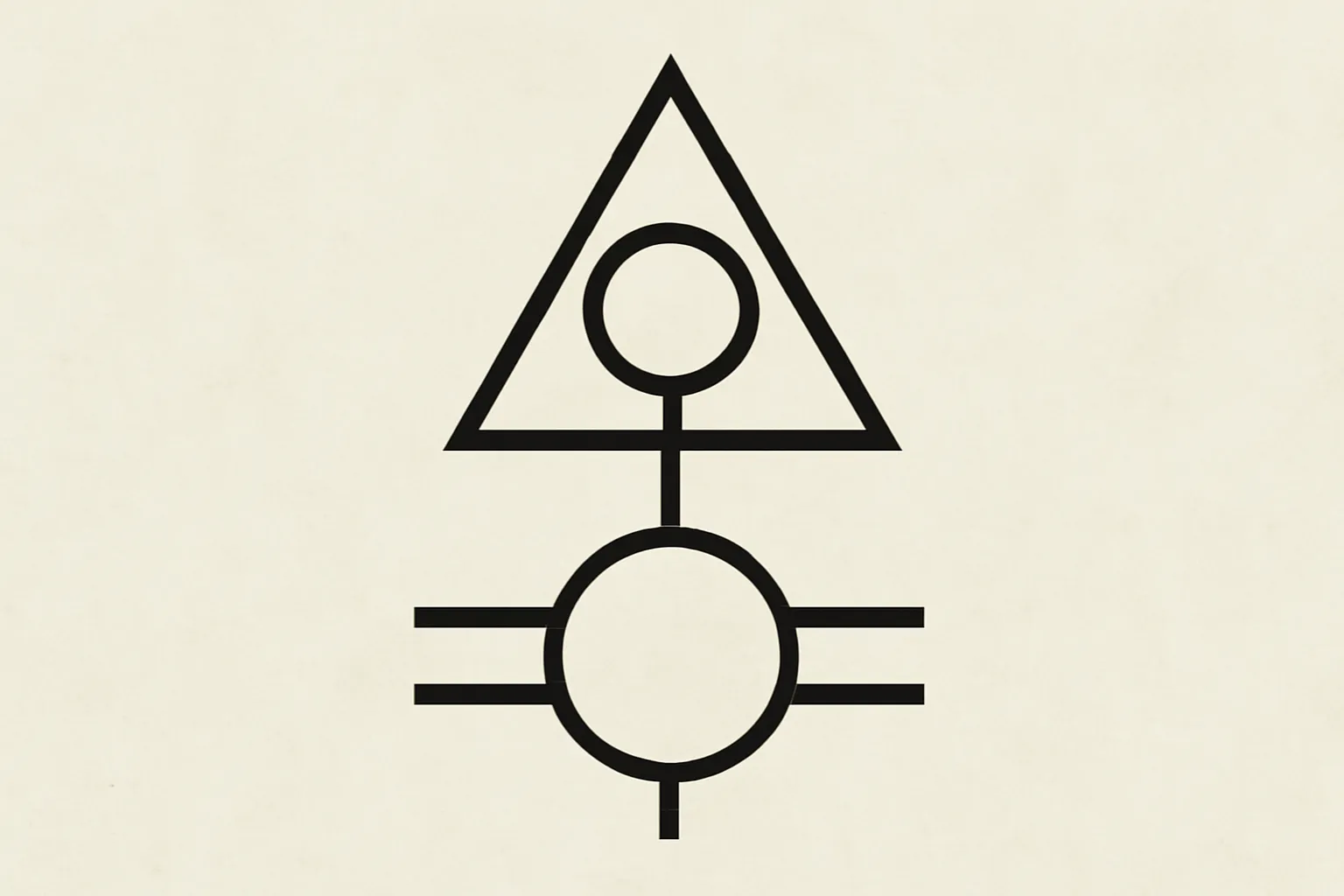
Binah Kabbalah, often called the Binah sefirah in Jewish mysticism, stands as a pivotal principle within the Tree of Life. This article explores its meaning, its symbolism, and its practical insights for daily life, study, and spiritual practice. While rooted in the arcane vocabulary of Kabbalah, the ideas behind Binah speak to universal questions about how ideas become form, how we discern, and how we cultivate a disciplined imagination that can translate inspiration into tangible reality.
In the classic schema of the Kabbalistic tree, Binah is the third sefirah in the central column, positioned downstream from Chokhmah (Wisdom) and upstream of Tiferet (Beauty) and the other lower sephirot. The Hebrew root behind Binah is ב-נ-ה, generally understood as “to understand,” “to discern,” or “to form.” In this sense, Binah is not merely passive knowledge; it is the active formation of potential into something recognizable, experienced, and usable in the world.
Historically, Binah has been described as the feminine, receptive principle within the divine structure, often linked with the idea of the Great Mother or Imma in various kabbalistic traditions. This is not a gendered statement about humans but a symbolic framework in which Binah represents the womb-like capacity to hold, reflect, and shape incoming light (in Kabbalistic terms, divine energy) into a form that can be perceived and acted upon. Because of this, Binah is frequently associated with contemplation, analysis, and the slow, deliberate processing that turns raw insight into structured understanding.
Some readers encounter Binah as formation or structure—the stage where ideas are given shape and boundaries. While Chokhmah can be imagined as a sudden spark of insight or a flash of possibility, Binah asks: What does this imply? How can this be formed into a reliable plan or system? In practical terms, Binah asks us to consider how to translate inspiration into method, how to map potential into plan, and how to align intention with form. This is why Binah is so often described as the sefirah of understanding that is active, not merely theoretical.
Etymology and Conceptual Framework
The name Binah itself encodes a nuanced spectrum of meaning. The root letters B-N-H point to comprehension and discernment, but the concept is expanded in the Kabbalistic tradition by associating Binah with concepts such as limitation, boundaries, and the creation of order from chaos. In many lineages, Binah embodies a deliberate, patient mode of perception that grants a vessel for ideas to reside, mature, and be evaluated before they manifest.
Root meaning: to understand, to discern, to perceive with depth.
Relationship to Chokhmah: Binah receives the raw light of Wisdom, filters it, and gives it form.
Role in the process of creation: Binah acts as the container that makes ideas usable in the physical or spiritual world.
Gendered symbol: often described as feminine or maternal energy within the sephirotic map, highlighting receptivity and generative potential.
In a broader framework, Binah is frequently connected to the idea of formation through contemplation, the moment when potential becomes a plan, not merely a possibility. It is the conceptual space in which we pause, examine assumptions, and determine the appropriate means to reach a desired end. This is why so many Kabbalists associate Binah with both intellectual discipline and emotional discernment.
Binah in the Tree of Life: Place, Function, and Interrelationships
Placed in the central pillar of the Tree of Life, Binah stands between the upper source of insight and the manifest world below. Its function is to take divine light—frequently described as the creative impulse of Chokhmah—and convert it into a coherent form that can enter the material or spiritual planes. In this sense, Binah acts as a translator, a bridge between inspiration and realization.
With Chokhmah: Binah’s formation arises from Chokhmah’s raw breakthrough or flash of insight. The energy of Wisdom is condensed and disciplined through Binah’s processing faculty.
With Gevurah and Hochma-Binah dynamics: Binah often works with Gevurah (Judgment or Severity) to define boundaries and ensure that form adheres to necessity and purpose. This interplay helps prevent chaotic overflow of energy and drives outcomes that are sustainable.
With the lower sephirot: Once Binah has formed a principle, it can progress toward Tiferet (Harmony/Beauty), Yesod (Foundation), and finally Malkuth (Kingdom) as manifestation in the physical or experiential realm.
With Da’at in some traditions: In certain schools, Da’at is treated as an additional or hidden sefirah that functions as a cognitive synthesis of knowledge, connecting Binah’s understanding with the experiential awareness of Yesod and Malkuth.
From a spiritual perspective, Binah’s place in the Tree of Life also invites us to consider the inner journey of a seeker. The path that runs through Binah invites a shift from the impulsive clarity of Chokhmah to a disciplined, patient, and responsible way of knowing. It is a path of maturation: ideas that are not yet ready are held, weighed, and refined until their form is robust enough to endure the tests of life and time.
The Dynamic of Formation: From Idea to Form
In practice, this dynamic can be understood as a two-stage process: first, the intuitive, instantaneous spark of Chokhmah; second, the deliberate, methodical shaping of Binah. When a person engages with Binah energy, they are invited to slow down, analyze, and create the blueprint for action. The synergy between wisdom and understanding yields more than a mere plan; it yields a resilient framework that aligns intention with resources, time, and context. This is a core reason Binah is essential to long-term success in creative, scholarly, or spiritual projects.
Symbolism of Binah: Archetypes, Colors, and Images
The symbolic language of Binah enriches our understanding and provides accessible entry points for practice. Several recurring images and associations appear throughout Kabbalistic literature and iconography:
The Womb and the Great Mother: Binah is often envisioned as a nurturing space where potential grows into intelligible form. This womb-like function emphasizes receptivity, containment, and growth within boundaries.
Color and light: Binah is frequently linked with deep, dark colors—often described as black or deep blue—signifying depth, concealment, and the unseen before it becomes manifest.
Planetary and elemental correspondences: Binah is commonly associated with the element of water and with lunar cycles in some traditions, highlighting the tides of perception, reflection, and inward turning.
Archetypal figures: The feminine principle of Binah is often linked with figures such as the Imma, the Sage Mother, or the Wise Woman who holds space for understanding to emerge.
Liminal space and time: Binah resides in the realm of timing, season, and process—precisely those dimensions required for an idea to pass from potential to reality.
In addition to these core symbols, many contemporary practitioners highlight Binah as the energy that discerns what is essential from what is not, enabling a plan that is coherent, sustainable, and aligned with deeper values. This makes Binah a crucial ally for scholars, designers, therapists, and anyone who works with complex systems or intricate creative processes.
Practical Insights: How to Engage with Binah in Daily Life
To translate Binah’s abstract wisdom into concrete action, practitioners often adopt two broad orientations: contemplative discernment and structured creation. The following practical pathways are designed to help you cultivate Binah energy without becoming overly rigid or overly passive. Use them as a framework, then adapt to your personal rhythm and spiritual tradition.
Contemplative discernment: cultivate periods of stillness in which you let ideas “silently breathe.” This could be a quiet walk, a focused journaling session, or a meditative review of a concept. The aim is to observe the idea from multiple angles, noting assumptions, counterpoints, and possible boundaries.
Structured analysis: practice turning inspiration into a plan. Ask constructive questions: What problem does this idea solve? What resources does it require? What milestones will mark progress? What are the potential risks or failures, and how can they be mitigated?
Womb-to-World exercises: create a small, tangible form for an abstract concept. For designers, this might be a schematic diagram; for writers, a detailed outline; for researchers, a research proposal. The goal is to translate intention into a defendable structure.
Boundary-setting: Binah emphasizes boundaries that preserve integrity. Practice identifying nonessential elements that drain energy and removing or restraining them to allow the core form to emerge.
Timing and pace: honor the timing of formation. Some projects require rapid prototyping; others require long incubation. Binah teaches us when to accelerate and when to hold.
Take a current idea or project. Write down its core purpose in one sentence, then expand to a two-paragraph rationale that includes potential obstacles and a simple plan to address them.
Choose a complex problem and map its flow from concept to outcome. Draw a flowchart that makes explicit whom or what is needed at each stage and where critical decision points occur.
Practice a weekly “Binah pause”: 15 minutes of focused reflection on one major decision or idea, followed by a short note about what boundary or constraint you will apply.
Engage in a creative exercise that requires turning a spontaneous insight into a tangible artifact (e.g., outline a chapter, design a prototype, or sketch a process). Emphasize how form supports function.
Pair Binah energy with a contrasting sefirah (such as Chokhmah or Chesed) to explore how different energies shape the same project. For instance, compare the rapid spark of inspiration with the slow, governing discipline of Binah for the same task.
Binah and Personal Development: Balancing Insight with Form
On the personal scale, Binah can guide us toward healthier habits of thinking and acting. It invites us to cultivate discernment, discipline, and a prudent sense of timing. But when Binah tilts toward rigid control or overanalysis, it can give rise to stagnation or perfectionism. The challenge is to integrate Binah with other sephirot that bring vitality and spontaneity, especially Chokhmah (inspiration) and Tiferet (harmony).
Strengths of Binah: clarity, structure, careful planning, risk assessment, and the ability to translate ideas into practical steps.
Shadow aspects: rigidity, overanalysis, paralysis by analysis, and fear of failure that prevents experimentation.
Balance strategies: pair Binah with Chokhmah for creative leaps, with Hesed for compassionate planning, or with Yesod for foundations that support daily life.
By recognizing Binah’s shadow and cultivating its lighter aspects, a person can approach life’s projects with mature insight—not merely cleverness or enthusiasm, but a robust framework that sustains effort and yields meaningful, lasting outcomes.
Binah in Practice: Spiritual and Meditative Approaches
For those who pursue spiritual practice, Binah offers a path toward inner clarity and ethical consistency. The contemplative dimension of Binah invites a quiet, patient form of prayer or meditation that honors the pace of formation. Practical spiritual habits include:
Contemplative study: approach sacred texts or teachings with a readiness to reflect, question, and synthesize rather than to accumulate knowledge.
Contemplative journaling: write reflections on what a concept would require to exist in your daily life—what boundaries, patterns, or routines would support it?
Dream and imagination work: use guided imagery to visualize how a nascent idea might take form in the waking world, paying attention to how boundaries shape growth.
Ethical discernment: employ Binah energy to examine the implications of decisions, considering how they affect others and the greater good.
In daily spirituality, Binah’s energy can be a counterbalance to the more spontaneous or radiant energies often celebrated in contemplative life. It teaches us that true wisdom often matures in silence, through careful examination, and through giving form to what we sense at a deeper level.
Common Misconceptions About Binah
As with many mystical concepts, Binah is sometimes misunderstood. Clearing these misconceptions helps students engage more accurately with the sefirah and integrate its energy more effectively. Common myths include:
Binah is only about intellectualization: While Binah involves deep thinking, its core is not dry intellect but transformative understanding—taking insight and shaping it into meaningful form.
Binah equals perfectionism: The sefirah emphasizes discernment and responsible form, not the paralyzing fear of failure. Healthy Binah seeks sturdy, adaptable boundaries.
Binah suppresses creativity: On the contrary, Binah supports sustainable creativity by providing the structure that ensures ideas can be realized without collapse or inconsistency.
Binah is detached: While Binah holds a certain inner reserve, its activity is deeply connected to ethical considerations and a sense of purpose that aligns with higher values.
Binah is exclusively “feminine”: The symbol of Binah as the feminine energy reflects archetypal dynamics, but the sephirah transcends gender metaphors, inviting all seekers to engage its form-making power.
Variations Across Traditions: How Binah Is Read Today
Across different schools within Kabbalah, Binah can be interpreted with slight variations, though the core idea remains consistent: a process of formation driven by deep understanding. In Lurianic Kabbalah, for example, the interplay between Binah and other sephirot is often discussed in terms of dynamic flows of light and the constraints that enable creation to become reliable. In modern, practical Kabbalah, many teachers emphasize Binah as a skillful approach to study, planning, and ethical decision-making, especially for those who seek to integrate spiritual insight with everyday life.
Readers may also encounter Binah in relation to the concept of Da’at (knowledge) as a potential hidden sefirah in some frameworks. In these models, Da’at functions as a cognitive synthesis that makes Binah’s discernment ready for application in Yesod and Malkuth. While not all systems use Da’at in the same way, the idea of integrated knowledge highlights how Binah does not operate in isolation but in concert with the full network of sephirot.
Practical Takeaways: How Binah Can Enrich Your Life
Whether you are exploring Kabbalah for spiritual growth, intellectual enrichment, or creative practice, Binah offers concrete methods to elevate your life. Here are practical takeaways you can apply starting today:
Adopt a Binah-led planning ritual: when starting a project, spend time mapping out purpose, steps, and boundaries before proceeding.
Practice reflective writing: regularly journal about how an idea could be formed, what obstacles stand in the way, and what resources are necessary to realize it.
Use Binah to refine your communication: draft messages or presentations with an emphasis on clarity, structure, and the logical flow of arguments.
Balance with other sephirot: pair Binah with Chokhmah to keep a spark of spontaneity, with Hesed for compassionate planning, or with Yesod for grounded implementation.
In personal growth, cultivate patient discernment: practice waiting for the right moment to act, allowing form to emerge rather than forcing it prematurely.
Conclusion: Integrating Binah into a Wise Life
Binah Kabbalah invites us to see understanding not as a solitary moment of insight but as a living process of formation. It asks: How can we translate inspiration into structure that serves life, learning, and love? How can we hold space for potential while also recognizing the necessity of boundaries and timing? When we engage with this sefirah—whether through study, meditation, or practical projects—we learn to cultivate a mature, grounded form of wisdom that helps us navigate complexity with clarity and care.
By recognizing Binah as a bridge between insight and action, the seeker gains a dependable ally in the ongoing work of creation. Whether you approach Binah as a spiritual archetype, a psychological principle, or a practical toolkit, the core message remains the same: true understanding leads to form, form fosters meaning, and meaning sustains life. In that sense, the Binah energy is not distant or theoretical; it is a lived discipline that, when practiced with intention, can transform ideas into enduring realities.