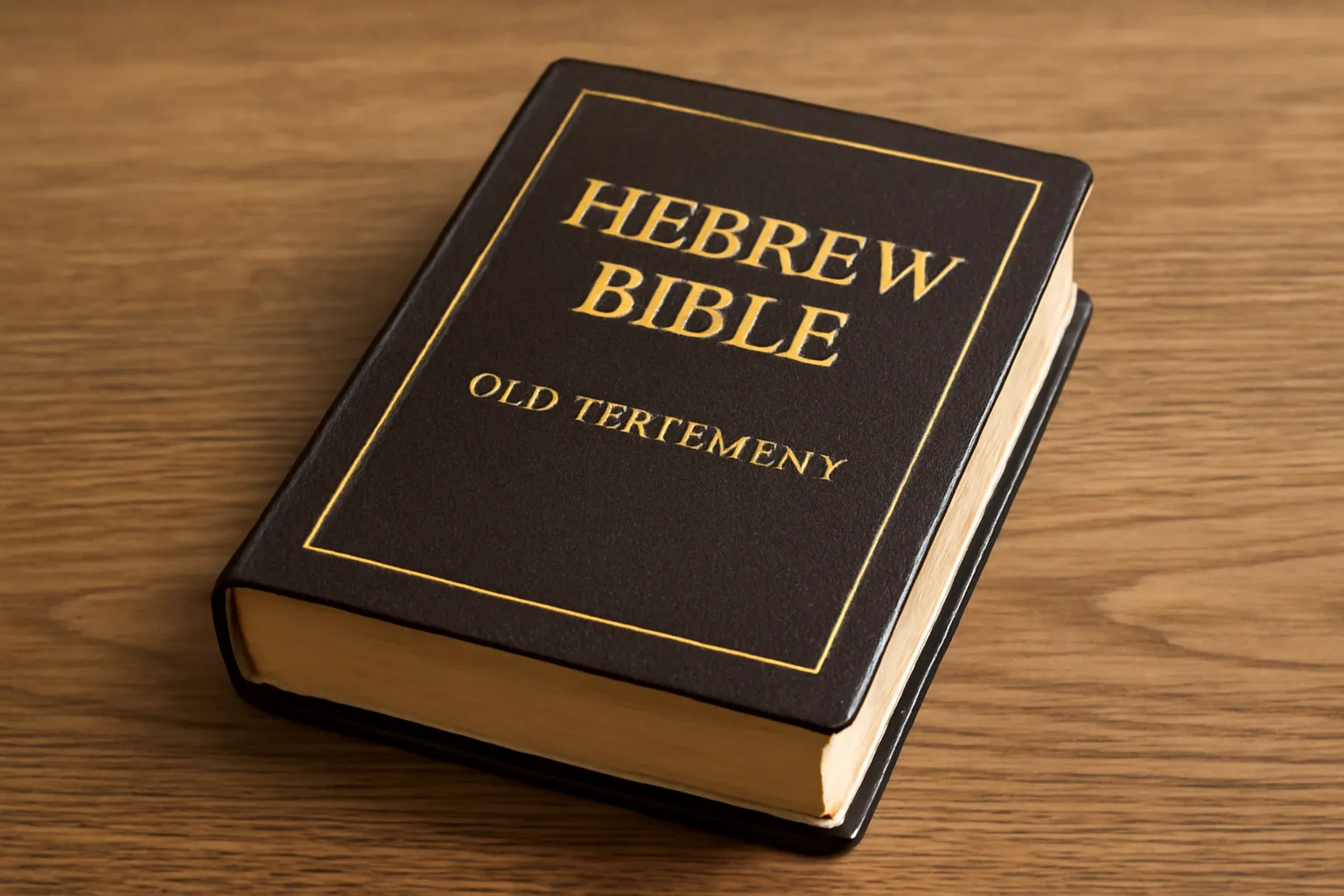
Introduction: Understanding the Hebrew Bible and the Old Testament
The study of the Hebrew Bible and the Old Testament opens a window into a vast and multifaceted ancient library that shapes
religious thought, law, poetry, history, and wisdom across multiple faith traditions. While these terms are often used interchangeably in everyday language, they
do not always refer to the same collection or the same ordering of texts in every tradition. The Hebrew Bible, also known as the Tanakh in Jewish usage, is the canonical corpus for Judaism and is traditionally divided into three parts: the Torah (Law),
the Nevi’im (Prophets), and the Ketuvim (Writings). By contrast, in most Christian contexts the same body of material is referred to
as the Old Testament and is arranged in a different sequence, often with a broader set of books that Catholics and Orthodox include.
In this article, we will explore how the canon of these scriptures was formed, what the contents are in each tradition, and how they relate to
theology, history, and practice. We will also consider the scholarly perspectives on textual transmission, translation, and interpretation. The goal is to provide a
comprehensive guide that helps readers navigate the similarities and differences without getting lost in terminology.
Overview of the Canon Across Traditions
The term canon refers to the authoritative list of books regarded as sacred scripture within a religious community. In the case of the Hebrew Bible,
the Tanakh distinctively shapes Jewish faith and practice. For Christians, the same ancient scriptures have been incorporated into the Old Testament in ways
that reflect doctrinal development, the influence of the Septuagint, and the decisions of various church councils over centuries.
When comparing canons, it is important to recognize three key distinctions:
Order and grouping of books vary between Jewish and Christian traditions.
The scope of accepted texts differs, with some Christian traditions including Deuterocanonical books that are not part of the Hebrew Bible.
The name for the corpus can differ: Tanakh in Jewish usage, Hebrew Bible in scholarly contexts, and Old Testament in many Christian Bibles.
Key terms to know
Tanakh – the canonical collection in Jewish tradition: Torah, Nevi’im, Ketuvim.
Torah – the first five books, also called the Pentateuch in Christian contexts: Genesis, Exodus, Leviticus, Numbers, Deuteronomy.
Nevi’im – the Prophets, subdivided into Former and Latter Prophets in Jewish tradition.
Ketuvim – the Writings, a diverse collection that includes poetry, wisdom, and historical writings.
Deuterocanonical – books accepted in Catholic and Orthodox canons but not in the Hebrew Bible or most Protestant canons.
Septuagint – a Greek translation of Hebrew scriptures that influenced Early Christian usage and some Christian canons.
Canonical Structure and Contents
Although the names and order differ, the core material in the Hebrew Bible and the Old Testament shares many of the same books. The canon is usually
described in broad sections, with the Torah/Pentateuch serving as the foundational narrative, followed by prophetic writings and finally the writings
that capture wisdom, poetry, and diverse genres.
Torah / Law
The Torah is the cornerstone of both Jewish and Christian scriptures. It presents the creation narrative, the patriarchal histories, the
formation of Israel as a chosen people, and the giving of divine law. The five books in this section are:
Genesis
Exodus
Leviticus
Numbers
Deuteronomy
In Jewish tradition, these books are read publicly in annual cycles during synagogue services and form the basis for the covenantal relationship between God
and Israel. The material covers themes of creation, sin, redemption, covenant, laws, and the leadership of Moses.
Prophets
The Nevi’im is typically divided into two major subsections: the Former Prophets and the Latter Prophets (within Jewish
usage; Christian divisions may differ in labeling but essentially inventory the same core texts).
Former Prophets: Joshua, Judges, Samuel (1–2 Samuel), and Kings (1–2 Kings).
Latter Prophets: Isaiah, Jeremiah, Ezekiel, and The Twelve (Hosea, Joel, Amos, Obadiah, Jonah, Micah, Nahum, Habakkuk, Zephaniah, Haggai, Zechariah, Malachi).
These books present the history of Israel from entering the land to the extinction of a northern kingdom and then the Babylonian exile, followed by prophetic
messages that call for repentance, justice, hope, and a future renewal. In Christian contexts, these books are often grouped as Prophecy and
used to interpret the Messiah expectations in light of later revelation.
Writings
The Writings (the Ketuvim) form a diverse collection that includes poetry, wisdom literature, and apocalyptic or historical works. The
order and exact books vary by tradition, but common inclusions are:
Psalms
Proverbs
Job
Song of Songs
Ruth
Lamentations
Ecclesiastes
Esther
Daniel
Ezra–Nehemiah
Chronicles (1–2 Chronicles)
The Writings emphasize a broad spectrum of human experience, including worship, doubt, lament, celebration, and perseverance. In the Jewish
tradition, the Ketuvim includes the Five Megilloth (scrolls)—Songs of Songs, Ruth, Lamentations, Ecclesiastes, Esther—which are read on special
occasions throughout the liturgical year.
Translations, Textual Traditions, and Variants
The text of the Hebrew Bible has a long and intricate transmission history. The native Hebrew/Aramaic manuscripts preserved by Judaism were later
translated into Greek as the Septuagint, which influenced Christian usage and translations in the early centuries CE. The manuscript tradition
that underpins modern translations often centers on the Masoretic Text, a carefully standardized Hebrew text produced by Jewish scholars in the medieval period.
Modern scholarship also examines sources such as the Dead Sea Scrolls, which preserve Hebrew and Aramaic texts from before the Common Era and illuminate
textual variants, rival readings, and the development of biblical books. Because different manuscript traditions exist, modern translations aim to
balance literal fidelity, readability, and the understanding of ancient idioms.
The Masoretic Text (MT) is the standard basis for most Jewish and many Protestant translations.
The Septuagint (LXX) is a Greek rendition that circulated widely in the ancient world and remains influential in Catholic and Orthodox traditions.
In some Christian canons, the Deuterocanonical books (such as Tobit, Judith, Wisdom, Sirach, and 1–2 Maccabees) are included, expanding the Old Testament beyond the MT’s scope.
Other textual witnesses, including the Dead Sea Scrolls, provide important variants and new insights into the wording and ordering of certain books.
Historical Development and Formation of the Canon
The formation of a stable canon was a gradual process rather than a single event. Different communities recognized certain writings as authoritative
at different times, leading to a diverse set of canons by the early centuries CE. Several factors shaped these developments:
Authority and use: Texts that were widely read in worship, teaching, and communal life tended to gain canonical status.
Linguistic and cultural context: The transition from Hebrew to Aramaic and Greek, as well as contact with Near Eastern literary traditions, affected which books were retained.
The role of religious authorities: Councils, synagogue leadership, and later church authorities played roles in defining the scope of Scripture, especially in Christian communities.
The impact of exile and diaspora: The experience of exile and wandering influenced how communities understood revelation, covenant, and continuity with ancestors.
The Jewish canon was largely settled by the end of the first century CE, though some textual debates persisted in various communities. For Christians, the process
continued through late antiquity, with differences between the Catholic, Orthodox, and Protestant canons becoming more pronounced.
How the Hebrew Bible and the Old Testament Relate to Theology, History, and Practice
The two terms describe related but distinct religious repositories that inform faith, practice, ethics, and communal identity in different ways. Here are
some key points about their relationship.
Themes of covenant and law run throughout the Torah and reappear in prophetic admonitions and wisdom literature. These themes shape
ethical thought, communal governance, and religious devotion in both Jewish and Christian settings.
Prophecy in the Nevi’im is central to understanding how ancient communities related to divine guidance, justice, and social order. In Christian
contexts, messianic expectations tied to prophecy are often interpreted as anticipatory signs of the Messiah, while Jewish interpretation emphasizes
ongoing relevance and ethical application.
Wisdom and poetry in the Ketuvim provides reflection on life, suffering, joy, and the human experience. This section complements the narrative and
prophetic strands by offering meditation, insight, and theological depth beyond law and history.
Liturgical and devotional use—The texts have long guided prayers, readings, and synagogue worship (Judaism) and liturgical calendars and preaching (Christianity).
The Tanakh and the Old Testament thus function as living documents in religious communities. They shape how adherents imagine God,
righteousness, justice, and hope for the future. They also influence laws, ethical norms, and the interpretation of other sacred writings within each tradition.
Interpreting these scriptures requires sensitivity to their diverse readouts across traditions. Some readers focus on the biblical narrative as a
historical arch, while others emphasize the theological message embedded in the language, poetry, and rhetoric. The existence of multiple canons
invites readers to compare how the same stories or poems are framed differently in Jewish and Christian contexts.
For scholars and students, this involves:
Comparative readings of parallel passages across books.
Cross-referencing with archaeological and historical data to understand the cultural milieu of the biblical authors.
Attention to genre and rhetoric—laws, narratives, poetry, wisdom—so that interpretation respects literary form.
Awareness of how translation choices can influence meaning, such as glosses for key terms like covenant and justice.
A thoughtful approach to reading the Hebrew Bible or the Old Testament involves a balance of literary, historical, and theological inquiry. Here are practical steps
and tips to guide study:
Identify the canon you are using: Know whether you are reading a Jewish Tanakh, a Catholic/Orthodox Old Testament, or a Protestant Bible, as the included books and their order will differ.
Learn the main divisions: Torah, Nevi’im, Ketuvim, or Law, Prophets, Writings, depending on tradition. Understanding these divisions helps with thematic coherence.
Pay attention to context: Consider historical setting, authorship debates, and the intended audience before drawing conclusions from a single passage.
Compare translations: Look at a few English translations and consult reliable commentaries to capture nuances in wording and meaning.
Engage with scholarly resources: Use introductions to biblical books, scholarly articles on canon formation, and textual criticism to deepen understanding.
Explore liturgical and devotional dimensions: Recognize how communities use these texts in worship, prayer, and moral reflection.
The canon is not merely a static list of titles; it reflects communities’ discernment about which writings faithfully reveal divine will and guide life.
The way a reader interprets the contents—the stories, laws, poetry, and wisdom—depends on the tradition’s theological framework and the
interpretive methods employed. For example:
In the Tanakh, narrative arcs and prophetic messages are often read in light of covenantal history and communal memory.
In the Old Testament of Christian traditions, interpretation frequently reads through the lens of Christology, typology, and fulfillment motifs.
In both frameworks, the ethical dimension—justice for the vulnerable, care for the marginalized, and fidelity to God—remains central.
The study of sacred scriptures is prone to misunderstandings. Here are a few clarifications that can help readers avoid common pitfalls.
All these texts are ancient and come from diverse communities. Do not assume a single voice or era; multiple authors and editors contributed over a long period.
The Hebrew Bible and the Old Testament are not the same thing in every tradition. Their canons, sequencing, and inclusions differ across Judaism, Catholicism, Orthodoxy, and Protestantism.
Canonical status does not imply uniform interpretation. Within each tradition, different schools of thought interpret the same passages in divergent ways.
Modern scholarship emphasizes historical-critical methods, textual criticism, literary analysis, and historical theology to understand how the texts emerged,
how they circulated, and how readers have engaged with them through time. Scholarly work often highlights:
Textual variation among manuscripts, and the impact on translation choices.
Historical context for events described in the narrative and the social world in which the texts were produced.
Literary genres such as narrative, law codes, prophetic oracles, wisdom discourse, and psalmody, and how genre shapes interpretation.
Intersections with other ancient Near Eastern literature, which can illuminate how biblical authors used common motifs and rhetorical devices.
The Hebrew Bible and the Old Testament continue to influence religious practice, ethical discourse, and community identity in meaningful ways.
Beyond doctrine, these scriptures shape liturgy, ritual, and moral decision-making. They provide:
Foundational narratives about creation, covenant, liberation, and redemption that motivate communal memory.
Laws and wisdom that guide social justice, personal conduct, and interfaith engagement.
Poetic imagination that invites reflection on suffering, joy, and the mystery of the divine.
Prophetic critique of injustice and calls for ethical renewal in communities.
For readers who want a concise reference guide, here is a quick map of the core terms and their relevance:
Torah – Law or Teaching; first five books, foundational narrative and legal material.
Nevi’im – Prophets; historical and prophetic books that interpret Israel’s story in light of divine reiteration of covenant promises.
Ketuvim – Writings; poetry, wisdom, and diverse literature that round out the canon.
Septuagint – Greek translation that influenced Christian canons and helps explain differences between Jewish and Christian orders.
Deuterocanonical books – additional books recognized in Catholic and Orthodox canons but not in the Hebrew Bible.
Masoretic Text – Medieval standardized Hebrew text that forms the basis for many modern translations.
Old Testament – Christian designation for the corpus of scriptures corresponding largely to the Hebrew Bible but arranged and sometimes expanded in content.
The Hebrew Bible and the Old Testament together summarize a long conversation about human nature, divine purpose, justice, and hope.
They reveal how communities have sought to live in relationship with the divine, how they have interpreted revelation in changing circumstances, and how they
have preserved memory across generations. Whether you study them for academic insight, spiritual growth, or cultural literacy, the core remains
accessible: a shared archive of laws, stories, poems, and visions that continue to invite readers to ask foundational questions about meaning, ethics, and community.
For readers who wish to go deeper, consider the following avenues of study:
Commentaries on individual books, especially those that discuss the literary genres and historical context.
Introductory volumes on biblical languages—Hebrew and Koine Greek—to engage with original wording and nuances.
Survey treatments of canon formation across Judaism and Christianity to understand how communities decided which books were authoritative.
Cross-references to related ancient literature to appreciate common themes and distinctive theological insights.
This comprehensive guide has aimed to present a balanced and accessible overview of the Hebrew Bible and the Old Testament, highlighting how
these sacred texts relate to each other across traditions. By exploring their contents, their canons, and their ongoing interpretation, readers can gain a richer,
more nuanced understanding of these ancient writings and their enduring influence on faith, culture, and scholarship.