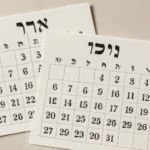
The Hebrew Bible calendar—often called the Jewish calendar or the lunisolar calendar—is the framework that structures the religious year for the Jewish people. It organizes the cycle of holidays, the Torah readings, and many of the biblically rooted dates that appear in the Bible itself. Because it blends lunar months with solar-year adjustments, the calendar stays in sync with the seasons while preserving the distinctive cadence of the Hebrew year. In this guide we explore how the Hebrew calendar works, the major biblical dates it marks, the holiday cycle embedded within the calendar, and how the Torah reading schedule interacts with the annual rhythm.
Foundations and Core Concepts
Two core ideas dominate the Hebrew calendar: it is lunisolar, and it is rooted in a 19-year Metonic cycle that keeps leap months in step with the solar year. The result is months that follow the moon-cycle length (29 or 30 days) while the year is kept aligned to the seasons through periodic intercalation. This dual structure ensures that the biblical festivals tied to agricultural and seasonal markers — such as Passover in spring and Shemini Atzeret in autumn — occur in the correct times of year year after year.
In common parlance the calendar is described with several interchangeable terms: Hebrew calendar, Jewish calendar, and biblical calendar. Each emphasizes a slightly different facet—linguistic, religious, or historical—yet all refer to the same system that governs the dates used for ritual observance in synagogues and homes.
Key outcomes of the calendar’s design include:
The year is divided into months, with names that date back to biblical and post-biblical times: Tishrei, Cheshvan, Kislev, Tevet, Shevat, Adar (and Adar I/Adar II in leap years), Nisan, Iyar, Sivan, Tammuz, Av, Elul.
The year begins in Tishrei with Rosh Hashanah, and the annual cycle culminates later in the autumn with Simchat Torah in most communities (in Israel, the sequence is slightly different for some observances).
Additional months appear in leap years, most notably Adar II, to reconcile the lunar months with the solar year and to preserve the timing of key seasonal holidays.
The Year Structure: Months, Leap Years, and Adar II
The months of the Hebrew calendar run in two sequences, reflecting both the religious and agricultural cycles. The civil year begins in Tishrei (the fall) but the holiday sequence often highlights the spring cycle (beginning with Nisan and Pesach).
The Months in Order
The standard order of the months is:
Tishrei
Cheshvan
Kislev
Tevet
Shevat
Adar (or Adar I in leap years)
Adar II (only in leap years)
Nisan
Iyar
Sivan
Tammuz
Av
Elul
Note the distinction in leap years: when a leap year occurs, Adar II is inserted after Adar I, and the holiday schedule accommodates this additional month without displacing the seasonal markers.
Leap Years and the 19-Year Cycle
To keep the lunar months aligned with the solar seasons, the Hebrew calendar uses a 19-year cycle that contains u00a07 leap years. The leap years are typically years 3, 6, 8, 11, 14, 17, and 19 of the cycle. In leap years, an extra month, Adar II, is added after Adar I, making the year longer by a month. The presence of Adar II affects the timing of festivals and fasts that historically fell in the old Adar or near Adar, as the calendar shift can move dates forward or backward relative to the spring and autumn seasons.
Year length can vary by month length, with typical year lengths around 353–355 days in a common year and 383–385 days in a leap year (depending on whether Kislev or Cheshvan are deficient, regular, or complete). The interplay of lunar days with solar realities creates a calendar that is both deeply traditional and remarkably precise in keeping the agricultural and liturgical seasons in harmony.
Many of the holidays on the Hebrew calendar have roots in the biblical narrative, while others emerged in rabbinic or later times but are harmonized with the biblical framework. Below is a guide to the most significant biblical dates and the annual rhythm they create.
Autumn and Fall Festivals
Rosh Hashanah — 1–2 Tishrei. The Jewish New Year marks the beginning of the religious year, with soundings of the shofar and a focus on repentance, prayer, and reflection. It is also called Yom Teruah, the Day of Trumpets.
Yom Kippur — 10 Tishrei. The Day of Atonement, a day of fasting, intensive prayer, and confession. It is the holiest day in the annual cycle for many Jews.
Sukkot — 15–21 Tishrei. The Festival of Tabernacles/Booths, commemorating the Israelites’ 40 years in the wilderness and the harvest season. The intermediate days are known as Chol HaMoed.
Shemini Atzeret and Simchat Torah — 22–23 Tishrei (diaspora communities often celebrate Simchat Torah on 23 Tishrei; Israel observes 22 Tishrei for Shemini Atzeret and Simchat Torah on the same day in many communities). These days close the Sukkot festival and celebrate the annual Torah reading cycle with rejoicing and Torah scroll processions.
Pesach (Passover) — 15–22 Nisan. A central festival celebrating the Exodus from Egypt. The Seder on the first two nights (in the diaspora) or the first night (in Israel) begins the week-long festival, with the Chametz prohibition and family pilgrimage themes central to the observance.
Counting of the Omer — from 16 Nisan to 5 Iyar (inclusive). The counting period links Passover to the next major festival, Shavuot.
Shavuot — 6 Sivan. The Festival of Weeks, commemorating the giving of the Torah on Mount Sinai. The date is tied to the Omer count and the grain harvest in biblical times.
Purim — 14 Adar (15 Adar in the walled city of Jerusalem or Shushan). Purim commemorates the events recorded in the Book of Esther, including survival against annihilation and the reversal of danger through courage and wit. While Purim itself is not a Torah reading, it is a biblical-era narrative story that features in the Tanakh and is read on Purim night and day with the Megillah scroll.
Hanukkah — 25 Kislev to 2–3 Tevet (eight days). While widely celebrated as a festival with candles, it is primarily rabbinic in origin, commemorating the rededication of the Temple and the miracle of the oil. It is often described in the context of the biblical period even though its formal observance emerged after the biblical era.
Fast Days such as Ta’anit Esther (3 Adar) and Tisha B’Av (9 Av) are anchored in biblical and post-biblical history, with the day of mourning for the destruction of the Temples shaping the fast’s character in many communities.
Rosh Chodesh (the new month) is observed monthly as a minor holiday, with special readings and prayers in the synagogue on days when the new month begins.
Shalosh Regalim (the three pilgrimage festivals) refers to Pesach, Shavuot, and Sukkot—the biblical-era pilgrimage feasts when ancient Israelites came to the Temple in Jerusalem.
Tu B’Av (15 Av) and Tu B’Shvat (15 Shevat) are later additions to the calendar that reflect romance or tree-related harvest themes, respectively, and have become regular observances in many communities.
Torah Readings and the Annual Cycle
A central feature of the Hebrew calendar is how it governs the Torah readings for weekly synagogue services, holiday readings, and special ritual portions. The system links the textual portions of the Torah to the flow of the year, making every week a part of a living conversation with the biblical text.
Weekly Torah Portions (Parashot)
Traditionally, the entire Torah is read over the course of a year in most communities, with a single weekly portion known as a parashah. When two parashot fall in the same week, a double portion is read, and sometimes a portion is divided across two weeks in the diaspora or in communities that follow shorter portions.
The exact parashah schedule can vary slightly depending on the year and the community’s custom, but the structure remains tied to the calendar’s weeks and holidays. For example, in years when a Shabbat coincides with a festival, a special haftarah (prophetic reading) is read in addition to the standard parashah, and the service highlights the festival’s themes alongside the weekly Torah portion.
Holiday Readings and Maftir
In addition to the weekly Torah portion, certain days—especially Rosh Hashanah, Yom Kippur, Sukkot, Pesach, and Shavuot—include distinct Maftir readings (a concluding portion from the Torah) and special haftara readings that align with the holiday’s narrative or theological themes. These readings are an essential part of how the calendar shapes the year’s study and worship.
The Cycle: Annual vs. Triennial
Most communities follow an annual Torah reading cycle, completing the entire five books of Moses in a year. Some communities, however, use a triennial cycle, where each portion is read once over three years. The calendar accommodates both approaches, and calendars or liturgical guides note when a given year uses an alternate cycle. This shows how the Hebrew calendar is flexible enough to support diverse liturgical traditions while maintaining a shared textual cycle.
Calculating and Observing: How the Calendar Is Determined
Core Determinants
The calendar is anchored to the new moon, determining the start of each month (Rosh Chodesh).
It is adjusted to stay in step with the solar year, ensuring that biblical holidays tied to seasons remain in their appropriate times (e.g., Pesach in spring).
The Metonic 19-year cycle with 7 leap years ensures a long-term alignment of lunar months with the solar year.
Postponement Rules and the Kav”e: Dehiyyot
In the fixed form of the calendar, there are traditional rules that govern when the first day of the month (Rosh Hashanah) can fall. Known as dehiyyot (postponements), these rules ensure certain weekdays are avoided for Rosh Hashanah and help maintain a balanced year. A well-known maxim is Lo ADU Rosh, which means Rosh Hashanah cannot occur on Sunday, Wednesday, or Friday. In practice, additional adjustments (such as the GaTRaD rules for certain leap-year configurations) can shift the date to ensure the year’s other holidays land in their proper seasons and to avoid problematic sequences of days between holidays and Sabbaths.
In modern practice, most Jewish communities rely on a fixed calendar that scientific and rabbinic authorities determine and publish well in advance. This makes the calendar predictable and consistent year after year, enabling households, schools, and communities to plan ahead for both the religious and social dimensions of the year.
Practical Guide for Learners and Enthusiasts
Understanding the Calendar at a Glance
Rosh Hashanah marks the year’s start in the fall; the days leading up to it are part of the High Holy Days in many communities.
Yom Kippur is the holiest day, focusing on fasting, prayer, and repentance.
Sukkot is a harvest festival with a seven-day structure that follows Yom Kippur.
Pesach is the spring festival commemorating liberation from Egypt, with the Seder on the first two nights in the diaspora and the first night in Israel.
Shavuot follows the Omer counting and commemorates the giving of the Torah at Sinai.
Purim and Hanukkah are widely observed, though their roots differ (Purim is biblical in narrative; Hanukkah is primarily rabbinic in origin).
Practical Dates and Observances
In a typical year, expect Rosh Hashanah 1–2 Tishrei, Yom Kippur 10 Tishrei, and Sukkot 15–21 Tishrei.
The Pesach festival runs 15–22 Nisan, with the Omer counting beginning on 16 Nisan.
Shavuot falls on 6 Sivan; the precise day-of-week varies by year.
In leap years, the presence of Adar II shifts the position of other months in the calendar, which in turn can affect the exact dating of holidays that are linked to specific month numbers.
A Note on Regional Observance
There are differences between Israel and the diaspora in the observance of some holidays, particularly with respect to the span of certain festivals and the dates of Simchat Torah. While the core calendar remains the same, these regional practices reflect historical and liturgical development and should be understood as part of the broader Hebrew calendar tradition.
Glossary and Key Terms
Hebrew calendar / Jewish calendar — the lunisolar system used to schedule biblical dates, holidays, and Torah readings.
Rosh Hashanah — the Jewish New Year, beginning on 1 Tishrei.
Yom Kippur — the Day of Atonement, observed on 10 Tishrei.
Sukkot — the Festival of Tabernacles, starting on 15 Tishrei.
Shabbat — the weekly day of rest that often intersects with the calendar’s readings and seasonal patterns.
Adar I and Adar II — months added in leap years; Adar II carries the second Adar’s festival dates.
Nisan / Pesach — the month and festival of Passover, beginning the spring cycle of biblical holidays.
Omer — the counting period between Pesach and Shavuot (weeks counted from 16 Nisan to 5 Iyar).
Shavuot — the Festival of Weeks, commemorating the giving of the Torah on Sinai.
Maftir — the concluding Torah portion read on certain festival days.
Haftarah — readings from the Prophets that accompany the weekly Torah portion or festival readings.
Parashah — a weekly Torah portion; the term for the weekly section of Torah read in synagogue.
Lo ADU Rosh — the traditional rule that Rosh Hashanah not fall on Sunday, Wednesday, or Friday.