Hebrew Calendar Explained: A Clear Guide to Jewish Dates
The Hebrew calendar is a classic example of a lunisolar system that has guided Jewish life for millennia. It blends lunar months with solar year corrections to ensure that holidays occur in their proper seasons while preserving the rhythm of the lunar month. This article, a broad and practical overview, is designed to be an accessible Hebrew calendar explained resource for beginners and curious readers alike, and it uses variations of the phrase Hebrew calendar explained to reflect the variety of ways people search for this topic. By the end, you’ll understand how the calendar is built, how it maps to the secular year, and how the holidays you observe arise from its structure.
Foundations: what makes the Hebrew calendar unique
In broad terms, the Hebrew calendar explained here covers a system that determines both the months and the years used by Jewish communities to mark holy days, ceremonial offerings, and daily practice. A few core ideas shape the calendar:
Lunisolar basis: Each month begins with a new moon, but the year must stay aligned with the solar cycle so that agricultural and seasonal holidays occur in the appropriate time of year.
19-year cycle: The calendar uses a fixed 19-year cycle that inserts 7 leap years. This helps synchronize the lunar months with the solar year.
Months of the year: Most months alternate between 29 and 30 days, creating a rhythm that repeats over long periods.
Year types: The length of a Hebrew year varies slightly (common years can be 353–355 days, leap years 383–385 days), and the pattern of long, regular, or short months helps achieve the target.
For many readers, the question in this section is Hebrew calendar explained in plain terms: how does it keep lunar months while staying in sync with the seasons? The answer lies in the rules that govern when the year begins and how months are adjusted. In particular, the start of the year is fixed at Rosh Hashanah, and the days on which it can fall are constrained by a set of calendrical rules known as dehiyyot. Today, we’ll walk through these rules, as well as the practical implications for days, months, and holidays.
Key components: months, years, and cycle patterns
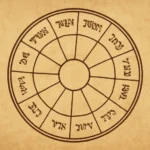
Months in the Hebrew calendar
The calendar uses a sequence of months that, in terms of layout, resembles a running list with a few special cases in leap years. The standard order of months, starting from Tishrei (which anchors the autumn holidays) and moving through the year, is:
Tishrei (the civil new year in many contexts)
Cheshvan (also called Heshvan)
Kislev
Tevet
Shevat
Adar (Adar I in leap years; Adar II is the second Adar in leap years)
Nisan
Iyar
Sivan
Tammuz
Av
Elul
In a common year, you’ll have Adar (one month) after Shevat. In a leap year, there are two Adars: Adar I (a longer month) and Adar II (the month in which Passover preparations often culminate). The typical month lengths are arranged to alternate between 29 and 30 days, but there are adjustments as described below.
Important note: the months are traditionally named in Hebrew and many calendars use the Hebrew transliteration. The structure here reflects the common order and naming used in most Jewish communities around the world.
Year lengths and the 19-year cycle
The Hebrew calendar is built to align a lunar year with the solar year through a carefully designed cycle. The days in a year can vary as follows:
Common year: 353, 354, or 355 days
Leap year: 383, 384, or 385 days
The 19-year cycle inserts leap years in years 3, 6, 8, 11, 14, 17, and 19, which adds a leap month (Adar II) to keep the calendar roughly in phase with the solar year. In other words, the cycle is a practical solution to the synodic month (~29.53 days) and the solar year (~365.242 days) mismatch. The result is a calendar that preserves the seasonal timing of holidays like Passover in spring and Sukkot in autumn.
At the heart of the Hebrew calendar explained is the day of Rosh Hashanah, the Jewish New Year. This is not merely a date to remember; it is a formal begin-of-year marker with both religious and agricultural implications. The rules around Rosh Hashanah are designed to ensure certain patterns do not occur on the calendar, and they have real implications for the timing of all other dates in the year.
Dehiyyot: postponements and restrictions
The calendar uses a set of rules called dehiyyot (postponements) to prevent certain days from hosting Rosh Hashanah and to keep the calendar within acceptable patterns. The most commonly discussed dehiyyot are:
Molad Zaken: If the mean conjunction (the molad) of Tishrei occurs at or after noon, Rosh Hashanah is postponed by one day.
Lo ADU Rosh: Rosh Hashanah is not allowed to fall on Sunday, Wednesday, or Friday.
Ga’aguim and BeTuTaKpat (more technical rules): in certain year types, additional postponements apply to ensure the calendar’s consistency and to prevent certain undesirable sequences. These rules ensure that certain dates do not occur in ways that would disrupt major holidays or the rhythm of the year.
In practice, these constraints mean that the exact day Rosh Hashanah falls on is not arbitrary. The Hebrew calendar explained resource emphasizes that Rosh Hashanah often lands on Thursday or Saturday in many cycles, and occasionally on Tuesday or Sunday depending on the year type and the cycle’s adjustments. The net effect is that the year’s first day sets the stage for all the other dates in the year, including Yom Kippur, Sukkot, Hanukkah, and Passover.
Cheshvan and Kislev: months that shape the year
Two months—Cheshvan and Kislev—play a special role in determining the year’s length. Unlike other months, their lengths are not fixed every year. Instead, the calendar can vary them to create a short, regular, or long year. This is how the calendar achieves its precise day counts in different years without adding or subtracting whole months arbitrarily.
A short year (in Hebrew, a “kesidrah” variant) has 353 days in common years or 383 days in leap years.
A regular year typically has 354 days in common years or 384 days in leap years.
A long year has 355 days in common years or 385 days in leap years.
When Cheshvan hours up to 30 days and Kislev can be 29 or 30 days, the year’s total adjusts automatically. This flexibility is a hallmark of the Hebrew calendar explained approach: the months aren’t rigidly fixed in length; they respond to the need to align with the solar year, while still maintaining the lunar monthly rhythm.
Interpreting dates: how holidays line up with the calendar
All major Jewish holidays follow a schedule tied to the month and its day. The calendar explains that a holiday’s date is anchored in a month-day combination, not in a fixed number of days from the start of the year. A few key patterns appear in practice:
Passover (Pesach) occurs on the 15th of Nisan, a date celebrated in a way that marks the liberation story in the spring. In the diaspora, two days of Yom Tov are often observed for major holidays; in Israel, many holidays are observed on a single day.
Rosh Hashanah is observed on the 1st and 2nd of Tishrei, typically a two-day holiday outside Israel and often a two-day observance in many communities, though some places observe only one day today with variations.
Yom Kippur falls on the 10th of Tishrei, a solemn fast day that follows the opening of the year’s spiritual season.
Sukkot begins on the 15th of Tishrei and lasts for seven days, with Shemini Atzeret and Simchat Torah marking the conclusion on days 8 and 23 of Tishrei in many traditions.
Hanukkah extends across Kislev and Tevet, beginning on the 25th of Kislev and continuing for eight days in most years.
In addition to the major festivals, the calendar includes Purim in Adar (or Adar II in leap years) and Shavuot in Sivan, among other observances. This interconnected web of dates is what modern readers mean when they say Hebrew calendar explained in the context of religious life: the calendar governs when to read Torah portions, recite specific prayers, and perform traditional rituals.
Practical structure: how a year unfolds in days and weeks
Days of the week and Shabbat
Most Jewish days have set ritual rhythms, and the calendar has a strong weekly cadence. The Jewish week runs Sunday through Saturday, with Shabbat on Saturday, a day of rest. The calendar’s constraints ensure that many holidays avoid certain weekdays to preserve the Sabbath pattern and the continuity of the weekly cycle.
Gaps and overlaps: how holidays shift within the week
Because the Hebrew calendar is anchored to both lunar months and solar years, holiday dates can drift across days of the week from year to year. The 19-year cycle, with its leap months, can cause a holiday that appears on one weekday in one year to appear on another weekday several years later. The consistent element is that the holiday’s month and day are preserved; only the weekday alignment varies if the year type changes.
Practical guide: how to use the calendar in daily life
Reading a Hebrew date
In most Jewish calendars, a date is shown as a day number followed by a month (for example, 1 Tishrei, 14 Nisan). In many communities, you will also see the year counted as AM (Anno Mundi), the Hebrew era name, or AM year numbers alongside the secular year. For someone learning the Hebrew calendar explained, recognizing both the day and month is essential. Some calendars place the year name or number in a corner as a quick reference for scholars or students.
One year, many calendars: differences by community
While the overall framework is consistent, there are practical differences across communities and locales. In Israel, many holidays are observed on a single day, whereas in the diaspora, two-day observances are common for several holidays. The Hebrew calendar explained perspective emphasizes that these differences arise from historical and cultural choices rather than from a different calendrical mechanism. The underlying rules remain the same, but the practical observance adapts to local customs.
Tools and resources for practical use
Online Hebrew calendar converters and apps can translate a Hebrew date to a secular date and vice versa.
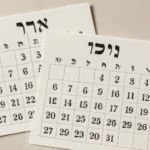
Printed calendars and synagogue calendars often include secular holidays alongside Hebrew dates and can be a handy bridge between the two systems.
Educational courses and guides can help you explore the Jewish calendar explained in greater depth, including how to read the leap year rules and the days of week for holidays.
Understanding the Hebrew calendar explained also means appreciating how holy days weave together with daily life. The calendar is not only a schedule; it is a map of Jewish time that connects agricultural cycles, historical events, and spiritual themes. The rhythm of the year shapes prayers, study, feasts, and acts of remembrance. Here are a few thematic anchors:
The autumn season begins with Rosh Hashanah, a period of reflection that precedes the Day of Atonement. It inaugurates a series of holy days that emphasize repentance, renewal, and community.
Late autumn and early winter bring Yom Kippur, followed by Sukkot and Shemini Atzeret, highlighting themes of shelter, gratitude, and communal celebration.
The spring cycle culminates in Passover (Pesach), the festival of freedom, which begins on the 15th of Nisan and continues through several special days including Chag HaMatzot and Shavuot.
Winter provides a lighter but spiritually meaningful window with Hanukkah, a festival of lights occurring in Kislev and Tevet, which often invites family gatherings and candle-lighting traditions.
Common questions about the Hebrew calendar explained
Why is the leap year pattern 3, 6, 8, 11, 14, 17, 19?
This sequence is what creates the leap years within the 19-year cycle. By adding an extra month (Adar II) in those leap years, the calendar keeps the lunar months aligned with the solar seasons—particularly ensuring that Passover occurs in spring. The pattern is fixed, and calculating leap years in advance is a reliable way to forecast many future dates.
Can Rosh Hashanah ever fall on Sunday, Wednesday, or Friday?
No. A central rule of the calendar is Lo ADU Rosh, which forbids Rosh Hashanah from starting on those days. This constraint is part of the broader dehiyyot that preserve the seasonal timing of holidays and help prevent problematic calendar configurations.
What about the length of the year—short, regular, or long?
As described above, the calendar’s flexibility comes from making Cheshvan and Kislev longer or shorter to adjust the year length. This is a deliberate design choice that allows a single lunar rhythm to stay in sync with the solar year, while keeping the structure of months intact. Readers exploring Hebrew calendar explained often find the idea of variable month lengths and year lengths both fascinating and essential for understanding how the calendar functions over decades.
The Hebrew calendar’s rules evolved over centuries, balancing religious requirements, agricultural cycles, and practical administration for communities scattered across different regions. The adoption of the fixed 19-year cycle and the formalization of dehiyyot allowed communities to predict holidays with a high degree of reliability. This stability is a key feature in the Hebrew calendar explained narrative: it is a calendar that preserves sacred timing while adapting to the realities of lunar phases and solar seasons.
In modern practice, many Jewish communities rely on software and printed calendars to project dates far into the future. Yet the underlying concepts remain the same: a lunisolar system that uses a 19-year cycle with leap years, a year-length mechanism dependent on Cheshvan and Kislev, and a set of postponement rules that maintain consistency and harmony with the weekly cycle and seasonal timing.
Summary: what you should take away from this Hebrew calendar explained guide
The calendar is a lunisolar system designed to keep lunar months aligned with the solar year and the agricultural-seasons calendar.
It uses a fixed 19-year cycle with 7 leap years to insert Adar II and keep the calendar in sync with the seasons.
Year lengths vary: common years have 353–355 days, leap years 383–385 days. The lengths depend on how many days are allocated to Cheshvan and Kislev.
Rosh Hashanah is the anchor of the year, governed by dehiyyot (postponements) including Molad Zaken and Lo ADU Rosh.
Holidays follow the month-and-day structure, with diaspora communities often observing two days of major festivals, while Israel typically observes one day in many cases.
Understanding the Hebrew calendar explained framework helps in planning religious observances, learning, travel, and family celebrations throughout the year.
Further reading and exploration
If you want to deepen your understanding beyond this broad overview, you can explore more detailed explanations about the mechanics of the Hebrew calendar explained, such as the precise definitions of the dehiyyot (postponements), the exact computations for molad, and historical developments in the calendar’s refinement. You may also engage with calculators, educational modules, and scholarly discussions that illustrate how the 19-year cycle plays out in practice across different centuries and locales.
Closing thoughts
This Hebrew calendar explained guide has walked you through the essential structure of the calendar: the lunisolar basis, the long-running 19-year cycle with intercalated leap years, the monthly sequence with flexible lengths, and the key rules that govern the start of the year. By understanding these pieces, you gain a clearer picture of Jewish dates, holidays, and the rhythm of Jewish time. Whether you are a student, a curious reader, or someone planning celebrations, the Hebrew calendar provides a resilient, meaningful framework for marking the passage of years, seasons, and sacred moments. And as you continue to explore phrases such as calendar explained in Hebrew or Jewish calendar explained, you’ll recognize the same core ideas expressed in different dialects and resources—an invitation to deepen your knowledge while staying rooted in tradition.