Hebrew Birthday Conversion: Optimizing Content for Hebrew Audiences is a topic at the intersection of calendrical computation, language localization, and user experience. In this article, we explore how to approach Hebrew birthday conversion concepts, how to present them in a way that is accessible to Hebrew-speaking readers, and how to optimize content for search engines and applications that work with the הלוח העברי (Hebrew calendar).
Understanding the concept: what is a Hebrew birthday?
To optimize content for Hebrew audiences, it helps to start with clear definitions. A Hebrew birthday, in everyday usage, can refer to two closely related ideas:
The date of birth in the Hebrew calendar — תאריך לידה בלוח העברי, which expresses the birth date using the Hebrew year, month, and day (for example, 12 Tishrei 5783).
The anniversary of birth celebrated in the Hebrew calendar — יום הולדת לפי הלוח העברי, where the annual celebration occurs on the same Hebrew date each year, even as the Gregorian calendar date shifts.
In practice, many people think of a Hebrew birthday as their תאריך לידה in the Hebrew calendar, and they may also celebrate on the corresponding יום הולדת in the Gregorian calendar if that is what their family and community observe. Understanding this duality is essential for creators who publish content intended for Hebrew readers: the same concept may be interpreted differently depending on the reader’s background, level of religious observance, and personal preference.
Why convert Gregorian dates to the Hebrew calendar?
Many audiences encountering Hebrew birthday conversion expect to see a date that makes sense within their cultural and religious framework. Here are the main reasons for offering conversions between the Gregorian and Hebrew calendars:
Religious and cultural relevance: For many readers, listing a birth date in the הקדושה העברית or mentioning a person’s Hebrew year (e.g., 5784) provides cultural resonance and clarity.
Personal and family history: Families track generations using the Hebrew calendar for naming patterns, anniversary prayers, or ritual timelines tied to specific Hebrew months and holidays.
Educational context: In Jewish studies, a Hebrew date helps learners connect historical events, festivals, and life milestones with a calendar that has its own cadence (months, leap years, weeks, and leap days).
Localization and accessibility: If your content targets Hebrew speakers, presenting dates in the native calendar reduces cognitive load and improves trust.
Key concepts in the Hebrew calendar you should know
Before discussing optimization strategies, it helps to grasp several core concepts that frequently appear in הלוח העברי discussions:
Lunisolar structure: The Hebrew calendar is a lunisolar system, combining lunar months with solar corrections to align with seasons. This makes conversions non-trivial but well-defined when using established algorithms or libraries.
Months and their structure: Months include Nisan, Iyar, Sivan, Tammuz, Av, Elul, Tishrei, Cheshvan, Kislev, Tevet, Shevat, and Adar (which splits into Adar I and Adar II in leap years).
Leap years: In the 19-year cycle, years 3, 6, 8, 11, 14, 17, and 19 are leap years, introducing a second Adar (Adar II). This affects date calculations and must be accounted for in any conversion tool.
Year numbering: The Hebrew year numbering is distinct from the Gregorian year. A birth date in the Hebrew calendar carries both a year and a month-day pair (for example, 15 Kislev 5780).
Day of week drift: Because the Hebrew year length is not a fixed number of days, the day of the week on a given Hebrew date shifts from year to year when seen in the Gregorian calendar. This matters for planning and for presenting date-related information clearly.
Variations and semantic breadth: different ways to phrase Hebrew birthday conversion
To maximize comprehension and search visibility, content should acknowledge multiple ways readers search for this topic. Here are common variations and their equivalents you might encounter or want to support in your content:
Hebrew date of birth — תאריך לידה הלוח העברי
Date of birth in the Hebrew calendar — תאריך לידה לפי הלוח העברי
Hebrew birthday date — יום הולדת לפי הלוח העברי
Yom huledet in Hebrew calendar — transliterated term frequently used in bilingual contexts
Hebrew birthday conversion — the general process of mapping between Gregorian dates and Hebrew dates
Hebrew calendar birth date — another common phrasing for a birth date expressed in the Hebrew calendar
תאריך לידה עברי — the Hebrew phrase often used directly in Hebrew-language content
מועד הולדת לפי הלוח העברי — an alternative Hebrew expression emphasizing the celebratory aspect
When you write for Hebrew audiences, you should consider presenting these variations in a glossary or within the text itself, especially if your audience includes both monolingual Hebrew readers and bilingual readers. This approach improves semantic breadth and helps search engines understand the content’s intent and scope.
Localization fundamentals: language, direction, and typography
Localization is more than translation. For Hebrew readers, the user experience is shaped by right-to-left (RTL) typography, date pickers, and the reading flow. Here are practical guidance and best practices:
Direction and typography: Use RTL content flow for Hebrew blocks. For English sections or multilingual pages, consider a clear RTL toggle so readers can switch between left-to-right and right-to-left presentation without confusion.
Date formatting: Align date formats with reader expectations. In Hebrew contexts, the Hebrew date is typically presented in the order Day Month Year (e.g., 12 Kislev 5784) rather than numeric-only formats. Provide both a native Hebrew date and a neutral ISO date when appropriate for cross-cultural audiences.
Numerals: Some Hebrew readers prefer Hebrew numerals for certain dates, while others expect Arabic numerals. If you present numbers in the Hebrew calendar, consider offering a consistent convention and an option to switch numerals if your platform supports it.
Terminology consistency: Maintain consistent terms for key concepts (e.g., תאריך לידה, יום הולדת, הלוח העברי) to reduce cognitive load and improve search visibility.
Glossaries and inline explanations: For technical terms (e.g., leap year, Adar II), provide brief glossary entries in Hebrew with accessible definitions and links to more detail.
Tools and methods for converting dates: practical guidance
There are several reliable approaches to convert between Gregorian dates and Hebrew calendar dates. The best choice depends on your platform, programming language, and the level of precision you require. Below are practical categories, with examples of how they’re used in real-world content and applications.
Client-side libraries: JavaScript libraries can perform real-time conversions in the browser. This is valuable for interactive date pickers and forms where users expect immediate feedback. Look for libraries that support the Hebrew calendar, leap years, and accurate month lengths.
Server-side libraries: Server-side conversion ensures consistent results regardless of the user’s device. Popular languages with Hebrew calendar support include Python, Java, and Ruby. Typical workflows involve parsing a Gregorian date, passing it to a Hebrew calendar module, and returning a Hebrew date string for display.
APIs and web services: For large-scale or centralized systems, APIs like the Hebrew calendar service or the Hebrew Calendar API can provide robust conversion, holiday data, and related calendar information with minimal client complexity.
Foundation libraries and standards: The International Components for Unicode (ICU) library supports various calendar systems, including the Hebrew calendar, and offers consistent formatting rules that help with localization across platforms.
Content strategy tools: When optimizing content for Hebrew audiences, you can integrate date conversion functionality into your CMS or content pipeline, ensuring that any date displayed in Hebrew format remains accurate across time zones and updates (for example, when daylight saving rules or calendar definitions change).
In practice, a simple content workflow might look like this: A user enters a Gregorian date on a form; your system uses a Hebrew calendar library to compute the corresponding לה לידה עברית (Hebrew date of birth) and stores both representations. When displaying content, you present both dates with an option to toggle the preferred calendar. This approach satisfies readers who prefer cultural alignment and readers who prefer unambiguous cross-calendar references.
Implementation notes: technical and user-experience considerations
Here are practical considerations for implementing Hebrew birthday conversion in content, apps, or websites:
Performance: Date conversion is typically inexpensive, but if you’re rendering large lists or performing conversions in real time, consider caching common conversions (for example, frequently requested birthdays or common dates).
Accuracy and reliability: Use battle-tested libraries and verify their handling of leap years, leap months (Adar II), and the precise rules of the Hebrew calendar. Double-check edge cases around Rosh Hashanah and other holidays that can influence month boundaries in some algorithms.
Localization quality assurance: Test your Hebrew UI with native readers to ensure the RTL layout looks correct, that date formats align with expectations, and that any transliterations or glossaries are clear and accurate.
Accessibility: Ensure screen readers can announce Hebrew dates correctly. Provide textual descriptions in both Hebrew and English where appropriate. Maintain semantic HTML (time elements with dateTime attributes when possible) for assistive technologies.
SEO and discoverability: Use Hebrew keywords in titles, meta descriptions, and structured data. Include variations of the search terms (as shown in the “Variations and semantic breadth” section) to improve discoverability across bilingual queries.
Content strategies: optimizing for Hebrew readers
Successful content for Hebrew audiences blends linguistic accuracy, cultural sensitivity, and practical utility. Consider the following strategies:
Glossaries and bilingual support: Provide clear terms and translations around calendrical concepts. A bilingual glossary helps readers who are exploring Hebrew terms and their translation into English, and vice versa.
Examples and scenarios: Use sample scenarios that reflect real-life contexts—family planning, religious observance planning, or school curricula—that hinge on understanding the Hebrew date of birth or the Hebrew calendar in general.
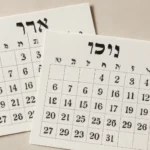
Visual aids tailored to RTL reading: Use calendars that render left-to-right glyphs appropriately in RTL contexts. Ensure month abbreviations and day names are legible in both Hebrew and transliterated formats.
Consistent transliteration: When including transliterations, maintain a consistent scheme (e.g., Yiddish-influenced forms vs. modern Hebrew transliteration). This reduces reader confusion, particularly for those learning the language.
Contextual help and tooltips: For technical terms like “Adar I” and “Adar II,” offer concise tooltips or inline explanations that appear on hover or tap to aid comprehension without cluttering the main text.
Practical examples: what a well-structured Hebrew birthday conversion article looks like
To illustrate how to present this topic effectively, here are several example content blocks you might adapt for your site. They demonstrate how to integrate Hebrew calendar conversion into clear, reader-friendly pages.
Example: A bilingual explainer: A page explains תאריך לידי הלוח העברי and uses a toggle to show the Gregorian equivalent. The page provides glossaries and a how-to section on performing conversions with a chosen library, plus a short FAQ addressing common questions such as “What is Adar II?” and “When does a leap year affect my birthday?”
Example: A developer-focused guide: A documentation page outlines the API for converting dates, including example code snippets (in Python, JavaScript, and Java) that demonstrate how to obtain תאריך לידה עברי from a given Gregorian date and how to format results for display in RTL contexts.
Example: An educational resource: An article for students explains the history of the Hebrew calendar, why it is lunisolar, how leap years work, and how to read Hebrew dates in historical documents. The piece includes diagrams of months, leap-year cycles, and sample conversions to reinforce understanding.
Case studies: common scenarios and how to approach them
Consider a few practical scenarios that a content creator or developer might encounter. These cases illustrate how to plan, implement, and verify Hebrew birthday conversions in real products.
Case study A: A family-history site presenting birth dates
A family-history portal wants to display both the Gregorian date and the Hebrew date of birth for family members. They implement:
A dual-date display section showing both dates side by side with clear labeling.
A realm of cultural context notes that explain how the date is determined and what “Hebrew year 5784” signifies.
An accessibility feature that uses the time element for the Hebrew date when supported by the user’s browser, and a textual fallback for older environments.
Case study B: A health portal offering date-based reminders
A health portal sends reminders tied to birth dates and age in both calendars. The system:
Offers reminders based on the יום הולדת in the Hebrew calendar and uses the Gregorian calendar as a fallback in case of user preference.
Includes a user preference panel where readers choose which calendar should drive reminders, with a default aligned to their locale.
Validates and tests date logic across time zones to avoid drift in reminders.
Automated tests: Develop unit tests that verify that known Gregorian dates map to exact Hebrew dates in various leap-year scenarios, including dates around Adar I/Adar II transitions.
Localization QA: Perform RTL smoke tests, verify that Hebrew UI elements render correctly, and ensure dates and month names do not overflow or wrap in awkward ways on small screens.
End-user testing: Run usability tests with Hebrew-speaking participants to verify that the terms used are intuitive and that the date presentation aligns with reader expectations.
Accessibility and inclusivity considerations
Accessibility is essential for content that addresses date information, especially in bilingual or multilingual contexts. Consider:
Screen-reader friendly date formats: Use machine-readable markup where possible, such as with both the Hebrew date and the ISO date included in accessible text.
Clear visual hierarchy: Ensure that the presentation of dates has high contrast, legible typography, and sufficient spacing, especially in RTL layouts.
Keyboard navigability: Ensure that any date-picking widgets and toggles can be operated with a keyboard.
Descriptive labels: Label controls and date fields clearly, avoiding ambiguous placeholders that could confuse readers who rely on assistive technologies.
Language strategy: how to talk about Hebrew dates in English content
If your audience includes both Hebrew speakers and English readers, you can follow these language strategies to maximize comprehension and engagement:
Dual-language sections: Provide parallel sections showing the Hebrew date alongside the English explanation of what it represents.
Glossaries for transliterations: Explain common transliterations and phrases (e.g., “Yom Huledet” and “Tishrei”) so readers can learn context while reading.
Hebrew terms in context: Integrate Hebrew terms with their English explanations, rather than replacing one language with the other. This fosters cultural appreciation without sacrificing clarity.
Keyboard-friendly input: Allow readers to search using both Hebrew and English terms, and provide helpful auto-suggestions for Hebrew calendar terms and dates.
Best practices recap: optimizing content for Hebrew audiences
To summarize the practical guidelines you can apply when writing about Hebrew birthday conversion, here is a concise checklist you can use during content creation and review:
Clarify the concept: Explicitly differentiate between “date of birth in the Hebrew calendar” and “birthday in the Gregorian calendar.”
Use accurate terminology: Include a consistent set of terms such as תאריך לידה, הלוח העברי, and יום הולדת.
Provide robust examples: Show both calendars for a sample date and explain how the conversion was performed, with references to the library or method used.
Offer multiple formats: Provide both the native Hebrew date and the ISO date to accommodate different reader preferences and technical needs.
Respect RTL design principles: Ensure proper alignment, typography, and navigation for Hebrew readers; test on multiple devices and screen sizes.
Include tooltips and glossaries: Help readers understand terms such as “Adar II” and “Rosh Hashanah” in context, without breaking the reading flow.
Optimize for search: Use Hebrew keywords in titles, headings, and meta descriptions; include synonyms and transliterations to capture diverse search queries.
Conclusion: embracing Hebrew birthday conversion for broader reach
Hebrew birthday conversion is more than a technical date calculation. It is a doorway to culturally respectful presentation, clearer communication, and better user experiences for Hebrew-speaking audiences. By understanding the Hebrew calendar, recognizing the different ways readers refer to תאריך לידה and יום הולדת, and implementing thoughtful localization strategies, you can create content that feels native, trustworthy, and useful. Whether you are building a family-history portal, a calendar app, or a bilingual educational resource, the goal remains the same: present dates in a way that respects tradition while remaining accessible to modern readers.
In the end, the phrase you want your readers to remember is Hebrew Birthday Conversion: Optimizing Content for Hebrew Audiences. It signals a commitment to linguistic accuracy, cultural relevance, and practical usefulness, all of which are essential for delivering value in Hebrew-language contexts. By combining solid calendrical foundations with thoughtful localization and user-centered design, you can help readers navigate the complexities of the Hebrew calendar with confidence and clarity.