Overview: Core beliefs and responsibilities surrounding death
In Jewish tradition, death is deeply embedded in a framework of dignity, community, and continuity. The primary aim of Kavod HaMet (the dignity of the dead) guides every practice from the moment of death to the final resting place and beyond. Within this framework, burial customs are not only about disposing of the body; they are about honoring the person who lived, comforting the living, and reinforcing the bonds of memory that sustain a family and a community. Across diverse Jewish communities—Ashkenazi, Sephardi, Mizrahi, and those who identify with Reform, Conservative, or Orthodox streams—the central ideas persist: simplicity, humility, and respect for the sacredness of life and death.
Historical roots and cultural variation
Jewish burial customs have evolved over centuries, shaped by moral teachings, legal debates, and local customs. While the Torah emphasizes burial in a timely manner and with reverence, later rabbinic authorities expanded the rituals and clarified roles for communities and family members. Some differences stem from geographic origin: Western European communities nurtured distinct practices around mourning and bereavement, while communities from the Mediterranean and Middle East often preserved variations in liturgy, dress, and burial gear that reflect climate, material availability, and cultural norms. Today, these differences coexist within a shared vocabulary of terms like tahara, tachrichim, levaya, shivah, kaddish, and yahrzeit.
The key actors: Chevra Kadisha, mourners, and ritual space
Two institutions are central to traditional Hebrew burial customs. The first is the Chevra Kadisha, a volunteer or semiprofessional burial society responsible for the tahara (ritual purification) and the careful preparation of the body according to halakhic norms. The second is the family and close community members who participate in the levaya (funeral procession) and the subsequent mourning periods. The actions of these groups reflect a lifetime commitment to kavod and to supporting those who are grieving.
The preparation: tahara, tachrichim, and the simple aron
The preparation phase centers on the body and its dignified handling. Three terms you will encounter repeatedly are tahara, tachrichim, and aron hakodesh (the sacred coffin). The process may involve a ritual bath, prayer, and careful dressing, followed by burial in a plain casket or, in some traditions, directly into the earth. While the exact sequence may vary by community, the principles remain consistent: cleanliness, humility, and sanctity of the body as it returns to the earth.
Tahara: ritual purification and care for the deceased
The tahara is the communal act of cleansing and purifying the body in preparation for burial. It is performed with solemnity and reverence by members of the Chevra Kadisha. The body is treated with privacy and respect, and the participants recite prayers or psalms during the cleansing. The aim is to honor the deceased and restore beauty in service to the life that was lived. In many communities, this ritual is conducted without sensational display, emphasizing quiet dignity and the sanctity of every life.
The body is dressed in tachrichim, simple white linen shrouds. These burial garments symbolize equality in death, modesty, and the belief that the soul continues beyond the body. For men, the tachrichim may include a belt or belt-like ties; for women, a similar covering reflects modesty. In some communities, tachrichim are hand-sewn with care, and the colors remain plain white to emphasize humility. The practice of wearing simple white garments mirrors a broader spiritual emphasis on simplicity and dignity at the end of life.
Aron hakodesh: the coffin or grave container
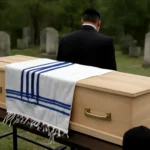
In traditional practice, the casket used in Jewish burial is designed to minimize material and ornamentation. Many Orthodox communities bury in a plain aron (coffin), often made of wood with no metal nails or decorative elements, reflecting the aim of returning the body to the earth without display. Some communities also bury directly in the ground without a casket, depending on local rabbinic guidance and cemetery policy. The overarching aim is to avoid grandeur and maintain a sense of humility before God and nature.
The funeral service: levaya and the journey to the grave
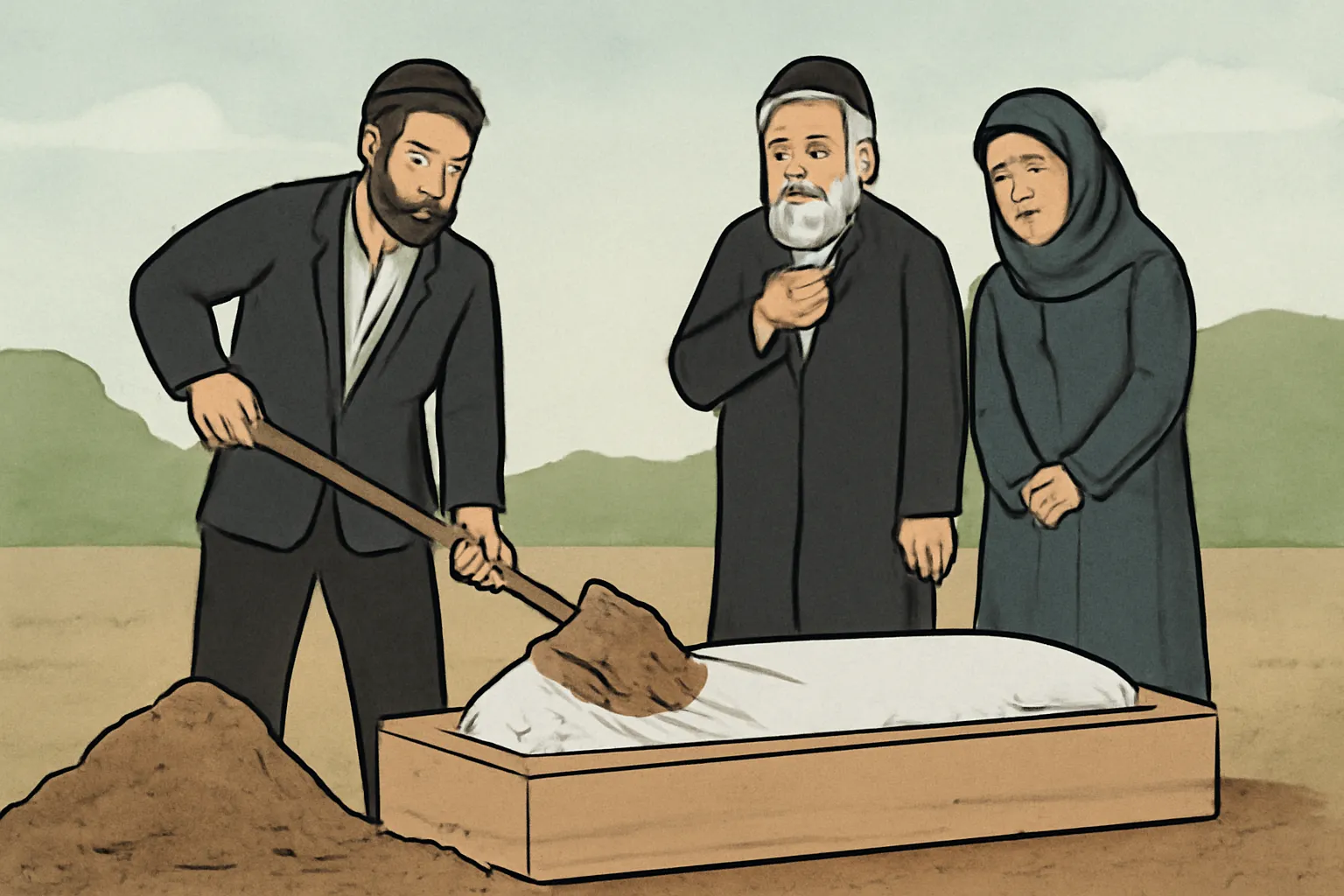
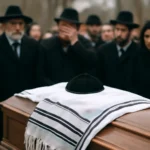
The levaya is the formal funeral procession and service held near or at the cemetery. It marks the completion of the living’s duties to the deceased and initiates the mourning period for survivors. The service typically includes special prayers, readings from sacred texts, and communal expressions of condolence. The kaddish is recited by mourners, often with others joining in as a sign of communal remembrance and faith, even when the language of the prayers is unfamiliar. A pivotal moment in the levaya is the lowering of the body into the grave, followed by laying earth on the coffin in a final act of completion and care.
Common elements of the levaya
El Malei Rachamim or similar memorial prayers, invoking God’s mercy for the deceased.
Recitations of psalms and passages from scripture that speak to life, memory, and hope.
The keriah: the symbolic tearing of garments by mourners or their representatives as a public sign of grief, especially by immediate family members.
The recital of kaddish, which asserts faith and praise of God despite loss.
Processional steps from the house or synagogue to the cemetery, often with escort by family, friends, and community members.
Burial at the cemetery: the grave, the stone, and marking the resting place
At the cemetery, the body is interred in accordance with local customs and halakhic guidance. The act of burial itself is considered a final act of care and respect for the deceased. Many visitors place a small stone on the grave as a sign of remembrance and continuity; unlike flowers, stones endure and symbolize the enduring nature of memory in Jewish tradition. A matzevah (gravestone) or monument is often erected later, providing a lasting marker for families and future generations to locate the resting place and reflect on a life once lived.
Post-burial mourning: Shiva, Shloshim, and Yahrzeit
The mourning period in Jewish tradition unfolds in stages, each with specific practices, obligations, and emotional rhythms. The sequence centers on supporting the mourner while honoring the deceased’s memory. The main milestones are shivah (seven days), shloshim (thirty days), and the annual yahrzeit (anniversary of death), followed by ongoing memories through yizkor prayers on certain holidays.
Shiva: The first seven days
The shivah period sees mourners staying at home or in a designated space, often surrounded by friends and relatives who bring comfort, food, and companionship. Common practices during shivah include:
Refraining from work and normal routines, focusing on rest and reflection.
Recalling and sharing memories of the deceased through divrei zikkaron (memories) and stories.
Shabbat-like observances, depending on timing and community norms.
Covering mirrors briefly to redirect focus from physical appearance toward the memory of the soul.
Wearing humble clothing; some mourners avoid leather shoes or other luxurious distinctions during shivah.
Limited candlelight or mood lighting, symbolizing introspection and quiet contemplation.
Family members may receive visitors, and the community often provides meals in a tradition known as seudat havra’ah (comfort meal) to sustain the mourners during their first days of grief.
Shloshim: The thirty-day period
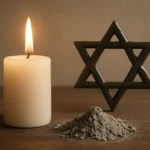
After shivah, the shloshim period typically extends for another thirty days, during which the mourner gradually resumes ordinary activities while still observing certain restrictions. Prayers and readings continue, and the memory of the deceased remains central to daily life. For some, friends and family visit, lighting a yahrzeit candle at home on the anniversary of the death remains a meaningful practice to mark the passage of time and maintain connection with the departed.
Yahrzeit: The annual commemoration
The yahrzeit marks the yearly anniversary of the death according to the Hebrew calendar. Observances typically include lighting a special candle that burns for 24 hours, reciting or hearing the kaddish, and studying a text linked to the deceased’s life. Families may gather to remember the person’s contributions, virtues, and lessons, reframing grief into ongoing legacy and learning.
Yizkor and memorial prayers
On certain holidays, the community recites Yizkor (memorial prayers) to honor loved ones who have died. These moments offer collective remembrance, often accompanied by readings, reflections, and a shared sense of continuity within the faith community.
Markers of memory: gravestones, matzevot, and continuing remembrance
Creating a matzevah (gravestone) is a significant step in many communities. The inscription typically includes the deceased’s name, dates, and a brief epitaph, sometimes reflecting the person’s virtues, role in family life, or spiritual character. Erecting a matzevah is often a family or communal project, undertaken after burial and completed in cooperation with cemetery authorities and rabbinic guidance. The grave site becomes a place of ongoing visitation, reflection, and comfort for future generations who seek connection with their ancestors.
Sephardic, Mizrahi, and Ashkenazi variations: diverse pathways to the same goal
While all these practices share common aims, there are meaningful variations across communities. Ashkenazi communities often emphasize the plain, unadorned casket and formal tahara process; Sephardic and Mizrahi communities may incorporate distinct liturgical melodies, different timing for burial, and unique customs around mourning foods and hospitality after the funeral. In some circles, especially within Reform or Conservative streams, there may be more flexibility about burial arrangements and the interpretation of certain practices. The underlying principle across all groups remains: respect for the deceased, support for the bereaved, and a shared commitment to memory and meaning.
Ashkenazi practices in brief
Plain wooden casket or coffin, minimal ornamentation
Tahara performed by the Chevra Kadisha
Shiva at home with communal meals and visitors
Kaddish recited by mourners, with communal accompaniment
Yahrzeit and Yizkor as ongoing memorial rituals
Sephardic and Mizrahi practices in brief
Often more fluid burial timings in some communities, with rabbinic guidance tailored to local customs
Distinct liturgical tunes, sometimes prayers in the community’s ancestral language alongside Hebrew
Family hospitality and mourners’ meals with cultural dishes that reflect heritage
Contemporary and Reform approaches
In contemporary circles, some families consider green burial or biodegradable caskets to reduce environmental impact. Others may opt for alternative mausoleums or cemetery spaces that reflect personal values while still honoring traditional rites. Across these variations, many Reform and Conservative communities maintain the essential sequence—tahara when possible, levaya, shiva, kaddish, and enduring remembrance—while allowing for adaptation in language, liturgy, and logistics to fit modern life.
Green burials and modern adaptations: respecting tradition while innovating
Green burial—designing the burial to minimize environmental impact—has gained interest in many Jewish communities seeking both ecological responsibility and religious integrity. Key elements often include biodegradable tachrichim, plain wooden caskets, and rapid burial when legally possible. Rabbis and burial societies work to ensure that these modern choices align with halakhic guidelines and communal norms. In addition, some communities explore cemetery space design that accommodates family rituals, quiet reflection, and accessible memorials, all while preserving the core values of dignity, simplicity, and memory.
Practical guidance for individuals and families navigating Hebrew burial customs
For those planning or participating in Hebrew burial rites, a few practical points can help navigate the process with sensitivity and clarity:
Consult your local chevra kadisha or rabbi early in the process to understand the specific customs of your community and cemetery.
Ask about tahara, tachrichim, and coffin options to ensure alignment with tradition and the cemetery’s requirements.
Clarify burial timing, especially in the context of Shabbat or holidays, to understand when levaya and burial can occur.
Prepare for the mourning periods by coordinating with family and community for shivah meals, hospitality, and support.
Remember the importance of kavod ha-met—the dignified treatment of the deceased—as the guiding principle throughout.
Common questions and clarifications
Because practices vary by community and region, it is common to have questions about specific customs. Here are a few frequently asked topics, with concise answers rooted in traditional practice and modern adaptation:
Can Jews be cremated? Traditional halakhic authorities generally discourage cremation due to the belief in returning the body to dust and the sanctity of the body. Some modern or more liberal communities may allow it in rare circumstances, but it is not the norm in Orthodox practice. Always consult your rabbi to understand local guidance.
Is a casket always required? Not universally. Some communities bury directly in the ground without a casket, while others use a plain wooden casket. The choice depends on local halakhic guidance and cemetery policy.
What about green burials? Green burials emphasize environmental stewardship and simplicity. They are increasingly practiced in many communities, provided they comply with halakhic principles and cemetery rules.
Who conducts the tahara? A Chevra Kadisha of trained volunteers or professionals carries out tahara, guided by a rabbinic authority and in accordance with communal norms.
What are the main mourning periods? The primary stages are shivah (seven days), shloshim (thirty days), and the annual yahrzeit, with ongoing observances such as kaddish and memory-based rituals throughout the year.
In sum: honoring life through tradition
Hebrew burial customs—though diverse in practice—share a unifying purpose: to honor the life that has passed, to support the living as they grieve, and to preserve memory for generations to come. From the tahara performed by the Chevra Kadisha to the quiet act of placing a stone on a grave, these rituals encode a message of dignity, humility, and communal responsibility. The levaya marks not an end, but a transition within a larger cycle of memory, faith, and continuity that sustains families and communities long after the burial has occurred.
Whether one adheres to traditional Orthodox forms, embraces Sephardic or Mizrahi customs, or explores green and reform-minded adaptations, the core of Hebrew burial customs remains steadfast: a reverent and compassionate approach to death, a structured path through mourning, and a mindful commitment to memory that endures across time and place. By understanding these traditions, families can approach loss with clarity, find support within their community, and preserve a dignified legacy—an enduring tribute to the life that has been.