Jewish burial customs are among the oldest and most deeply observed rituals in the Jewish world. They arise from a combination of scriptural, rabbinic, and communal teachings that emphasize dignity for the dead, humility, and the return of the body to the earth. While there is broad agreement on the core principles—quick burial, modesty, and avoiding ostentation—the details can differ across communities and denominations. This article offers a comprehensive overview of Hebrew burial practices, with attention to terminology, procedures, and the ways in which tradition has adapted to modern life. It aims to be informative for readers seeking a solid understanding of Jewish funeral traditions and the reasons behind them.
At the heart of Jewish burial traditions is a theological and ethical stance about the body after death. Jewish law (Halakha) teaches that the body is a divine creation and should be treated with reverence from the moment of death onward. The aim is to ensure a speedy burial (typically as soon as possible), a dignified ceremony, and a return to the earth in a natural state. Community, family, and ritual volunteers all play roles in safeguarding these values. The burial is not only a private moment of mourning; it is a public act of respect for a life lived and a watershed moment that begins the process of communal mourning.
Preparation of the Body: Taharah and the Chevra Kadisha
Two interlocking institutions preserve the sanctity of the deceased: the tahara (ritual purification) and the Chevra Kadisha (the burial society). Together they ensure that the body is prepared in accordance with centuries-old guidelines while maintaining respect and compassion for mourners and the deceased alike.
Tahara: Ritual Purification
Tahara is the ritual purification of the deceased. A trained team, usually organized by the Chevra Kadisha, performs washing, cleansing, and purification using carefully prescribed procedures. The process is conducted with the utmost modesty and secrecy: the body is washed, the natural orifices are respectfully addressed, and the corpse is prepared for burial in a state of ritual purity. The goal is not medical disinfection but spiritual preparation, in keeping with the belief that the body should be returned to the earth in the same condition in which it was created, free from impurities but not stripped of dignity.
Chevra Kadisha: The Burial Society
The Chevra Kadisha is a volunteer organization that exists in many Jewish communities. Its members are devoted to ensuring that the tahara is performed according to tradition, that the body is treated with reverence, and that the mourners receive guidance and support. In practice, the Chevra Kadisha often handles embalming concerns, coordinates with the funeral home, and ensures that the burial proceeds in accordance with local custom and halakhic considerations. In some communities, the chevruta (partner) system means that one or two people oversee the entire process, while other communities may have a larger group of volunteers who rotate duties.
The Tachrichim: The Burial Garments
A central element of Hebrew burial practices is the dressing of the deceased in simple white garments known as tachrichim (the burial shrouds). The tachrichim symbolize equality before God in death and signify humility before the Creator. The law requires modesty and simplicity, avoiding anything that might imply status or wealth in the afterlife. The exact components can vary by community, but several common themes recur.
Components and Symbolism
White shrouds are the defining feature. The white color represents purity and the return to the earth in a state of equality.
In many communities, two pieces of white linen or white garments are used, sometimes complemented by a white belt or cords to secure the garments.
For men, some tachrichim include a simple head covering and, in some traditions, a belt. For women, the tachrichim are similarly modest, with care taken to preserve dignity without adornment.
Though not universal, some traditions have a small, simple head covering (often a white cap or hood) as part of the tachrichim to cover the hair and maintain modesty.
In some communities, a kittel (a white robe-like garment) is used for the deceased, reflecting a parallel with garments worn during rites of passage. The use of the kittel varies, and some communities reserve it for certain occasions or for the living mourning relatives rather than the deceased.
Because tachrichim are intentionally plain, the focus is on human dignity rather than ornamentation. The family and community members often participate in the process of tying, folding, and dressing, turning what could be a clinical procedure into a moment of communal care and humility.
Shmirah: The Vigil with the Body
One of the most intimate practices surrounding a Jewish burial is shmirah, the vigil or watch over the deceased. A shomer (watcher) sits with the body, often reciting prayers, verses from Psalms (Tehillim), or the Shema, to accompany the soul as it remains between this world and the next. The practice emphasizes the belief that the living accompany the dead in their final moments and until burial, ensuring that the body is never left alone in a state of vulnerability.
Some communities arrange continuous watches that last until burial, sometimes with family members taking shifts.
Other communities appoint a designated group of volunteers or professionals who maintain the vigil, especially during daytime hours.
In certain modern settings, a brief shmirah may be observed with the body in the funeral home or mortuary, particularly when immediate burial is scheduled or logistics require time.
Shmirah is not only about ritual words; it is an expression of deep respect for the dead and an act of communal solidarity for the mourner family. It also helps those who later participate in the levaya (funeral procession) to approach the service with a sense of sacred stillness.
Levaya: The Funeral Procession and Service
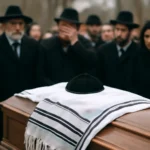
The levaya (funeral procession) is a transition from the private sphere of mourning to the communal act of burial. The ceremony is typically held at a funeral home, synagogue, or cemetery and may include prayers, readings, and a brief eulogy. The emphasis is on humility, respect for the deceased, and a sense of shared responsibility for the mourners.
Ritual Structure of the Funeral
Opening prayers often include verses from Tehillim (Psalms) and a brief consideration of the righteous life lived by the deceased.
The El Malei Rachamim prayer for the departed is commonly recited, invoking mercy and rest for the soul.
In many communities, a short kaddish is recited by mourners, though the formal Kaddish Yatom (Mourner’s Kaddish) is usually reserved for the shiva and later periods; the timing can vary by tradition.
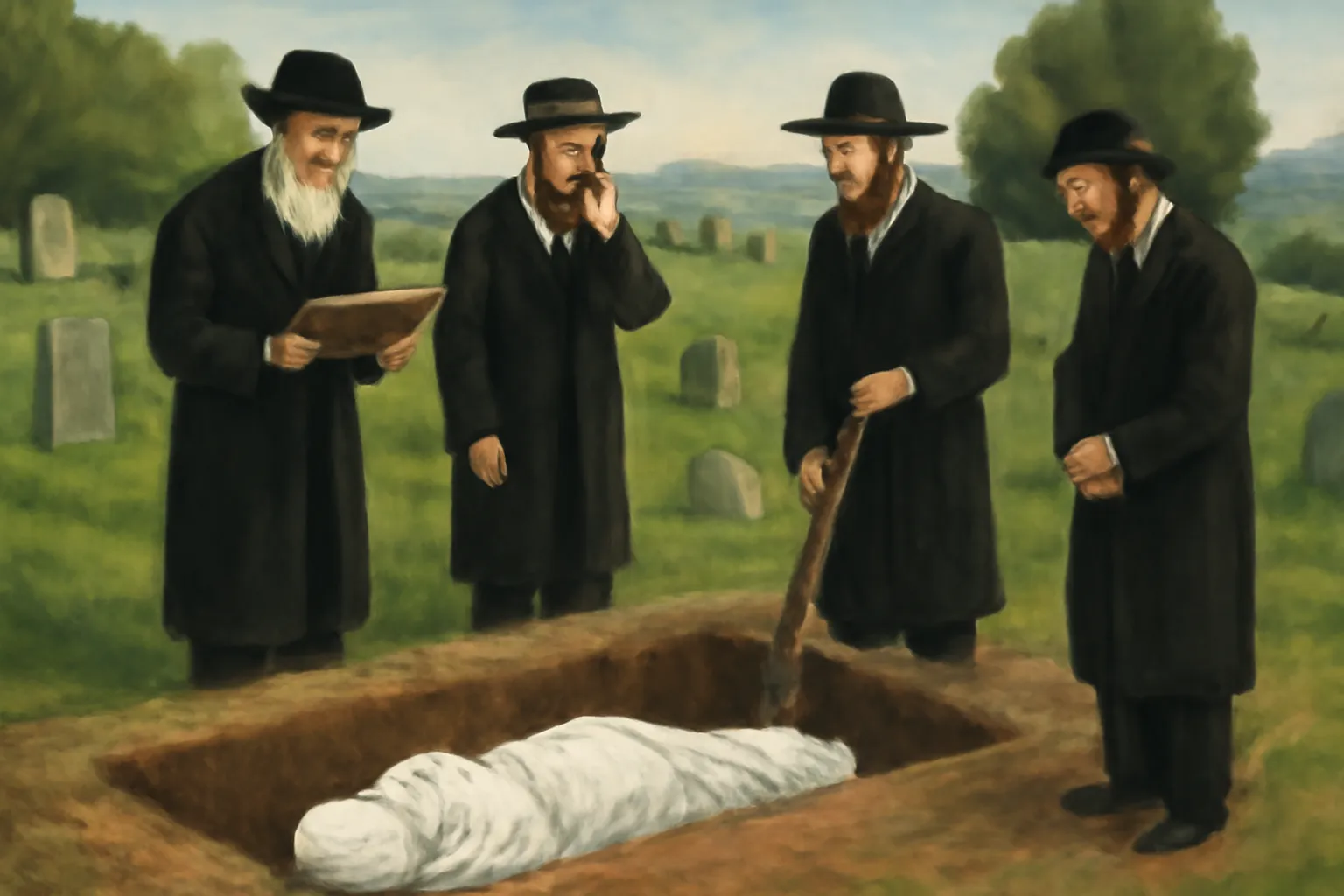
A simple, dignified interment follows, with the grave prepared, the coffin placed (if a casket is used), and the earth returned to the grave with solemn ritual words.
Embargo on Embalming and Caskets
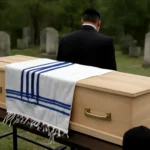
In traditional Jewish law, embalming is generally avoided because it delays burial and manipulates the natural state of the body. Additionally, many communities favor plain wooden caskets and discourage metal hardware or cosmetics on the body, aligning with the ideal of returning to the earth in a natural state. While standards vary, it is common to see a minimalist approach in Orthodox and many Conservative communities, with a growing interest in environmentally friendly «green burials» that emphasize minimal processing and natural woods.
The Burial: Grounds, Caskets, and Markers
The moment of interment is a defining part of Jewish burial practice. The grave site is treated with reverence, and the process is conducted with care to honor both the deceased and the family.
Beit HaMet: Cemeteries and Grave Etiquette
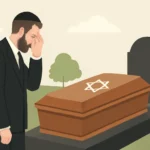
Traditionally, the cemetery (beit ha-met, “house of the dead”) is a sacred ground. A simple ceremony precedes the actual lowering of the casket or the placement of the body into the earth. In many communities, the family members participate in filling the grave with soil as a tangible act of returning the body to the ground and sealing the bond between life and the earth. After the burial, it is common to recite Tehillim at the graveside or to offer a brief memorial reflection for the deceased.
Gravestones and Stones: The Living’s Commemoration
One enduring custom is for visitors to place small stones on the grave as a sign of remembrance and respect. This practice is not a marker of ownership or permanence but a physical expression of ongoing care. It serves as a reminder to the community that the person’s memory continues to live in the lives of others. The practice of placing stones contrasts with the Western practice of placing flowers, emphasizing permanence and the sense that life endures in memory rather than in flora that fades.
Laws about Embalming, Caskets, and Burial Practices
Jewish law has long recognized a balance between reverence for the dead and practical considerations for mourners. While there is a spectrum of practice among communities, several principles recur:
No embalming or only very limited, reversible procedures that do not delay burial.
Plain wooden caskets are preferred in many Orthodox communities, with minimal metal and ornamentation.
The body is laid to rest as soon as possible, ideally within 24 hours of death, though exceptions apply for Shabbat, holidays, or logistical issues.
Tahara and tachrichim emphasize humility and equality before God in death.
Mourning and Commemorations
After the burial, the focus shifts to mourning rituals. Jewish mourning has structured stages that help the bereaved navigate grief while integrating it into the rhythms of the community.
Shiva is a seven-day period of intense mourning during which mourners stay home, sit on low stools or the floor, recite prayers, and receive visitors who come to offer condolences. The family may continue to recite certain prayers at this time, often including Kaddish.
Shloshim lasts thirty days from the funeral and marks the cessation of public mourning in many communities. Family life gradually returns to a more typical pace, though certain restrictions may remain (e.g., not attending parties or public celebrations for some mourners).
Yahrtzeit is the annual anniversary of the death. On this date, families light a candle, visit the grave, and recite the Kaddish in memory of the deceased. The Yahrtzeit serves as a yearly reminder of continuity and memory within the community.
Across these periods, mourners may observe additional customs such as visiting the cemetery, giving charity in memory of the deceased, or reading selected portions of Scripture or Psalms. The precise practices may vary by tradition, but the underlying goal remains consistent: to honor life, to remember, and to build community support for those in sorrow.
Variations Across Denominations and Cultures
Jewish burial practices reflect a diversity of approaches shaped by halakhic rulings, historical developments, and cultural contexts. Here are some broad lines of variation, while noting that local custom often prevails over broad categories.
Orthodox and Hasidic Practices
Burial within 24 hours when possible; embalming discouraged or avoided.
Use of a Chevra Kadisha and a sober, dignified process with minimal ceremony beyond prayer and Psalms.
Plain wooden caskets and simple tachrichim, with strong emphasis on modesty and equality in death.
Strict observation of Shiva, Shloshim, and Kaddish with communal support and daily minyan (where available).
Conservative and Reform Approaches
Conservative communities generally maintain traditional elements (tahara, tachrichim, modest graveside rites) but may permit some flexibility in communal practices and timing, depending on the congregation.
Reform and some Reconstructionist communities may place greater emphasis on personal choice and environmental concerns, with varied stances on cremation, caskets, and the duration of mourning rituals. Cremation is more commonly discussed and, in some Reform settings, considered an option, though many still favor traditional burial.
In all streams, there is a growing interest in green burial options that minimize environmental impact while respecting Jewish law. Some rabbinic authorities have issued guidelines for green caskets, natural earth burials, and the avoidance of embalming where possible.
Sephardic, Mizrahi, and North African Traditions
Sephardic and Mizrahi communities often follow broader Halakhic principles but may have distinct liturgical prayers or customs at the graveside. The timing and structure of the service can differ, reflecting ancestral customs from Spain, North Africa, the Middle East, and the broader diaspora.
Yemeni, Iraqi, Moroccan, and other communities each bring unique melodic, linguistic, and ritual flavors to the funeral and mourning periods while preserving core standards of respect and dignity for the deceased.
Ethnic and Geographic Variations
In Israel, where many communities observe law and custom within a modern state context, practices can blend traditional elements with contemporary logistics, though the basic ethos remains the same: humble burial, respect for the dead, and support for mourners.
In the American and European diasporas, synagogues and burial societies often adapt to local infrastructure, providing guidance on funeral homes, cemeteries, and transportation while maintaining the essential rituals of taharah, tachrichim, and levaya.
Modern Trends and Debates
As Jewish communities engage with contemporary life, several debates and trends shape how burial practices are carried out today. These include discussions around environmental sustainability, urbanization and cemetery space, and the evolving role of the state, the family, and the community in funeral logistics.
“Green burials” emphasize natural decomposition, minimal preservatives, and avoidance of metal coffins or embalming. Some rabbinic authorities have weighed in with guidelines to ensure that green practices remain compatible with Halakha. For families who value ecological concerns, green burial can be a way to align religious duties with environmental stewardship, while still upholding the dignity of the deceased and the needs of mourners.
Embalming, Transportation, and Technology
Advances in funeral technology, transportation, and logistics influence how quickly a burial can occur, especially in densely populated urban areas or regions far from a cemetery. Communities grapple with the best ways to respect tradition while accommodating families who live far apart or must travel long distances. The core question—how to preserve the dignity of the deceased while supporting the needs of living mourners—remains central.
Interfaith and Multicultural Contexts
For families with interfaith or intercultural backgrounds, Jewish funeral rites may be integrated with other traditions. In such cases, rabbis often work closely with families to preserve the essential elements of Jewish law while honoring the beliefs and customs of other traditions. The aim is to provide a meaningful pathway for mourning that is inclusive, respectful, and faithful to Jewish practice.
Glossary of Key Terms and Concepts
Beit HaMet – the cemetery; “house of the dead.”
Chevra Kadisha – burial society responsible for taharah and related rituals.
Levaya – funeral procession and ceremony.
Taharah – ritual purification of the body before burial.
Tachrichim – the white burial garments; the shroud.
Shmirah – vigil over the body by a watcher, often with prayer.
Shiva – seven-day period of mourning for the family.
Shloshim – the thirty-day mourning period following the funeral.
Yahrtzeit – annual anniversary of the death; a day of remembrance.
Kaddish – prayer of mourning; traditionally recited by mourners.
El Malei Rachamim – prayer for the departed, commonly recited at funerals.
Beit HaMet – the cemetery; another term for burial grounds.
Practical Considerations for Families and Communities
For families planning a burial, several practical questions often arise. While local customs and rabbinic guidance will shape the final decisions, some general considerations help families prepare for the process in a way that respects tradition and supports mourners.
Consult the local Chevra Kadisha early in the process to understand the schedule, the requirements for tachrichim, and the preferred arrangements for shmirah and levaya.
Discuss cemetery options, including green burial alternatives, if desired, and confirm the policy on caskets and materials with the funeral home and cemetery.
If possible, consider arranging a brief mourning service or reflection at the graveside that reflects the family’s spiritual and emotional needs while adhering to tradition.
Prepare for the mourning period, including community visits, prayer opportunities, and support from friends and neighbors who want to provide comfort during shiva and beyond.
Historical and Theological Perspective
Jewish burial practices have evolved over centuries, rooted in biblical times and refined by rabbinic authorities. The overarching theological aim is to honor the Creator by showing respect for human life and the body, and to support the soul on its journey while offering a clear framework for the family to navigate grief. The continuity of tradition—through the tahara, the tachrichim, the levaya, and the mourning periods—acts as a bridge between generations. As communities adapt to new social realities and new ethical concerns, these core values persist, guiding both practice and interpretation.
Conclusion: Living Respectfully with Death in a Jewish Framework
Hebrew burial practices are a robust system of ritual care that reflect age-old beliefs about the dignity of the deceased, the responsibilities of the living, and the enduring bond of community. The sequence from tahara to tachrichim, from shmirah to the levaya, and through the stages of mourning, creates a structured path for families to endure loss while remaining engaged with their faith, their elders, and their community. While denominations and cultures differ in emphasis or detail, the shared aim remains clear: to honor life by honoring the body, to support mourners with compassion and ritual, and to remember that every person’s life leaves a lasting impact on those who remain. Through discussion, education, and respectful practice, Hebrew burial traditions continue to offer a thoughtful, humane, and spiritually meaningful response to death in the modern world.