The Hebrew calendar, also known as the Jewish calendar, is a complex and deeply historical system that organizes time for Jewish life. It is a lunisolar calendar, meaning it tracks both the moon’s cycles and the solar year so that agricultural feasts, seasonal holidays, and religious observances stay in their intended seasons. This guide offers a comprehensive tour of how the calendar works, its major months and holidays, how leap years are handled, and how contemporary Jewish communities—including those in Israel and the diaspora—use and adapt the calendar in daily life.
In this article you will encounter a variety of terms that refer to the same overarching system. You may see it described as the Hebrew calendar, the Jewish calendar, the religious calendar, or the lunisolar calendar. All of these phrases point to a single framework that has evolved over centuries, formalized in the medieval period, and standardized by later rabbinic authorities. Throughout, we will emphasize both the long arc of history and the practical rules that shape month lengths, year lengths, and holiday timing.
Overview: What makes the Hebrew calendar distinctive
Several features distinguish the Hebrew calendar from purely lunar or purely solar calendars. Among the most important are:
Lunisolar design with a fixed algorithm to align lunar months with the solar year.
The use of the Metonic cycle, a 19-year cycle in which seven leap years add an extra month to keep the calendar in sync with the seasons.
Specific rules for determining the first day of a month, called Rosh Chodesh, and for postponing certain dates to ensure holidays do not land on problematic days of the week.
Two principal ways of counting years: the AM (Anno Mundi) system counting from Creation, and the practical dating used by communities and institutions today.
A seasonal rhythm in which certain months vary in length (especially Cheshvan and Kislev) depending on the year type.
Structure of the Hebrew calendar: months, days, and leap years
The calendar is built around a sequence of months and a scheme for accommodating the solar cycle. The months’ lengths and the occasional intercalation of an extra month are what keep agricultural and religious timing aligned with the seasons. Here are the core elements:
Months: order, names, and lengths
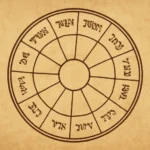
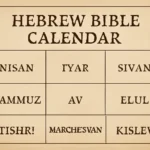
The months in the religiously recognized cycle follow the biblical order, while the civil counting often begins the year in Tishrei. In practical terms, the standard month order is:
Nisan (often associated with Passover in the spring) — 30 days
Iyar — 29 days
Sivan — 30 days
Tammuz — 29 days
Av — 30 days
Elul — 29 days
Tishrei — 30 days
Cheshvan (MarCheshvan) — 29 or 30 days
Kislev — 29 or 30 days
Tevet — 29 days
Shevat — 30 days
Adar — 29 days in common years; in a leap year there is Adar I (30 days) and Adar II (29 days)
A leap year adds an entire month, Adar II, to keep the calendar aligned with the solar year. The length of Cheshvan and Kislev can vary, producing common years that are 353, 354, or 355 days long, and leap years that are 383, 384, or 385 days long. This variability is a deliberate feature to prevent drift of holidays into unacceptable seasonal windows.
Year types and the Metonic cycle
The Metonic cycle spans 19 years, in which seven years are leap years. The leap years occur in years 3, 6, 8, 11, 14, 17, and 19 of the cycle. This intercalation adds a 13th month, Adar II, in leap years. The remaining years are common years. Each year’s total length depends on how many of the two months at the start of the year, Cheshvan and Kislev, contain 30 days instead of 29.
Major holidays and observances on the calendar
The Hebrew calendar organizes a rhythm of sacred times, agricultural markers, and historical commemorations. Many holidays have both a historical memory and a liturgical focus, while others mark seasonal or agricultural milestones. Below is a high-level map of the major holidays and how they fit into the calendar year.
The high holy days in Tishrei
Rosh Hashanah — the Jewish New Year, observed for two days outside the Land of Israel and (traditionally) for one day in Israel in many communities; a time of introspection, reflection, and the sounding of the shofar.
Yom Kippur — the Day of Atonement, a 25-hour fast and intensive day of prayer and repentance.
Sukkot — the Festival of Booths, a week-long festival beginning five days after Yom Kippur, commemorating the Israelites’ wanderings in the wilderness; includes the Hoshana Rabbah on the seventh day.
Shemini Atzeret and Simchat Torah — celebrated together in Israel as a single day in many communities, while in the diaspora they are observed as two days with Shemini Atzeret followed by Simchat Torah on the next day.
Winter to spring: calendar anchors outside Tishrei
Hanukkah — an eight-day festival of lights in Kislev, often described as a winter festival, commemorating the rededication of the Temple and the miracle of the oil.
Tevet and Shevat provide intercalary markers within the winter months, setting rhythms for study, charity, and ritual obligations.
Purim — a festive celebration in Adar (Adar I in leap years, or Adar II in some practice contexts), recalling the story of Esther and the deliverance of the Jews in ancient Persia.
Spring and early summer: Passover, Shavuot, and Sukkot’s cycle
Pesach (Passover) — begins on the 15th of Nisan and lasts seven days in Israel and eight days in the diaspora (two additional days outside Israel are observed for most communities). It commemorates the Exodus from Egypt and includes the Seder ritual.
Shavuot — the Festival of Weeks, observed seven weeks after Passover, marking the giving of the Torah at Mount Sinai; it celebrates agricultural harvest as well.
Shabbat and Yom Tov rhythms recur through the year as weekly and seasonal days of rest, with special liturgy and dietary observances.
Tu BiShvat and other minor holidays
Tu BiShvat — the New Year for Trees, celebrated on the 15th of Shevat, often with a focus on fruit, planting, and environmental themes.
Other commemorations and fast days follow the rhythm of the Hebrew calendar, including minor fasts and public observances tied to historical or liturgical occasions.
Calculation rules: how the calendar is determined
Unlike purely lunar calendars that drift through the solar year, the Hebrew calendar uses a set of rules to maintain alignment with the seasons. These rules are implemented through calculations and, in traditional contexts, are governed by rabbinic authorities. Below are key ideas that shape the calendar in practice.
Molad and postponement rules
The concept of the molad is the mean conjunction of the new moon. A fixed time of the month’s start is computed in days, hours, and chalakim (parts). If the molad would cause Rosh Chodesh to fall on a forbidden day of the week or time, a set of postponement rules, or dehiyyot, moves the start of the month forward. The primary dehiyyot include:
Rosh Hashanah cannot occur on Sunday, Wednesday, or Friday.
If the molad of Tishrei occurs at or after noon, Rosh Hashanah is postponed to the next day.
In certain cases, Rosh Hashanah is postponed by one or two days to prevent certain sequences of days that would lead to problematic shabbatot or other observances in the year.
Intercalation and the 19-year cycle
To maintain alignment with the solar year, the calendar incorporates a leap month roughly every 19 years. The leap year months follow this pattern: Adar II is added in leap years, while common years do not include Adar II. The leap-year pattern is typically years 3, 6, 8, 11, 14, 17, and 19 of the 19-year cycle. This intercalation ensures that major holidays like Passover stay in their springtime window.
The length of Cheshvan and Kislev is adjustable. Depending on the year type, these two months can collectively provide extra days to make a complete year, or they can be shorter, producing a deficient year. This variability is critical for syncing with the solar year and is a distinctive feature of the Hebrew calendar.
Year types: common vs leap years, and the “deficient/regular/complete” spectrum
Two broad categories describe the year: common years and leap years. The leap year adds a full month (Adar II), creating a longer year. Within each category, the year length can vary slightly depending on how many days Cheshvan and Kislev contribute. Collectively, we distinguish three possible lengths for each category:
Deficient years — fewer total days (e.g., 353 days in a common year).
Regular years — standard length (e.g., 354 days in a common year or 384 days in a leap year).
Complete years — the longest variant (e.g., 355 days in a common year or 385 days in a leap year).
These nuanced possibilities are not random; they are the result of the calendar’s arithmetic and are essential for keeping the cycle aligned with the agricultural and seasonal calendar across centuries.
Historical context: how the calendar became fixed
While Jewish timekeeping included lunar and observational elements for centuries, the Hillel II calendar reform in antiquity provided a stable, computed system that could be used by Jewish communities across the Diaspora. This formalization helped ensure consistency across long distances, making it feasible to observe the same holidays on the same dates in cities as distant as Babylonia, North Africa, and Europe. The objective was not merely mathematical convenience; it was a sacred project to preserve the rhythm of sacred time in exile and settlement alike.
Regional practice and variations: Israel, the Diaspora, and modern life
In practice, many communities follow the same core rules, but there are notable differences in how the calendar is observed and referenced in different places and among different traditions.
Israel vs the Diaspora
In the Land of Israel, some holidays with two-day observances in the diaspora may be observed for a single day, reflecting historical patterns when travel was difficult.
In the diaspora, two days of Yom Tov are often observed for holidays such as Rosh Hashanah, Shemini Atzeret, and others, to ensure that people living far from central authorities could publicly verify and celebrate on the correct date.
Modern usage and civil dating
Today, most Jewish communities use the AM year count (An Numdei Mundi, or Anno Mundi) as a traditional reference, though daily life often relies on secular dating as well. For example, a date might be given as 1 Tishrei 5785 (the Hebrew calendar) alongside September 2024 in English-language materials. Organizations, event planners, schools, and synagogues frequently publish calendars that weave together:
Religious date labels (Rosh Hashanah, Yom Kippur, Passover, etc.)
Seasonal and agricultural notes tied to the Hebrew calendar
Local decisions about when to observe Shabbat and holidays according to community practice
Reading and using a Hebrew calendar: practical tips
Whether you are planning travel, participating in a festival, or studying the calendar academically, here are practical ways to read and interpret a Hebrew calendar.
Annual calendars list the major holidays for a given year and show the month-by-month structure.
Moon-phase calendars emphasize the lunar cycle alignment with special dates highlighted for Rosh Chodesh and festival days.
Liturgical calendars focus on the sequence of Shabbatot and holiday observances from Tishrei through Elul.
Key terms to recognize
Rosh Chodesh — the new month day, often celebrated with special prayers and customs when a month begins.
Molad — the mean time of the new moon’s conjunction; the basis for month start calculations.
Dehiyyot — the postponement rules that modify the calendar to avoid certain problematic outcomes.
AM dating — Hebrew year numbering, e.g., AM 5786.
Adar II — the second Adar, added during leap years.
Educational perspectives: learning the calendar through study and practice
For students and educators, the Hebrew calendar serves as a lens into Jewish history, liturgy, and timekeeping. Here are some paths to deepening understanding:
Study the Metonic cycle and why seven leap years occur in a 19-year pattern.
Explore postponement rules and how they affect the placement of Rosh Hashanah and the year’s start.
Analyze the variable months Cheshvan and Kislev and how they influence year lengths.
Compare practice between Israel and the diaspora, noting the differences in holiday observance days.
Use sample calendars to convert between Hebrew dates and Gregorian dates for different years and holidays.
Variations and related calendars: semantic breadth and alternative terms
To build semantic breadth, it helps to recognize a few variations on the same core calendar concept. Scholars, clergy, and educators may use different phrases that all describe the same system:
Jewish calendar as a common everyday term in English-language media and education.
Hebrew lunisolar calendar to emphasize the blend of lunar months and solar adjustments.
Hillel II calendar to reference the historically significant fixed calendar reform attributed to Hillel II in antiquity.
Hebrew civil calendar in some discussions to distinguish the civil year that begins in Tishrei from other counting methods used in religious study.
Am-mundi dating or Anno Mundi (AM) as the traditional year-counting system used in liturgical contexts.
Common questions and quick answers
What is the difference between a common year and a leap year in the Hebrew calendar?
A common year has 353–355 days, while a leap year has 383–385 days because it contains an additional month, Adar II. The lengths vary based on the exact lengths of Cheshvan and Kislev in that year.
Why are some months variable in length?
Cheshvan and Kislev can alternate between 29 and 30 days to adjust the total number of days in the year, ensuring alignment with the solar year and maintaining the seasonal integrity of holidays.
When does Rosh Hashanah occur?
Rosh Hashanah is determined by the molad and postponement rules. It never falls on Sunday, Wednesday, or Friday, and the exact date is calculated to ensure proper seasonal alignment and ritual timing.
Why are there two Adars in leap years?
To keep the calendar synchronized with the seasons, a second Adar (Adar II) is inserted in leap years. Adar I precedes Adar II and has its own 30-day length, while Adar II has 29 days.
Practical applications: planning and culture
Understanding the Hebrew calendar enriches many aspects of Jewish life—from prayer and synagogue rituals to family gatherings and community planning. Here are practical domains where calendar literacy matters:
Religious observance planning, including when to light Shabbat candles, when to observe fasts, and when to begin Jewish holiday celebrations.
Life-cycle events such as weddings, bar/bat mitzvahs, and naming ceremonies often consider calendar timing, especially when certain days are less convenient for participation.
Education and study programs align curricula with the cycle of holidays, with syllabi that reflect the seasonal rhythm.
Travel and heritage scheduling for those visiting Israel or attending events tied to particular holidays or seasons.
Several substantial resources can deepen understanding of the Hebrew calendar, its calculation rules, and its historical development. Consider exploring:
Introductory texts on the Metonic cycle and its historical role in calendar systems.
Rabbinic discussions about dehiyyot and their rationale in ensuring consistent observance.
Historical studies of Hillel II and the development of the fixed calendar.
Educational calendars produced by synagogues, schools, and Jewish cultural centers that illustrate month-by-month layouts and holiday labels.
The Hebrew calendar, or Jewish calendar, is more than a way to label days. It is a dynamic framework that binds lunar months to the solar year, preserves seasonal integrity for agricultural and liturgical events, and anchors a collective memory across generations. By understanding its structure—months and their lengths, leap years, the Metonic cycle, and the postponement rules—readers can read, interpret, and engage with Jewish time with greater clarity and appreciation. Whether you encounter it in a family planning calendar, a synagogue schedule, a classroom lesson, or a digital calendar app, the calendar’s architecture remains a testament to centuries of mathematical precision, religious rigor, and communal life.