The Hebrew calendar is a remarkable fusion of lunar months and solar-year adjustments. It is a lunisolar system designed to align the months with the cycles of the Moon while keeping the major holidays in their appropriate seasons. This article explores the names, order, and holidays associated with the months in the Hebrew calendar. You will find explanations of how the months behave in common years and leap years, how holidays shift from year to year, and how different communities observe the same months with small variations. Whether you are studying Jewish practice, planning travel around Jewish holidays, or simply curious about the way time is counted in this tradition, this guide will help you understand the rhythm of the months and the meaning behind their names.
The Hebrew calendar uses a fixed set of month names, most of which are Hebrew titles with Babylonian roots that were adopted during antiquity. The twelve (or thirteen in a leap year) months are arranged into a cycle that reflects both religious and agricultural life. A few key points help frame how the calendar works:
Months cycle is lunisolar: The months follow a Lunar rhythm (29 or 30 days) and are adjusted to stay in sync with the solar year so that holidays land in their proper seasons.
Leap years add an extra month: In 7 of 19 years, an additional month, Adar I, is inserted before Adar II. This keeps the calendar aligned with the agricultural year and ensures holidays like Passover stay in spring.
The civil year begins in Tishrei: For civic and liturgical purposes, the calendar year starts in the month of Tishrei, with a sequence that proceeds through the rest of the year and returns to Tishrei again.
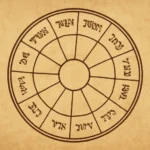
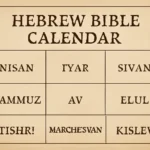
The month names, in order as they appear in the civil year, are:
Tishrei
Cheshvan (also called Mar-Cheshvan or Bul in some traditions)
Variations in spelling and transliteration: You will see Nisan and Nisan (also Nisan or Nisan), Iyar or Iyyar, Tammuz or Tamuz, and Cheshvan or Mar-Cheshvan. These reflect transliteration practices rather than different months.
Adar II is the additional month in leap years. Adar I and Adar II are sometimes called Adar Rishon and Adar Sheni in Hebrew sources.
Cheshvan (Bul) and Kislev are the two months that can vary in length from year to year, which affects the total number of days in a given year.
The order above reflects how the months run in the religious and civil cycle. However, for many people who observe the holidays, the physical order of events in a year starts with Tishrei and then proceeds through the rest of the year, which is why the later months (Nisan through Elul) may be thought of as forming the “spring and summer” part of the cycle, with Nisan introducing Passover and the counting of the Omer.
Month-by-month overview: holidays, themes, and observances
Below you’ll find a detailed look at each month, including its common length, the major holidays or fasts that occur within it, and notes about how observances may vary between communities. The descriptions emphasize core traditions and typical timing, while acknowledging that exact dates shift slightly from year to year due to leap years and the rules of the calendar.
Nisan (Nisan / Nissan) — the month of liberation and festival planning
Context: Nisan is the month that opens the religious narrative on the redemption from Egypt and the spring agricultural cycle in the land of Israel.
Key holidays: Passover (Pesach) begins on 15 Nisan in most calendars and lasts seven or eight days depending on tradition (Israel typically observes seven days, while the diaspora observes eight).
Other notes: The Omer counting begins on the second day of Passover (typically 16 Nisan) and continues for 49 days until Shavuot. The week-long setup of the festival season culminates with Shabbat Hagadol preceding Pesach and the festive days that follow.
Variations: In some years, the first day of Pesach is observed with unique customs, and the wrap-up of the holiday may extend across two weekends. The exact end date depends on whether you follow the Israel or diaspora practice.
Iyar — the counting month and the bridge to Shavuot
Context: The month that follows Pesach is less dense in public holidays but critical for the counting of the Omer, which links Pesach to the next major festival, Shavuot.
Key observances: Counting the Omer continues through Iyar and beyond, shaping liturgy and study themes for 49 days.
Notes: In some years, Yom HaShoah (Holocaust Remembrance Day) is observed in the spring (often around 27 Nisan or during Iyar, depending on the calendar), but this varies by country and tradition.
Sivan — the festival of Shavuot and harvest clarity
Context: Sivan brings the second major agricultural and covenantal festival.
Key holiday: Shavuot (the Feast of Weeks) is celebrated on 6–7 Sivan, with the date sometimes shifting by a day in leap years or in certain calendars. It commemorates the giving of the Torah at Sinai.
Other notes: Sivan marks the culmination of the Omer count with a focus on Torah study and Torah learning in many communities.
Tammuz — the fast of connection and reflection
Context: The month begins a period known for its somber tone in many traditions, often associated with the beginning of the “Three Weeks.”
Key observances: The fast of the 17th of Tammuz marks the breach of the walls of Jerusalem in ancient times. This fast begins the three-week period of reflection in preparation for Tisha B’Av.
Av — the height of sorrow and the seeds of resilience
Context: Av continues the commemorations of loss that begin in Tammuz, extending the mood of reflection through the ninth of Av.
Key observances: Tisha B’Av is the day of mourning for many Jews, commemorating the destructions of the First and Second Temples and other calamities in Jewish history. For many communities, the 9th of Av is the central fast day of the year.
Elul — the month of introspection and preparation for the new year
Context: Elul is a month of spiritual preparation, when scholars, communities, and families engage in introspection, repentance, and personal planning for the new year ahead.
Key practices: Seliḥot (special penitential prayers) are often recited in the weeks leading up to Rosh Hashanah, setting a reflective tone for the high holidays to come.
Tishrei — a cluster of holidays and the turning of the year
Context: Tishrei is the climactic month in the religious calendar, hosting a powerful sequence of holidays across a few weeks.
Key holidays:
Rosh Hashanah (1–2 Tishrei): The Jewish New Year, a time for reflection and renewal.
Yom Kippur (10 Tishrei): The Day of Atonement, a solemn day of fasting and prayer.
Sukkot (15–21 Tishrei): The Festival of Booths, commemorating the Israelites’ desert wanderings and harvest.
Shemini Atzeret (22 Tishrei): A separate festival marking the end of Sukkot and the beginning of a new spiritual year in some customs.
Simchat Torah (23 Tishrei): Celebration of the Torah and the return to the beginning of the yearly Torah cycle in many communities.
Notes: The exact days and the number of festival days can vary by tradition and location, especially between Israel and the diaspora. The two-day Rosh Hashanah practice is common in many communities outside Israel, while some traditions in Israel observe one day for each holiday, though most observances today align with international practice.
Cheshvan (Mar-Cheshvan) — a quiet month with a flexible length
Context: Unlike the other months, Cheshvan does not have any mandatory national holidays. Its length is variable, ranging between 29 and 30 days depending on the year’s leap-year pattern.
Practical notes: The variability of Cheshvan is one of the reasons why a year can have either 353–355 days (common years) or 383–385 days (leap years). This month often receives attention for its role in balancing the calendar to keep holidays in their correct seasons.
Kislev — Hanukkah and the gift of light
Context: Kislev is the month that often brings the festival of lights to life.
Key holiday: Hanukkah (also called the Festival of Lights) typically begins on 25 Kislev and lasts eight days in most years. It spans Kislev and sometimes a portion of Tevet, depending on the calendar’s alignment.
Additional notes: The lighting of the menorah during Hanukkah becomes a central seasonal ritual for many families and communities, with prayers, songs, and family gatherings shaping the month’s mood.
Tevet — the quiet of winter and the extended Hanukkah days
Context: The month of Tevet often sits in the midst of winter darkness for many in the northern hemisphere, and its holidays complement Hanukkah’s glow.
Key observances: In some years, the end of Hanukkah falls during Tevet, and there can be a sense of transition as the calendar moves toward Tu B’Shevat in the following month.
Shevat — Tu B’Shevat and the renewal of the land
Key holiday: Tu B’Shevat (the 15th of Shevat) is the Jewish Arbor Day, a time to celebrate trees and nature, and to reflect on environmental care and the connection to the land.
Context: This month often marks the turning point toward the later part of winter and the approach of spring in the Hebrew calendar’s agricultural framework.
Context: In a common year, the month of Adar (Adar Rishon in some texts) is observed as a regular month. In leap years, the calendar adds Adar I and Adar II (Adar II being the month in which most Purim observances take place).
Key holiday: Purim is celebrated on 14 Adar (in leap years, 14 Adar II). In walled cities, the festive commemoration of Purim is shifted to 15 Adar (Shushan Purim) in many traditions. The exact day can depend on local custom and whether one is counting Adar I or Adar II.
Other notes: Adar II’s inclusion in leap years is designed to preserve the alignment of the lunar months with the solar year and keep Pesach in spring.
Nisan again — the second appearance of spring in the calendar
Context: After Adar comes Nisan, a month that returns to the cycle of spring festivals and the Omer count that leads to Shavuot.
Key holidays: See above under Nisan. In a leap year, the same order applies; the only difference is that Adar II has joined the sequence earlier in the year.
Iyar through Elul — the ongoing year and its rhythms
Context: The months from Iyar through Elul form the long stretch of the year after Passover and before the next Tishrei.
Key points: Iyar and Sivan bring Shavuot and the Omer, Tammuz and Av bring the Three Weeks and Tisha B’Av, and Elul is a period of spiritual preparation for Rosh Hashanah. The rhythms are consistent across years, but the precise holiday dates shift due to leap years and calendrical rules.
Special features of the Hebrew calendar you should know
Beyond knowing the month names and their holidays, several distinctive features shape how the calendar functions in daily life and ritual practice:
Dechiyot (postponements): The calendar uses postponement rules to avoid certain holidays falling on Friday or Sunday and to ensure that certain fasts don’t conflict with the Sabbath.
Month length variability: Two months, Cheshvan and Kislev, can vary in length. This variability is what allows a year to be common (12 months) or leap (13 months) and to stay aligned with agricultural and seasonal cycles.
Two-day holidays in the diaspora: In many communities outside Israel, major holidays begin on the evening before and continue for two days, especially Rosh Hashanah, Shemini Atzeret, and Simchat Torah. In Israel, some holidays are observed for one day, reflecting different historical practice and the local calendar.
Omer counting: The period between Passover and Shavuot is defined by counting the Omer—49 days of spiritual preparation that connect liberation to revelation. This practice colors the months of Nisan, Iyar, Sivan, and the early part of Tammuz in the calendar’s rhythm.
Practical examples: a sample year and how it unfolds
To illustrate how the months and holidays play out in real life, here is a simplified description of a typical year in a modern Jewish community. Note that exact dates shift by year due to leap years and the specifics of the calendar system in use (Israel vs. diaspora, and the handling of leap months).
Tishrei begins with Rosh Hashanah, followed by Yom Kippur and Sukkot with Shemini Atzeret and Simchat Torah at the end of the month. The mood alternates from introspection to celebration as the calendar moves from autumn into late fall.
Cheshvan and Kislev introduce a transition period. If the year is a long year, Kislev and Cheshvan may alternate between longer and shorter lengths, which influences how many days remain for winter holidays like Hanukkah to begin.
Tevet typically sits in the quiet days after Hanukkah, while Shevat brings Tu B’Shevat, the new-year for trees, which many people observe with a custom of planting or reflecting on nature.
Adar and, in leap years, Adar II, prepare the ground for Purim, a festive, sometimes humorous holiday that centers on themes of deliverance and identity. In leap years, Purim is usually observed in Adar II, while Adar I is used to maintain the calendar’s rhythm.
Nisan marks the return of spring festival momentum with Pesach (Passover) and the start of the Omer count toward Shavuot.
Iyar emphasizes the ongoing Omer counting and prepares the community for Shavuot.
Sivan culminates in Shavuot, commemorating the giving of the Torah at Sinai and often featuring festive study and dairy-food customs.
Tammuz and Av carry the arc of lamentations and endurance with the fast of 17 Tammuz and the major fast of 9 Av (Tisha B’Av), which historically marks destructions and tragedies in Jewish history.
Elul calls for self-examination, repentance, and preparation for the new year as families and communities plan for a fresh start with Rosh Hashanah.
This hypothetical year demonstrates how a single calendar cycle can hold a balance of solemn days, sacred seasons, and communal celebrations, all tied together by the rhythm of the months and their holidays.
Practical tips for navigating the Hebrew calendar
Know the year type: Determine whether the current year is common or leap, as this affects the presence of Adar II and the dates of holidays.
Check local practice: Depending on whether you are in Israel or the diaspora, some holidays may be observed for one day versus two, and the handling of Shabbat and other holy days may differ.
Plan travel and events: If you are coordinating travel, study, or work with Jewish communities, be aware of major holidays, sabbatical-like seasons, and the Omer period that connects Passover to Shavuot.
Learn the month names and variants: Becoming comfortable with names like Cheshvan, Kislev, Adar I, and Adar II will help you navigate calendars, synagogues, and community bulletins more easily.
Glossary of key terms
Hebrew calendar: The lunisolar calendar used by Jewish communities to determine the dates of festivals, fasts, and Shabbat preparations.
Dechiyot: Postponement rules that adjust holiday observance to avoid certain days and ensure seasonal alignment.
Leap year: A year with 13 months, adding Adar I and Adar II to keep the calendar synchronized with the solar year.
Omer: The 49-day counting period between Pesach and Shavuot, a structure for spiritual refinement and study.
Tu B’Shevat: The Jewish Arbor Day on 15 Shevat, a celebration of trees and nature.