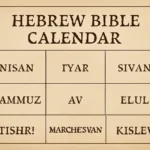
The month of Av occupies a distinctive place in the Jewish calendar. In the religious year, it is counted as the fifth month, following the months of Nisan, Iyar, Sivan, and Tammuz. In some civil or secular reckonings, Av sits later in the year, but in the structure of the sacred calendar it serves as a transitional period between the mournful weeks of late spring and the spiritual renewal that begins with Rosh Hashanah. The Hebrew name Av is preserved across generations, and this month runs with a rhythm that blends solemnity with moments of joy. The month typically has 29 days, and its character is shaped by the observances it hosts, most notably the culmination of the Nine Days and the festive counterpoint of Tu B’Av.
Throughout this article, you will see variations on the phrase Av month, month of Av, or Av in the Hebrew calendar. All of these refer to the same period, just from slightly different angles. The discussion that follows covers the core dates, holidays, and observances associated with the Av month Jewish calendar, including how Shabbat and calendar rules interact with fast days, and how communities around the world observe this time.
Rosh Chodesh Av: The Beginning of the Month
The Rosh Chodesh Av marks the start of the month of Av. In the fixed Jewish calendar, the start of a new month can be celebrated as one day or as two days, depending on how the lunar cycle falls in a given year. Therefore, the two-day Rosh Chodesh Av is not unusual in some years, while in other years the observance lasts only one day. When Rosh Chodesh Av is observed for two days, the second day is often a continuation of the same festive or liturgical mood that began on the first day.
Rosh Chodesh marks the spiritual opening of the new month with special prayers, readings, and some communities exchanging greetings or small gifts. It is a moment to acknowledge the power of the new lunar cycle and to recenter personal and communal intention.
The two-day Rosh Chodesh Av can affect synagogue schedules, Torah readings, and personal calendars in communities that follow the two-day system for Rosh Chodesh.
In Israel, as in other places with careful adherence to the calendar, the practice of Rosh Chodesh remains a recognized occasion for additional prayers or festive notes, even as the month of Av grows heavier with the approach of the Three Weeks.
Av Month in Focus: Key Dates, Holidays and Observances
Several dates in the Av month carry particular weight, either because they mark a fast, a minor festival, or the end of a set period of lament. The following entries outline the principal observances and how they are commonly practiced, both in Israel and in the diaspora.
Tu B’Av: The 15th of Av — A Day of Joy
Tu B’Av, which falls on the 15th day of the Av month, is often described as a day of renewal and love. Historically a date of matchmaking in ancient Israel, Tu B’Av has re-emerged in many communities as a time to celebrate connection, friendship, and communal warmth. In modern practice, Tu B’Av is commonly observed as:
A festive or joyful mood that contrasts with the seriousness of the preceding days.
A popular time for outdoor activities, gatherings, and in some communities, weddings and engagements.
An occasion to reflect on the value of community bonds, hospitality, and the social fabric of Jewish life.
While Tu B’Av is not one of the major fast days, it serves as a deliberate counterpoint to the sorrow associated with the Three Weeks. The date invites people to enjoy the beauty of communal life, to give attention to kindness, and to celebrate the relationships that sustain a faith community during a period otherwise marked by weighty remembrance.
Tisha B’Av (The Ninth of Av) — The Most Memorable Fast Day of Av
The central observance of the Av month in the modern religious calendar is Tisha B’Av, the fast of the Ninth of Av. This is the day when the two Temples in Jerusalem were destroyed, a catastrophe that reverberates through Jewish memory and liturgy. Tisha B’Av is observed with a combination of fasting, mourning, and eventual consolation as the day ends. Key features include:
A full-day fast, typically beginning before dawn and ending after nightfall. In practice, the fast lasts for about 25 hours, with exceptions for the ill, pregnant, nursing, or those truly unable to fast.
The Eicha (Book of Lamentations) is read in the synagogue as part of the evening service, followed by a second reading the next morning. The elegiac poetry helps frame the themes of loss and longing that define the day.
Restrictions on physical pleasures and certain types of work, similar in spirit to other fast days, but often more stringent given the historical significance of the events commemorated.
In the diaspora, the fast can be observed with adaptations if it falls on Shabbat (see notes below). In Israel, similar practice applies, with local customs guiding the exact liturgical flow when Shabbat intersects with the fast.
Beyond the ritual specifics, Tisha B’Av is a moment for introspection and communal memory. The day invites a unique combination of grief and hope, acknowledging historical traumas while also seeking renewal and spiritual repair. It is one of the few days in the year that so decisively marks the Jewish calendar with a somber tone, but it also teaches resilience and continuity as communities look toward future rebuilding.
Bein HaMetzarim: The Three Weeks in Av and Tammuz
Running up to Tisha B’Av, many communities observe the period known as Bein HaMetzarim — literally, the «between the thresholds» period. This spans from the even more somber date of Shiv’ah Asar B’Tammuz (the 17th of Tammuz) through Tisha B’Av (the 9th of Av). During these weeks, there is a mood of semi-mourning and a set of customary practices designed to soften joy and heighten reflection. In the Av month, this period takes on a distinct flavor because it sits at the tail end of the summer season and the approach of the fall holidays in the Jewish year.
The first marker, Shiv’ah Asar B’Tammuz, is the 17th of Tammuz and commemorates the breach of the walls of Jerusalem in ancient times. This date is a grim reminder that the cycle of destruction and exile has deeply shaped Jewish memory.
From that point forward, the Three Weeks emphasize restrictions on joyous activities and certain types of work, depending on community custom. The aim is to prepare the heart and the home for Tisha B’Av.
As the calendar progresses into Av, the mood shifts gradually. By the time Tu B’Av arrives, the atmosphere often lightens, offering a balanced approach to mourning and renewal.
Shabbat Chazon: The Shabbat Before Tisha B’Av
A notable ritual moment within the Av month is Shabbat Chazon, the Shabbat immediately prior to Tisha B’Av. The Haftarah for this Shabbat, read from the Book of Isaiah, is known as the «Chazon» portion, which speaks of vision and warning. This Shabbat serves as a liturgical and emotional bridge between the intensifying mood of the Three Weeks and the climactic fast day that follows.
In practice, Shabbat Chazon often reinforces themes of accountability, repentance, and the hope for restoration. It is a moment to contemplate the past while preparing for the emotional and spiritual tasks of Tisha B’Av. Communities may emphasize special songs, reflective sermons, and shared meals that acknowledge the weight of the season without erasing the possibility of growth and renewal.
Shabbatot Around Av: Additional Observances and Customs
During the Av month, several other Shabbat-related practices may appear, depending on local custom and rabbinic guidance. For example, some communities observe Shabbat Nachamu in the week after Tisha B’Av, which introduces the next phase of consolation through the Haftarah of Isaiah. The exact timing of this Shabbat can shift slightly from year to year because the lunar calendar determines the weekdays on which the fast and its surrounding readings fall. In general, the post-Tisha B’Av period invites a transition from mourning toward hope, a thematic arc that carries into the days of late summer and the start of the Hebrew month of Elul.
Other Notable Dates Within the Av Month
In addition to Tisha B’Av and Tu B’Av, there are other calendar moments that people may notice in the Av month, particularly for those who study the Torah portions, liturgy, or seasonal cycles. These moments may include:
Rosh Chodesh Av observances, which can affect synagogue services and personal calendars.
The ongoing presence of the Three Weeks and the emotional pace of the season for families and communities with close ties to the Temple narrative and Jewish history.
Regional and cultural variations in how the Av month is taught to children and discussed in study groups, with some focusing on the themes of hope, resilience, and the moral lessons drawn from national trials.
Av Month in Practice: Observing in Israel and the Diaspora
The practical observance of the Av month can vary depending on location, tradition, and the local religious calendar. Here are some common patterns you might encounter when considering the Av month Jewish calendar in different contexts:
In Israel, the cycle of mourning and consolation is typically observed in the same sequence as in the diaspora, but with local customs that reflect the communal calendar and the rhythms of Israeli life. The focus remains on the Three Weeks and the culmination in Tisha B’Av.
In the diaspora, communities may differ on the exact restrictions during the Nine Days, how strictly to observe work restrictions, and the timing of the Eicha readings. Nonetheless, the overarching arc remains the same: a period of solemn reflection followed by a day of intense mourning and, soon after, the possibility of renewed hope.
Rosh Chodesh Av can be observed as a one-day or two-day event, with synagogue services and personal traditions aligned to the length of the month’s opening.
The Spiritual and Practical Significance of the Av Month
The Av month holds a unique place in Jewish spirituality and communal life. It is often described as a period that invites humility, restraint, and introspection, while the presence of Tu B’Av and the post-fast days point toward renewal and communal joy. This juxtaposition—mourning and joy, loss and hope—reflects a broader pattern in Jewish timekeeping: that the year contains cycles of recall and release, mourning and rejoicing, seriousness and light. The way communities navigate this calendar season can teach resilience, empathy, and a sense of shared history.
From a pedagogical standpoint, the Av month Jewish calendar provides a rich framework for teaching about memory, identity, and the resilience of a people. Students and families often find value in pairing liturgical readings with historical sources, art and music inspired by Tisha B’Av, and discussion prompts that connect ancient events with contemporary concerns. The interplay between Rosh Chodesh Av, the Three Weeks, Tu B’Av, and Tisha B’Av offers a structured path for exploring themes of loss, endurance, and eventual renewal.
Practical Ways to Engage with the Av Month Calendar
Whether you are participating in synagogue life, studying on your own, or planning family observances, here are practical ideas to engage with the Av month calendar:
Keep a shared family or community calendar that marks the dates of Rosh Chodesh Av, Shabbat Chazon, Tu B’Av, and Tisha B’Av. Having clear reminders helps everyone prepare emotionally and logistically.
Plan a study schedule focusing on the themes of the Three Weeks, the Book of Lamentations, and primary sources about the Temples and Jerusalem. Reading suggestions can include selected chapters from Eicha and commentary that resonates with modern life.
Consider combining liturgical practices with family activities. For example, on Tu B’Av, host a community gathering or a dessert social after a day of study, linking the ancient sense of communal celebration with contemporary hospitality.
Offer resources for those observing the fast: light meals before dawn, supportive guidance for parents with young children, and tips for staying engaged during long services or readings.
For educators and youth leaders, create modules that explain the historical events commemorated during Tisha B’Av, followed by discussions on resilience, rebuilding, and hopeful futures.
A Glance at the Calendar: Variations and Semantics
To help readers navigate the Av month calendar with clarity, here is a concise summary of variations you might encounter:
The Av month is the fifth month in the ecclesiastical year. Some calendars label months differently, but the observances detailed here remain central across traditions.
The Rosh Chodesh Av can span one or two days, depending on the year. When two days are observed, the second day often carries similar liturgical practices as the first.
Shabbat Chazon—the Shabbat preceding Tisha B’Av—serves as a liturgical bridge and a moment for communal contemplation before the fast.
In the diaspora, there are occasional differences in how strictly certain restrictions of the Nine Days are observed, and some communities place more emphasis on Tu B’Av as a festival of joy than others. In Israel, the momentum of this period interacts with the summer climate and everyday life in distinctive ways, but the core narratives and obligations remain consistent.
The Av month sits at an important crossroads in the Jewish calendar. It begins with the quiet anticipation of a new lunar cycle as Rosh Chodesh Av arrives, moves through a period of collective mourning that culminates in the solemn fast of Tisha B’Av, and then makes room for the gentle elevation of Tu B’Av, a moment of communal light. The Three Weeks and the Bein HaMetzarim period connect memory with meaning, urging communities to reflect on the past while looking toward renewal and rebuilding. For learners, families, and faith communities alike, the Av month offers a powerful template for engaging with history, Jewish ethics, and the shared task of hopeful living in the present.