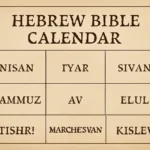
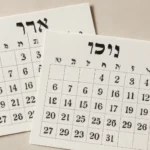
Adar is one of the twelve or, in leap years, thirteen months that make up the Hebrew calendar. In the rhythm of the Jewish year, Adar is traditionally a month of joy and anticipation, a time when communal and family celebrations come to the fore, culminating for many with the holiday of Purim. The name Adar appears in biblical and post-biblical Jewish sources, and its position within the year shifts depending on whether the year is a common year (with one Adar) or a leap year (with two Adars: Adar I and Adar II, also called Adar Rishon and Adar Sheni respectively).
In this article we explore the dates of Adar, the significance of the month, and the broad spectrum of traditions associated with Adar in various communities. We will also look at how the two Adars interact with Purim and other observances, how the month is calculated within the lunisolar Jewish calendar, and how Adar is experienced in practice around the world.
Adar in a Common Year vs. Adar I and Adar II in a Leap Year
The structure of the Jewish calendar means that the month of Adar can appear in two distinct forms depending on the year type.
Adar in a common year (one Adar)
In a common year, there is a single occurrence of Adar. This month generally flows into the next month of Nisan, aligning with other months that alternate lengths close to 29 or 30 days. The typical length of Adar in a common year is 29 days. The days of Adar are determined by the lunisolar rules of the Hebrew calendar, with the new month beginning at the sighting of the new moon and then adjusted to align with the solar year over a 19-year cycle.
In a leap year, the calendar inserts a second month named Adar, called Adar I (also Adar Rishon). The second Adar is known as Adar II (or Adar Sheni). In this configuration, Purim is celebrated in Adar II, which is the form of Adar most people refer to when discussing the holiday in a leap year. The traditional understanding is that Adar I has 30 days, while Adar II has 29 days, though the exact lengths can be subject to the calendar’s fixed rules. The presence of two Adars affects the date of Purim and related observances in a given year, and it also influences when Rosh Chodesh Adar occurs and when the fast of Esther is observed relative to the month’s structure.
In both scenarios, the Adar month sits near the late winter–early spring portion of the Gregorian calendar, often placing Purim in February or March. The leap year adjustment ensures the Hebrew calendar remains aligned with the solar year, so that holiday seasons interlock with seasonal expectations across generations and geographies.
Dates and Timing: When Adar Occurs in the Civil Year
The Hebrew calendar is a lunisolar system, and the month of Adar begins with the new moon of the month. Because the Hebrew calendar does not align perfectly with the Gregorian calendar, there is no fixed Gregorian date for Rosh Chodesh Adar; instead, it shifts yearly. However, certain patterns are helpful for understanding the timing of Adar and its major observances:
Rosh Chodesh Adar marks the start of the month’s observances. This is the new month in the Hebrew calendar and is observed with festive or semi-formal customs depending on community practice.
Rosh Chodesh Adar II (in a leap year) is often a point of particular focus for communities celebrating Adar II’s arrival, because Purim will occur during this month.
Ta’anit Esther (the Fast of Esther) is observed on the 13th day of Adar in most communities (some exceptions exist depending on local tradition and calendrical rules).
Purim is the central festival of Adar. In a common year, Purim is celebrated on 14 Adar in most places, while in walled cities like Jerusalem, it is observed on 15 Adar (the day known as Shushan Purim). In a leap year, Purim occurs in Adar II (the second Adar).
Mishloach Manot (gift baskets of food) and Matanot La’evyonim (gifts to the poor) are traditionally given on Purim day, intensifying the communal sense of generosity and solidarity during Adar.
Because Adar’s placement is tied to the lunar cycle and to the leap year rules that insert Adar I and Adar II, the Gregorian dates shift by several weeks from year to year. When planning around Adar, it is helpful to consult a reliable Hebrew calendar or a Jewish year calendar for the current year to see the exact dates for Rosh Chodesh Adar, Ta’anit Esther, and Purim in your community or tradition.
The Significance of Adar: Why This Month Feels Special
Adar has a long-standing reputation for joy, festivity, and a sense of renewal within the Jewish calendar. This significance is conveyed through liturgical readings, customs, and communal practices that span centuries of practice.
Historical and liturgical importance
The name and timing of Adar are connected to historical events and biblical references that emphasize deliverance, resilience, and communal solidarity. The most celebrated narrative in Adar is the story of Purim, which retells the miraculous survival of the Jews in the Persian Empire as recorded in the Book of Esther. The reading of the Megillah (the Scroll of Esther) during Purim, with its dramatic and celebratory cadence, reinforces the idea that even in times of danger, communal faith and collective action can yield a positive outcome.
Joy and interruption of the ordinary pace
In many communities, Adar is perceived as a time when restrictions on joy are temporarily relaxed. The Talmudic and later rabbinic authorities highlight Adar as a period in which celebratory spirit is appropriate and even encouraged. This sense of uplift shapes everyday practices, such as festive meals, costumes associated with Purim, and charitable giving. The phrase “in Adar, increase” is often invoked to describe the broader ethical and communal impulse to give more generously, to be more hospitable, and to extend acts of kindness to others.
Traditions and Observances in Adar
The traditions of Adar center on Purim but also include several ancillary practices that illuminate the month’s unique flavor. Below is a survey of some of the salient customs, with attention to how they vary between Adar I and Adar II, and between different Jewish communities.
Megillah reading—The Scroll of Esther is read in the evening and again during the day. The reading is often accompanied by lively commentary, drinks, and a festive atmosphere, especially among families and children.
Costumes and masquerades—People dress in costumes to symbolize themes from the Megillah, to poke fun at political or historical figures, or simply to foster communal joy and creativity.
Seudah Purim—A festive meal that often features abundant food and drink, reflecting the celebratory mood of Adar.
Mishloach Manot—The exchange of food gifts with friends, neighbors, and community members.
Matanot La’evyonim—Charitable gifts to the poor, a core obligation that embodies the social dimension of Purim.
Purim songs and plays—Traditional and modern songs, plays, and performances that retell the Megillah’s tale and encourage communal bonding.
Ta’anit Esther and preparations for the holiday
Many people observe Ta’anit Esther on the 13th of Adar as a fast in remembrance of Esther’s role in the salvation of the Jewish people. In Jerusalem and other walled cities, Purim is observed a day later, which can influence the timing of related fasts and gatherings in the community. The fast day is observed by some as a day of quiet reflection or minimal daytime meals, while others do not fast, depending on local custom and health considerations.
Rosh Chodesh Adar and seasonal emphasis
At the start of the month, Rosh Chodesh Adar may be marked with special liturgical readings or community gatherings in some traditions. The emphasis on Adar as a time of increased joy sometimes blends with seasonal expectations of late winter turning toward early spring in the northern hemisphere, reinforcing a sense of renewal and communal resilience.
Regional Variations and Practical Considerations
Across the Jewish world, practice can differ in meaningful ways during Adar, especially when comparing Adar I and Adar II, or when considering diaspora vs. land of Israel customs. These variations are shaped by historical development, rabbinic authority, and local communal culture.
Purim in Adar I vs. Adar II
In a leap year, Purim is observed primarily in Adar II. This means that the celebratory season for Purim is shifted to the second Adar, aligning with the established timeline of Esther’s story and the rabbinic determinations about when the festival should be observed.
The earlier month, Adar I, is often described as a preparatory period, with less emphasis on Purim-style festivities, though regional communities may still observe certain customs related to preparation, charity, and communal gathering.
Observance differences between Israel and the Diaspora
In most communities outside the land of Israel, Purim is celebrated on 14 Adar (with 15 Adar as Shushan Purim in cities with walled status). In the State of Israel and certain ancient-walled cities, this may be adjusted to align with local tradition and historical practice.
Jerusalem and other walled cities historically observe Purim on 15 Adar (Shushan Purim), which means their Megillah readings, Seudah, and other Purim rituals occur a day later than in many other communities.
These regional variations are part of the living fabric of the Hebrew calendar in action. They illustrate how a fixed lunisolar framework can accommodate diverse cultural expressions while preserving shared theological milestones tied to the Purim narrative.
Adar and Its Relationship to Other Months
To understand Adar fully, it helps to view its relationship with other months in the year. Several key connections shape its significance and practical observance:
Adar in the cycle of months sits between Shevat and Nisan, bookending late winter and the lead-up to Passover. The proximity to Nisan—when the Haggadah and Passover preparations begin—adds a sense that Adar is a doorway into the festive and redemptive period of spring.
Adar II in leap years strengthens the Purim celebration by situating it later, which also influences how communities schedule readings, feasts, and charity activities in the weeks surrounding Purim.
The month’s mood—often described in traditional sources as a time for increased joy and extra acts of kindness—may influence how people plan charitable events, community gatherings, and family celebrations in the days ahead of Adar’s end and the arrival of Nisan.
Practical Ways to Observe Adar Today
For individuals and families looking to engage deeply with the spirit of Adar, there are several practical avenues to explore. Below is a non-exhaustive guide to observing Adar in a way that honors tradition while embracing contemporary life.
Mindful calendar planning
Consult a reliable Hebrew calendar to determine the exact dates for Rosh Chodesh Adar, Ta’anit Esther, and Purim in your year (and location), especially in leap years where Adar I and Adar II differ.
Plan charitable activities or community events to align with the Matanot La’evyonim and Mishloach Manot opportunities, ensuring participation is feasible for family and friends.
Family and educational activities
Read the Megillah together as a family, with attention to the meanings behind key phrases and characters. Use this as a chance to discuss themes of courage, resolve, and communal responsibility.
Prepare and bake Hamantaschen (traditional Purim pastries) together, experimenting with fillings that reflect local tastes or family heritage.
Share stories of resilience from history or personal experiences that resonate with the Purim message of hope and deliverance, reinforcing the spirit of Adar as a time of increase in generosity and goodwill.
Attend or organize a Purim Seudah or festive meal that honors the religious and social dimensions of the holiday.
Participate in Mishloach Manot exchanges with neighbors, elderly members of the community, or people in need to strengthen social ties and acts of kindness.
Support charitable programs that provide Matanot La’evyonim, especially for families facing economic hardship.
Conclusion: The Spirit of Adar
Across generations, the month of Adar has been understood as a time of heightened joy, communal generosity, and spiritual readiness in anticipation of the redemptive cycle that culminates with Nisan and the festival of Pesach. Whether viewed through the lens of Adar I and Adar II in a leap year, or through the single Adar of a common year, this month invites us to embrace acts of kindness, to celebrate life with family and friends, and to remember the power of community to endure hardship and emerge with renewed hope.
As you plan and participate in Adar’s traditions—whether you focus on Purim, charity, or the broader social customs—the core message remains consistent: in Adar, the course of history and the daily acts of generosity converge to uplift individuals and communities alike. The calendrical system may be fixed, but the lived experience of Adar is human, personal, and deeply communal. By exploring the variations—Adar Rishon and Adar Sheni, the different locales for Purim, and the ways families observe the fast of Esther—readers can gain a richer understanding of how this month functions as a bridge between hardship and celebration, between memory and meaning.