Overview: Hebrew Christianity, Hebraic Traditions, and Related Nomenclature
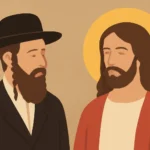
The phrase Hebrew Christianity points to a family of religious expressions that emerge at the intersection of Second Temple Judaism and the early Christian movement. Throughout history, scholars and practitioners have used a variety of terms to describe this terrain, including Hebraic Christianity, Hebrew-Christianity, Messianic Judaism (in contemporary contexts), and older designations such as Nazarene or Ebionite communities. Each label reflects different emphases—some highlight language, others highlight liturgical practices, and still others stress doctrinal approaches to Jesus (often referred to as Yeshua in Hebrew or Aramaic contexts) in relation to Torah observance, covenantal promises, and the ongoing identity of the people of God.
This article surveys the origins, core beliefs, and modern perspectives on this family of movements, with attention to the linguistic, theological, and sociocultural currents that have shaped them. It also differentiates between historical groups of early Jewish Christians and later contemporary forms that re-emphasize a Hebrew-leaning approach to faith, scripture, and practice. By tracing continuity and divergence, we can better understand how Hebrew Christianity has evolved into distinct communities, how it dialogues with Judaism and mainstream Christianity, and what it means for believers today.
Origins and Historical Context
The story of Hebrew Christianity begins in the milieu of early Second Temple Judaism, a plural landscape in which diverse groups held different expectations about the Messiah, the Torah, and the role of Israel among the nations. In the decades after Jesus’ ministry, a subset of Jesus’ earliest followers remained within a Jewish framework while claiming new revelations about Jesus as the promised Messiah.
Early Jewish Roots and Historical Prototypes
Several tendencies in antiquity foreshadow what modern readers might call Jewish Christianity or Hebraic Christianity:
The Nazarene circles emerged as a group of Jesus-believing Jews who maintained deep ties to Jewish law and practice while recognizing Jesus as the Messiah.
The Ebionites, a later nomenclature for certain Jewish-Christian groups, emphasized Jesus as a prophetic figure and tended to adopt a distinctive stance toward the law, often refraining from certain Gentile-oriented interpretations.
The earliest apostolic and post-apostolic communities navigated questions about the covenant, the role of circumcision, and the status of non-Jewish followers, all within a shared scriptural horizon that included the Hebrew Bible (what Christians call the Old Testament).
The Transition to a Distinct Tradition
Over centuries, these early forms of Hebrew Christian witness—often embedded within synagogal life or parallel religious spheres—faced pressures from both Rabbinic authority and the rising institutional church. The result was a gradual shift in some circles toward converting gentiles, reorganizing communal life, and sometimes reinterpreting Torah observance in light of belief in Jesus the Messiah.
In academic terms, historians distinguish between:
Historical Judaic-Christian movements that persisted in certain communities through late antiquity.
Modern Hebrew-Christian expressions that intentionally reclaim Hebrew language, liturgy, and scriptural interpretation in a contemporary setting.
Theological Core and Beliefs
A defining feature of Hebrew Christianity—in its various forms—is the attempt to harmonize the claims of Jesus as the Messiah with a reverence for Torah, the prophets, and the ethical expectations of Judaism. This involves nuanced views on law, the covenant, and the degree to which non-Jewish believers should adopt Jewish practices. Different communities emphasize particular aspects, yet several common motifs recur.
A central question across the spectrum concerns how to read the scriptures that inform both the Tanakh (Hebrew Bible) and the New Testament writings. In many forms of Hebraic Christian thought, the following tensions are foregrounded:
How prophecy and fulfillment relate to Jesus as the anticipated Messiah.
How the Hebrew scriptures relate to the narrative and claims of the Gospel accounts.
How to interpret covenantal language—notably the relationship between the Covenant of Sinai and the new covenant proclaimed in the Gospel.
Christology and the Law
Distinct approaches to Christology (the person and work of Jesus) often accompany different stances toward Torah observance:
A dividual emphasis on Jesus as the divine Messiah who brings liberation from sin yet does not discard the ethical demand of the law.
A fulfillment-centric perspective that sees certain ceremonial aspects of the law as finding their pole in the life of Jesus or in the experiment of the early church.
A continuity model in which salvation is accessible through faith while works of the law remain meaningful for moral life and communal identity.
Covenant, Covenant Renewal, and Identity
The concept of covenant takes on varied nuances:
Some strands emphasize a continuation of the Sinaitic covenant in a reinterpreted light, fused with the new covenant language associated with Jesus.
Others stress a renewed sense of ethnoreligious identity that binds a community through shared practices, languages (Hebrew or Aramaic), and festival calendars.
There are also voices that prioritize inclusion of non-Jewish believers while still honoring the Jewish roots of the faith tradition.
Practices, Liturgy, and Texts
The practical life of Hebrew Christianity—whether in historical Jewish-Christian circles or contemporary expressions—involves liturgical forms, prayer, scriptural study, and a distinctive use of language. Texts are read through a dual lens: the Hebrew Bible and the apostolic writings that center on Jesus as the Messiah.
Languages, Scriptures, and Translation
Across the spectrum, language matters. Some groups prioritize Hebrew as a liturgical and theological language, while others embrace Aramaic or Greek as historical channels for the early church. The Septuagint and the Targums (Aramaic paraphrases of the Hebrew scriptures) often figure in formative discussions about interpretation and authority.
Use of Hebrew Scripture alongside the New Testament writings.
Retention or revival of Hebraic prayers and biblical recitations, especially around holidays such as Passover, Pentecost, and Sabbath.
In some communities, the Seder or Seder-like observances are employed to highlight redemptive motifs tied to the exodus narrative.
Ritual Practices and Calendar
The practice of holy days and weekly observances varies. Some groups align with traditional Jewish synagogue patterns, while others adopt a church-like structure oriented around congregational worship that centers on Jesus as the Messiah.
Weekly Sabbath or Sabbath-like gatherings, with teachings grounded in Torah and Gospel passages.
Festivals with reinterpretations of old motifs, inviting both Jewish and non-Jewish believers into shared remembrance of redemptive acts.
Rites of passage, baptism, and communion are adapted to reflect a distinctly Hebrew-Christian perspective.
Worship Music and Spiritual Practice
In many modern expressions, worship language and musical styles blend Hebrew liturgical motifs with gospel-centered hymns. Some communities favor songs in Hebrew or transliterations that echo ancient liturgical songs, while others use vernacular languages to reach wider audiences.
Modern Perspectives and Communities
In the contemporary period, a range of communities identify with Hebrew Christianity or its close variants. Some self-identify as Messianic Judaism, others as Hebraic Christian congregations, and a number operate within broader Christian networks that honor Jewish roots. The diversity reflects different goals, historical backgrounds, and approaches to Judaism and the Christian faith.
Messianic Judaism and Hebrew-Christian Movements
Messianic Judaism is perhaps the best-known contemporary umbrella term for a movement that seeks to live as Jewish followers of Jesus. Core features often include:
Affirmation of Jesus as Messiah, while maintaining Jewish identity, calendar, and sometimes dietary practices.
Use of Hebrew names for Jesus (often Yeshua) and for other scriptural figures.
In many communities, the Sabbath and Jewish holidays are observed in ways that emphasize redemptive themes associated with Jesus.
It is important to note that the term Messianic Judaism covers a spectrum—from groups that align closely with mainstream Christian theology to more distinct expressions that preserve deep Jewish practice. Debates within the broader religious landscape often concern matters of proselytism, the nature of mission among Jewish communities, and the boundaries between Jewish identity and Christian worship.
Hebraic Christians in Contemporary Mainstream Contexts
Outside explicit Messianic identities, many Christian communities emphasize Hebrew-Christian roots as a lens for biblical interpretation and moral formation. Characteristics may include:
Reverence for the Hebrew Bible as authoritative and foundational to faith.
Respect for the continuity between the people of Israel and the church, while recognizing the unique place of Jesus in salvation history.
Participation in ecumenical dialogue that seeks shared moral concerns across faith traditions.
Contemporary Controversies and Debates
The modern landscape features lively discussions about identity, mission, and theological nuance. Some points of controversy include:
The degree to which Jewish law should inform daily Christian life among Jews-for-Jesus communities.
The use of missionary language toward Jewish audiences and the risk of blurring boundaries between faith communities.
Distinctions between historical Ebionite frameworks and contemporary Hebraic expressions that emphasize grace and faith in Jesus as the path to salvation.
Ethics, Social Life, and Interfaith Dialogue
A defining feature of Hebrew Christianity, in its many forms, is its ethical imagination: how to live faithfully before God in a world with complex religious and cultural identities. This includes engagement with Judaism, Christianity, and broader society through a shared commitment to justice, compassion, and peace.
Ethical Priorities
The ethical dimension often centers on:
Emphasis on justice for the vulnerable, echoing prophetic themes in the Hebrew Bible.
Hospitality and solidarity with immigrant communities, particularly in contexts where Jewish-Christian groups share a common concern for the vulnerable.
Honoring the dignity of all people while maintaining religious integrity, which requires respectful dialogues with both Jewish and Christian neighbors.
Interfaith and Civic Engagement
In the modern era, many Hebraic-Christian communities participate in interfaith initiatives that promote mutual understanding and social welfare. These engagements can involve:
Joint charitable ventures and disaster relief efforts with Jewish and Christian partners.
Educational programs that teach about the Hebrew Bible, the life of Jesus, and the shared moral concerns of faith traditions.
Dialogues aimed at clarifying theological differences while discovering common ground on issues such as human dignity, freedom of conscience, and religious liberty.
Texts, Scholarship, and Historical Memory
The study of Hebrew Christianity intersects with biblical studies, early Christian history, and Jewish studies. Scholars examine ancient sources, including patristic writings, rabbinic literature, and documentary texts that illuminate how early Jewish-Christian communities understood themselves and interacted with their neighbors.
Historical Sources and Modern Scholarship
Analyses focus on how early Jewish Christians interpreted the law, the concept of kingdom, and the identity of the Messiah. Modern scholarship also explores how these communities navigated the pressure of shifting political landscapes, such as the Roman occupation, the destruction of the Temple, and the emergence of distinct Christian and rabbinic identities.
Patristic testimonies that reference Nazarene or Ebionite groups.
Jewish apocryphal and rabbinic writings that shed light on how Jewish communities perceived the nascent Christian movement.
Contemporary ethnographic and sociological studies of living Hebraic Christian congregations around the world.
Global Distribution and Cultural Expressions
Today, Hebrew Christianity and related movements are found across continents, including regions with large Jewish or Christian populations. Global expressions often adapt to local languages, cultures, and religious landscapes, while preserving a core interest in the Hebrew roots of faith and the claims of Jesus as the Messiah.
Some regions exhibit vibrant networks of Messianic Judaism alongside independent Hebraic Christian congregations. In several countries, there are educational institutes, worship venues, and media outlets dedicated to explaining biblical interpretation from a Hebrew-Christian perspective.
Cross-Cultural Exchange
Cross-cultural dialogue has yielded mutual enrichment in worship, scriptural interpretation, and community life. Shared emphasis on justice, mercy, and the ethical obligations of believers helps to bridge differences while honoring distinctive traditions.
Contemporary Reflections on Identity and Community
As the landscape of Hebrew Christianity continues to evolve, contemporary voices emphasize authenticity, theological clarity, and pastoral care. For many adherents, the project is not merely about heritage but about forming faith communities where biblical faith is lived out in a language that resonates with both ancient memory and modern experience.
Identity and Theological Clarity
A recurring theme is the question of identity: how to be a Jew, how to be a Christian, and how to navigate a faith that honors the God of Israel while proclaiming Jesus as the Messiah.
Whether to emphasize continuity with historic Jewish practice or to foreground the gospel proclamation.
How to articulate a coherent Christology that respects the Jewish roots of Scripture and the transformative claims of Jesus.
How to maintain healthy boundaries with other communities while pursuing shared ethical aims.
Pastoral and Educational Dimensions
In many contexts, Hebraic-Christian communities invest in education, youth programs, and pastoral care that address the complexities of identity, family life, and community leadership. Teachers, pastors, and lay leaders often emphasize:
Scriptural literacy across the Hebrew Bible and the New Testament.
Ethical formation that mirrors the values found in both the Torah and the teachings attributed to Jesus.
Appreciation for Jewish-Christian history as a resource for understanding faith, not merely as a distant past.
Practical Guide to Understanding Hebrew Christianity
For readers seeking a balanced and informed understanding of Hebrew Christianity, the following points may help navigate the terrain:
Recognize the diversity of forms within this broad family of traditions, from Messianic Judaism to Hebraic Christian congregations that align with mainstream Christian denominations.
Distinguish between historical accounts of early Jewish-Christian groups and modern expressions that intentionally reframe faith in a Hebrew linguistic and cultural context.
Understand that debates about law and grace are not only doctrinal matters but also questions about communal life, worship, and mission strategy.
Appreciate the role of language, liturgy, and calendar in shaping identity and spiritual experience.
Conclusion: Toward a Richer Conversation
The story of Hebrew Christianity is not a single narrative but a collection of conversations that span ancient history and modern religious life. From its earliest Jewish-Christian prototypes to contemporary movements that seek to conserve heritage while proclaiming salvation in Jesus the Messiah, this field invites thoughtful engagement with questions about Canaanite and Mediterranean religious worlds, the meaning of covenant, and the place of the Torah in a life of faith grounded in the Gospel.
Whether one uses the term Hebrew Christianity, Hebraic Christianity, Hebrew-Christian movement, or Messianic Judaism, the underlying impulse remains a search for a faithful, informed, and compassionate way to live as people shaped by sacred texts, witnessed to by a risen Christ, and committed to the welfare of neighbor and society.