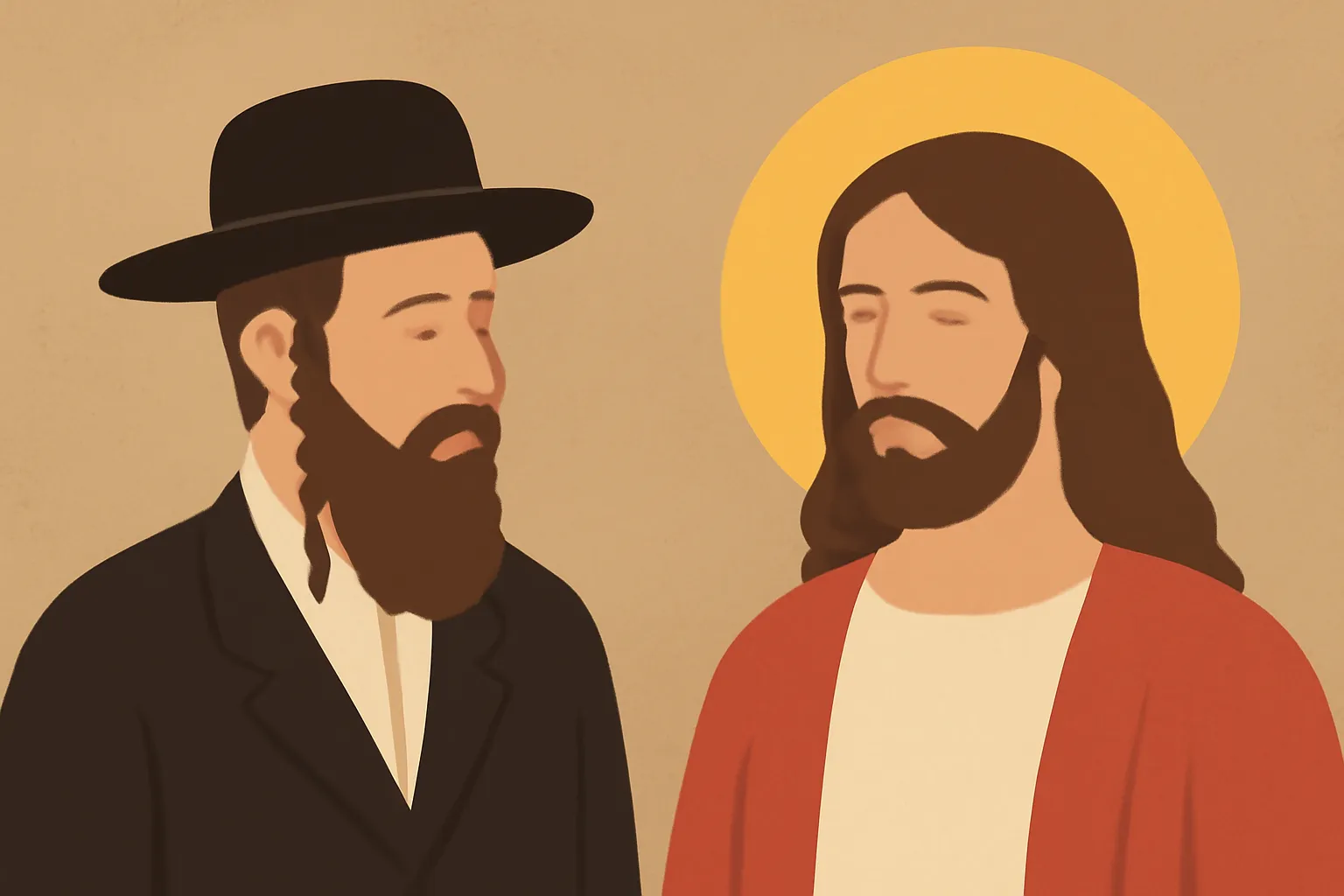
Do Jewish People Believe Jesus Is the Son of God? A Comprehensive Guide to Jewish Perspectives on Jesus
Across the centuries, the question “do Jewish people believe Jesus is the Son of God?” has appeared in conversations, textbooks, and debates about religion, history, and identity. The short answer, for the vast majority of traditional Jewish communities, is no: Jesus is not considered divine, and the Messiah in Jewish tradition is understood as a future, human leader rather than a divine figure. But to say that Judaism rejects Jesus outright would oversimplify a topic that is rich with history, variation, and nuance. This article offers a thorough, evidence-based look at Jewish perspectives on Jesus, the question of whether Jesus is the Son of God, and how different strands of Judaism—from Orthodox to Reform to secular approaches—approach this topic today.
Framing the question: What people mean when they ask about the Son of God
When readers ask “do Jewish people believe Jesus is the Son of God?”, they are often trying to understand two ideas at once: first, the claim of Jesus’ divinity, and second, the status of Jesus as the Messiah in Jewish thought. In Judaism, these two concepts are deeply interconnected with the broader conviction of monotheism and the expectations of a future Messiah. To unpack the issue clearly, we must distinguish between:
Divine status of Jesus: Is Jesus a divine being or part of God?
Messianic expectations in Jewish tradition: Is Jesus the awaited Messiah or not?
The historical context and how early Judaism and early Christianity diverged.
Contemporary Jewish viewpoints across movements, including how Messianic Judaism is viewed by mainstream Judaism.
Throughout this guide, you will encounter several variations of the phrase do Jewish people believe Jesus is the Son of God, such as does Judaism view Jesus as divine, what do Jews think about Jesus’ claim to be the Messiah, and is Jesus the Messiah in Judaism. These variations signal the same core distinction: Judaism’s framework for understanding God, the Messiah, and the place of Jesus within history.
Historical context: Jesus in Jewish history and rabbinic tradition
Jesus in first-century Palestine and the birth of Christianity
Jesus of Nazareth lived in a Jewish milieu. He is a figure who most scholars agree was Jewish by birth and upbringing, and his ministry occurred within the Second Temple period. In Jewish history, however, Jesus did not become a figure identified with a later Jewish school of thought or with a living movement within Rabbinic Judaism. The Christian movement that followed the crucifixion of Jesus eventually developed a distinct set of beliefs about his divine nature and messianic identity.
From the Jewish perspective, the early centuries were a period of divergence: Christianity developed a doctrinal framework in which Jesus was the Son of God and the Messiah in ways that diverged from rabbinic expectations. Over time, Jewish communities articulated a different picture of Messiah and a robust commitment to monotheism that did not include the divinity of any human being. In modern terms, Judaism maintains that the Messiah is a future, human leader rather than a divine figure, and that God is one without any partners or incarnations.
The rabbinic perspective on Jesus and the New Testament
Traditional rabbinic literature does not treat Jesus as an accepted figure within Jewish law or Jewish theology in the way that Christians understand him. Some Talmudic and post-Talmudic sources mention figures named Yeshu or similar names; however, scholars debate whether these references refer to Jesus of Christian tradition or to other individuals, and they do not present a unified or canonical view about him as a divine being or as the Messiah. In any case, these texts reflect a different religious framework from Christian claims about Jesus and, importantly, do not support the idea of Jesus as a divine Son of God within Judaism.
What is clear from Jewish history is a recurring theme: Judaism and Christianity grew apart over essential theological questions, most notably about the nature of God and the identity of the Messiah. In Jewish understanding, divinity and incarnation do not apply to human figures, and the Messiah is awaited as a human, political and spiritual leader who will fulfill specific prophetic criteria, not as a divine being.
Key doctrinal distinctions: God, Messiah, and the Son of God in Jewish thought
Monotheism: The foundation of Jewish belief
One of the central pillars of Judaism is strict monotheism. The Shema, recited daily by many Jews, proclaims, “Hear, O Israel: the Lord is our God, the Lord is One” (Deuteronomy 6:4). Within this framework, the idea of divine plurality or incarnation—including a child of God or a divine son—has not been part of traditional Jewish theology. When people ask “Do Jews believe Jesus is the Son of God?”, the categorical answer in mainstream Judaism is that no, because that would imply a breach of the absolute oneness of God.
Messiah in Judaism vs. Jesus as Messiah in Christianity
In Jewish tradition, the Messiah is a future human leader, descended from David, who will accomplish concrete goals: bring about universal peace, gather all Jews back to the land of Israel, rebuild the Temple in Jerusalem, and restore proper worship. The Messiah is not conceived as a divine figure nor as a person who shares God’s essence. This is a major divergence from Christian teaching, which presents Jesus as the divine Messiah and the Son of God who is part of the Trinity.
Thus, when asked “Is Jesus the Messiah in Judaism?”, the standard Jewish response is that Jesus did not fulfill the full set of prophecies and that the Messiah has not yet arrived or been recognized. Some Jews may acknowledge Jesus as a notable teacher or historical figure within a Jewish context, but they would not regard him as the Messiah in the sense described above, nor as divine.
Judaism does not accept the notion of divine incarnation in human form. The phrase “Son of God” in Christian usage implies a unique divine status that Judaism rejects for any human being. Therefore, in the simplest terms, the answer to “do Jewish people believe Jesus is the Son of God?” is generally no.
That said, there is nuance in how people talk about Jesus in a Jewish context. Some Jews might discuss Jesus as a historical figure who emerged within Judaism and who challenged or interpreted certain Jewish laws differently. Others, especially in secular or cultural circles, may discuss Jesus as part of Western history or literature without making theological claims about divinity. This range of views demonstrates that the question cannot be reduced to a single dogmatic position across all Jews.
Contemporary Jewish perspectives: Movements, communities, and debates
Orthodox Judaism
In Orthodox Judaism, the stance is clear and conservative: the Messiah to come is awaited as a human, and Jesus is not accepted as the Messiah nor as divine. The core tenets of Orthodox belief—God’s unity, the Torah as binding law, and an eventual Messianic era led by a human descendant of David—frame the response to the question “do Jews believe Jesus is the Son of God?” as negative with respect to Jesus’ status in Judaism. Some Orthodox thinkers may discuss Jesus to explain Christian beliefs in contrast with Jewish understanding, but they do not ascribe to Jesus a divine identity or a messianic role within Judaism.
Both Conservative and Reform branches maintain the core Jewish commitment to monotheism and to the future arrival of a Messiah as a human leader. In these movements, Jesus is typically not considered the Messiah and is not regarded as the Son of God in Jewish theology. However, Reform Judaism, with its emphasis on ethical living and modern scholarship, may engage with Jesus as a historical figure within Jewish history and as a subject of study in academic settings. Some Reform Jews may view Jesus as a teacher who operated within a Jewish milieu, rather than as a divine figure. The upshot is that the question “do Jews believe Jesus is divine?” receives varying but non-divine responses across denominations, with consistency on the divinity point in orthodox circles.
Reconstructionist and secular Jewish perspectives
In Reconstructionist Judaism, which emphasizes evolving Jewish civilization and culture, and in many secular Jewish communities, Jesus may be studied as a historical figure or as part of interfaith dialogue. These communities often distinguish between historical Jesus and theological claims that belong to Christian faith. They typically do not interpret Jesus as the Son of God within Jewish belief, and they reaffirm that Jewish worship centers on the One God and the Torah.
Messianic Judaism and its contested status
There is a distinct group known as Messianic Judaism or Messianic Jews, which identifies as Jewish while embracing belief in Jesus as the Messiah and often as divine. This movement aims to preserve Jewish identity while adopting core Christian doctrines. However, mainstream Rabbinic Judaism does not recognize Messianic Judaism as a form of Judaism. Most Orthodox, Conservative, and Reform authorities do not accept Messianic Jews as Jewish by halakha (Jewish law) because the belief in Jesus as divine and as the Messiah is incompatible with traditional Jewish doctrine. In short, the question “do Jewish people consider Messianic Jews to be Jewish?” is answered differently by different authorities, but the prevailing view in non-Messianic Judaism is that Messianic Judaism is a separate movement with a different self-understanding than Rabbinic Judaism.
In modern Jewish education and scholarship, the figure of Jesus is discussed in historical, literary, and comparative frameworks. Scholarly study often situates Jesus within the broader context of First-Century Judaism, the diversity of Jewish groups at the time, and the development of Christianity as a distinct religion. In classrooms, textbooks, and museum exhibitions, Jesus is typically presented as a Jewish teacher or figure from antiquity, with emphasis on the historical and religious context rather than as a divine being.
Within the Jewish community, what is taught about Jesus reflects the prevailing theological commitments of the community. In interfaith dialogue, Jews and Christians discuss Jesus with mutual respect, focusing on shared values, historical understandings, and the differences in theology. The question “do Jewish people believe Jesus is the Son of God?” thereby becomes a catalyst for examining foundational beliefs about God, scripture, prophecy, and community identity.
Frequently asked questions: nuanced answers about Jesus and Judaism
Do Jewish people believe Jesus is the Son of God? In mainstream Judaism, the answer is generally no; divinity is not ascribed to Jesus, and the Messiah is anticipated to be a human leader. Some small groups or individual Jews may have different spiritual interpretations, but they do not represent the consensus of Rabbinic Judaism.
Is Jesus the Messiah in Judaism? Most Jews believe that the Messiah has not yet come. Jesus is not recognized as the Messiah according to traditional Jewish criteria, which include rebuilding the Temple and gathering all Jews to Israel, among other things.
What do Jews think about Jesus’ divinity? The concept of a divine son of God is not compatible with Jewish theology, which maintains that God is one and indivisible.
How do different Jewish movements view Jesus?Orthodox Judaism emphasizes the future, human Messiah and rejects Jesus’ divinity; Conservative and Reform Judaism similarly do not view Jesus as divine and do not accept him as the Messiah; Messianic Judaism presents Jesus as the Messiah within a Jewish framework but is not recognized as Jewish by mainstream rabbinic authorities.
What about “Yeshu” in rabbinic literature? Some rabbinic sources mention a figure named Yeshu, but the identification with Jesus of Christian tradition is debated, and these references do not constitute an endorsement of Jesus’ divine status within Judaism.
Monotheism is central to Judaism; the belief in a divine Son of God is not part of traditional Jewish theology.
The Messiah in Judaism is expected to be a human descendant of David who brings about specific prophetic outcomes, not a divine being.
Across major Jewish movements, Jesus is not recognized as the Messiah and is not considered divine within Judaism.
There is diversity in how Jews discuss Jesus: some view him as a historical figure within a Jewish context, others study him in interfaith or secular settings, and a minority identifies with Messianic beliefs that align more with Christian doctrine.
In scholarly and educational contexts, Jesus is often examined as part of Jewish history and the emergence of Christianity, with emphasis on historical circumstances rather than theological status within Judaism.
Conclusion: understanding the broader picture
When people ask “Do Jewish people believe Jesus is the Son of God?”, the best answer is nuanced rather than absolute. In mainstream Judaism, the assertion that Jesus is the Son of God is not accepted, and the Messiah is awaited as a human leader rather than a divine figure. This is a foundational difference between Judaism and Christianity, and it has shaped centuries of religious discourse, interfaith relations, and personal identities.
Nevertheless, the conversation about Jesus within Jewish communities is not monolithic. It spans a spectrum from devout adherence to traditional theological boundaries to secular historical inquiry and interfaith dialogue. Some Jews may engage with Jesus as a figure who emerged in a Jewish milieu, while others may place him squarely outside the scope of Jewish belief. Among Messianic Judaism, there is an attempt to harmonize Jesus with Jewish identity, but this approach remains outside the mainstream Rabbinic tradition, and the question “do Jewish people accept Messianic Jews as Jewish?” often receives a clear and negative answer from most rabbinic authorities.
Ultimately, the answer to the central question rests on defining terms and recognizing diversity. For those seeking to understand Jewish perspectives on Jesus, it is important to distinguish between historical context, theological doctrine, and contemporary practice. This distinction helps clarify why many people ask variations of the same question: “Do Jewish people believe Jesus is the Son of God?” or “Is Jesus the Messiah in Judaism?”—and why the responses differ across communities, generations, and disciplines.
As with many complex religious topics, knowledge grows when we engage with multiple voices—historians, theologians, educators, and members of differing Jewish denominations. The ongoing conversation about Jesus within Judaism is part of a broader exploration of what it means to be Jewish today: rooted in tradition, yet living in a world where interfaith understanding and scholarly inquiry enrich the tapestry of beliefs and identities.