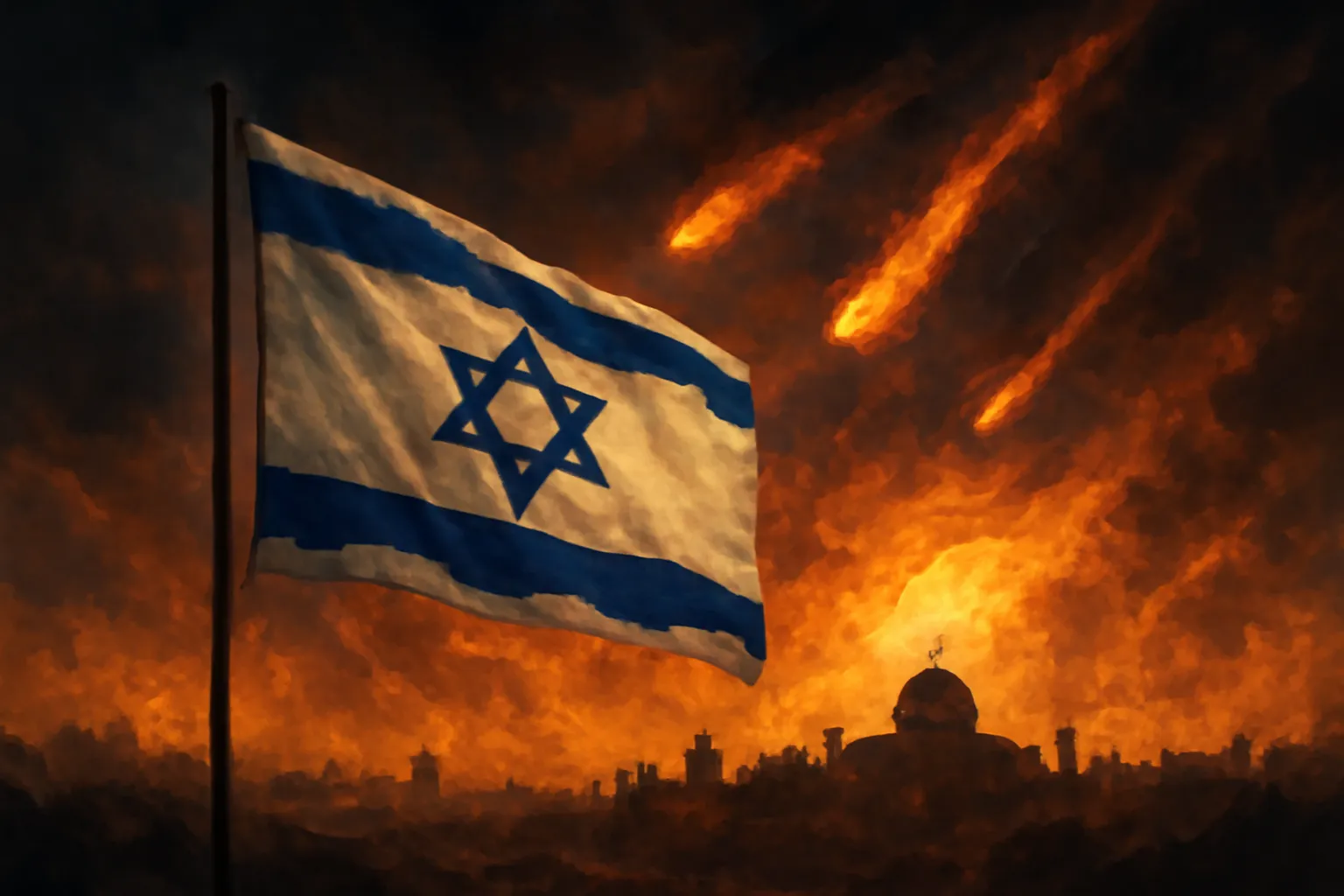
Israel end times prophecies sit at the intersection of biblical narrative, historical memory, and contemporary geopolitics. For centuries, readers have looked at the Hebrew Bible, the Christian scriptures, and later historical events to interpret how a small nation’s fate might reflect larger cosmic patterns. This article offers a careful, balanced survey of the subject, tracing biblical signs, exploring various timelines, and explaining how different traditions read the same texts in different ways. The goal is not to predict the future but to illuminate the ways in which the idea of end-time prophecy tied to Israel has shaped faith, scholarship, and public discourse.
Biblical Foundations: Key Passages About Israel and the End Times
In studying the topic of end-time prophecy for the nation of Israel, many readers turn to a core set of scriptures. These passages are cited by theologians, students, and commentators as primary anchors for discussions about the nation’s role in the last days.
Prophetic visions in Daniel
Daniel 9:24-27 – The prophecy of the “seventy weeks” has been interpreted in several ways, but most readers see it as describing a divinely ordered timeline leading up to a climactic culmination. The topic is debated, with some linking it to historical events in the life of Israel and others to a broader eschatological framework that includes the Temple, the Messiah, and conflict in the last days.
Daniel 7-12 – Visions of empires, beasts, and a future kingdom that endures forever have prompted discussions about who represents the nations of the earth and how the people of Israel fit into that drama.
Ezekiel’s chapters on regathering and conflict
Ezekiel 37-39 describe the revival of dry bones and a future invasion of a coalition that many readers associate with a planetary confrontation. A common thread is the idea that Israel will be spiritually and physically restored, which some interpret as a sign of the end times.
Ezekiel 38-39 present a dramatic alliance of nations opposing Israel, with references that some students associate with end-time conflicts around the latter days.
Prophetic apocalyptic sections in Isaiah, Joel, Zechariah
Zechariah 12-14 speaks of a future day when Jerusalem becomes the focal point of international concern, when foes gather against the city, and when the Lord intervenes in dramatic fashion.
Joel and other prophetic books describe signs in the heavens, ecological upheavals, and cosmic events that are often linked by readers to the end of days and the establishment of divine rule.
Isaiah contains passages about light breaking through darkness, nations streaming to worship, and a restored land—all of which have been read as indicators of a future transformation connected to Israel.
New Testament highlights and the role of Israel in Jesus-era expectations
Matthew 24-25 includes Jesus’ teachings about signs of the end times, including wars, earthquakes, persecution, and the central importance of watchfulness. Some readers see Israel as a focal point in the sequence, while others interpret the passage as addressing a broader church-era audience.
The book of Revelation contains symbols and visions that have been interpreted as cosmic battles and the ultimate victory of God. For many readers, references to a new temple, a revived priesthood, and a renewed land feed the sense that Israel plays a pivotal role in the closing chapters of human history.
Historical Context: How modern events intersect with ancient prophecies
The idea that modern Israel is connected to ancient prophecies has grown in explanatory power during the last two centuries. Scholars, theologians, and political commentators have debated how to read the return of the Jewish people to their ancestral land in 1948, the reunification of Jerusalem in 1967, and ongoing regional tensions through the lens of eschatology.
The 20th century and the rebirth of Israel
The establishment of the State of Israel in 1948 is often seen by readers of end-time prophecy as a central historical marker. Some traditions view the rebuilding of the nation as a sign of the times, while others emphasize spiritual renewal or repentance as prerequisites for prophetic fulfillment.
The 1967 Six-Day War and the subsequent changes to the map of the Middle East have been interpreted by some as the opening of a window for prophetic events. Others view these developments as political realignments with no necessary prophetic conclusion.
Contemporary voices and competing interpretations
Within Israel end times prophecies discourse, there is a spectrum ranging from dispensational premillennialism (which often treats a future rebuilding of the Temple and a pre-tribulation rapture) to amillennial and postmillennial perspectives that read the same texts differently.
Some scholars stress the interpretive dangers of tying prophecy too tightly to current events, arguing that the biblical writers spoke in symbolic language shaped by their own historical contexts.
Timelines and Thematic Threads: How End-Time Scenarios Are Built
When readers assemble a timeline from the biblical text and historical events, several frequent thematic threads emerge. These threads create distinct end-time predictions for Israel and the surrounding region.
Regathering of the people and restoration of the land
The promise of return from exile, the reoccupation of the homeland, and the reestablishment of national institutions appear repeatedly in the prophetic corpus. For many, this is a prerequisite for any further prophetic fulfillment.
Modern readers often see the ongoing immigration to Israel and the development of state institutions as a practical realization of this ancient motif.
Temple significance and sacrificial practices
Several strands of interpretation imagine a future temple in Jerusalem. The rebuilding of the Temple is a potent symbol in many eschatological schemes, particularly within certain strands of end-time prophecy discourse.
Debates center on whether such a temple would function as a literal, sacrificial center or as a symbolic representation of renewed worship and covenant faithfulness.
Cosmic warfare and geopolitical tensions
Biblical texts often describe a climactic coalition against Israel and a divine intervention in human history. In modern contexts, analysts look at regional conflicts, alliances, and prophetic language about Gog and Magog or similar figures as potential indicators of this stage.
Interpreters caution that historical armies and modern coalitions can be understood in multiple ways, depending on whether one reads the text typologically, symbolically, or literally.
Judgment, salvation, and the inauguration of a renewed era
In many traditions, the end of days culminates in divine judgment followed by the establishment of peace and righteousness. For Israel end times prophecies discourse, the question often becomes: who is the agent of change, and what becomes of the people of Israel in the new era?
Different schools of thought offer varying answers, with some emphasizing a millennial reign of peace and others highlighting a transformed spiritual order rather than a strictly political map.
Interpretive Approaches: How Different Traditions Read Israel in the End Times
The same scriptures can be read in markedly different ways. The diversity of interpretation helps explain why predictions about the end-time scenario for Israel vary so dramatically across traditions and communities.
Futurist and dispensational perspectives
This approach treats much of the biblical material as yet unfulfilled in a future sequence that includes a rapture, a tribulation period, the rebuilding of the Temple, a climactic conflict, and the Second Coming. Within this frame, the state of Israel is often viewed as central to triggering or signaling key events.
Supporters argue that abundances of prophecies point to literal, concrete occurrences in the land of Israel before the end of the world as we know it.
Preterist and historicist readings
In contrast, preterist and historicist readings interpret much of the prophetic material as already fulfilled in historical processes—perhaps in the ancient world or in the course of church history. They may still affirm a future culmination, but emphasize continuity with the past rather than a strict chronology tied to modern events in Israel.
These approaches often stress the moral and spiritual lessons of the texts rather than a precise, predictive timetable.
Idealist and symbolic interpretations
The ideal or symbolic readings focus on universal spiritual principles—justice, repentance, the renewal of creation—without insisting on a fixed political timeline. They tend to foreground the ethical demands of faith and the readiness of people for divine intervention, rather than the precise identity of nations.
In this view, Israel can symbolize a broader covenantal people or a geographic symbol of divine encounter, rather than a single nation’s geopolitical destiny.
Critical Considerations: Distinguishing Symbolic Language from Literal Predictions
Scholars emphasize that prophetic literature employs rich imagery, multiple genres, and historical allusions. When reading Israel end times prophecies, it is important to distinguish between symbolic language meant to convey truth about God’s purposes and attempts to predict exact political events.
Historical context matters: texts reflect the concerns of their own times as much as they convey universal truths. The original audience might have heard “end-time” language in light of political threats, exile, or spiritual crisis.
Genre matters: prophetic literature mixes poetry, vision, and apocalyptic narrative. Interpreting imagery such as stars, beasts, or nations requires careful exegesis and awareness of literary devices.
Translation and interpretation: different Bible translations can influence how readers understand key terms such as “days,” “weeks,” or “glory,” which in turn can affect the sense of timelines.
Ethical and Social Dimensions: How End-Time Talk Shapes Faith and Policy
Conversations about end-time Israel prophecies influence not only theology but also civic life, interfaith relations, and political attitudes. There are several notable dynamics to consider.
Community identity: For many Jewish and Christian communities, the idea of a distinct covenantal people bound to a land can strengthen communal cohesion and religious practice.
Hope versus fear: End-time narratives can be a source of hope and resilience, but they can also generate fear or fatalism if interpreted as strict futures to be unavoidable.
Interfaith engagement: Debates about Israel and prophetic expectations intersect with broader conversations about peace, justice, and the treatment of Palestinians. Responsible scholarship encourages attention to human rights, shared humanity, and the protection of all people.
Political rhetoric: Prophetic language has been deployed in political debates. Critics warn against weaponizing prophecy to justify policies that may harm marginalized groups or escalate conflict.
Practical Guide: How to Study Israel End Times Prophecies with care
If you are exploring the topic for study, teaching, or personal reflection, here are practical steps to approach the literature responsibly.
Diversify sources: Read passages in multiple translations and compare commentaries from different traditions—Jewish, Catholic, Orthodox, Protestant, and secular scholars—to gain a balanced view of how Israel end times prophecies are understood.
Separate theology from politics: Recognize when a claim about Israel in the end times is a theological interpretation versus a political assertion about current events.
Track the genre and audience: Identify whether a passage is apocalyptic, prophetic, poetic, or didactic. Different genres require different interpretive tools.
Note the symbolic language: Apocalyptic imagery often uses symbolic language that is not meant to be read as a literal forecast of future maps or battles.
Consider historical fulfillments and foreshadowings: Recognize the tension between fulfilled biblical motifs (such as regathering) and anticipated future events (such as a climactic conflict or a Messiah-centered expectation).
Practice humility in predictions: Given the diversity of scholarly opinion, many respected theologians affirm that precise timelines are uncertain and should be approached with caution.
Common Questions About Israel End Times Prophecies
Here are some of the questions frequently raised by readers studying the topic of Israel end times prophecies and their implications.
Do biblical prophecies require a literal rebuilding of the Temple in Jerusalem? Some streams insist on a literal temple as a prerequisite, while others view the temple primarily as a symbol of worship and covenant fidelity.
Is modern Israel an indispensable component of eschatology? Opinions vary. Some traditions see the state of Israel as central to prediction, while others understand divine plans as independent of political states.
What is the role of the Messiah in these prophecies? Expectations range from a political deliverer to a spiritual redeemer, depending on tradition and interpretation.
Are current events reliable indicators of prophetic fulfillment? Most scholars emphasize caution, noting that many prophecies are not meant to be read as simple forecasts of contemporary events.
Variant Readings: Different Ways People Talk About the Topic
To capture the breadth of discourse, here are several ways people phrase the subject. This helps demonstrate semantic breadth when discussing the phenomenon of Israel end times prophecies.
Israel end-time expectations
End-times prophecies about the Jewish nation
Prophetic signs concerning Israel in the last days
Israel and eschatological timelines
Prophecies for the nation of Israel in the final era
Comparative Reflections: Judaism, Christianity, and the Eschatological Narrative Involving Israel
The way Israel features in eschatology diverges across faith communities. In Judaism, prophetic expectations focus on national restoration, covenant faithfulness, and the coming of a future era of peace and divine justice, without necessarily projecting a single messianic figure in the same way some Christian traditions do. In Christian eschatology, the figure of the Messiah and the interpretation of the gospel in light of prophecies about Israel often shape the predicted sequence of events, with some traditions emphasizing a future consolidation of Israel as a sign of the end times.
Exploring Variants: What the Term «Israel End Times Prophecies» Encapsulates
The phrase Israel end times prophecies binds together several distinct lines of thought. It often signals a focus on how divine promises to the people of Israel intersect with apocalyptic expectations, redemptive history, and the future structure of divine rule. Readers should be aware that end-time predictions are not monolithic; they reflect a spectrum of interpretive communities, each with its own methods and aims.
Conclusion: Reading with Care, Context, and Compassion
The conversation about Israel end times prophecies is expansive and multi-layered. It invites readers to engage with ancient texts, evaluate modern developments, and consider the ethical implications of prophecy language in public life. A responsible approach respects both the textual complexity of the biblical witness and the real-world consequences of how these prophecies are interpreted and applied. Rather than chasing a single, definitive timetable, a thoughtful study seeks clarity, humility, and a commitment to the well-being of all people affected by these conversations.