Israel sits at the center of a long-running network of spiritual, historical, and political expectations about end-time prophecy. From ancient scriptures to modern historiography, writers and scholars have connected the fate of the Jewish people and the city of Jerusalem with a sequence of events that many interpret as signs of a coming era. This article surveys the major themes, interpretations, and modern implications of eschatology—the study of the last things—and explains how contemporary events in the land commonly identified as Israel are read through various prophetic lenses. It does so with attention to nuance, noting that there are multiple traditions and perspectives within Judaism, Christianity, and Islamic thought that engage with these themes in distinct ways.
Historical Foundations: Prophetic Wictions About the Land and Its People
The connection between the land of Israel and prophetic expectations predates modern geopolitics. Across ancient scriptures and the interpretations attached to them, the idea that the Jewish people would experience both dispersion and eventual regathering forms a throughline in end-time scenarios. In accounting for the present, readers often invoke two broad strands:
Biblical foundations: Prophecies that describe a return to a homeland, the reestablishment of a temple, and a centralized Jerusalem as pivotal to the end of days.
Historical turning points: Major events in the 20th century that many scholars and commentators consider fulfillment markers for long-standing hopes and expectations.
The interplay between covenant promises, national restoration, and religious symbolism has created a framework in which people read contemporary events as fulfillments or preludes to classical prophecies. While the interpretation varies widely, the central motif remains: Israel is presented, in many streams of thought, as a signpost for what some call the last era.
Core Prophetic Concepts Connected to Israel
To understand how modern readers approach end-time prophecies related to the land of Israel, it helps to outline several core concepts that recur across traditions.
Old Testament Predictions and the Regathering
In the Hebrew scriptures, there is a recurring motif of exile and return. Prophets such as Isaiah, Jeremiah, and Ezekiel describe a people scattered among nations who will be summoned back to their ancestral homeland in a dramatic display of divine sovereignty. For many, this restoration is a prerequisite for future cosmic events, including a rebuilt temple and a new order in Jerusalem.
Jerusalem as a Central Theme
Across scriptures and later theological writing, Jerusalem appears as more than a political capital. It is often cast as a symbolic center of divine presence, judgment, and reconciliation. In end-time prophecy discourse, control over the city is frequently framed as pivotal, with debates about sovereignty, sacred space, and access shaping readers’ expectations about the near and distant future.
A frequent element in eschatological narratives is the anticipated restoration of the temple in Jerusalem, or at least a renewed posture of religious significance in that geography. Different traditions interpret this differently: some see it as a literal rebuilding of a temple, others as a symbolic or spiritual temple, and yet others as a process that culminates in a new cosmic order rather than an architectural structure alone.
Signs, Timelines, and Theological Frameworks: How the Map Is Read
The question of signs and timelines is central to discussions about end-time prophecy. Readers look for signals in both biblical text and current events. Below are common categories used to frame the conversation.
Common Signs Often Cited Related to Israel
The regathering of the Jewish people to Israel after dispersion.
Growing diasporic reversals and increasing Jewish presence in areas around Jerusalem.
Re-emergence of Hebrew as a living national language integrated with civic life.
Geopolitical storms in the Middle East that are interpreted as plausible accelerants of prophetic timelines.
Economic, cultural, and religious consolidation that some view as enabling a new era.
Timelines and Chronologies in Eschatology
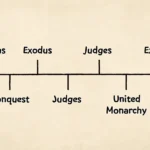
Among the analytical tools used by interpreters are biblical chronologies and prophetic timeframes. The most well-known frame in Christian eschatology is the calculation of a sequence of years known as the seventy weeks (Daniel 9:24–27), frequently invoked to discuss a climactic period preceding a final culmination. Other frameworks emphasize:
Generation-based timelines: Some interpret the age of a generation in biblical terms as a window when certain events may unfold.
Millennial viewpoints: Distinct schools of thought—such as premillennialism, postmillennialism, and amillennialism—offer different readings of how future events unfold and how Israel fits into those events.
Symbolic vs literal readings: Some traditions emphasize symbolic symbolism in prophetic books, while others insist on literal fulfillment in a future historical moment.
Dispensational Premillennialism vs Other Readings
A widely discussed frame in contemporary popular discourse identifies a specific sequence: the regathering of the Jewish people to the land, the rebuilding or rededication of sacred space, and a final wave of geopolitical and spiritual events. This approach, commonly labelled dispensational premillennialism, strongly emphasizes a literal interpretation of prophetic timelines and often places significant weight on current events in Israel and Jerusalem as heralds of the end times. Other traditions—such as amillennial and postmillennial readings—tend to interpret these signs as pointers toward spiritual realities or moral transformations rather than purely geopolitical milestones.
Modern Relevance: 20th and 21st Century Events Interpreted Through Prophecy
The creation of the modern State of Israel in 1948 and its subsequent wars, peace processes, and cultural developments have generated a continuous stream of interpretive responses within the broader conversation about end-time prophecy. For many readers, these events are not mere politics; they are seen as possible fulfillment markers or catalysts that move a prophetic clock forward. The following sections provide a snapshot of how scholars, theologians, and lay readers connect present realities with ancient texts.
Key Historical Milestones and Their Prophetic Readings
1948—Declaration of the State of Israel and the end of a long Diaspora; proponents argue this is a sign of regathering prophesied by various texts.
1967—The Six-Day War and the reunification of Jerusalem under Israeli control; many interpret this as a watershed moment in prophetic chronology.
Peace treaties and negotiations with neighboring states, such as the Camp David Accords and the Abraham Accords, are viewed by some as fulfillment of prophecies about peace and safety in the region.
Temple-related discourse and debates about access to sacral spaces around Jerusalem reflect ongoing tensions that some readers see as signposts toward future events.
In addition to geopolitical shifts, other indicators often cited in popular prophecy discourse include advances in technology, media, and global connectivity, which some believe could enable a rapid global response to unfolding events—a factor often connected to the idea of a final generation or a moment of global reckoning. While political developments are real and consequential, it is important to recognize that eschatology often blends historical interpretation with spiritual symbolism, and different traditions will attach different levels of significance to the same events.
Contemporary Debates: Readings, Resonance, and Responsibilities
In the modern era, debates about how to read prophetic signs related to Israel often hinge on two questions: «What counts as a fulfillment?» and «What does this imply for today?» The answers vary by tradition, denomination, and scholarly approach.
Scholarly vs Popular Interpretations
Scholars tend to distinguish between textual interpretation and historical-contextual analysis, emphasizing careful exegesis and the recognition of diverse ancient sources.
Popular prophecy teachers may foreground current events and draw direct lines between headlines and biblical passages, sometimes using dramatic language to describe imminent horizons.
Both streams often agree that Israel remains a central symbol in the drama of prophetic expectation, but they diverge on the likelihood and timing of specific events.
Ethical and Practical Considerations
Prophecy discourse can shape public opinion and policy, which makes responsible interpretation important for civic life and interfaith dialogue.
Interfaith perspectives emphasize shared humanitarian concerns and mutual respect, encouraging readers to distinguish between spiritual symbolism and political manipulation.
Educational and inclusive approaches help readers understand that there are multiple legitimate ways to engage with end-time prophecy without reducing complex contemporary events to a single narrative.n
Interpretive Frameworks: How Communities Read Israel in Eschatology
Across Jewish, Christian, and Muslim eschatology, Israel features prominently, but the emphasis differs. Below are schematic sketches of how some communities approach the subject.
Judaism: Land, Covenant, and National Return
In many strands of Jewish thought, the modern creation of a Jewish state is interpreted within the long arc of historical experience and covenantal memory. Some regard the return as a secular or national milestone rather than a theological sign of the end times; others see it as part of a divine plan that could lead to the ultimate redemption. Jewish eschatology often emphasizes geopolitical and moral maturation—how communities strive to live out the Torah in a modern state, which is seen by some as a prerequisite for future Messianic events.
Among Christian readers, the promise-fulfillment paradigm ties Israel to prophecies about the Messiah, the regathering, and the eventual establishment of a new era. Within this discourse, different groups stress different components, including:
The anticipated arrival of a righteous ruler and the restoration of temple-centered worship, whether in a literal or symbolic sense.
A focus on Jesus as the promised fulfillment for many, or a renewed expectation of divine intervention in world affairs that centers around the Holy Land.
A caution against conflating current political events with divine timing, urging prudence and humility in interpretation.
Islamic Perspectives: Jerusalem and Eschatological Horizons
In Islamic eschatology, the fate of the Holy Land, including Jerusalem, is entwined with the coming of major signs before the Day of Judgment. While not focusing exclusively on Israel as a political entity, many Islamic traditions bless or condemn actions around sacred sites in light of divine judgment and cosmic outcomes. This creates a third voice in the conversation that highlights interfaith dialogue, respect for sacred spaces, and the shared stakes of regional stability.
Where Does This Leave Us? Reading End Time Prophecy in a Modern World
For readers today, the persistence of Israel in eschatological writing invites careful engagement rather than hurried conclusions. The relationship between signs in scripture and the timeline of actual world events is a field where humility and historical awareness are essential. It is possible to study prophetic literature, appreciate its symbolism, and still recognize the complexity of contemporary geopolitics without collapsing one into the other.
Historical consciousness: Recognize how historical events in Israel have shaped religious imagination across generations.
Textual sensitivity: Different scriptures—whether Hebrew Bible, Christian New Testament, or Islamic sources—offer distinct vantage points about the end times and their relevance to real locations like Jerusalem.
Ethical grounding: Use prophecy discussions to foster peace, mutual understanding, and humanitarian considerations rather than to justify harm or exclusion.
Conclusion: The Lifeworld of Eschatology and the Modern Israel
The intersection of Israel and end-time prophecy is a setting in which ancient texts, spiritual hopes, and contemporary politics converge. Whatever one’s religious or secular background, there is a common ground: the land and its capital, Jerusalem, remain potent symbols of identity, memory, and possibility. For students of eschatology, the modern state provides a living case study in how people read scripture in a world shaped by mass media, rapid travel, and complex diplomacy. The discussions are not merely about predicting a date or a dramatic moment; they are about how communities imagine their future, how they engage with their past, and how they navigate the ethics of power, peace, and prophecy.
In the end, the practical takeaway is not to find a single, all-encompassing forecast but to recognize the breadth of interpretations and their impact on faith, policy, and everyday life. The study of Israel within the field of end-time prophecy remains a dynamic, contested, and deeply human conversation—one that invites careful listening, robust scholarship, and a commitment to the common good as much as to the mysteries of the future.