The question of whether Israel is building the 3rd Temple sits at the intersection of ancient history, religious belief, and contemporary politics. It is a topic that appears in religious discourse, academic debate, and headlines around the world. This article surveys the issue from multiple angles: the historical context of the Temples, the prophetic and theological underpinnings of a future sanctuary, and the modern developments that shape how people talk about a potential reconstruction. It aims to present a balanced overview, acknowledging both the deep commitments of those who envision a rebuilt Beit HaMikdash and the complex realities that make such a project profoundly controversial in today’s world.
In discussing whether Israel building the 3rd Temple is feasible or likely, it is helpful to distinguish between symbolic and practical dimensions. Some observers refer to a Third Temple movement as a religious aspiration and scholarly project focused on ritual purity, artifact restoration, and priestly preparation. Others speak in terms of a political possibility, noting that the site, governance, and security situation surrounding the Temple Mount create significant barriers to any physical reconstruction. Throughout this article, the language used—whether it describes a literal temple on the Temple Mount or a figurative temple in heart and practice—reflects the diverse ways people articulate this enduring idea.
Historical background: from the First and Second Temples to the present day
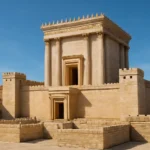
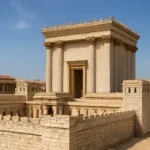
The arc of Jewish temple worship stretches back more than two millennia. The story begins with the First Temple, traditionally associated with King Solomon, which stood in ancient Jerusalem and served as the central cultus for the people of Israel. Its destruction in 586 BCE by the Babylonians is a watershed moment in Jewish history and in the religious imagination about sacred space. After the exile and eventual return, the Second Temple was erected around 516 BCE. This second sanctuary underwent a dramatic expansion during the reign of Herod the Great in the first century BCE and became the focal point of Jewish life until its destruction by the Romans in 70 CE.
The destruction of the Second Temple did not end Jewish longing for a sanctified center in Jerusalem. However, the nature of that longing evolved. Rabbinic literature reframed temple worship as a heavenly ideal and a future hope rather than an immediately implementable project. Over the centuries, many Jewish thinkers kept the memory of the Beit HaMikdash (House of Holiness) alive through liturgy, ritual law, and messianic expectation. The idea of a Third Temple thus matured in phases: as a theological symbol, as a set of ritual practices to be prepared, and as a possible future physical rebuilding if political and spiritual conditions permit.
In modern times, the political realities of Jerusalem and the Temple Mount transformed the question from one of purely religious longing into a matter of national and international significance. The Temple Mount, known to Muslims as Al-Haram al-Sharif, houses the sacred Islamic sites of the Al-Aqsa Mosque and the Dome of the Rock. Since 1967, control of the site has been a flashpoint in Israeli-Palestinian relations, with the Waqf (an Islamic trust) administering the compound under a delicate arrangement with Israeli security forces. This arrangement—often described as the “status quo”—has far-reaching implications for any discussion about rebuilding a temple on the site.
In short, the historical threads are clear: the ancient Temples existed and were destroyed; modern Jews have longed for a future sanctuary in Jerusalem; and the contemporary political and religious landscape creates a very different set of constraints than those facing the ancient builders. The question then becomes not only what theologically or historically could be involved in a Third Temple, but also how such a project would operate in a world of international law, interfaith dialogue, and national security concerns.
c. 960–931 BCE: Construction of the First Temple under Solomon (traditional dating; historicity debated).
586 BCE: Destruction of the First Temple by the Babylonians.
516 BCE: Return and dedication of the Second Temple.
37 BCE–4 BCE: Herod’s expansion of the Second Temple.
70 CE: Destruction of the Second Temple by Roman forces.
Late 19th–early 20th centuries: Emergence of modern Jewish messianic and revival movements that reframe temple longing in a contemporary context.
1967–present: The Temple Mount remains a highly sensitive political and religious site under a complex governance framework that shapes any talk of rebuilding.
The 3rd Temple in Jewish thought: theology, symbolism, and ritual
In Jewish thought, the Beit HaMikdash is more than a building; it is a focal point of divine worship, national memory, and messianic expectation. The concept of the Third Temple arises not only from a desire to restore ancient rituals but also from a belief in a future era when divine presence will rest among the people of Israel in a renewed sanctuary. The theological framework around this idea includes several core elements:
Sacred space: The Temple is seen as the unique locus of sacrificial worship, service by the priesthood, and the centrality of divine presence.
Kohanim and Levim: The priestly and Levite obligations are central to temple ritual, including offerings, purification rites, and liturgical functions that are described in Torah and later rabbinic literature.
Ritual objects: The Temple would house sacred implements such as the Menorah, the Table of Showbread, and the Altar, which modern preparations sometimes recapture symbolically even if the actual sacrifices are not performed today.
Messianic timing: Many Jewish traditions link the rebuilding of the Temple with the coming of the Messiah and a new era of peace and righteousness.
Within this framework, several strands of thought exist. Some emphasize the practical preparations—ritual artifacts, priestly training, and temple scrolls—that would enable a future temple to function when conditions are right. Others focus on the ethical and spiritual transformation that would accompany a new sanctuary, arguing that the spiritual readiness of the people is a prerequisite to any physical rebuilding. Importantly, there is a spectrum of positions among Jewish communities: from those who see temple restoration as a core covenantal goal to others who view it as a symbolic or eschatological aspiration rather than a current political program.
Ritual preparation and artifacts
Proponents of a possible future temple emphasize concrete, tangible preparations. The Temple Institute, founded in the late 20th century, has focused on reconstructing ritual objects and reconstituting ceremonial practices in a way that aligns with ancient texts, while avoiding any explicit call for immediate construction unless conditions become favorable. Their work includes meticulous recreations of sacred vessels and a study on the priestly service, with the goal of being ready to resume temple rituals should a legitimate pathway open in the future. Critics contend that such preparations could inflame tensions and oversimplify a highly charged political situation; supporters argue that they preserve historical memory and spiritual discipline that have persisted for centuries.
In discussing the possibility of Israel building the 3rd Temple, it is essential to recognize that most mainstream political actors in Israel do not currently endorse a unilateral move to rebuild on the Temple Mount. The discussion in religious communities, however, is vibrant and varied, with different sects prioritizing different aspects of the project—from ritual readiness to theological declaration to community education.
Prophecy, eschatology, and modern interpretations
Prophecy is a central language through which many discuss the idea of a future sanctuary. Biblical texts, rabbinic commentary, and Christian eschatological narratives offer different visions of a rebuilt Temple and the events surrounding it. This section surveys how these sources are interpreted and debated in contemporary discourse.
Biblical foundations in Judaism
In Jewish scripture and later rabbinic interpretation, the temple is a recurring motif tied to divine proximity, national destiny, and ritual order. Some passages associated with a future sanctuary include visions of a restored temple complex and renewed sacrificial practices. Yet, rabbinic authorities also insist that the exact timing and manner of any such rebuilding remain in God’s hands. For many scholars and lay readers, the prophetic material serves as a catalyst for ethical and spiritual reform rather than a simple blueprint for construction.
Christian perspectives and interreligious dialogue
In Christian eschatology, the idea of a rebuilt temple has appeared in different forms, sometimes as a literal future temple and other times as a symbol of spiritual fulfillment. These differing Christian interpretations have historically affected interfaith relations, particularly when linked to political developments in Jerusalem. Open dialogue and mutual understanding among faith communities are widely regarded as essential in navigating expectations tied to prophecies and the sacred landscape of the city.
Contemporary debates: symbolic vs. literal
Today, debates about the Third Temple often hinge on two questions: Is the goal a literal rebuilding on a contested site, or is the term a broader metaphor for a future era of spiritual renewal and ethical governance? Advocates who emphasize a literal approach argue for a tangible center of worship and a restoration of priestly practice. Critics who stress a metaphorical reading fear that a literal reconstruction could trigger violence, disrupt fragile peace processes, and complicate religious coexistence in a city already marked by sacred significance for multiple faiths.
Modern developments: groups, politics, and possibility
In recent decades, several organizations and political currents have contributed to the public conversation about a possible Third Temple in Israel. These developments operate at the intersection of religious aspiration and political reality.
Organizations and movements
The Temple Institute: A Catholic-free, non-profit Jewish organization dedicated to researching and preparing for a future temple by reconstructing sacred artifacts, studying priestly service, and educating the public about temple laws. They emphasize preparedness and liturgical scholarly work rather than immediate construction.
Temple Mount activist groups such as movements historically associated with requiring access and Israeli sovereignty for prayer on the Temple Mount. These groups range in their tactics from peaceful advocacy to provocative demonstrations, and their activities have occasionally sparked clashes with authorities and with Muslim communities.
Multiple religious and political actors across Israeli society and the diaspora who discuss the topic within broader debates about national identity, religious liberty, and the ethics of sovereignty on a contested site. Some emphasize coexistence, others emphasize religious right, and many advocate for cautious, incremental change rather than sweeping action.
Legal and political context
The political landscape surrounding any discussion of the Temple Mount is complex. The site is administered under a delicate framework that balances Jewish freedom of worship with Muslim religious authority and public security concerns. In practice, the Israeli government does not have a policy to rebuild the Third Temple, and the status quo arrangement limits changes that could provoke widespread conflict. Any proposal to rebuild would require negotiations at national and international levels, involve religious authorities on multiple sides, and contend with potential consequences for regional stability.
Public opinion and regional implications
Public opinion on the topic varies widely within Israel and among Jewish communities abroad. Some researchers note a segment of society that views the Third Temple as a legitimate future objective rooted in historical memory and religious obligation. Others see the issue as an obstacle to peace, arguing that practical priorities should focus on security, economic stability, and shared sacred space. The regional implications are significant: nearby states and non-state actors may interpret any movement toward rebuilding as a signal with far-reaching security and political repercussions, underscoring the need for careful diplomacy and interfaith dialogue.
Practical realities: what would be involved in constructing a Third Temple today?
Even among advocates of a future sanctuary, there is broad agreement that moving from aspiration to action would require navigating a maze of legal, logistical, theological, and ethical questions. Several practical considerations often appear in discussions about the feasibility of Israel building the 3rd Temple:
Site sovereignty and access: The Temple Mount’s status is a core obstacle. Any construction would hinge on political decisions, religious permissions, and security considerations involving multiple stakeholders, including the Israeli government, Palestinian authorities, and international actors.
Security and interfaith peace: Even with broad consensus inside a single community, the broader regional environment could respond with protests, violence, or international condemnation. Public safety and maintaining peace would be paramount.
Religious authority and legitimacy: Temple rituals require guidance from priestly authorities and rabbinic leadership. Whether such leadership would authorize a move or permit ritual continuity would be a pivotal question.
Ritual preparation vs. construction: Many groups emphasize that ritual and symbolic readiness could proceed independently of any physical reconstruction, serving as a form of spiritual preparation while political conditions mature.
In this framework, the question “Is Israel building the 3rd Temple?” is often reframed as: is there an ongoing program of spiritual and cultural preparation, is there a political momentum toward reconstruction, or is it primarily an eschatological scenario discussed within religious communities? The answer varies depending on the perspective and the criteria used to define “building.”
What some modern proponents actually do
To illustrate the distinction between aspiration and action, consider these representative activities associated with the broader conversation about a future temple:
Producing and curating ritual artifacts (candlesticks, menorot, tableware) that would be used in temple services in the future.
Offering education on temple laws, priestly regulations, and ceremony logistics to ensure readiness if conditions ever permit.
Engaging in public discourse about sacred space, religious heritage, and national memory to keep the topic in view while underscoring the need for peaceful resolution of conflicts tied to the site.
The idea of a Third Temple raises a spectrum of ethical and political questions. Supporters argue that preparing for a future sanctuary is a rightful expression of faith and a form of cultural continuity. Critics caution that a real-world attempt to reconstruct a temple on a contested site could inflame tensions, threaten human rights, and destabilize an already volatile region. The following considerations appear repeatedly in debates about Israel building the 3rd Temple:
Interfaith relations: The Temple Mount is sacred to Muslims as well as to Jews and Christians. Any action that changes the status quo risks provoking wide-scale interfaith conflict.
Political sovereignty: Sovereign claims, security realities, and international diplomacy all shape whether such a project could be pursued without triggering regional or international backlash.
Historical memory vs. contemporary reality: Balancing reverence for history with modern governance creates a tension between longing for a sacred space and necessity of coexistence.
Ethical stewardship: Some argue that it would be ethically irresponsible to pursue construction when it could harm vulnerable communities or undermine long-standing peace processes.
These debates are not merely academic. They influence public policy, scholarly inquiry, and religious education. The conversations reveal how israel building the 3rd Temple is understood differently by communities with diverse religious commitments, political aims, and historical memories.
Conclusion: a complex question with no simple answer
In summary, the question of whether Israel building the 3rd Temple is currently underway is not answered by a single source of authority or a simple yes or no. The issue exists in several layers: historical longing for sanctuary in Jerusalem, theological and liturgical preparation for future temple worship, prophetic interpretation, and a modern political reality marked by security considerations and interfaith sensitivities. While specific groups, notably the Temple Institute and other advocates, pursue tangible preparations for a future sanctuary, there is broad consensus among governments and major religious authorities that any actual rebuilding would require a level of consensus and peace that does not currently exist on the ground. The prevailing stance among Israeli authorities, international mediators, and many religious leaders is one of cautious restraint, recognizing that the sacredness of the site for multiple faiths, combined with geopolitical tensions, makes unilateral action extremely risky.
For readers seeking to understand the topic in depth, it is essential to distinguish between symbolic or preparatory activity and the possibility of immediate reconstruction. It is also important to listen to a plurality of voices—from rabbinic scholars and Jewish religious educators to interfaith advocates and policy analysts—so as to grasp the full spectrum of views on the Third Temple and its place in modern Israel.
Ultimately, the question is not simply a matter of architectural plans or political will. It is about whether a path can be found that honors a sacred heritage while also fostering peace, dignity, and security for all who live in and around Jerusalem. The conversation continues, shaping how people imagine the future of sacred space in a city that holds profound significance for many faiths and communities around the world.
Further resources and reading
For readers who want to explore this topic more deeply, here are categories of sources to consult. These are not endorsements of any position, but gateways to a broader understanding of the historical, theological, and political dimensions involved:
Historical texts and scholarly histories of the First and Second Temples.
Rabbinic literature addressing temple theology, priesthood, and ritual law.
Modern organizations such as the Temple Institute, their published materials, and public lectures.
Policy analyses on the status of the Temple Mount, sovereignty, and interfaith relations in Jerusalem.
Interfaith dialogues and comparative religious studies exploring how different faith communities conceive sacred space in Jerusalem.
When engaging with this topic, readers are encouraged to approach sources with an awareness of potential biases, a respect for diverse beliefs, and an attention to the real-world implications of discussions about sacred space in one of the world’s most contested and sacred cities.