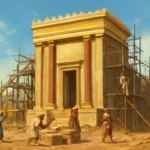
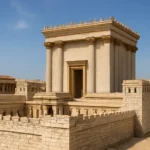
The notion of a rebuilt Jewish Temple has occupied a central place in Jewish thought for centuries. In religious texts and liturgy, the idea of a future Third Temple is tied to themes of national restoration, spiritual renewal, and messianic expectation. Outside of religious discourse, the phrase jewish temple rebuilt appears in political debate, scholarly analysis, and popular culture as a symbol of sovereignty, contested space, and interfaith complexity. This article surveys the long arc—from ancient temples to modern discussions—and then surveys how different communities around the world respond to the prospect of a temple reconstruction. It will distinguish historical memory from contemporary possibility, and it will examine how global reactions shape, and are shaped by, this enduring symbol.
Historical Background: From Solomon’s Temple to the Second Temple
The story of a Jewish Temple begins in antiquity with the First Temple, traditionally identified with Solomon’s reign in the 10th century BCE. The First Temple stood as the formal center of ancient Israelite worship, housing sacred artifacts and serving as a focal point for national and religious life. Its destruction, whether through conquest or political upheaval, marked the end of an era and the beginning of a long diasporic history.
Several centuries later, the return from exile and the construction of the Second Temple in Jerusalem restored a central cultic precinct. This period saw renewed architectural, ritual, and communal activity, including the pivotal role of the priestly classes and the emergence of debate over purity, sacrifice, and ritual law. The Second Temple era ended with its destruction by Roman forces in 70 CE, an event that not only altered homeland worship but also redefined Jewish identity across the centuries.
The idea of a future temple—though frequently framed within religious expectations—also acquired political resonance. In Jewish tradition, the concept is intertwined with concepts of redemption, Messianic expectation, and the hope for a restored land governed in accordance with divine statutes. The phrase temple reconstruction or beit ha-mikdash (House of Holiness) appears in liturgical poetry, prayers, and rabbinic discussions, signaling that the dream of a rebuilt sanctuary has persisted even in the absence of a physical temple.
Theological Significance and different Jewish perspectives
Messianic expectation: In some currents of Judaism, the Third Temple is linked to a future era brought about by the Messiah, a sign of universal peace and divine nearness.
Spiritual temple: Other streams emphasize that the true temple is not merely a building but the sanctification of daily life, justice, and communal prayer—an idea that can coexist with a discussion about a physical rebuilding.
Halakhic debate: Rabbinic authorities have differed on whether and how a physical reconstruction could occur within the boundaries of Jewish law, especially in the modern political and legal landscape surrounding the Temple Mount.
Modern Developments: From Zionist Thought to the Beit HaMikdash Debate
In the modern era, the question of whether the temple reconstruction can or should happen has intersected with national statehood, international law, and military realities. The rise of Zionism, the establishment of the State of Israel, and the ongoing status of Jerusalem have all added layers of complexity to discussions about rebuilding.
The Temple Mount, known to Muslims as al-Haram al-Sharif and to Jews and Christians as the site of the ancient temple, is one of the most sensitive and volatile sacred spaces in the world. Its political status—both as a place of worship and as a contested symbol of sovereignty—has a direct bearing on the feasibility of any practical plan for jewish temple rebuilt projects or architectural proposals.
Beit HaMikdash in contemporary Jewish thought
For many contemporary Jews, the discourse around a possible temple reconstruction is less about immediate political action and more about theological reflection, education, and interfaith dialogue. Some advocates emphasize the importance of deepening Jewish ritual life and ethical discipline as preparations for any future change in sacred space. Others imagine architectural projects that could serve educational or memorial purposes without claiming exclusivity over a contested holy site.
Legal and geopolitical realities
The reality on the ground involves a framework of sovereignty, custodianship, and international diplomacy. Any discussion of a rebuilt Temple must reckon with:
The current status of the Temple Mount as a site administered by a religious trust and protected by international arrangements.
Close attention to religious sensitivities among Muslims, Christians, and Jews who revere the space for different reasons.
International law and the potential implications for regional stability and peace processes.
Global Reactions: How the World Interprets the Idea of a Rebuilt Temple
The prospect of constructing or restoring a Jewish sanctuary on the historical site is met with a spectrum of responses around the globe. Reactions vary from religious reverence and scholarly curiosity to political caution and interfaith concern. The way different communities respond sheds light on broader questions about sacred space, sovereignty, and the possibility—or peril—of change in a place with deep symbolic meaning for multiple faiths.
Responses from Muslim-majority communities and leaders
For many Muslims, the Temple Mount/Al-Haram al-Sharif represents a sacred space with a long religious and communal history that currently hosts important Islamic holy sites. The rebuild narrative is often seen through the lens of political tension as well as religious identity. Calls for preserving the status quo, protecting access for worshippers, and preventing unilateral changes are common in official statements and media coverage. In this frame, any discussion of a new temple is interpreted as a potential catalyst for conflict unless handled within a carefully negotiated diplomatic process.
Christian perspectives and ecumenical dialogue
Christian communities—ranging from Catholic to Protestant and Orthodox churches—frequently emphasize the shared spiritual heritage of Jerusalem and the importance of interfaith dialogue. Some Christian voices support religious coexistence and urge restraint, while others discuss the symbolic implications of a rebuilt temple for eschatological narratives. Across denominations, the emphasis often falls on peace, religious freedom, and the preservation of holy sites for all who revere them.
Jewish voices: diversity within a global diaspora
Among Jews worldwide, opinions about rebuilding the temple are diverse. In some communities, the concept is primarily theological or aspirational rather than practical political program. In others, national or religious groups advocate for policy that would allow for respectful access and ritual life on sacred ground, while others stress that any change must come through broad consensus and legal legitimacy. The global Jewish diaspora brings a range of voices, reflecting differences in tradition, law, and approach to sacred space.
Academic and media perspectives
Historians, archaeologists, and political scientists frequently approach this topic with an emphasis on context, chronology, and consequences. Journalists and commentators analyze how conversations about a potential temple are framed, how power dynamics shape discourse, and how international actors respond to incidents or proposals. The media often highlight the tension between symbolic significance and real-world governance, illustrating how historic memory and contemporary politics intersect in public debate.
Interfaith and peace-building initiatives
In response to the sensitivities surrounding sacred space, many interfaith organizations promote dialogue aimed at reducing tensions, fostering mutual understanding, and encouraging the protection of holy sites for worship by diverse communities. These initiatives underscore a broader point: the conversation about whether a temple could be rebuilt is inseparable from questions of coexistence, human rights, and security.
Possible Scenarios: What Could Happen If a Temple Were Rebuilt?
Discussions about jewish temple rebuilt are often framed in hypothetical scenarios because any practical move would require navigating a complex web of religious prerequisites, legal frameworks, and political realities. Below are some common narrative strands that appear in scholarship, policy discussions, and public commentary.
Scenario A: Spiritual Center Without Political Sovereignty
In this scenario, communities agree to construct a symbolic or educational temple space that serves as a center for study, culture, and remembrance. The project might emphasize ritual learning, historical exhibitions, and commemorative services aligned with Jewish tradition, while the site itself remains under existing legal and administrative arrangements that maintain the status quo. This approach prioritizes education and memorialization over political change.
Scenario B: A Shared Sanctuary Model
Some proposals imagine a model in which sacred space is shared, with careful rules governing access, worship, and ritual practices for different faith communities. Proponents argue this could foster mutual respect and interfaith cooperation, though critics warn that shared sovereignty could intensify disputes or degrade traditional practices. Any such arrangement would hinge on long-term, transparent governance and robust international mediation.
Scenario C: Full Reconstruction Within Legal Boundaries
A more ambitious and controversial scenario involves restoring a Jewish sanctuary in a way that would require sweeping changes to the current framework governing the Temple Mount and surrounding areas. This would demand broad international consensus, constitutional or parliamentary action, and irreversible shifts in the balance of religious access. Critics worry about destabilization and the potential for violence; supporters may view it as a step toward spiritual renewal and national self-determination.
Scenario D: Architectural or Educational Replica
To balance respect for history with practical realities, some advocates propose creating an authentic-looking replica or a purpose-built educational facility that teaches about the biblical temple’s architecture, rites, and social significance without attempting to perform the ancient cultic functions. This could provide a focal point for learning while minimizing disruptive political risk.
Impact on Interfaith Relations and Global Culture
The question of whether the temple reconstruction could or should proceed has broad implications for interfaith relations and regional culture. It intersects with issues of memory, ritual life, and the politics of sacred space in ways that reverberate far beyond national borders.
Interfaith dialogue and shared sacred spaces
Some scholars and religious leaders argue that discussions about a future temple, when conducted with humility and transparency, can deepen interfaith understanding. Dialogue that centers on the protection of all sacred sites, access for worshippers, and mutual respect may foster an environment where diverse communities can coexist peacefully, regardless of concrete outcomes in terms of physical reconstruction.
Educational value and historical memory
Even in the absence of political change, conversations about the ancient temples offer opportunities for education about antiquity, archaeology, and the evolution of monotheistic faiths. Museums, studies, and public programs can convey the historical legacy of the Beit HaMikdash and its significance across generations, helping people understand how memory shapes contemporary identity.
Human rights and security considerations
Any discussion about sacred space must be anchored in human rights norms and the protection of worshippers. International observers emphasize the need to safeguard freedom of faith, prevent discrimination, and ensure safety for all who visit or pray at holy sites. In this frame, the debate about reconstruction is inseparable from concerns about violence, discrimination, or coercion.
Architectural and Cultural Dimensions: What a Rebuilt Temple Could Entail
Architecture, symbolism, and material culture would play a central role in any discussion of temple reconstruction. While the architectural plans would be inherently symbolic, they would also reflect contemporary engineering practices and museum-like interpretive goals. Architects and scholars often discuss how to convey authenticity while avoiding misrepresentation or sensationalism.
Design considerations and symbolic language
Any imagined structure would need to grapple with questions of scale, adornment, and symbolic language. Questions might include how to:
Respect traditional motifs while ensuring secular accessibility for education and tourism.
Represent ritual spaces in ways that are informative rather than prescriptive about actual religious practice.
Preserve nearby sacred spaces and align with urban planning, safety, and preservation laws.
Cultural memory and tourism
A site associated with the ancient Jewish temple could become a magnet for visitors from around the world. The cultural economy of the surrounding area might experience shifts as museums, guided tours, and scholarly conferences become integral to the site’s identity. In this light, the debate over rebuilding becomes not only a religious question but a public history question—how communities remember and present the past to diverse audiences.
Ethical Reflections: The Responsibility of Discussing Sacred Space
Debates about the potential jewish temple rebuilt are not only about architecture or politics; they raise deep ethical questions about how communities treat sacred space, how to balance memory with lived reality, and how to pursue peace in a region with a painful history. Ethical considerations include:
Respect for the religious rights of all communities that revere the site.
Avoiding provocations that could escalate tensions or violence.
Prioritizing education, dialogue, and non-coercive approaches to change.
Acknowledging the fragility of political arrangements in conflict zones and the danger of unilateral actions.
Conclusion: The Future of the Temple Idea
The notion of a rebuilt Jewish Temple remains a powerful symbol with a long historical arc—from the sacred precincts of ancient Jerusalem to contemporary debates about sovereignty, memory, and interfaith coexistence. While the specifics of any practical path toward reconstruction are deeply contentious and fraught with geopolitical risk, the broader conversation continues to be shaped by a shared human interest in dignity, meaning, and peace. The dialogue around the temple—whether it moves toward physical reconstruction, a symbolic or educational form, or a renewed commitment to spiritual ethics—will likely persist as a mirror of evolving Jewish identity, evolving interfaith relations, and evolving international norms.
In exploring the topic of jewish temple rebuilt, it is essential to distinguish between the enduring religious imagination of the Third Temple and the pragmatic constraints of modern governance. The global reactions described here illustrate how a sacred and historic question can intersect with diplomacy, law, and human rights. By engaging with these debates thoughtfully, communities around the world can contribute to a conversation about sacred space that seeks protection for worship, respect for memory, and commitment to peaceful coexistence—whether or not the physical temple rises again in the near future.