The Jewish temple in Jerusalem: an overview of a storied legacy
Across millennia, the phrase the Jerusalem temple has carried rich meanings for Jews and many others. From the ancient sanctuaries described in biblical and post-biblical writings to the enduring memory that fuels prayer, ritual, and longing, the story of the Beit HaMikdash—often translated as the Holy Temple—is a central thread in Jewish history. This article traces the arc of the temple in Jerusalem, from its earliest biblical form, through the magnificent expansion under Herod, to its destruction and the ongoing significance it holds in religious imagination, collective memory, and modern visiting culture. We will explore the First Temple and the Second Temple, highlight why this sacred site mattered to ancient priests and ordinary worshippers, and offer practical guidance for travelers curious about the current landscape around the Temple Mount and related sites in the old city.
History: from Solomon’s sanctuary to the great reconstruction
First Temple: Solomon’s sanctuary in ancient Jerusalem
The traditional starting point for the history of the First Temple is the reign of King Solomon, who, according to biblical narratives, built a central sanctuary in Jerusalem to house the divine presence. This structure, sometimes called the Beit HaMikdash Sheni in later memory, stood as the focal point of Jewish worship and sacrifices. The temple was conceived as a dwelling place for the God of Israel, complete with a Holy of Holies that housed the Ark of the Covenant when it existed.
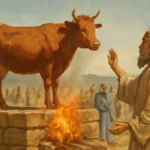
The architectural and religious design of the First Temple reflected a complex system of priestly service. Priests from the Koeanim and the Leviim performed daily offerings and special rites, while feasts and pilgrimages brought crowds from across the ancient world to the holy precincts. The narrative tradition emphasizes a covenantal relationship between the people, the sanctuary, and the God who dwelt among the community.
The First Temple did not survive unscathed. In the late 7th and early 6th centuries BCE, external forces and internal tensions culminated in a devastating defeat, and the temple was destroyed by the Babylonians. The destruction marks a turning point in Jewish history, unleashing long centuries of exile and a reimagining of what the temple represented on a symbolic and spiritual level.
Destruction and exile: the end of an era
The fall of the First Temple sent shockwaves that reshaped religious life. The people of Judah faced exile, and the temple’s physical center of worship disappeared for a generation. Yet this catastrophe gave rise to profound theological work, prophetic admonitions, and the conviction that the temple would one day be restored. The narrative tradition that emerges from this period is not merely about architecture; it is about identity, covenant, and the longing for a return to Jerusalem.
Second Temple: rebuild, renewal, and expansion
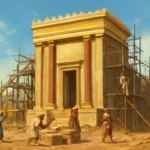
After the return from exile, a new sanctuary rose on the same sacred hill—this time under Persian auspices and with the support of local religious leaders. This period is remembered as the era of the Second Temple, a leaner but deeply meaningful form of central worship that persisted for several centuries. The Second Temple was smaller in scale than Solomon’s original sanctuary but grew in significance as a hub of religious life, study, and ritual observance.
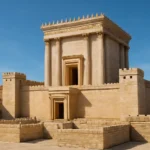
A major transformation came with the arrival of Herod the Great, whose ambitious refurbishment around 20 BCE expanded the sacred precincts and created a grand, colonnaded complex that would house priests, teachers, pilgrims, and merchants during festivals. The Herodian Temple complex became, in many ways, a city within a city—a monumental project designed to reflect divine majesty and the Jewish people’s endurance.
Destruction of the Second Temple and the enduring afterlife of the dream
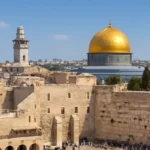
The destruction of the Second Temple by the Romans in 70 CE marked a watershed moment. Although the temple proper was razed, the memory and longing for the sanctified space did not vanish. Through centuries of exile, the magazine of prayers, liturgy, and sacred poetry fostered the hope of restoration. The Western Wall, as the surviving portion of the western retaining wall of the temple platform, became a powerful symbol of Jewish continuity and devotion—an intimate place where millions come to mourn, to pray, and to commemorate.
Significance: why the Jerusalem temple matters in history and faith
Religious significance: the center of worship and ritual
For much of its history, the Holy Temple in Jerusalem stood as the primary locus of sacrificial worship in ancient Israel. The daily offerings, the seasonal festivals, and the ritual calendar culminated on the temple precincts. The design of the sanctuary, especially the Holy of Holies, expressed a theology of sacred space: a place where the divine presence could be encountered and accessed in a structured, communal way. Even after the destruction of the physical temple, Jewish liturgy preserved the aspiration to one day see a rebuilt sanctuary and renewed service—an idea that continues to animate prayers and theological reflection.
The Beit HaMikdash remains a symbol beyond its architectural form. In Jewish thought, it stands for divine closeness, national identity, and the ethical obligations that connect people to God and to one another. The idea of a future Third Temple or a reconstituted temple in the messianic era appears in a variety of rabbinic and poetic sources, reflecting hopes, debates, and moral commitments that bind generations together.
Cultural and political significance: memory, sovereignty, and identity
The temple in Jerusalem also has lasting cultural and political resonance. Throughout centuries of diaspora, Jews faced the question of how to maintain a sense of place and purpose when the physical sanctuary was no longer available. The memory of the temple—its rituals, its priests, and its festivals—became a unifying thread that drew Jewish communities into shared observance and study. The site itself, perched above the ancient streets of the Old City, has become a touchstone of national identity and religious imagination.
In modern times, the complex around the Temple Mount has taken on new layers of significance. The Sabbath prayers and national commemorations that reference the rebuilding of the temple sit alongside ongoing debates about sovereignty, religious rights, and access to sacred space. The interplay of Judaism, history, and politics around this site is a reminder that sacred architecture can become a living, contested conversation about the future as well as the past.
Archaeology and memory: what excavations reveal about ancient practice
Excavations and archaeological work around the old city of Jerusalem have shed light on the daily life and material culture of the temple era. Artifacts, inscriptions, and architectural remnants illuminate how the temple precincts functioned, how priests prepared for services, and how pilgrims traveled to the festival seasons. Institutions like the Davidson Center and other museum sites present reconstructions of the temple layout, maps of the courtyards, and explanations of ritual objects found in the surrounding area.
Visiting today: navigating the landscape of memory, sacred space, and tourism
For visitors, the area around the ancient temple site is a tapestry of sacred geography and modern urban life. The Temple Mount (Har HaBayit in Hebrew) sits at the heart of this tapestry, atop a hill that dominates the skyline of Jerusalem. The site is sacred to multiple faith communities, and access rules reflect a commitment to safety, respect, and religious sensitivity. Surrounding this core are the Western Wall (Kotel) and a network of nearby museums, tunnels, and parks that help explain the historical context and ongoing significance of the temple story.
Temple Mount: current status, access, and guidance
The Temple Mount is a focal point of reverence, history, and political delicacy. Today, visitors must navigate a complex framework of permissions and security requirements. In many periods, non-Muslim visitors have been allowed to enter specific zones and at regulated times, while certain areas remain off-limits. The policies can change, so travelers should verify the latest guidance from official sources before planning a trip. When planning a visit to the Temple Mount, be prepared for security checks, dress modestly, and follow posted instructions carefully. Photography rules may vary by area, and during certain times entry may be limited to specific groups or days.
Adjacent sites: the Western Wall, tunnels, and the surrounding precincts
Just outside the Temple Mount sits the world-renowned Western Wall, a surviving retaining wall from the ancient platform. The wall is revered as a place of prayer and reflection and is commonly visited in conjunction with a broader exploration of Jerusalem’s Old City. Nearby you can explore the tunnels and excavations that reveal layers of history, as well as interpretive exhibits that explain how the temple complex looked in different eras. The Western Wall Tunnels provide a subterranean perspective on the ancient city and the temple’s relationship to the urban landscape above.
Public museums and educational centers: learning the temple’s story
The surrounding region houses a number of museums and educational centers that present the temple’s history in a multimedia and accessible way. Institutions such as the Davidson Center and related exhibits offer reconstructions of temple architecture, artifacts related to ritual life, and explanations of the priestly functions. For those who want a deeper understanding, guided tours often include historical background, archaeological context, and discussions of how the temple’s legacy informs contemporary Jewish thought and practice.
City of David and related archaeological parks
A short distance from the old city’s crown of walls lies the City of David, an archaeological park that complements temple-era history with insights into the broader urban life of ancient Jerusalem. Visitors can see remains from the Bronze and Iron Ages, water systems, and fortifications that helped define the city during periods when the temple stood at the center of religious and political life. Combining a visit to the temple precincts with a trip to these related sites can offer a fuller sense of how Jerusalem functioned as a political and religious capital in antiquity.
Practical tips for visitors: making the most of your journey through history
Planning and timing: when to go and what to expect
If you want to experience the temple legacy in Jerusalem, consider allocating multiple days for a comprehensive exploration. The core temple complex is best experienced with a guided tour that explains architectural features, ritual objects, and historical milestones. For many travelers, a morning visit to the Western Wall area, followed by a daytime excursion to museums and the City of David, provides a balanced itinerary. If you are particularly interested in archaeology, plan time for the Davidson Center and related exhibitions that present artifacts from the temple era.
Dress code and conduct: showing respect in sacred spaces
When visiting sacred sites around the temple precincts, modest dress is recommended. In many areas, shoulders, arms, and knees should be covered, and hats or head coverings may be requested in certain venues. Quiet, respectful conduct is appreciated, especially in proximity to prayer spaces and areas that are still revered by worshippers today.
Access and mobility: navigating stairs, routes, and facilities
The terrain around the temple platform involves stairs and uneven paths in places; some parts of the security infrastructure may present challenges for visitors with mobility concerns. If accessibility is a priority, contact your tour operator or the site administration in advance to learn about available routes, elevators, or alternative viewpoints. The surrounding museums and parks often have better accessibility options than the most elevated areas of the temple complex.
Security and etiquette: camera use, belongings, and photography
Security checks are a routine part of visiting sensitive religious sites. Pack light, have your passport or ID ready if required, and be mindful of signage about photography restrictions. In some areas, especially within certain zones of the Temple Mount, photography may be restricted or prohibited. Always follow guidance from guards and staff, refrain from political messaging or disruptive behavior, and treat the space with reverence for its religious meaning.
Guided tours and self-guided options: choosing what suits you
You can choose between guided experiences and self-guided exploration. A formal guide can illuminate the temple’s historical contexts, the priestly roles, and the evolution of religious practices across eras. On the other hand, self-guided routes with maps and informational panels also reveal a great deal about the sanctuary’s layout, the courtyards, and the broader urban environment. If you are visiting with family or a group, consider a hybrid plan that includes a guided segment for background and a self-guided stroll to absorb details at your own pace.
Nearby dining, rest, and logistics in Jerusalem
After a day of walking through the Old City and its historic sites, you may want to pause at nearby cafés, bakeries, or restaurants offering a mix of traditional and contemporary flavors. The Old City and the adjacent quarters provide a range of options. If you are visiting during an extended trip, it can be helpful to map out closest restrooms, water access, and safe places to sit before entering the temple precincts and their related museums.
Terminology and variations: broader semantic breadth for the topic
To maintain linguistic variety and better reflect the diverse scholarship around this subject, readers may encounter several synonymous expressions. Some of the most common variants include Beit HaMikdash (the Hebrew term for the Holy Temple), Holy Temple in Jerusalem, Jerusalem’s Temple Mount, the Second Temple period, and the First Temple. These terms emphasize different historical phases and religious dimensions. In literary and scholarly contexts, you may also see phrases like Solomon’s Temple, Herod’s renovation of the temple precincts, or the ancient sanctuary on Mount Moriah, all of which point to the same sacred complex while highlighting distinctive features of each era.
For readers who want to explore beyond a single tradition’s voice, a careful reading of sources can reveal how different communities have perceived the temple’s geography, chronology, and theological import. By engaging with various narratives—biblical, rabbinic, archaeological, and modern historical accounts—one gains a more nuanced understanding of why the temple in Jerusalem remains a potent symbol across time.
Summary: the enduring significance of the Temple in Jerusalem
The story of the Beit HaMikdash—in all its phases as the First Temple and the Second Temple—forms a backbone of Jewish memory and religious life. Its influence extends into modern prayer, national identity, and even contemporary discussions about access to sacred space. While the physical temple on the Temple Mount is not currently standing as a house of ritual sacrifice in the ancient sense, its legacy persists in liturgy, symbolic longing, architecture, and the ongoing interest of visitors from around the world who come to Jerusalem to encounter the layers of history that converge on this remarkable site.
Whether you approach this topic as a scholar, a pilgrim, or a curious traveler, you will discover that the narrative surrounding the ancient Jerusalem temple offers a wealth of insight into how a city can bear the weight of sacred memory while continually shaping the present and the possible futures of its people.