History of the Third Temple Concept: From Ancient Temples to Modern Discourse
The notion of a Third Jewish Temple sits at the intersection of biblical memory, rabbinic interpretation, and modern political imagination. Long before the term became a headline in news cycles or a subject of theological debate, Jewish memory held the «Beit HaMikdash»—the divine sanctuary built in Jerusalem—as a central anchor of worship, identity, and national narrative. The history of this idea unfolds across three dominant phases: the ancient temples that stood on the Temple Mount, the long era without a standing sanctuary after their destruction, and the modern revival of the concept within diverse Jewish communities and nationalist movements. While the physical reconstruction of a sanctuary remains a matter of intense dispute, the idea of a future sanctified space continues to shape liturgy, eschatology, political discourse, and interfaith dialogue in the contemporary world.
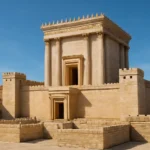
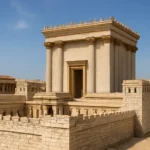
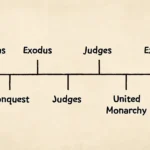
In the biblical and post-biblical record, the First Temple and Second Temple were central loci of worship, sacrifice, and ritual leadership. The First Temple, traditionally associated with King Solomon, represents a high-water mark of ancient Israelite state religion. Its destruction by Babylon in 586 BCE disrupted national sovereignty and religious life, yet it also seeded expectation for renewal. The Second Temple period, culminating in the monumental rebuilding completed around 516 BCE and culminating in Herodian expansion, continued until the siege of Jerusalem in 70 CE. The fall of the Second Temple produced a long, complex exile and the flowering of Rabbinic Judaism that reframed religious life around study, prayer, and ethical practice rather than animal sacrifice on an altar.
Over centuries, messianic expectation and interpretive traditions evolved regarding a future sanctuary. In some streams of rabbinic literature, the rebuilding of a new sanctuary is envisioned as a catalyst for national restoration and spiritual renewal. In others, the emphasis shifts toward a transformed eschatology in which worship transcends a single physical temple and centers on universal ethical renewal and divine presence in the world. Throughout the medieval and early modern periods, Jewish thinkers debated what a Third Temple would entail, what form it might take, and what conditions—if any—would precede its construction.
The modern reincorporation of the Third Temple idea into public debate arises in the context of Zionism, the return to Zion, and the religious revival of the late 19th and 20th centuries. In the contemporary era, organizations and scholars have asked not only if a future sanctuary could be built, but what theologically, culturally, and politically legitimate avenues would be for such an aspiration. This revival is not uniform: it appears in a spectrum from scholarly inquiry and ritual planning to activist campaigns and speculative fiction. Across these variations, the underlying aspiration remains: a future sanctuary as a symbol of divine presence, national restoration, and religious renewal.
An important facet of the history of the temple idea is its association with the Temple Mount, a site that has long been revered by multiple religious communities. The site’s sanctity, its architectural remains, and its contested sovereignty have made it a focal point for both devotion and political conflict. The Temple Mount is not simply a backdrop for a religious dream; it is a live, debated space in which sovereignty, religious liberty, archaeology, and international law intersect. In this sense, the narrative of a potential Third Temple cannot be detached from its geopolitical implications.
The historical arc also includes the emergence of modern movements dedicated to the Beit HaMikdash as a concrete project. The late 20th century saw the rise of organizations such as the Temple Institute, which has produced ritual articles, architectural models, and study programs that imagine a practical, if controversial, path toward ritual readiness. Yet, these efforts operate within a framework of contested legitimacy, with many scholars, policymakers, and religious leaders cautioning that any discussion of rebuilding must navigate fragile interfaith realities, legal status, and the potential for violence. In short, the history of the Third Temple concept is a layered tapestry that weaves together ancient memory, religious imagination, and present-day political peril—and it remains an active topic of study and debate today.
Beit HaMikdash in Jewish Thought: Terminology and Variants
To understand the breadth of the discussion, it helps to notice the diversity of terms that communities use when referring to this sacred project. Scholars and advocates may speak of:
Third Temple or Third Beit HaMikdash as the canonical phrase in English and Hebrew contexts.
The idea of a sanctuary or house of worship that could replace or duplicate the ancient altar system.
The concept of a future sanctuary that must be understood within broader eschatological expectations.
Historical language such as Beit HaMikdash Shlishi (Third Sanctuary) used in academic literature and religious discourse.
Nuanced theological formulations that present the project as a symbol of messianic hope, a catalyst for spiritual renewal, or a matter of sacred obligation within certain streams of Judaism.
Across these variants, the central question persists: what would a new sanctuary embody for Jews, for the city of Jerusalem, and for the wider world? How would it affect Jewish worship, interfaith relations, and regional stability? These questions frame the entire field of study around the Third Temple concept and explain why it continues to stir both reverence and controversy.
Theological and Cultural Significance of a Future Sanctuary
The third sanctuary idea is not merely a question of architecture or ritual practice. It resonates with deeply held beliefs about divine presence, national destiny, and the possibility of renewal after years of exile or hardship. For supporters, a Third Temple would symbolize a restoration of ancient vocation, a reengagement with sacred service, and a tangible sign of fulfillment of biblical prophecies—often framed within a broader messianic horizon. For others, the concept invites caution, as it intersects sensitive claims about sacred space, sovereignty, and the potential for conflict.
Some of the most consequential themes in the discourse around the future sanctuary include:
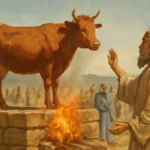
Liturgy and sacrifice: Proponents discuss what forms of worship would be possible within a new sanctuary and which types of ritual reappear. The debate often centers on whether ritual acts that were halted in antiquity—such as certain sacrifices or the renewed standing priesthood—would be revived, and under what conditions.
Divine presence and holy space: The Temple is described in traditional sources as the dwelling place of the Divine in a unique and visible way. For many, the sanctity of the space has a cosmic dimension that goes beyond national or ethnic identity.
Ethical and ritual purity considerations: The sanctuary concept invokes questions about ritual purity, the roles of priests (Kohanim), and the boundaries of access for different groups within the Jewish community and beyond.
Lived religious practice: In the absence of a standing sanctuary, Jewish life continues to center on prayer, Torah study, and acts of charity. Some theologians argue that spiritual discipline and ethical living take on heightened significance in a world where a physical temple does not exist.
Messianic expectation and timeframes: For some, the rebuilding would be a sign of imminent redemption; for others, it is a long-range possibility requiring moral, geopolitical, and spiritual readiness rather than a rushed project.
The importance of the idea also extends into cultural memory and interfaith dialogues. The Temple’s symbolism appears in literature, music, film, and art, shaping how communities imagine Jerusalem as a city of sacred memory and potential renewal. Even when there is broad consensus that a physical rebuilding remains controversial or unlikely in the near term, the concept continues to offer a potent vocabulary for discussing Jewish identity, religious authority, and the meaning of sacred space in the modern world.
Different streams within Judaism emphasize different aspects of the Third Temple discourse. Some strands, particularly among Religious Zionists, argue for readiness and ritual preparation, while insisting that any concrete steps should be taken with careful attention to the political and religious landscape. Other groups emphasize the hope for spiritual renewal and communal integrity rather than a physical temple structure. Still others caution against foregrounding physical reconstruction at the expense of Torah study, social justice, and peaceful coexistence with neighbors.
Across this spectrum, a core question remains: should the long-term dream of a sanctuary be pursued through ritual preparation and scholarship, or should it be contextualized within broader aims of peace, coexistence, and shared sacred space? The answer varies by community and by era, but the ongoing dialogue reflects a living relationship with ancient memory and a recognition of present-day complexities.
Contemporary Debates: Politics, Religion, and Public Policy
The discussion about a Third Temple project sits at the crossroads of faith, politics, and international relations. In modern Israel and in Jewish communities worldwide, there is no monolithic stance. Instead, there are competing narratives, policy concerns, and ethical considerations that shape how people talk about a potential sanctuary in theory and in principle. These debates are further complicated by the status of the Temple Mount, a site with immense religious meaning for Jews, Muslims, and Christians, and by the broader question of how religious visions intersect with state sovereignty, security, and interfaith harmony.
Religious Zionism and the Temple Mount
Among adherents of Religious Zionism, there is a spectrum of positions on the Temple Mount. Some argue for a form of ritual readiness that would enable meaningful Jewish worship in proximity to the sacred precinct while accepting the legal and political constraints today. Others emphasize the importance of de facto sovereignty and long-term strategic planning, tying spiritual aspiration to political process, diplomacy, and mutual recognition. Supporters often frame their stance in terms of religious obligation and historical continuity, while opponents stress the dangers of asserting a claim that could destabilize a volatile regional balance.
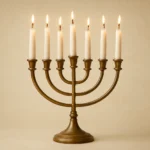
Ritual preparation—studying the procedures described in classical sources, compiling ritual objects, and educating clergy and laypeople about the envisioned services.
Legal and diplomatic coordination—recognizing that any steps toward a future sanctuary would require extensive agreements with authorities and international actors to avoid escalation.
Symbolic avenues—emphasizing spiritual renewal, education, and cultural memory as immediate and non-disruptive forms of engagement with the idea.
Islamic and Palestinian Perspectives
For Muslims and many Palestinians, the Temple Mount—where the Dome of the Rock and Al-Aqsa Mosque stand—is one of the holiest places in Islam and a cornerstone of patrimonial identity. The idea of reconstructing a Jewish sanctuary on the same site is therefore viewed with profound concern. Critics caution that even discussions about rebuilding could inflame tensions, threaten access to holy sites for Muslims, and undermine efforts toward a peaceful, negotiated solution that respects the rights and reverence of all communities. In this view, safeguarding the status quo and promoting dialogue are essential to regional stability.
Respect for sacred spaces—the need to preserve the sanctity of religious sites and the rights of worshippers of all faiths.
Peaceful coexistence—seeing the site as a place where mutual recognition can contribute to regional stability.
Access and security concerns—addressing how to manage visitation, prayer, and security without escalating conflict.
Legal, Constitutional, and International Dimensions
The legal architecture surrounding the Temple Mount and any hypothetical future sanctuary is intricate. In Israel, the status quo arrangement governs religious worship and access to the site, while laws concerning property, sovereignty, and security intersect with international considerations and diplomatic relations with neighboring states. UNESCO resolutions, international perceptions, and the policies of key actors all influence what is feasible in practice. Critics worry that unilateral acts could complicate peace processes, while supporters argue for a careful, legally sound path toward spiritual expression and religious liberty. The question of how to balance national sovereignty with international norms and faith-based aspirations remains a central feature of contemporary debates.
Legal status—the current framework emphasizes the maintenance of the status quo rather than unilateral religious changes at the site.
International diplomacy—world powers and regional neighbors watch closely for signals about sovereignty, access, and interfaith relations.
Heritage protection—archaeological and cultural heritage concerns require careful stewardship to preserve historical remains and contextual understanding.
Practical and Ethical Considerations
Beyond theology and politics, there are pragmatic and moral questions about what it would mean to pursue a Third Temple project in the modern era. Some key points include:
Security implications—any steps toward greater religious activity at the site could affect security and risk of violence in a volatile region.
Interfaith dialogue—how efforts to discuss or promote the idea could contribute to or hinder interfaith understanding and cooperation.
Educational opportunities—advancing scholarly study of the Temple’s history, architecture, and ritual practices as a non-political, non-constructed exploration of heritage.
Ethical leadership— emphasizing humility, restraint, and a commitment to human life and dignity in all configurations of worship and place.
Variations on the Theme: How the Idea Is Framed in Public Discourse
Across cultures and communities, the third sanctuary concept appears in a wide range of forms. Some of the most notable variations include:
Ritual-precursor narratives—emphasizing preparation, education, and the revival of specific liturgical forms without committing to immediate physical rebuilding.
Architectural and symbolic models—creating models, drawings, or virtual representations that visualize a hypothetical sanctuary while avoiding actual construction on a contested site.
Educational and cultural programs—using lectures, archives, and museum exhibits to explore the Beit HaMikdash as a historical and religious phenomenon rather than a political project.
Peaceful coexistence frameworks—proposing approaches that center shared reverence for the site as a place of spiritual significance for multiple traditions.
Literary and media narratives—exploring the theme in novels, films, and essays that examine identity, memory, and moral responsibility in the face of sacred longing.
These variations illustrate how the Third Temple discourse has evolved beyond a single blueprint toward a spectrum of possibilities. The discourse engages scholars, religious leaders, policymakers, and civil society actors who each bring different ethical and practical concerns to the table. This plurality reflects a broader trend in contemporary religious thought: sacred imagination can coexist with sober attention to political realities, security concerns, and the imperative to protect human life.
Conclusion: Reflecting on a Complex Legacy
The question of building a Third Jewish Temple remains one of the most nuanced and contested topics in modern religious and political life. From the ancient memory of the Beit HaMikdash to the modern debates that orbit the Temple Mount, this is not simply a matter of architecture or ritual—it is a question of memory, ethics, sovereignty, and the possibility of peaceful coexistence in a city that is sacred to multiple faiths. Whether one views the dream as a distant aspiration, a symbol of renewal, or a cautionary tale about religious passion, the conversation continues to challenge communities to consider what it means to honor the past while navigating the demands of the present.
As a living topic, the Third Temple idea invites careful study, respectful dialogue, and a commitment to the values that undergird religious freedom and human dignity. In the end, the most constructive approach may be to honor sacred memory without compromising the safety and rights of all who revere Jerusalem as a city of prayer, a city of history, and a city of shared humanity.