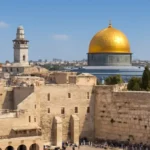
The fall of Jerusalem in 70 AD stands as one of the defining events of ancient history. It marks the culmination of the First Jewish–Roman War and the destruction of the Second Temple in Jerusalem, an event that reverberated through Jewish life, early Christian history, and the wider Roman world. This article explores the complex causes that led to the siege, outlines the military operations and daily realities of the campaign, and surveys the profound consequences that followed for the city, its inhabitants, and the religious and political landscape of the Mediterranean world. Though the episode occurred nearly two millennia ago, its echoes continue to shape how historians understand imperial power, urban resilience, religious identity, and cultural memory. Read on to understand the multiple dimensions of the destruction of Jerusalem in 70 CE and why it remains a central reference point when discussing ancient warfare and religious transformation.
Causes and Context: Why did the fall of Jerusalem in 70 AD come to be?
To grasp the fall of Jerusalem in 70 AD, it is necessary to see both long-term structural factors and short-term sparks that intensified the conflict. The city and its region endured a volatile mix of political rivalry, economic strain, and religious tension under Roman rule. Several strands converged to make the siege not only probable but, for many participants, seemingly inevitable.
Long-term factors shaping the conflict
Roman imperial governance and provincial administration often operated with heavy-handed taxation and frequent interventions in local affairs, eroding trust among Jewish leadership and urban elites.
Economic pressure and tax burdens placed on urban residents, artisans, and agrarian communities created resentment that could be mobilized during crises.
Religious and political tensions within Judea—between priestly factions aligned with the Temple in Jerusalem and radical groups advocating resistance—made the population susceptible to exaggerated promises of liberation when external threats rose.
Leadership struggles among Jewish factions, including zealots, Sicarii, and other rising voices, undermined cohesive resistance and complicated Roman attempts at reconciliation or compromise.
Strategic importance of Jerusalem as religious center and symbol of national identity made its fate a litmus test for both Roman policy and Jewish resistance.
Immediate triggers and the spark of rebellion
The outbreak of the Great Jewish Revolt in 66 CE, sparked by a combination of taxation grievances, religious tensions, and a loss of faith in political leadership, created a ripe moment for larger military action.
Early Jewish successes against smaller Roman forces amplified hopes for independence and encouraged more aggressive tactics, which in turn prompted a more forceful Roman response.
Roman political rivalries within the empire, including the succession crisis that brought Vespasian to power and later his son Titus, influenced how Rome allocated resources to combat the rebellion.
Military decisions by both sides—such as fortifying towns, contesting supply lines, and controlling key corridors—shaped the trajectory of the war and set the stage for the eventual siege of the capital city.
Thus, the fall of Jerusalem in 70 AD did not arise from a single mistake or miscalculation; it emerged from a chain reaction of political, economic, and religious pressures that culminated in a Roman punitive expedition designed to decisively end the revolt and restore imperial authority in the province.
The Roman Campaign and the Siege
The execution of the siege was led by Vespasian and his son Titus, with the strategic aim of encircling the city, cutting off supplies, and compelling surrender. The Roman campaign unfolded in stages, combining siege warfare, strategic diplomacy, and relentless military pressure. The defense and eventual fall of the city highlight both Roman military ingenuity and the resilience—and tragedy—endured by Jerusalem’s residents.
Strategic plan and deployment
Roman commanders dispatched engineers, legionaries, and auxiliary troops to establish a comprehensive blockade around Jerusalem. The plan relied on:
Constructing circumvallation lines to prevent escape or reinforcements;
Controlling access routes from the surrounding hills and plains;
Seizing supply conduits, especially grain shipments from allied regions, to induce famine and surrender;
Isolating the city from external aid while preparing for a protracted siege.
The phases of the siege
Encirclement and isolation: The Romans sealed off Jerusalem from food and water sources, using earthworks, ramparts, and watchtowers to monitor movement and deter sorties.
Assaults and countermeasures: The defenders, composed of Zealots, Jewish militias, and city residents, mounted stubborn resistance, including night sorties, arson attempts, and attempted breaches of the Roman lines.
Starvation and hardship: Prolonged deprivation weakened morale and health, intensified internal disputes, and increased the temptation to surrender under terms that would spare lives in return for loyalty to Rome or payment of tribute.
The breach and conquest: Ultimately, a breach in the inner fortifications allowed Roman troops to enter the city, leading to a violent consolidation of victory and the systematic destruction that followed.
The siege lasted for several months, with the climactic moments occurring in 70 CE. The Roman siege of Jerusalem culminated in the destruction of much of the urban fabric, including the Temple precinct, which held immense symbolic importance as the center of Jewish worship and national identity. Contemporary accounts describe the Temple Mount burning, the looting of sacred objects, and the mass killing and enslavement that followed in the wake of the conquest.
Destruction of the Temple and the City’s Fall
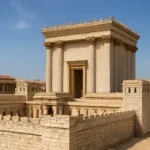
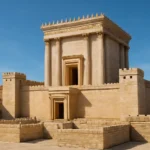
One of the defining and most controversial aspects of the fall of Jerusalem in 70 AD is the destruction of the Second Temple and the broader devastation of the sacred urban core. The Temple’s destruction has been described in varying ways by ancient authors, yet the core fact is clear: the temple and much of the city’s religious and administrative infrastructure were destroyed or rendered unusable.
The Temple’s fate and its symbolic weight
The Temple had stood for centuries as the epicenter of Jewish life, ritual, and national memory. Its destruction signified not only a military victory but a deep disruption of religious practice and social order in Judea. The loss sent shockwaves throughout Jewish communities across the Mediterranean world and, for Christians, became a powerful symbol tied to narratives about the old covenant and the emergence of a new religious framework.
In Rome, triumphal imagery and provincial propaganda celebrated the victory, with reliefs and inscriptions commemorating the triumph over Jerusalem, the spoils, and the return of Roman forces. The Arch of Titus in Rome famously depicts the spoils from the Temple, including menorahs and other sacred objects, serving as a visual reminder of Rome’s dominance and the city’s dramatic fall.
Aftermath: Immediate Consequences and Longer-Term Legacies
The fall of Jerusalem in 70 AD did not merely end a rebellion; it reshaped cultural, religious, and demographic realities across the region. The immediate aftermath was brutal in human terms, but it also sowed seeds for enduring changes in Jewish life and the broader Mediterranean world.
Human cost and demographic shifts
Widespread casualties, enslavement, and displacement affected tens of thousands of people who remained in the city and the surrounding countryside.
Many survivors fled to safer rural areas, other Judean towns, and further afield, contributing to the growth of the Jewish diaspora across the Roman world.
The loss of life and the upheaval of social structures disrupted traditional patterns of farming, trade, and religious leadership.
Religious and intellectual transformations
The destruction of the Temple led to a decisive shift in Jewish religious life. Rabbinic authority, communal worship in synagogues, and the study of Torah in the absence of a central temple became the new organizing principles for many Jewish communities.
In the increasingly diverse early Christian world, the fall of Jerusalem helped redefine relationships between Jews and Christians as distinct religious movements within the broader empire. The events contributed to the evolving Christian narrative about the temple and its significance.
Literary and archival traditions emerged to preserve memory and interpret the catastrophe, shaping future generations’ understanding of Jewish history and resilience.
Political and urban consequences for Judea and the Roman world
Rome reorganized the province, imposing stricter governance and integrating the region more closely into provincial administration, with military presence maintained to deter rebellions.
Jerusalem’s physical landscape was substantially altered: city gates, walls, neighborhoods, and public buildings were dismantled or repurposed, reflecting a strategic shift in how the city would function under imperial oversight.
The destruction reverberated through neighboring regions and influenced the broader policy of Rome toward client kingdoms, provincial taxation, and military suppression of uprisings.
Historical Sources, Interpretation, and Debate
Understanding the fall of Jerusalem in 70 AD relies on a combination of ancient eyewitness accounts, later scriptural and historical writings, and modern scholarship. The primary ancient source is Flavius Josephus, whose works—often titled The Wars of the Jews and Antiquities of the Jews—provide a narrative of the revolt, the siege, and the fall of the city from a Jewish-Radon perspective and a Roman insider’s account after his capture and alliance with Rome.
Josephus and the reliability of early accounts
Scholars debate the reliability and biases of Josephus’s narratives. While Josephus offers rich detail about the siege, motives, and daily life inside the city, his perspective is complex: a Jew who aligned with Rome, a marginal voice in some respects, and a writer who sought to justify or explain events to a readership that included Roman patrons. Other sources include Roman historians who reference the siege and the broader war, as well as later Christian writers who reflected on the destruction as a turning point in religious history.
Archaeological and textual corroboration
Archaeology provides tangible evidence for the siege’s aftermath, including destruction layers in Jerusalem’s remains, remnants of fortifications, and material culture that illuminate the daily grind of famine, conflict, and urban life under siege. In combination with textual sources, archaeology helps historians reconstruct the sequence of events and assess how the city’s population endured the catastrophe.
Variations of the Narrative: The Fall of Jerusalem in 70 AD from Different Angles
Modern historians and scholars often frame the fall of Jerusalem in 70 AD from multiple angles—military, religious, economic, and social. Some common refrains you may encounter include:
The destruction of the Second Temple as a catalytic event for changes in Jewish worship and communal organization.
The siege as a turning point in Roman imperial policy toward Judea and the broader eastern provinces.
Jerusalem’s fall as a potent symbol in Christian memory about the transition from temple-centric religion to a church-centered world.
Discussions about whether the destruction was an inevitable outcome of ongoing rebellion or a calculated risk on Rome’s part to deter further uprisings.
The Aftermath in the Long View: How the Fall Shaped History
In the centuries following the fall of Jerusalem in 70 AD, the region experienced a complex interplay of displacement, renewal, and reinterpretation of religious identity. These are some of the enduring consequences that scholars highlight when analyzing the broader historical arc:
Diasporic dispersion: Large populations left the city and its environs, spreading Jewish communities across the Mediterranean basin and creating new centers of Jewish life in places like Alexandria, Antioch, and Rome.
Rabbinic authority: With the temple no longer available for centralized ritual, early Rabbinic leaders emerged as the primary interpreters of Jewish law and practice, shaping the development of Judaism as a movement compatible with diaspora life.
Architectural and urban memory: The ruins and the Roman commemorations in the imperial capital left a lasting imprint on how urban defeat and imperial power were remembered in the annals of antiquity.
Christian memory and identity: For the early Christians, the fall of Jerusalem reinforced theological themes about the temple’s obsolescence and the ascendancy of faith communities rooted in places other than Jerusalem.
Impact on Modern Understandings of Antiquity
The fall of Jerusalem in 70 AD continues to be a touchstone for discussions about the relationship between empire and religion, urban catastrophe, and cultural resilience. It serves as a case study in how a city can be transformed by warfare, how religious communities adapt to loss, and how memory shapes historical narratives across centuries. The event’s reach extends beyond the immediate geographic region; it informs how scholars interpret sources, construct historical timelines, and assess the reliability and perspective of ancient writers.
In Summary: The Fall of Jerusalem in 70 AD as a Turning Point
To conclude, the destruction of Jerusalem and the fall of the city in 70 CE were not isolated happenings. They were the culmination of deep-rooted tensions, strategic imperial ambitions, and transformative social changes that altered the religious map of the ancient world. The long-term effects—the shift from temple-centered Judaism to Rabbinic scholarship, the dispersal of Jewish populations, and the evolving relationship between Rome and its eastern provinces—help explain why this episode remains central to both ancient history and the study of religious transformation. Understanding the fall of Jerusalem in 70 AD thus requires a careful synthesis of military history, political strategy, cultural memory, and the lived experiences of people who endured one of antiquity’s most consequential sieges.