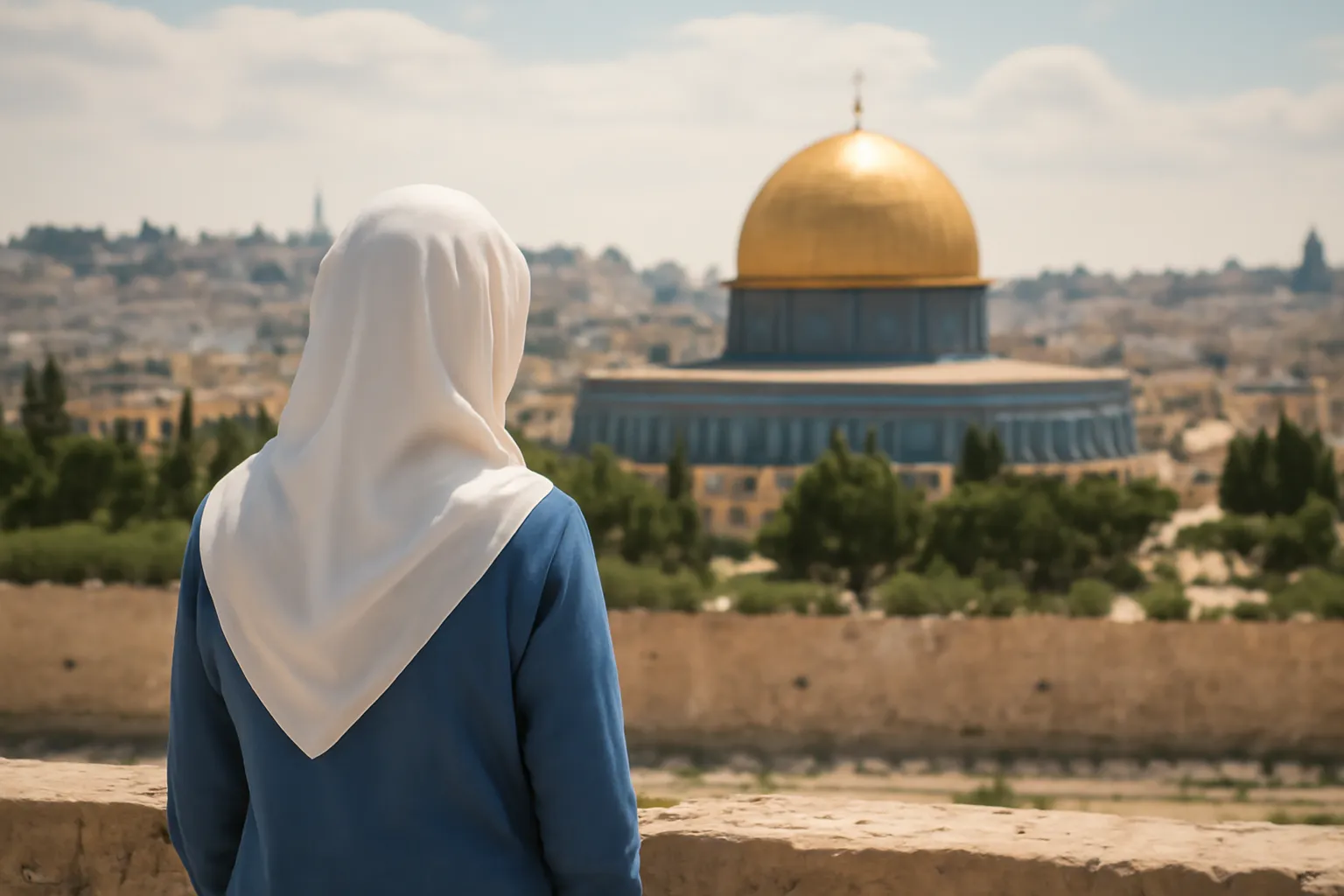
Christian Jerusalem sits at the crossroads of faith, history, and daily life. The city is revered by Christians around the world as the place where events at the heart of the Christian narrative unfolded. For centuries, a diverse spectrum of Christian communities has maintained a presence in the Holy City, shaping not only religious practice but also art, education, charity, and interfaith dialogue. The term Jerusalem and the Christian world often moves between descriptions like Christian Jerusalem, Jerusalem’s Christian community, and Christians in the Holy City, each highlighting a facet of how faith, history, and pilgrimage intertwine.
This article traces the arc of the Christian story in Jerusalem—from ancient roots and the earliest church to the modern era—and surveys the spiritual landscapes, sacred sites, and pilgrimage traditions that continue to attract believers and curious travelers alike. It also reflects on how the Christian faithful in Jerusalem navigate contemporary realities—demographic shifts, custodianship of holy sites, and interreligious relations—without losing sight of what makes this city sacred to so many people.
Historical Foundations: The Roots of Christian Jerusalem
Ancient Roots and Early Christian Presence
Long before the advent of Islam or the modern state of Israel, the land of Jerusalem was already a place of profound significance for early Christians. The city’s role as the site of key events in the life of Jesus—his triumphal entry, last days, crucifixion, and reported resurrection—made it a destination for pilgrims from the Roman Empire and beyond. By the late antiquity period, a vibrant Christian community existed, marked by churches, monasteries, and the leadership of bishops and patriarchs serving a broad network of believers.
The earliest established Christian centers in Jerusalem contributed to the shaping of doctrine, liturgy, and sacred memory. The city acquired a prominent place in Christian imagination as the Holy City, and its geography—prophetic mountains, valleys, and sacred tombs—became a living curriculum for religious education and contemplation.
Medieval Transformations: The Crusader Era and the Latin Patriarchate
The medieval period brought dramatic change as Jerusalem became a focal point of the Crusades. After the First Crusade (1099), Western Christians established new institutions and built or reconfigured key sites. The Latin Patriarchate of Jerusalem emerged as the administrative center for the Western Church in the region, operating alongside existing Eastern Christian communities. During this era, monumental churches and fortifications were erected, and the city’s Christian landscape reflected a blend of Latin, Greek, Armenian, and other Christian traditions.
The Crusader period left a complex legacy: sacred sites that served as pilgrimage destinations; architectural patronage that shaped Jerusalem’s skyline; and enduring tensions among different Christian factions as well as with Muslim rulers. The centuries that followed saw shifts in governance, sacred custodianship, and the practical realities of living in a contested space.
Ottoman Era: Continuity and Diversity
Under Ottoman rule, starting in the 16th century, the Christian communities in Jerusalem experienced both stability and regulatory constraints that affected access to holy sites, property rights, and internal church governance. The Camaraderie among the Greek Orthodox, Armenian Apostolic, and Latin communities, along with Ethiopian and Coptic congregations, contributed to a robust and plural religious life in the Holy City.
The period also shaped the architecture of sacred spaces and the maintenance of ciboria, relics, and tombs that continue to be central to devotion. Throughout these centuries, Jerusalem’s Christian institutions developed a unique sense of shared custodianship—an early form of intercommunal governance that resonates in modern arrangements.
Modern Beginnings: Mission, Identity, and Global Connection
In the 19th and 20th centuries, as European powers asserted influence and the Ottoman Empire began to decline, Jerusalem-based Christianity entered a new era of organization and outreach. The restoration and construction of churches, schools, and hospitals by various Christian denominations created a legacy that extended far beyond the city’s walls. The presence of local and international clergy and laity in Jerusalem helped anchor Christian life in a way that connected the Holy City to worldwide networks of faith.
Religious Institutions and Sacred Sites
Major Christian Denominations in Jerusalem
The Christian presence in Jerusalem today is characterized by a demanding and collaborative landscape. Among the most prominent communities:
Greek Orthodox Church: The Patriarchate of Jerusalem (also known as the Ecumenical Patriarchate’s local see) maintains control over a large proportion of the sacred sites and oversees numerous parishes and monasteries.
Armenian Apostolic Church: The Armenian Patriarchate has a historic quarter in Jerusalem and preserves ancient liturgical traditions, chapels, and schools.
Latin (Roman Catholic) Church: The Latin Patriarchate of Jerusalem administers Catholic parishes, the sense of universal Catholic rites, and the delivery of education and charity across the city.
Coptic, Ethiopian, and Syriac Christian communities: Each of these communities maintains venerable monasteries and churches, contributing to the city’s pilgrim culture and liturgical life.
The Christian landscape in Jerusalem is defined by a set of sacred places that anchor belief and ritual. Some sites are shared or contested among communities, while others reflect distinct custodianships:
Church of the Holy Sepulchre: The focal point for Christian devotion in the city, believed to enshrine both the site of the crucifixion and the tomb of Jesus. Its custody is shared among the Greek Orthodox, Armenian Apostolic, and Latin Christian communities, among others.
Via Dolorosa: The path that believers traditionally trace as they accompany the stations of the cross toward the Church of the Holy Sepulchre.
Golgotha (Calvary) and the Tomb of Jesus: Central to the Passion narrative and Easter celebrations for many pilgrims.
Mount of Olives: A place of prayer and prophecy, associated with Jesus’s ascent, and a site of ongoing ritual and remembrance for the Christian faithful.
_mount Zion, Cenacle, and related sites: Places tied to events in Christian memory, including the tradition of the Last Supper and early Christian community life.
In the Holy City, liturgical life is shaped by a rhythm of feasts, processions, and rites that reflect the city’s diverse Christian identities. The varied calendars—Orthodox, Catholic, and Protestant—interlock at times, creating periods of joint pilgrimages and shared prayers as well as moments of solemn, separate commemoration.
Across the Christian communities, you will hear distinct languages, chant traditions, and liturgical vestments that speak to the city’s cosmopolitan Christian heritage. For visitors and pilgrims, this diversity offers a living catechism in ecclesiology—the study of the Church—as it manifests in actual churches, cathedrals, and monasteries.
Faith Practices, Pilgrimage, and Spiritual Discovery
Why the City Continues to Draw Pilgrims
For Christian pilgrims, Jerusalem represents the fulcrum of Christian memory. The prospect of standing where Jesus walked, preached, died, and rose again offers a tangible link to the core events of the Gospels. Pilgrimage here is not merely sightseeing; it is a form of spiritual discipline that invites contemplation, repentance, and renewed faith.
The purpose of a journey to the Holy City varies: some seek the nutritive quiet of sacred spaces for prayer and personal reflection; others pursue the history of the faith through a lens of archaeology, architecture, and archaeology. The experience can be profoundly transformative and often includes engagement with local Christian communities, theological schools, and Christian charities that operate within the city.
Common Paths and Practices for Pilgrims
Visiting the Church of the Holy Sepulchre and participating in or observing the Easter Vigil, processions, and the Holy Fire ceremony (where applicable in the liturgical year).
Walking the Via Dolorosa and reflecting on the Passion narrative, often tracing the chronological sequence of the stations.
Praying at the Mount of Olives, where ancient prophecies and biblical events are remembered in a landscape that has been sacred for generations.
Engaging in ecumenical worship, Latin, Greek, and Armenian liturgies, depending on the time of year and the visitor’s itinerary.
Seasonal and Life-Cycle Observances
Christian rites in Jerusalem unfold through the liturgical calendar, with springtime Easter celebrations culminating in unique Holy Week rituals, and Advent and Christmas tones appearing in the city’s churches with special services and processions. Holy Week in this context becomes a living pedagogy, as local congregations open their doors to visitors, offering guided reflections on the Passion, Resurrection, and the meaning of mercy and redemption.
Historical Evolution into the Modern Era
From the Ottoman to the British Mandate Periods
In the modern era, Jerusalem’s Christian presence navigated the shifts of empire and statehood. The 19th and early 20th centuries saw an expansion of Christian institutions—schools, hospitals, libraries—and the emergence of a more clearly defined international Christian leadership network in the city. The British Mandate period added a new layer of governance that influenced religious freedom, property rights, and the administration of holy sites, while also shaping the status and protection of different Christian communities.
Mid-20th Century to Present: Continuity, Change, and Interfaith Dialogue
The mid-20th century brought upheavals that intersected with the creation of the modern state and the ongoing Arab–Israeli conflict. Despite political volatility, Jerusalem’s Christian churches continued to function as centers of worship, hospitality, and education. In the decades since, interfaith initiatives and dialogues have sought to preserve access to sacred spaces and to promote mutual respect among Christians, Muslims, and Jews who share the city.
Today, Jerusalem-based Christians include long-standing communities and newer congregations that reflect migratory patterns, global religious networks, and local resilience. The city remains a case study in how a sacred city can bear witness to faith, history, and the possibility of coexistence even amid contested narratives.
Challenges, Preservation, and Stewardship
Custodianship of Holy Sites
The custodianship and preservation of sacred spaces in Christian Jerusalem require careful governance and cooperation among denominations. The Church of the Holy Sepulchre, for example, operates under a framework of shared responsibility, with guardianship and liturgical access negotiated through centuries of tradition. Maintenance, restoration, and modernization must be balanced with historical authenticity and spiritual reverence.
A city with at least three major Abrahamic faiths presents both opportunities and challenges. For the Christian community in Jerusalem, dialogue with Muslim and Jewish neighbors is a daily practice, and it often centers on shared concerns—protecting access to sites, ensuring safety for worshippers, and fostering mutual understanding that benefits the city’s social fabric.
Demographic Shifts and Local Identity
Demographic changes—whether in the form of migratory patterns, economic pressures, or shifts in religious affiliation—affect how Jerusalem’s Christians experience their city and how they present their faith to visitors. Nonetheless, the enduring presence of churches, monasteries, schools, and charities keeps the Christian voices in the city vibrant and visible.
Preservation of Heritage and Education
The preservation of artifacts, manuscripts, and liturgical treasures is a shared concern across communities. Educational institutions and libraries affiliated with Christian Jerusalem serve not only their congregants but scholars, pastors, and lay readers who seek to understand the city’s spiritual history and its ongoing witness to faith.
A Practical Guide for Visitors and Pilgrims
Planning Your Visit
If you intend to visit Jerusalem as a Christian pilgrim, plan with attention to holy days, church schedules, and the possibility of crowds at peak pilgrimage times. It is helpful to coordinate visits with led pilgrim groups or with local churches that host international guests. Consider the following steps:
Identify a few key sites you want to experience—such as the Church of the Holy Sepulchre and the Via Dolorosa—and allow space for reflection and prayer between visits.
Respect the customs of each denomination; modest dress and quiet conduct are often appreciated near sacred spaces.
Be prepared for security checks and limited access on certain holy days, especially during major religious seasons.
Engage with local Christian communities to learn about current life in Jerusalem today, as well as historical narratives.
Practical Considerations for Pilgrims
Expect varied languages and liturgies; participation is optional, but many visitors appreciate the chance to observe.
Carry a modest, respectful demeanor when entering churches and monasteries; photography rules differ by site.
Support ethical tourism that respects custodianship agreements, preservation efforts, and local livelihoods.
Seasonal Highlights and Events
Throughout the year, particular feasts and processions highlight the depth of Christian devotion in Jerusalem. Easter celebrations draw special attention, but other liturgical seasons—like Advent and Christmas—also illuminate the city’s living faith. Pilgrims may encounter processions, chanted liturgies, and icon veneration in multiple church spaces, offering a window into how Jerusalem’s Christian communities honor centuries of tradition.
What to Learn for a Deeper Experience
To gain a richer understanding of Christian Jerusalem, consider exploring:
The relationship between sacred space, liturgical practice, and local memory across different denominations.
How historical events—conquests, reforms, and modern political changes—reconfigured access and custodianship.
The role of educational and charitable institutions run by Christian communities in Jerusalem today.
In sum, a journey through Jerusalem’s Christian landscape offers more than a catalog of sites; it invites a personal dialogue with belief, memory, and the city’s enduring call to unity amid diversity. Whether you speak of the Christian presence in the Holy City as a historic phenomenon or as a living, evolving witness, the arc from ancient roots to modern practice remains a compelling testament to faith in a place that continues to shape the global Christian imagination.