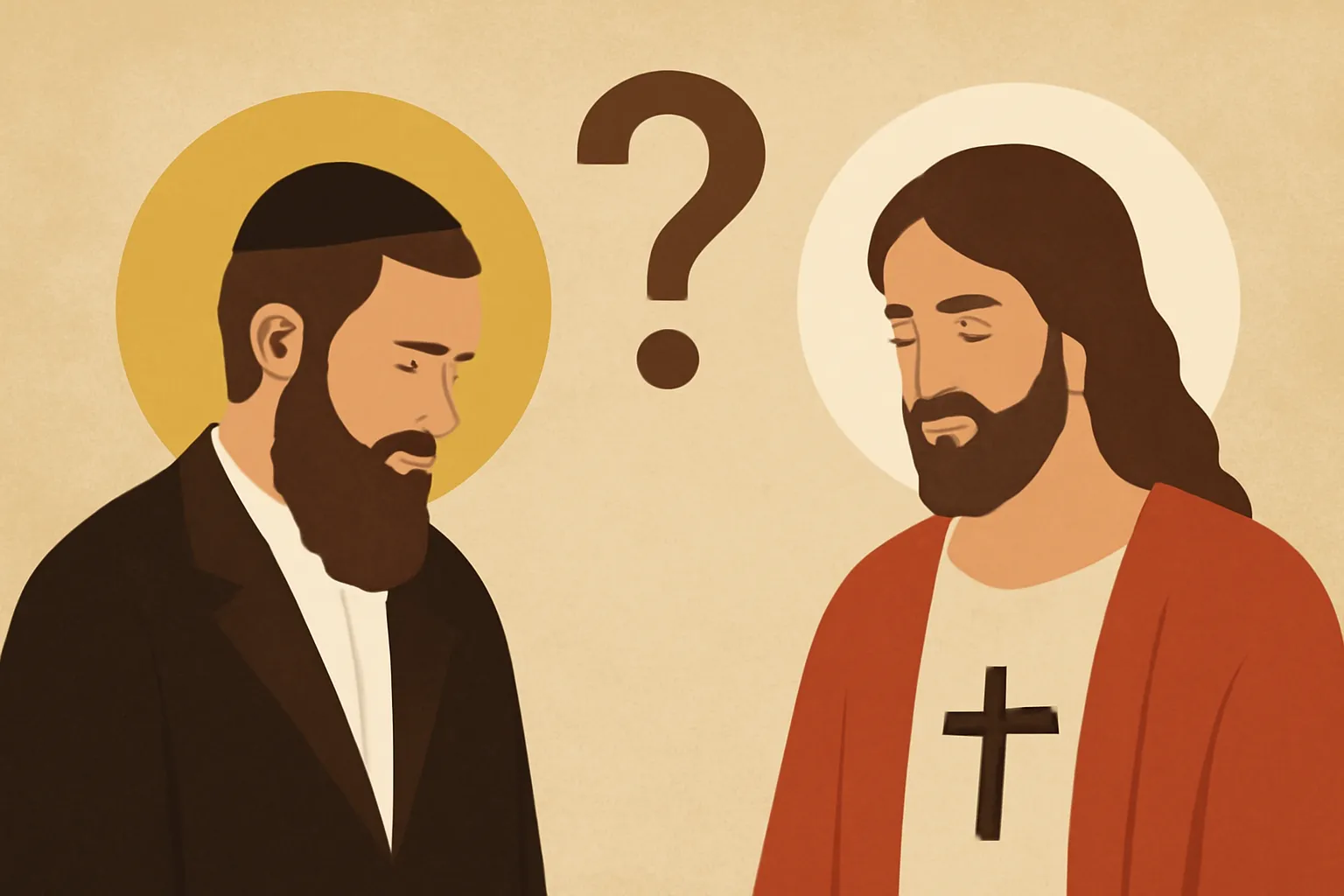
Do Jews believe in the same God as Christians? This question sits at the crossroads of theology, history, and lived faith. The answer is nuanced: both traditions affirm a single, transcendent God, but they differ on how God is understood, revealed, and worshiped. This article explores the shared roots of Judaism and Christianity, the major points of convergence, and the striking differences that shape how adherents of each faith speak about God today. It also examines how contemporary interfaith dialogue negotiates the question, “Do Jews and Christians worship the same God?” in light of doctrine, scripture, and practice.
Shared monotheism and the broad question: Do Jews believe in the same God as Christians?
Historically, monotheism—the belief in one, indivisible God—defines both Judaism and Christianity at their core. In Judaism, the declaration of God’s oneness is foundational and lifelong, crystallized in the Shema: “Hear, O Israel: the Lord our God, the Lord is one” (Deuteronomy 6:4). In Christianity, monotheism is also affirmed, but within a framework that includes the distinctive doctrine of the Trinity—Father, Son, and Holy Spirit as three persons in one Godhead. This difference is more than a semantic dispute; it concerns how God is perceived in relation to Jesus, the Spirit, and creation itself. So, do Jews believe in the same God as Christians? The simplest answer is that both traditions acknowledge the same divine source—the God of Abraham, Isaac, and Jacob—but they diverge on the nature and work of that God as revealed in their scriptures and creed.
The common ground: what is shared in belief and practice?
Across centuries and cultures, Jews and Christians have affirmed a number of shared convictions about God and the divine plan for humanity. The following are among the most important points of convergence:
Belief in one God: Both traditions insist on a single, sovereign Creator who origins all existence and governs history.
Covenant and election: God is depicted as choosing the people of Israel in the biblical narrative, inviting them to live in a special relationship with divine expectations and obligations.
Revelation through scripture: The Hebrew Bible (Tanakh) is foundational for Judaism and is a major authority for many Christians as well. Christians additionally claim the New Testament as a constitution of faith.
Ethical monotheism: A central emphasis is the ethical demand that persons relate to God and neighbor with justice, mercy, and righteousness.
Prayer and liturgy: Both traditions place a strong emphasis on prayer directed to God, with liturgical forms that express reverence, lament, gratitude, and praise.
Hope in divine justice: Both communities anticipate God’s continuing involvement in human history, including the restoration of justice and peace in the world.
When people ask, “Do Jews believe in the same God as Christians?” many scholars and theologians respond affirmatively in the sense of shared scriptural memory and a shared ethical framework, but with crucial caveats about how God is named, described, and encountered in each tradition. The rest of this article surveys where those continuities end and where the divergences begin.
The distinctive theologies: where do Jews and Christians part ways on the nature of God?
The nature of God: unity versus Trinity
The most visible theological divergence concerns the concept of God’s nature. In Judaism, God is strictly one and indivisible. This is not merely a matter of belief about a distant deity but a living commitment in daily prayer, law, and identity. The Shema declares a radical oneness that rejects any division of the divine essence. “Hear, O Israel: the Lord is one” is both a creed and a lifelong meditation on the unity of God.
In Christian theology, the Trinity describes one God in three coequal persons: the Father, the Son (Jesus), and the Holy Spirit. This framework is not simply a conceptual puzzle; it shapes beliefs about the incarnation, salvation, and ongoing divine presence in the world. Many Christian creeds insist that Jesus is God incarnate and that the Spirit proceeds from the Father (and in Western Christianity, from the Son as well). For Judaism, such a view compromises the absolute oneness of God and is deemed incompatible with scriptural monotheism. For Christians, the Trinity is not three gods but one God in triune unity, a mystery anchored in early creedal formulations and centuries of theological reflection.
To answer the question, do Jews believe in the same God as Christians? a clear line exists: both reject polytheism and affirm a singular divine source, yet the Christian concept of God’s triune nature is not accepted within traditional Judaism. Some modern Jewish theologians engage this topic in dialogue with humility, acknowledging that Christians approach God through the lens of Christology and Trinitarian faith, while maintaining their own commitment to the indivisible God of Israel.
Revelation, scripture, and authority
A second major difference concerns how God has revealed Godself and how that revelation is authoritative. Judaism emphasizes the Torah—the first five books of the Hebrew Bible—as the central, binding revelation given at Sinai, interpreted across generations by rabbinic authority. Christians hold the Old Testament (the Hebrew Bible) as foundational, but they also recognize the New Testament as a further divine revelation through Jesus and the apostles. For many Christians, the New Covenant in Christ fulfills and deepens the older covenants; for Judaism, the Mosaic Covenant remains the ongoing, binding relationship with God, not superseded by any later revelation.
Given these currents, the question “Do Jews believe in the same God as Christians?” yields different answers depending on which scriptures one regards as definitive and which interpretive lenses are used. In interfaith discussions, it is common to stress shared scriptures and common ethical demands while acknowledging divergent claims about divine revelation and the status of Jesus.
The Messiah and divine revelation
The concept of the Messiah offers another clear difference. In Judaism, the Messiah is typically a future human leader—unconquered, anointed, and an agent of universal peace—whose coming has not yet occurred. In Christianity, Jesus is identified as the Messiah (Christ) and is presented as the Son of God who fulfills, in a new way, the messianic expectation through his death and resurrection. This difference touches not only on eschatology but also on how God’s plan unfolds in history and how salvation is understood. Thus, the question “Is the God of Judaism the same as the God of Christianity?” cannot be answered simply in terms of messianic identity without acknowledging that Christians and Jews interpret messianic expectations through very different frameworks, which in turn shape doctrinal statements about God’s nature and action in history.
Names of God and how God is addressed
In Judaism, the primary divine name is Yahweh (often rendered as YHWH) in religious study, though in spoken prayers it is customary to substitute Adonai (the Lord). God’s attributes are discussed in light of scriptural revelation and rabbinic teaching, with a deep emphasis on God’s justice, mercy, and holiness. Christians typically refer to God using the general term “God” or Father in the context of the Trinity, and many also evoke “the eternal Son” and “the Holy Spirit” as distinct persons within the one Godhead. This linguistic and doctrinal distinction contributes to divergence in how God’s identity is communicated, worshiped, and understood in daily life.
The practical implications: law, grace, and salvation
Law, covenant, and salvation
Judaism emphasizes the Mosaic Covenant—a binding covenant marked by obedience to the Torah’s commandments (mitzvot), rituals, and ethical laws. This framework is at the heart of Jewish communal life and personal piety. Christians, by contrast, often teach that salvation comes through grace by faith in Jesus Christ, who fulfilled the law and inaugurated a New Covenant. While some strands of Christian theology stress the continuity of the moral law, many Christian groups hold that the ceremonial parts of the law are fulfilled in Christ, leading to different emphases in how adherents understand sin, atonement, and righteousness. In practical terms, the question “Do Jews believe in the same God as Christians” also invites discussion about how each tradition conceives divine forgiveness, accountability, and life after death.
It is important to recognize that both traditions share a profound concern with justice, mercy, and the ethical demands of living in a world created and governed by God. Yet the map of salvation—how one moves from human frailty to divine mercy—differs markedly between them, shaped by distinct convictions about the role of Jesus, the authority of scripture, and the place of ritual in daily life.
Historical movements: from shared roots to divergent paths
Origins in the Second Temple period
Christianity emerged from a Jewish milieu in the first century CE. The earliest followers of Jesus were Jews who read the Hebrew scriptures, worshiped in Jewish contexts, and awaited the fulfillment of biblical prophecies. Over time, as beliefs about Jesus’ identity and mission crystallized into doctrine, a distinct religious movement began to separate from rabbinic Judaism. The early church developed its own creeds and liturgical life, which increasingly set Christianity apart as a separate religion with its own understanding of God.
Judaism, meanwhile, continued to interpret God’s revelation through the authority of the Torah and later rabbinic writings. The rabbinic tradition, formed after the destruction of the Second Temple, emphasized covenantal obedience, ethical living, and community-based worship centered on synagogues and study. For many years, the two communities lived in close proximity, debated, and occasionally reconciled differences; for others, the divergence was decisive and long-lasting.
In Rabbinic Judaism, the oneness of God remains the central doctrinal anchor, with a robust tradition of interpreting textual and legal matters within the broader covenantal framework. Christian creeds—such as the Nicene and Apostles’ Creeds—formally articulate the Trinitarian understanding of God, the divinity and humanity of Jesus, and the person and work of the Holy Spirit. These creedal statements crystallize the divergence that persists in many confessional communities today.
Modern interfaith dialogue
In the modern era, many Jews and Christians engage in dialogue to explore common ground and to acknowledge differences with respect. Initiatives in education, shared worship, and collaborative social action illustrate a shift from mutual exclusivity to mutual recognition of shared concerns. In these conversations, questions like “Do Jews believe in the same God as Christians?” are addressed with care to avoid caricature and to honor the integrity of each tradition’s beliefs.
Perspectives by tradition: how contemporary denominations speak about God
Judaism: Orthodox, Conservative, Reform, and others
The central Jewish conviction about God is often summarized as belief in an indivisible, personal, and ethical Creator who revealed the Torah at Sinai. However, Jewish communities differ in how they interpret revelation, law, and the relationship between law and modern life:
Orthodox Judaism: Emphasizes traditional scriptural interpretation and the binding nature of halakha (Jewish law). God is understood as utterly one; the divine will is expressed through ongoing covenantal obligations and a living rabbinic tradition.
Conservative Judaism: Seeks a balance between tradition and modern life, affirming the centrality of Torah and Jewish law while allowing for evolving approaches to practice and belief.
Reform Judaism: Emphasizes ethical monotheism and personal autonomy in belief and practice; while affirming belief in one God, it often views God’s ways as compatible with a broad spectrum of understandings about revelation and tradition.
Across these movements, the basic conviction remains: God is one and the covenant with God shapes the life of the Jewish people. Yet the interpretation of how revelation is received and what that means for daily worship can vary, influencing how Jews discuss the question, “Do Jews believe in the same God as Christians?” in interfaith contexts.
Christianity: Catholic, Orthodox, and Protestant insights
Christian denominations collectively affirm the doctrine of the Trinity and the divinity of Jesus, but they differ in nuance and emphasis:
Roman Catholic and Orthodox traditions emphasize the continuity of revelation through Scripture and tradition, the authority of the Church, and a high Christology centered on the Incarnation and Resurrection.
Protestant traditions often stress the authority of Scripture (sola Scriptura), the doctrine of salvation by faith, and a variety of approaches to the Trinity and the person of Christ. Despite differences, all mainstream Christian groups profess belief in the triune God and in Jesus as Savior.
For Christians, the scriptural witness to Jesus as the fulfillment of God’s promises to Israel remains a core element of faith. When considering the question “Is the God of Judaism the same as the God of Christianity?”, Christians would affirm the shared belief in one Creator and the central place of Jesus’ life and work in defining God’s redemptive actions, while acknowledging that Jews do not accept Jesus as divine or as the Messiah in the Christian sense.
Common ground and key differences summarized
To keep the discussion clear, here is a concise comparison of core elements that influence how each tradition understands the God they worship. This is not a hierarchy of truth but a map of doctrinal posture and emphasis.
Do both traditions worship the same God? In broad terms, yes—there is a shared scriptural and theological lineage and a worship of the Creator who acts in history. The practical reality, however, is shaped by doctrinal differences about the nature of God (unity vs. Trinity) and about the person and role of Jesus.
Is Jesus God in Judaism? No. In Judaism, Jesus is not recognized as God or the Messiah in the sense Christians claim; instead, he is viewed as a historical figure within a Jewish context or as a teacher, but not as divine.
What about the Holy Spirit? Christians typically affirm the Holy Spirit as a divine person within the Trinity; Judaism speaks of God’s spirit as a force or presence in a more generalized sense, not as a separate divine person within Godhead.
How is revelation authoritative? Judaism centers on the Torah and rabbinic interpretation; Christianity, while respecting the Hebrew Bible, places significant weight on the New Testament and the revelation of Jesus as the Messiah and Son of God in most traditions.
Ethical monotheism remains a robust common ground: both traditions condemn idolatry and emphasize justice, mercy, and loving-kindness as central to worship and life.
In contemporary interfaith work, the question “Do Jews believe in the same God as Christians?” is often reframed as: “Do we worship the same God with different emphases or in different ways?” The answer tends to be: it depends on how one defines “the same God.” Many scholars, theologians, and congregants would say that the God whom they worship is the same God in the sense of shared divine source and moral law, yet Christians and Jews approach God through different theological constructs and historical experiences. Interfaith dialogue seeks to honor these differences while emphasizing shared commitments to compassion, mercy, and the pursuit of justice in the world.
Learning from history: how the question has evolved
Dialogue as a path forward
Over the last century, Christian–Jewish dialogue has produced robust engagement around topics like the nature of monotheism, the meaning of revelation, and the responsibilities of believers toward humanity. Scholars and religious leaders emphasize:
The importance of historical context in understanding early Christianity’s origins within Judaism.
The value of theological precision when describing the Godhead and Christology, to avoid conflating religious identities and to respect sincere differences.
Practical cooperation in social justice, education, and community service as a shared arena where faith informs ethical action.
Key questions and common misunderstandings
Because the topic touches core beliefs, several common misunderstandings deserve clarification:
Is the Trinity compatible with monotheism? In Christian doctrine, yes, the Trinity affirms one God in three persons. In Jewish theology, this is typically viewed as incompatible with absolute monotheism. The debate centers on how language about God can express mystery without violating the oneness of God.
Do Jews worship Jesus? No. Judaism does not attribute divinity to Jesus and does not accept him as Messiah or Son of God in the Christian sense.
Can Christians and Jews share prayer and worship? In some interfaith services or shared spaces, there may be mutual respect and a shared reverence for God, but typical worship remains distinct in liturgy, ritual, and creed.
Practical considerations for readers and communities
Understanding where Jews and Christians converge and diverge on the nature of God helps readers approach interfaith engagement with nuance and respect. For individuals navigating interfaith families or communities, several practical points emerge:
Education matters: Learning about each tradition’s language for God, such as the Jewish emphasis on the Shema and the Christian emphasis on the Trinity, helps reduce misunderstandings.
Respect for boundaries: Recognize and honor distinctive beliefs about Jesus, the Holy Spirit, and the nature of divine revelation.
Shared ethical commitments: Focus on common ground—justice, charity, care for neighbors, and the pursuit of peace—as a foundation for dialogue and cooperation.
Inclusive dialogue: Engage in spaces that welcome questions and avoid coercion, allowing communities to articulate their beliefs firmly and charitably.
Conclusion: answering the question once more
So, do Jews believe in the same God as Christians? The short answer is nuanced. Both traditions profess belief in a single, ultimate God who is the Creator and judge, who acts in history, and who calls humanity to righteousness. Yet the two faiths diverge in crucial doctrinal areas, especially regarding the unity of God versus the Trinity, the Messiah and the role of Jesus, the status of scripture and revelation, and the interpretation of the covenant. For many Jews, the God of Israel remains the indivisible, personal, and just God of the Torah. For many Christians, the God they worship is the triune God revealed in Jesus as the Messiah and Savior, whose Spirit continues to act in the church and the world.
Nevertheless, these differences do not prevent meaningful respect, cooperation, and dialogue. The historical link between Judaism and Christianity remains undeniable: both traditions share a scriptural foundation, a history of encounter, and a commitment to living in a way that reflects reverence for the divine. In contemporary settings, the question often becomes about how people express faith and how communities serve the common good, rather than a debate about ultimate ontology alone. In this sense, the provocative question “Do Jews believe in the same God as Christians?” serves as a prompt to explore what it means to honor the sacred while recognizing difference—and to find ways to walk together, with integrity and mutual respect, on the path toward a more just and compassionate world.
In closing, it is helpful to remember a guiding principle used in many interfaith discussions: acknowledge the shared reverence for God, name the disagreements with honesty, and pursue common action that reflects the ethical dimensions of monotheism in daily life. Whether one approaches this topic from a Jewish or Christian standpoint, the ultimate aim is not merely a doctrinal settlement but a lived testimony to faith in one God who invites humanity to seek justice, mercy, and peace.