The story often summarized as God’s covenant with Abraham sits at a crossroads of biblical narrative, theology, and tradition. This sacred agreement, commonly known as the Abrahamic covenant, lays the foundation for a sequence of revelations about land, lineage, and blessing that reverberate through Judaism, Christianity, and Islam. While the wording and emphasis differ among scriptures and readers, the essential elements—divine promises, a conditional response, and a ritual sign—remain central to how theologians and lay readers understand the relationship between God and the patriarch Abraham.
In this article, we explore the covenant made with Abraham, its major components, the historical and literary context in which it emerges, and its enduring significance for faith communities today. We will use terms such as the Abrahamic covenant, God’s covenant with Abraham, and the divine covenant with the patriarch to reflect the ways scholars describe this multifaceted promise. The goal is to offer a clear, nuanced, and accessible guide to a central biblical theme.
Foundational Texts and Theological Context
Old Testament Foundations
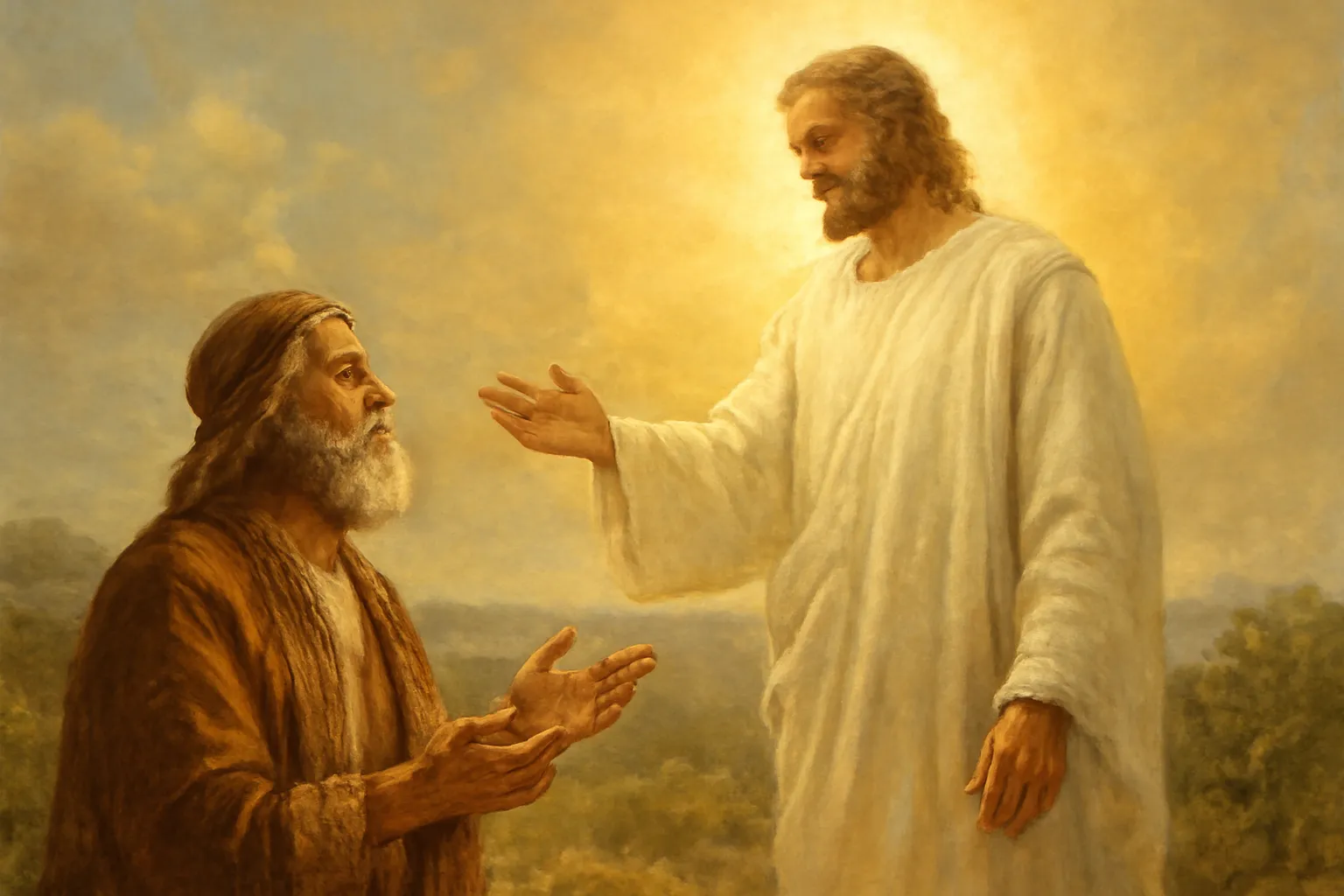
The narrative of the covenant with Abraham unfolds primarily in the book of Genesis, beginning with the renowned call of Abram (as he was then named) and culminating in later expansions of the terms of the divine promise. The core chapters—Genesis 12, 15, 17, and the testing of faith in Genesis 22—are frequently cited as anchor points for understanding the Abrahamic covenant.
Across centuries and across religious traditions, scholars describe the divine covenant with Abraham as a before-and-after moment: before the covenant, a world of dispersed peoples; after the covenant, a people chosen to bear blessing and a land-centered purpose. The language used in biblical texts often emphasizes God’s initiative—“I will make of you a great nation,” “I will bless you,” and “I will give you and your offspring the land.” These words frame a faith-centered narrative in which human action and divine promise work in dialogue.
Core Elements of the Abrahamic Covenant
Promises: Land, Descendants, Blessing
The most frequently highlighted components of the covenant with Abraham are often summarized as three interlocking promises:
Land and nationhood: God promises to give Abraham’s descendants a specific territory, establishing a homeland and a people who will be a distinct nation. This is sometimes called the land promise, and it becomes a central factor in the narrative arcs of biblical history.
Numerous descendants: God pledges that Abraham will become the father of a great people. The promise of a multitude of offspring frames the relationship between God and Abraham as a dynamic of growth, blessing, and obligation.
Blessing to all nations: The covenant expresses a divine intention that through Abraham and his descendants, entire nations will be blessed. This global dimension reframes the promise as not only about a local people but about a wider, universal invitation to relationship with God.
In biblical terms, these arms of the promise interlock: land secures a visible home; descendants guarantee continuity and fruitful society; blessing extends the impact of the relationship beyond the immediate family to influence the world’s spiritual and ethical life. The interplay of these dimensions is a hallmark of the Abrahamic covenant, and readers often note how the terms shift in emphasis as the story unfolds in later chapters.
A distinctive feature of the divine agreement is the sign of the covenant—circumcision. In Genesis 17, God formalizes the covenant with Abram through a ceremonial ritual and renames him Abraham as a marker of the transformed relationship. The act is described as a physical, enduring sign that would differentiate Abraham’s descendants and remind them of their covenantal obligation. The practice serves not merely as a ritual rite but as a daily reminder of the divine promises and the responsibility to live in faithfulness.
The sign of circumcision, however, raises questions for students of biblical theology: who belongs to the covenant? What counts as faithfulness within the covenant community? How does the covenant relate to Gentiles and to spiritual obedience? These questions have guided centuries of interpretive work across traditions, contributing to a robust and ongoing conversation about identity, inclusion, and the meaning of obedience before God.
Historical and Theological Dimensions
The covenant with Abraham sits in a broader theological architecture. On one level, it marks a turning point in the biblical narrative—from a world populated by myriad nations to a single divine intention focused on a people who would carry God’s purposes into history. On another level, the Abrahamic covenant prompts readers to consider the relationship between divine sovereignty and human response, between promise and faith, and between particularity and universality in God’s plan for humanity.
In Judaism, the covenant with Abraham is foundational for understanding identity, ritual practice, and ethical obligation. The land and blessing promises translate into a sense of covenantal belonging—Israel’s historic homeland, the continuity of the people, and the moral and religious responsibilities that flow from the covenant. In Christianity, the narrative of the Abrahamic covenant is often read in light of the New Testament, where Abraham’s faith is presented as a model for justification by faith and as a prefiguration of Christ’s work. Some Christian interpreters see Jesus as the fulfillments of the universal blessing promised to Abraham, while still affirming the enduring importance of the land and people motif in scriptural history.
In Islamic thought, the figure of Abraham (Ibrahim) is revered as a prophet who affirmed monotheism, submitted to God, and contributed to the spiritual ancestry of a faith community that acknowledges the oneness of God. The divine covenant with Abraham is viewed through a lens that emphasizes monotheism, obedience, and the moral integrity that characterizes Abraham’s trust in God.
Significance for Believers and Modern Faith Communities
The covenant with Abraham continues to shape worship, ethics, and communal life in multiple religious traditions. Its significance extends beyond ancient texts, emerging in the ways communities understand vocation, hospitality, justice, and the global reach of divine blessing.
Identity and belonging: The Abrahamic covenant provides a sense of identity for groups who view themselves as heirs to a spiritual lineage that begins with Abraham’s faith.
Ethical responsibilities: The covenantal call to live in accordance with God’s standards translates into moral obligations, hospitality to strangers, and concern for the vulnerable.
Interfaith dialogue: Because the covenant is shared by multiple traditions, it becomes a focal point for dialogue about common ground and divergent interpretations of divine promises.
Hope for future fulfillment: In various theological landscapes, the covenant remains a source of hope regarding what God intends to do in history and in the life of communities that trust in divine promises.
The Abrahamic covenant has been the subject of rich scholarly discussion across disciplines—biblical studies, theology, history, and ethics. Different scholarly approaches highlight different aspects:
Historical-critical perspectives: Some scholars emphasize the covenant as an ancient Near Eastern treaty form, analyzing how the language of the Genesis narratives reflects political and social realities of the time.
Theological exegesis: Other scholars foreground the covenant as a site of revelation and faith, focusing on the relationship between God and Abraham and how this relationship sets a pattern for faith in later generations.
Symbolic and typological readings: For some, the promises to Abraham prefigure later biblical themes—such as the universal reach of blessing and the spiritual significance of faith over mere ethnic lineage.
Interfaith interpretations: Within Judaism, Christianity, and Islam, the covenant is read in ways that align with each tradition’s beliefs about salvation, law, and divine guidance, generating lively ecumenical and interfaith discussions.
An ongoing area of debate concerns the relationship between the covenant and the law (Torah). Some interpret the land and birthright as temporal and national, fulfilled in particular historical epochs; others see the covenant as an enduring, spiritual calling that remains operative regardless of political circumstances. The question of how Gentiles relate to the covenant, especially in Christian theology, has also produced substantial dialogue about inclusion, faith, and works.
Key Debates
Is the Abrahamic covenant primarily about national inheritance (land and people) or about spiritual belonging (faith and righteousness)?
How does the sign of circumcision function within the covenant: as a boundary marker, a test of obedience, or a symbol of inclusion for the faithful?
What is the relationship between the covenant with Abraham and the Mosaic Law given to Israel in later chapters of the Bible?
To what extent does the covenant foreshadow a universal blessing, and how is that blessing realized in different faith traditions?
Contemporary Relevance and Common Misconceptions
In modern discourse, discussions about the divine covenant with Abraham sometimes become entangled with political and cultural debates. It is important to distinguish biblical theology from contemporary politics while acknowledging how the covenant’s themes—trust, obedience, justice, and hospitality—inform contemporary ethics and interfaith understanding.
A common misconception is to read the Abrahamic covenant as a static, exclusive guarantee of national privilege. In many biblical interpretations, however, the promise increasingly centers on a universal invitation: a blessing that invites all peoples to participate in a relationship with the one God. This shift can be seen in the broader scriptural arc that connects Abraham’s faith to the broader narrative of salvation history.
Rituals, Practices, and Theological Significance
The narrative surrounding the covenant emphasizes certain practices that anchor theological concepts in lived memory. The ritual act associated with the sign of the covenant—circumcision—has given rise to rituals, liturgy, and life milestones in communities that trace their spiritual ancestry to Abraham.
Covenant Renewal: In various traditions, there are moments of reaffirmation or reinterpretation of the covenant, marking new stages in the life of a faith community.
Rite of passage: The covenant sometimes features as part of rites of passage, reminding adherents of divine faithfulness and human responsibility.
Shared narratives: The figure of Abraham serves as a model of hospitality, hospitality to strangers, and trust in God’s promises in the face of uncertainty.
The Covenant’s Role in Biblical Narrative and Theology
The Abrahamic covenant is not a stand-alone event; it is embedded in a larger biblical tapestry. It interacts with other covenants and covenants-into-fulfillment ideas, shaping how later biblical writers understand God’s unfolding plan. The narrative demonstrates that promise, faith, and obedience operate in harmony, and that divine initiative is the catalyst for human response.
Theologically, the covenant offers a framework for understanding divine faithfulness across generations. It highlights that trust in God—despite uncertainty and delay—can translate into a life shaped by hope, ethical obligation, and a call to be a conduit of blessing for others.
Conclusion: The Enduring Significance of the Abrahamic Covenant
The concept commonly referred to as God’s covenant with Abraham or the Abrahamic covenant remains a central point of reference for believers and scholars alike. Its enduring significance lies not only in the historical account of a single patriarch but in the ongoing invitation it represents: a divine call to trust, to pursue justice, to extend blessing, and to live in a covenantal relationship with the Creator.
By examining the three primary promises—land, descendants, and blessing—and by considering the ritual sign that marks this covenant, readers can gain a clearer understanding of how faith, promise, and obedience interact in one of the Bible’s most influential narratives. The study of this covenant invites reflection on how belief translates into action, how communities are formed around shared convictions, and how the divine purpose for a people can have a transformative impact on the world.
Glossary of Key Terms
Abrahamic covenant: The treaty-like agreement between God and Abraham, emphasizing land, descendants, and universal blessing.
God’s covenant with Abraham: Another way of naming the divine agreement with the patriarch, highlighting the personal relationship between God and Abraham.
Divine covenant: A broader category that includes the Abrahamic covenant but also other divine agreements throughout the biblical text.
Patriarch: A male ancestor of the Israelites; in this context, the father of the faithful people, namely Abraham, Isaac, and Jacob.
Circumcision: The sign of the covenant, a physical ritual that marks membership in the covenant community.
For readers seeking to deepen their understanding, consider exploring how the Abrahamic covenant is interpreted in different traditions, how it relates to other biblical covenants, and how the promises are seen as guiding principles for faith, ethics, and community life today. Whether approached as a historical narrative, a theological statement, or a spiritual invitation, the covenant between God and Abraham remains a central thread in the fabric of Judeo-Christian thought and a touchstone for interfaith dialogue about faithfulness, blessing, and the purposes of God in the world.