The figure commonly known as Abraham is one of the most influential personalities in the biblical narrative. Known initially as Abram, he becomes a central patriarch whose life helps explain the origins of the people of Israel, the development of monotheism, and the mindset of faith that resonates across traditions. This article offers a comprehensive Abraham Bible summary, presented as an accessible guide to the Genesis narrative of Abraham, its key lessons, its timeline, and its lasting significance in Judaism, Christianity, and Islam. We will explore the different ways readers understand the Abraham story summary, the arc of his journey, and the way his example continues to shape faith, ethics, and imagination today. The goal is to provide a thorough, engaging overview that can serve students, readers new to the Bible, and those revisiting the Abraham timeline for study or reflection.
Overview: Abraham in the Bible — a concise yet comprehensive picture
In the simplest terms, the Abraham Bible summary traces a life marked by a dramatic call, a covenant with God, a series of challenging tests, and a set of promises that shape later biblical expectation. The story begins in Genesis, where the call comes to a man living among the peoples of Mesopotamia. The narrative then follows his family, their journeys, and the unfolding of a divine plan that centers on a people, a land, and a blessing for all nations.
Important to note is the way the name changes reflect a shift in vocation and promise. Abram becomes Abraham, and Sarai becomes Sarah, signaling a new stage in God’s relationship with him and his descendants. The Abraham story summary is not a single event but a sweeping arc: calling and departure, a covenant, a childless hope transformed into generations, a test of loyalty, and finally a legacy that extends beyond one life into the faith of countless believers.
Two interwoven strands characterize the Genesis narrative of Abraham: a personal journey of trust and a divine plan that has social and cosmic implications. On one level, this is a saga about a man who leaves his homeland and steps into a future shaped by divine promises. On another level, it is a narrative about the make-up of a people—how a community is formed not merely by birth, but by trust in God and by the faithfulness of a family that travels, encounters strangers, and demonstrates hospitality. This is why the Abraham life overview remains a foundational model in religious thought, ethics, and storytelling.
As you read the abraham bible summary, you will notice recurring motifs: the call to leave what is familiar, the promise of a vast inheritance, the testing of faith, and the inclusion of nations beyond the immediate family. The story culminates not in one victory but in a lifelong pattern of faith expressed through obedience, risk, and courage. Across traditions, the figure of Abraham is a touchstone for evaluating what it means to trust God, to keep promises, and to respond in hospitality and justice to others—themes that remain deeply relevant in modern discussions of faith and ethics.
What does the Abraham Bible summary intend to teach? The key lessons emerge from the episodes that define Abraham’s journey. The following subsections present central themes that scholars, teachers, and readers repeatedly highlight in studies of Abraham’s faith journey, theology, and practical ethics.
Faith and trust in the unseen
Faith is not a certainty of every detail, but confidence in God’s promises even when the outcome is unclear.
Abraham’s trust becomes a paradigm for navigating the unknown—what it means to walk by faith, not by sight.
The narrative invites readers to discern how belief translates into action, especially when circumstances seem improbable.
Obedience and courageous action
Abraham’s life is marked by obedience that often requires leaving safety and security behind.
The call to revisit familiar grounds—moving to a land God will show—illustrates a dynamic relationship between trust and movement.
Examples of decisive acts—whether in response to a direct command or to protect others—highlight the courage embedded in obedience.
Hospitality, generosity, and the ethics of welcome
Across multiple encounters, Abraham models generosity toward strangers, turning hospitality into a spiritual practice.
The narrative uses these acts to demonstrate how ethical behavior toward guests reflects a broader covenantal ethic.
Hospitality becomes a gateway for blessing to extend beyond a single household to a wider community and even to nations.
Hope against the odds
The promise of a son to an aging couple embodies the tension between human limitation and divine promise.
The Abraham timeline shows how hope does not always arrive instantly, yet patience and perseverance are integral to faith.
Readers encounter a faith that believes in possibilities beyond ordinary human expectation, a theme that resonates across generations.
Testing of faith and the refinement of character
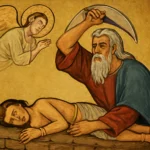
The dramatic test of offering Isaac is often discussed as a profound moment of loyalty and trust, inviting reflection on what it means to fear God above all else.
Even in difficult moments, the narrative preserves a sense of mercy, provision, and human frailty, painting a multi-dimensional portrait of faith under pressure.
Intercession, blessing, and the expansion of the covenant
Abraham’s prayers and mediating role for others illustrate a compassionate dimension of leadership.
The promise evolves from a single lineage to a broader blessing for all nations, signaling a universal scope for what began as a family covenant.
This expansion underscores a theological motif: the faithfulness of one man opens doors for countless people to know and experience God’s blessing.
Timeline of Abraham’s life: a chronological guide to the key events
The Abraham timeline traces milestones from his calling to his later years, highlighting how the events connect to form a coherent story. The following ordered list presents prominent episodes that together constitute the core of the Genesis narrative of Abraham.
Call of Abram and the departure from Ur of the Chaldeans. God’s initial command to leave homeland and go to a land God will reveal frames the entire journey.
Migration to Canaan and the establishment of a tent life amid the land God promises to give to his descendants. This marks the first stage of the promised inheritance.
Aberration and test of promise: with Lot, Abraham’s wealth grows, and the two families separate to avoid conflict, illustrating the tension between prosperity and obedience.
Command to circumcise all male members of the household, sealing the covenant as a visible sign of God’s promise (Genesis 17). This intangible covenant becomes a practical identity marker for the people of Israel.
Childlessness and divine promise: Sarah’s initial barrenness gives way to the assurance that Abraham will become a great nation, despite practical impossibilities, highlighting the extraordinary nature of the covenant.
Hagar and Ishmael: a complex episode that reflects human decisions within divine plans, showing both familial tension and God’s ongoing plan for the future generations.
Birth of Isaac: the son through whom the covenant line will proceed, shifting the focus from a wider promise to a specific lineage.
Covenant reaffirmed and promised land: God reiterates the land promise and the blessing that will extend to many nations through Abraham’s descendants.
The test of Isaac: the binding of Isaac on Mount Moriah is a defining moment in the Abraham story summary, challenging the depth of trust and loyalty to God.
Sarah’s death and burial in the family tomb at Machpelah, followed by Abraham’s later life and the expansion of the family through other descendants.
Death of Abraham and his legacy, including the reverberating impact of his faith on his son Isaac and the broader narrative of Israel’s patriarchs.
Each item on this Abraham timeline connects to broader themes: the interplay of promise and peril, the reality of human struggle, the way divine timing shapes outcomes, and the way a single life becomes a vessel for a divine mission that outlives him.
Significance: why Abraham matters in biblical faith and worldviews
Abraham’s importance extends beyond a single book or tradition. The significance of Abraham is felt across religious communities and in cultural memory. Below are three major strands that illuminate how different faith communities understand the Abraham timeline and its implications for belief, ethics, and practice.
Judaism: the father of a people and a covenant partner
In Jewish thought, Abraham is the patriarch of the Jewish people and a model of unwavering faith in God. The covenant established with God is foundational: God promises to make Abraham’s descendants a great nation, to grant them land, and to bless the world through them. The narrative emphasizes moral and ritual responsibilities, including hospitality, justice, and stewardship of the land. The Abraham life overview in Jewish tradition balances awe at God’s promises with the ethical call to live in trust and obedience within a family line that becomes the people of Israel.
Christianity: faith, promise, and the model of righteousness
For Christians, Abraham embodies a model of faith that is counted as righteousness. The apostle Paul frames Abraham as a ground-breaking example: the promise to Abraham is fulfilled not merely through biological lineage but through trust in God’s redemptive plan, which Christians understand as fulfilled in Christ. In this sense, the Abraham Bible summary becomes a story about how God’s blessing extends to all nations, aligning with the Christian understanding that salvation and blessing come through faith in God’s promises. The narrative invites contemplation of how belief translates into ethical behavior, justice, and love for neighbor, as well as how God’s promises unfold over generations.
Islam: Ibrahim (Abraham) as a prophet and exemplar of submission
In Islam, Ibrahim (the Arabic form of Abraham) is revered as a prophet and a model of monotheistic faith. He is seen as one who submitted to God’s will and prepared to sacrifice in obedience, an event commemorated in the annual Hajj and in various legends about testing and trust. The Abraham timeline in Islamic tradition emphasizes the universal message of monotheism and the call to righteousness, hospitality, and generosity—themes that resonate with the biblical narrative while presenting a distinct theological emphasis.
Key themes and motifs in the Abraham narrative
Beyond specific events, the Abraham story summary is rich with recurring motifs that scholars and readers notice across interpretations. Understanding these themes helps readers engage more deeply with the Genesis narrative of Abraham and grasp its ongoing relevance.
Covenant and Promise: A divine agreement that shapes the future of descendants and the land they will inhabit.
Call and Mission: A personal invitation to leave the familiar and embark on a journey with God.
Land and Nation: The promise of a homeland and a people who will carry a blessing to the world.
Descendants and Blessing: The paradox of parenthood (ager and Sarah) and the expansion of the family to nations.
Hospitality to the Stranger: A practical ethic that reveals character and invites blessing.
Testing and Growth: Episodes that reveal the depth of trust and the complexity of human decisions within divine purposes.
Intercession and Mercy: Abraham’s prayers for Sodom, for example, show concern for others within the covenantal framework.
Fulfillment and Tension: The tension between what God promises and how it unfolds in human terms, including delays and unexpected paths.
Common questions and clarifications in the Abraham narrative
Readers often have questions about the Abraham Bible summary, especially when interpreting complex episodes and ethical tensions within the story. Here are some frequently asked questions and concise clarifications to help deepen understanding without oversimplifying the text.
Was Abraham always perfectly faithful? The narrative highlights moments of great faith alongside episodes of fear or human error. The point is not to present a flawless hero, but a person whose faith persists despite failures and challenges.
What about the binding of Isaac? This event is deeply contested and interpreted in multiple ways. It is generally seen as a dramatic test of loyalty and trust in God, raising questions about obedience, trust, and what God desires from humanity. Readers often discuss the moral and theological implications in community or scholarly settings.
How does the Abraham story relate to modern ethics? The themes of hospitality, justice, mercy, and the care of vulnerable people are perennial concerns. The narrative invites readers to translate ancient moral questions into contemporary ethical commitments.
How is Abraham connected to other patriarchs? Abraham becomes the father of a lineage that leads to Isaac, then Jacob, and onward to the twelve tribes of Israel. His faith and actions set patterns that shape the entire biblical moral and theological landscape.
Why is the land promise central? The land is not merely a geographic notion; it symbolizes covenantal relationship, belonging, peace, and the possibility of a social order aligned with divine intention.
Relational dynamics: Abraham, Sarah, Hagar, Isaac, and the broader family
The Abraham timeline involves more than one generation of relationships. The interactions among Sarah, Hagar, Ishmael, and Isaac reveal a family weaving through faith, politics, and divine promise. These dynamics illustrate how God’s purposes often unfold through human choices, conflicts, and eventual reconciliation. The narrative’s relational layer provides a window into family life, but it also serves as a broader allegory about trust, patience, and the ways in which God works through imperfect people to accomplish a larger good.
From Abraham to the broader biblical arc: why this narrative matters today
The enduring significance of the Abraham Bible summary lies in its ability to speak to contemporary questions about faith, identity, purpose, and community. The story of Abraham offers readers a framework for understanding how one person’s encounter with the divine can ripple through time, shaping laws, ethics, and spiritual practices. Whether you approach the text as a reader of theology, history, literature, or moral philosophy, the Abraham life overview provides essential material for reflection on trust, responsibility, and the meaning of blessing for nations and neighbors alike.
In today’s world, where conversations about belonging, faith traditions, and interfaith dialogue are common, the Abraham narrative remains a powerful reference point. It invites a measured, thoughtful engagement with serious questions: What does it mean to obey a call that leads beyond one’s own comfort? How do promises shape a community’s identity without losing compassion for others? How can hospitality and justice coexist within a covenantal framework that seeks to bless the world?
Additional perspectives: variations in the Abraham Bible summary across sources
Because the Abraham story spans multiple chapters, regions, and textual traditions, scholars offer varied angles on the same core events. Some studies foreground historical-critical readings, while others emphasize theological readings, character studies, or literary analyses of the Genesis narrative of Abraham. A few helpful approaches include:
Historical-critical perspectives focus on context, sources, and how the narrative could have developed over time, revealing layers of tradition behind the story of Abraham.
Literary analyses highlight motifs, symbolism, and narrative structure—how Abraham’s journey mirrors ancient travel narratives and how promises function as driving engines of plot.
Theological interpretations explore the nature of God’s promises, the ethics of faith, and the implications for monotheism and covenantal ethics in biblical religion.
Ethical and practical readings emphasize hospitality, justice, and mercy, showing how the Abraham timeline translates into daily life, leadership, and communal responsibility.
Conclusion: embracing the Abraham Bible summary for study and reflection
In sum, the Abraham Bible summary offers a richly textured portrait of a man who becomes a symbol of faith, promise, and the divine-human relationship. The timeline of his life—marked by call, covenant, descendants, tests, and legacy—serves as a framework for exploring how faith shapes identity, ethics, and community across generations. The significance of Abraham—within Judaism, Christianity, and Islam alike—illustrates the power of a shared story to shape beliefs, rituals, and the moral imagination of millions of people around the world. Whether you are studying the Genesis narrative of Abraham for academic purposes, personal inquiry, or spiritual reflection, this Abraham story summary invites you to consider how trust in the divine can inform courage, generosity, and hope in your own life.
To recap, some of the most important takeaways from this extensive look at the Abraham timeline include the centrality of covenant, the transformative power of faith, the ethical call to hospitality, and the enduring idea that a single life can bless many nations. The Genesis narrative of Abraham remains a cornerstone of religious thought because it speaks to universal human questions: What does it mean to listen to a call beyond oneself? How can promises be kept and lived out in practical ways that benefit others? And how does faith survive when the path ahead is uncertain? These questions are as alive today as ever, making the Abraham Bible summary a vibrant, ongoing conversation for readers across time and tradition.