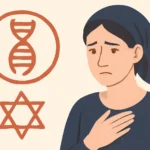
Jewish Inherited Diseases are a group of genetic conditions that occur more frequently in some Jewish populations due to historical population dynamics, founder mutations, and patterns of marriage within communities. This article explains the genetic risks that can be more pronounced in Jewish communities—particularly among Ashkenazi Jews—and how carrier screening has evolved to help individuals and couples understand and manage those risks. It also covers other Jewish populations, like Sephardi and Mizrahi communities, and discusses how carrier screening and genetic counseling fit into reproductive planning, medical care, and family decisions.
Overview of Jewish Genetic Risk and Founder Mutations
The elevated frequency of certain inherited diseases in some Jewish populations is often described through the lens of founder mutations and population history. A founder mutation is a genetic variant that originated in a small ancestral group and became common in descendants because of genetic drift, endogamy (marrying within a particular group), and population bottlenecks. Over centuries, these forces can concentrate specific variants in a community. In Ashkenazi Jews, several autosomal recessive disorders are well documented as having higher carrier frequencies than in the general population.
It is important to recognize that while some inherited diseases are more prevalent in certain Jewish groups, Jewish populations are diverse. Sephardi and Mizrahi communities have their own historical patterns and may carry different sets of variants. Genetics in Jewish communities is not uniform, and genetic screening programs now increasingly emphasize pan-ethnic coverage and individualized risk assessment based on ancestry, family history, and personal preferences.
A key point for readers is that not all Jewish people carry high-risk variants, and the presence of a carrier status does not guarantee that a person will develop a disease. It indicates that reproductive partners who are also carriers could have a child affected by an autosomal recessive condition. This is where carrier screening and genetic counseling become essential tools for informed decision-making.
Genetic Risk in Jewish Populations: Population History and Counseling
Founder Mutations and Population History
Founder mutations in Ashkenazi Jews are well-recognized in medical genetics. The combination of historical population size fluctuations, geographical separation, and social practices contributed to higher carrier frequencies for several serious conditions. When both parents are carriers for the same autosomal recessive disorder, there is a 25% chance with each pregnancy that the child will be affected, a 50% chance the child will be a carrier, and a 25% chance the child will be completely unaffected.
In modern medicine, recognizing these patterns has allowed clinicians and public health programs to design targeted screening strategies, especially for disorders with high carrier frequencies. It is also noteworthy that the landscape is changing as genetic testing becomes more comprehensive, more affordable, and capable of identifying a broader range of variants across diverse populations.
Autosomal Recessive Inheritance in This Context
Most of the well-known Jewish inherited diseases are inherited in an autosomal recessive fashion. This means:
People who carry one copy of the pathogenic variant are typically unaffected carriers.
Two carrier parents have a 25% risk with each pregnancy to have an affected child.
There is a 50% chance for a child to be an unaffected carrier.
There is a 25% chance for a child to be unaffected and not a carrier.
Carrier screening identifies individuals who carry one copy of a recessive variant and helps partners evaluate the risk to their offspring. In some cases, a couple where both partners are carriers may choose options such as genetic counseling, prenatal testing, or preimplantation genetic testing to reduce the likelihood that an affected child would be born.
The availability of carrier screening has shifted from a single-disease focus—famously Tay-Sachs disease in Ashkenazi Jews—to comprehensive, multi-disease panels that account for ancestry, family history, and personal values. Today’s screening often combines well-established founder mutations with broader sequencing approaches, enabling detection of additional variants that may contribute to disease risk. While Ashkenazi populations have the most well-characterized panels, many providers tailor panels to reflect ancestry-informed risk and the couple’s goals.
Common Inherited Diseases in Jewish Populations and Their Impact
Below are some of the most frequently discussed inherited conditions in Jewish communities. For each condition, you will find a concise profile including the gene involved, inheritance pattern, typical carrier frequency in Ashkenazi Jews when available, and what the disease looks like clinically. The goal is to provide an accessible landscape of risk and screening considerations.
Inheritance: autosomal recessive. Gene: HEXA, which encodes a subunit of the enzyme beta-hexosaminidase A. A deficiency leads to accumulation of GM2 ganglioside in nerve cells.
Carrier frequency: Among Ashkenazi Jews, approximately 1 in 27 are carriers, though estimates vary by study and population; general population frequencies are much lower.
Clinical features: onset in infancy with rapid neurodevelopmental decline, deafness, seizures, vision loss, and progressive motor weakness; death typically occurs by early childhood in untreated cases.
Screening impact: historically a driving force for carrier screening programs; early awareness dramatically reduced the incidence of Tay-Sachs among Ashkenazi Jews in many communities when screening and counseling were widely adopted.
Canavan disease (ASPA)
Inheritance: autosomal recessive. Gene: ASPA, encoding aspartoacylase which is critical for brain metabolism.
Carrier frequency: Higher in Ashkenazi Jews relative to the general population; exact figures vary, but screening programs emphasize Canavan as part of population-specific panels.
Clinical features: presents in infancy with rapid deterioration of motor and cognitive development, hypotonia, and seizures; typically severe neurodevelopmental impairment.
Gaucher disease type 1 (GBA)
Inheritance: autosomal recessive. Gene: GBA, encoding the enzyme glucocerebrosidase.
Carrier frequency: Ashkenazi Jews have an enriched carrier frequency compared with the general population; estimates commonly cited around 1 in 15 to 1 in 30, depending on the cohort.
Clinical features: a spectrum ranging from asymptomatic to organ enlargement (spleen, liver), anemia, bone pain, and fatigue; type 1 is non-neuropathic, and treatments such as enzyme replacement therapy are available.
Screening impact: Gaucher disease is frequently included in expanded Jewish carrier screening panels given its relatively high prevalence in Ashkenazi populations and the availability of treatment.
Carrier frequency: Enriched among certain Jewish subgroups, though overall numbers are lower than Tay-Sachs or Gaucher; still significant enough to merit inclusion in many panels.
Clinical features: type A presents in infancy with rapid neurodegeneration and early death; type B is typically less severe and may involve hepatosplenomegaly and respiratory issues.
Familial dysautonomia (IKBKAP)
Inheritance: autosomal recessive. Gene: IKBKAP, which is involved in the development and function of the autonomic nervous system.
Carrier frequency: One of the most prominent autosomal recessive disorders in Ashkenazi Jews; carrier frequencies commonly cited around 1 in 30 to 1 in 32 in some communities.
Clinical features: dysautonomia with impaired sensation, abnormal blood pressure and heart rate regulation, digestive issues, and feeding challenges; clinical features can vary widely by individual.
Screening impact: FD is a central component of many Ashkenazi Jewish carrier panels due to its relatively high carrier rate and well-characterized mutation spectrum.
Inheritance: autosomal recessive. Gene: BLM, encoding a helicase important for DNA repair.
Carrier frequency: Enriched in some Jewish populations, though it remains a relatively rare disorder overall; it is one of the classical “founder” conditions associated with Ashkenazi Jewish ancestry.
Clinical features: growth delay, sun-sensitive telangiectatic erythema, immunodeficiency, and high cancer risk later in life; management requires multidisciplinary care and cancer surveillance.
Cystic fibrosis (CFTR) in Ashkenazi Jews
Inheritance: autosomal recessive. Gene: CFTR, which encodes a chloride channel; mutations cause thick mucus and multi-organ disease.
Carrier frequency: In Ashkenazi Jews, as in many populations, the carrier rate is higher than in the general population but may vary by specific variant panels; CF is now part of many universal or ancestry-informed screening panels.
Clinical features: chronic lung disease, pancreatic insufficiency, and male infertility in some cases; with modern therapies, outcomes have improved substantially.
BRCA1/BRCA2 founder mutations and Jewish cancer risk
Inheritance: autosomal dominant with high-penetrance risk for certain cancers. Genes: BRCA1 and BRCA2, which play critical roles in DNA repair.
Founder mutations: The Ashkenazi Jewish population has three well-known founder mutations in BRCA1/BRCA2 (e.g., BRCA1 and BRCA2 variants that are more common in this group).
Clinical impact: Increased lifetime risk for breast and ovarian cancer in women, elevated risk for breast, prostate, and other cancers in men and women; risk levels can guide enhanced surveillance and preventive options.
Screening impact: Population-specific carrier and diagnostic testing for BRCA1/BRCA2 variants is widely available and widely used in both preconception and ongoing care; genetic counseling is essential for interpretation and management.
Carrier Screening: Practices, Benefits, and Limitations
Carrier screening provides information about whether an individual carries one copy of a pathogenic variant associated with a recessive disorder. When both partners are carriers of the same condition, they may face a risk of having an affected child. Modern screening programs aim to be comprehensive yet personalized, balancing robust risk assessment with respectful patient autonomy.
What is carrier screening?
Carrier screening is a voluntary test offered to individuals or couples, often before pregnancy or in early pregnancy. The test identifies carriers of specific genetic variants and can guide decision-making about reproductive options. In Jewish communities, ancestry-informed panels historically focused on Ashkenazi founder mutations, but many programs now use broader panels that include additional conditions and can be customized for Sephardi, Mizrahi, and other ancestries.
Who should consider screening?
People planning a pregnancy, whether or not they have a known family history of disease.
Couples who want to understand their risk before conception or early in pregnancy.
Individuals seeking information for genetic counseling, regardless of ancestry, given rising pan-ethnic testing options.
People with a family history of a recessive disorder or a prior child with a genetic condition.
What kinds of tests are used?
Panel testing: A set of common pathogenic variants known to occur in a particular population or across populations (founder panels for Ashkenazi Jews, expanded panels for diverse groups).
Targeted sequencing: Zooms in on genes associated with specific diseases; can detect known variants and some novel ones.
Whole-exome sequencing (WES) or whole-genome sequencing (WGS): Broader approaches that can identify a wide range of variants, with more complex interpretation and counseling needs.
Interpreting results and next steps
Positive carrier result: Indicates a risk to have an affected child if the partner is also a carrier for the same condition. Genetic counseling helps interpret risk and discuss options.
Negative result: Reduces risk relative to the general population but does not eliminate all risk—especially if screening did not cover all possible variants or if the partner’s status is unknown.
Variants of uncertain significance (VUS): Additional testing or functional studies may be needed to determine clinical impact.
Reproductive options after a positive carrier result
Preconception genetic counseling to understand risks and options before pregnancy.
Prenatal diagnosis via amniocentesis or chorionic villus sampling (CVS) to determine whether the fetus has inherited the disease.
Preimplantation genetic testing (PGT-M) with in vitro fertilization (IVF) to select embryos without disease-causing variants.
Donor gametes or adoption as alternative paths in some cases.
Ethical, social, and cultural considerations
Carrier screening touches on sensitive topics such as reproductive choices, privacy, and potential stigma. Genetic counseling provides a non-directive, supportive framework to discuss values, beliefs, and risk tolerance. Community programs often include education, counseling resources, and language accessibility to help people make informed decisions aligned with their families’ goals.
Living with and Preventing Inherited Diseases in Jewish Communities
Beyond screening, there are practical avenues to reduce disease burden and improve outcomes. These include newborn screening where available, early medical interventions, and access to therapies for treatable conditions (for example, enzyme replacement therapy for Gaucher disease, or disease-modifying approaches for other metabolic disorders). Public health efforts also emphasize education about family planning, reproductive options, and the availability of genetic counseling services.
Families considering testing should seek genetic counseling from qualified professionals who can explain the meaning of results, outline available options, and help interpret risk in the context of a couple’s unique ancestry and family history. In many regions, healthcare systems have integrated carrier screening into routine care, making it easier for people to access information and services early in life.
For communities with a strong cultural emphasis on family, there is growing collaboration among physicians, genetic counselors, community leaders, and patient advocacy groups to provide accessible information and reduce barriers to care.
Ethical and Cultural Considerations in Carrier Screening
Carrier screening intersects with ethical questions about autonomy, informed consent, and equitable access to testing. Some people value testing as a way to honor family planning goals, while others worry about potential discrimination, privacy concerns, or potential anxiety about results. High-quality genetic counseling helps address these concerns by providing clear information about what the results mean and how they may influence decisions about pregnancy, medical care, and family planning.
Cultural sensitivity is essential when discussing inherited diseases in Jewish communities and beyond. Providers should respect beliefs about reproduction, health, and disability while ensuring that patients understand the medical facts and the practical options available to them.
Conclusion
Jewish inherited diseases and the associated genetic risks represent an area where history, science, and personal choice converge. For many families, carrier screening—especially when informed by ancestry, family history, and personal values—offers a powerful tool to understand risk, plan for the future, and access timely medical care if needed. While some conditions are enriched in Ashkenazi Jewish populations, the field has evolved toward broader, more inclusive screening strategies that serve diverse communities, including Sephardi and Mizrahi populations.
If you are considering carrier screening or want to understand your family’s genetic risk, the best next step is to speak with a qualified genetic counselor or a physician who specializes in medical genetics. They can help interpret the results of specific panels, explain available reproductive options, and connect you with support and resources tailored to your ancestry, family history, and personal goals.
While this article emphasizes well-documented diseases and traditional screening approaches, advances in genomics continue to broaden our understanding of inherited conditions in Jewish populations and across the world. Staying informed, seeking guidance, and engaging in proactive planning can empower individuals and families to make decisions that align with their values and enhance health outcomes for future generations.