Hebrew Wordle is a cultural and linguistic twist on the popular word-guessing game, adapted for the Hebrew alphabet and reading direction. Like its English counterpart, Hebrew Wordle challenges players to guess a secret five-letter word within six tries. But because Hebrew uses a rich morphology, root patterns, and a script that is read from right to left, the game introduces unique puzzles and learning opportunities. In this article, we’ll explore expert tips, strategies, and common traps across several variants of Hebrew Wordle—including those that use standard 22-letter Hebrew plus the occasional final-form letters, and those that omit niqqud (vowel points) altogether.
Different flavors of Hebrew Wordle
The community around Hebrew Wordle has produced several variations that differ in word lists, allowed letters, and display conventions. Some notable flavors include:
Hebrew Wordle (classic): A straightforward 5-letter Hebrew word with the standard consonant letters. Final-form letters may or may not be treated distinctly depending on the platform.
Alefbet Wordle or Alef-Wordle: Emphasizes the Hebrew alphabet as a learning tool, sometimes including rare or loanword terms.
Root-based Hebrew Wordle: This variant highlights common roots (ד-כ-ת, פ-ע-ל patterns, etc.) and tends to reward users who recognize morphology.
Niqqud-free Wordle: The most common form, where vowel points are not shown; players rely on consonant patterns and context to deduce the word.
Final-forms aware Wordle: Some platforms treat the five final-letter shapes (ך, ם, ן, ף, ץ) as distinct from their non-final partners, which affects strategy and letter frequency.
Regardless of the version you play, the underlying skills overlap: vocabulary breadth, pattern recognition, and a systematic approach to elimination. You’ll see terms like root patterns, letter frequency, and word families recur in expert discussions about Hebrew Wordle.
Hebrew basics you’ll want to know before you play
Hebrew letters and their quirks
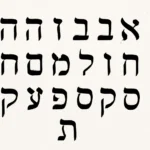
The Hebrew alphabet contains 22 basic letters. In practice, five of these letters have final forms (used when the letter appears at the end of a word):
כ/ך, ך? (Kaf), מ/ם (Mem), נ/ן (Nun), פ/ף (Pe), and צ/ץ (Tsadi). In some Wordle variants, these final glyphs count as distinct characters; in others, they are treated as the same letter in non-final positions. This distinction can influence which guesses are optimal in a single game session.
Common consonants you’ll see in five-letter Hebrew words include ל (Lamed), מ (Mem), ב (Bet), י (Yod), ש (Shin), ו (Vav), ה (Hey), כ/ך (Kaf), פ/ף (Pe), צ/ץ (Tsadi), ר (Resh), ת (Tav).
Because Hebrew is often written with final forms, you may encounter end-of-word glyphs that differ from their non-final forms. The practical takeaway: adapt your guesses to the platform’s letter mapping, and don’t assume two visually similar glyphs are the same letter on all versions.
Reading direction and input
Hebrew Wordle is usually presented with the standard right-to-left script, but the puzzle grid is a fixed 5-letter sequence per row. Input methods vary by device. On desktop, you’ll type with a Hebrew keyboard or use an on-screen input; on mobile, you’ll switch your keyboard to Hebrew. A common pitfall is mismatched keyboard layout or a left-to-right input mode that confuses letter order. Always verify your input direction before making a guess.
When vowels matter (and when they don’t)
In many Hebrew word games, niqqud (vowel points) are omitted. This mirrors how Hebrew is typically written in everyday use, where vowels are inferred from context and morphology. In some variants, especially educational ones, vowel points may be included to aid learning. If you’re playing a niqqud-free version, you’ll rely on consonant patterns and common five-letter roots, rather than vowel hints.
Starting strong: seed words and early-letter strategy
A sound starting strategy is the foundation of success in Hebrew Wordle. Because Hebrew words are built from roots and patterns, you can design a set of seed guesses that maximize information gained from every elimination. Here are practical approaches.
Coverage of common consonants: Choose words that include letters with high-frequency occurrence in Hebrew vocabulary, such as ל, מ, ס/ס (samekh or sin/ mem depending on keyboard), י, ה, ר, ת, ש.
Root-awareness: Include a seed that hints at common morphological families, for example words built from the roots כתב (to write), הלך (to walk), or צ-מ-ל families. This helps you detect whether the root appears in the target word.
Final-form awareness: If your version treats final letters as distinct, include guesses that use both a non-final and a final form of high-frequency letters when possible.
Pattern probing: Try sequences common in Hebrew noun or verb templates. For five-letter targets, you’ll often see patterns like CVCVC (consonant-vowel-consonant-vowel-consonant in transliteration terms), but in real Hebrew this translates to consonant-vowel-consonant-consonant-consonant or other morphological shapes. A seed that probes multiple positions for vowels and syllable shapes can reduce ambiguity quickly.
Example seed set (illustrative, not exhaustive): ילדים (children), ספרים (books), לבנים (white as an adjective plural form), מדפים (shelves; includes final forms), מטרה (goal; sometimes used as a root-matching hint). Note that the exact five-letter composition depends on the version’s allowed vocabulary and whether final letters are counted as separate glyphs.
Practical seed heuristics
Start with letters that frequently appear in everyday Hebrew words, such as ל, מ, ת, ה, ש, ר.
Include a vowel-consonant mix when the interface implicitly reveals patterns (even without vowels, the positional information can reveal a lot).
Use a consistent rotation among several seed words across games to build intuition about which letters cluster around common roots.
Patterns, roots, and morphology: how Hebrew Wordle rewards knowledge of Hebrew
Hebrew words are often built from roots (usually three consonants) and a system of patterns (binyanim) that add prefixes, suffixes, or vowel vowels to convey tense, voice, and meaning. A skilled Wordle player can leverage this structure to narrow down the possibilities quickly.
When you see two letters from a suspected root appear in the correct spots, it’s a strong signal that the root is present in the target word. For example, if you see the letters כ and ת in positions that align with common verb patterns, you might deduce a related form in later guesses.
Recognize common three-letter roots such as כתב (to write), הלך (to walk/go), ראה (to see), and how they morph into five-letter words with prefixes, suffixes, or infixes. Even if you don’t know the exact word yet, spotting a root fragment helps constrain word families.
Word families and suffix patterns
Suffixes can dramatically alter word meaning and part of speech in Hebrew. A suffix like -ים (-im) often marks plural masculine nouns, or a suffix like -ה (-ah) marks feminine nouns or abstract nouns. Knowing these patterns helps you guess which endings are plausible given the first four letters you’ve discovered.
When you detect a likely root, consider related words that share that root’s consonants but differ in patterns. For example, from a partial root you might infer related nouns or verbs with similar consonants.
Niqqud, vowels, and practical play
The presence or absence of vowels changes the difficulty of Hebrew Wordle dramatically. In niqqud-free versions, you’ll rely on the consonantal skeleton and your vocabulary breadth. In vowel-inclusive variants, you can use more precise matching to common vocalization patterns.
Vowel strategies in vowel-rich variants
Treat vowels as supplementary information you can use after you narrow down the consonant pattern. If a variant reveals a vowel hint, prioritize guesses that align with typical Hebrew syllables: CV-CV-C (for certain roots) or C-CV-C-CVC shapes, depending on the word’s morphological class.
Be wary of overfitting to a single vowel pattern early in the game. Hebrew has a rich variety of vowelization; a single vowel guess can mislead you if the word belongs to a different conjugation or noun form.
Word lists and learning resources
The availability and scope of Hebrew word lists vary by platform. Some Wordle clones lean on curated Hebrew lexicons used in Hebrew language learning apps, while others use broader dictionaries that include loanwords. When you’re preparing to play or teaching others, consider these sources:
Academic lexicons that focus on modern Hebrew vocabulary and common roots.
News and media corpora to expose yourself to current terms and everyday usage.
Root-based word lists that organize words by three-letter roots to help you practice pattern recognition.
Community-maintained lists for each variant you enjoy. These lists may update as new words enter common use or become popular in games.
Step-by-step play guide: a practical workflow for Hebrew Wordle
Step 1: establish your initial frame
Your first guess should be chosen to maximize information about both the presence of high-frequency letters and the potential root skeleton. A typical approach is to select a seed word that contains a mix of consonants with high frequency, a plausible five-letter structure, and a blend of common letters. If you’re unsure whether final-form letters count as distinct glyphs on your platform, start with a seed that avoids ambiguous final letters in the initial guess and adapt if your platform uses them distinctly.
Step 2: interpret feedback and refine
After you submit a guess, you’ll receive feedback for each letter—whether it is in the correct place, exists in the word but in a different place, or does not appear at all (the exact terminology varies by platform). Use this to:
Preserve letters that were marked correct in position and test their repeatability in other positions if the game allows multiple occurrences.
Eliminate letters that have been marked absent, unless you suspect the platform’s feedback might treat final forms as distinct letters (a rare nuance that some versions expose).
Consider root-building: if you identify a subset of letters that align with a known root, gently steer subsequent guesses toward related patterns or affixes.
Step 3: expand with a second and third guess
Use a second and third guess to probe additional letters that can reveal the root or word-family. A good tactic is to:
Include at least one letter not yet tested that commonly appears in Hebrew words to confirm or deny its presence.
Keep the guess lexically plausible in Hebrew; avoid ultra-rare terms in early rounds unless you’re confident they fit the feedback.
Consider morphology: if you’ve confirmed a root fragment, look for common affixes or simple verb/noun patterns that fit five letters.
Step 4: finalize with a confident seventh move
By the fourth or fifth guess, you should have a strong sense of the word’s skeleton. If you’re close but not certain, use a final guillotine guess that tests a narrowly plausible set of remaining letters. In many games, the path from “almost there” to “solution” hinges on recognizing a familiar word family rather than random letter chases.
Tricks and advanced tactics for speed and accuracy
For seasoned players, a few deliberate tricks can shave seconds off your solving time and increase your win rate.
Trick 1: leverage high-frequency letters first
Prioritize seeds that include letters with a strong presence in modern Hebrew, especially in everyday vocabulary. This often yields early feedback you can exploit in subsequent guesses.
Trick 2: think in roots, not just letters
Use linguistic intuition to group words by potential roots. If two letters appear in multiple positions across guesses, think about which two or three-letter roots could create five-letter words that fit the pattern.
Trick 3: monitor end-position patterns
Final-letter tendencies can reveal whether the word ends with a common suffix or noun-forming pattern. If you notice a plausible ending such as a feminine plural suffix or a common noun ending, adjust for that in your next guesses.
Trick 4: exploit platform quirks
Some Hebrew Wordle variants unify final forms with their non-final counterparts. Others treat them as distinct. If you’re unsure, test both possibilities in safe, early guesses and observe how the feedback marks the letters.
Common pitfalls and how to avoid them
Even experienced players hit stumbling blocks. Being aware of common mistakes will keep you from wasting guesses.
Overcommitting to a single letter: Don’t assume a letter is absent just because it didn’t appear in your first guess. It may appear in other positions or as a final form.
Ignoring word plausibility: It’s tempting to guess a string of rare letters, but five-letter words in Hebrew tend to come from recognizable roots or common roots families. Prioritize plausible words over exotic letter combos in early rounds.
Forgetting right-to-left alignment: If the platform shows an unusual letter order, re-check your input method or the system’s display rules. Small misalignments waste guesses you could have used to extract information.
Assuming vowels are always visible: If you play niqqud-free versions, don’t expect vowel hints. Instead, rely on consonant skeletons and your knowledge of Hebrew morphology.
Examples and practice scenarios
To help you see these principles in action, here are two hypothetical practice scenarios that illustrate how expert play unfolds. Note that the words themselves are illustrative; your actual game will present different targets.
Example A: Seed and elimination loop
Seed guess: ספרים (books). This word covers a spread of consonants and ends with a final mem, which may yield useful feedback on whether final forms are treated distinctly on your platform.
Feedback: Letters ס, פ, and ר light up in positions 1, 3, and 4, respectively, with some greens and yellows indicating additional presence in other positions; others are gray.
Next guesses: Use the feedback to test roots or affixes; for example, a word like משרדים would be too long, but a five-letter related unit such as משרד (office) could be used if the platform accepts it; otherwise, try a plausible five-letter variant that includes the confirmed letters while exploring others.
Outcome: You narrow down to a subset of roots and end up solving within the allowed guesses by leveraging the discovered pattern and root family.
Example B: Root-based deduction
Seed guess: כתב is only two or three letters, so you might pick a full five-letter word built on a related root, like כותב (writer) if your platform supports it as a five-letter word.
Feedback: You learn that the letters in positions 1 and 2 align with the root fragment אבל you don’t have the full root yet.
Next moves: Test other letters associated with the root family and look for a familiar pattern that could produce a common noun or verb form in five letters.
Outcome: By leveraging root patterns and a methodical elimination approach, you identify the correct word with minimal guesswork.
Accessibility and inclusive play
Hebrew Wordle should be accessible to a broad audience, including learners who are new to the language and speakers who use assistive technologies. Here are some guidelines to keep in mind:
Clear font rendering: Platforms should render Hebrew letters without distortion, ensuring that final forms and normal forms are unambiguous.
Keyboard support: A smooth, reliable Hebrew keyboard input is essential. If you’re designing a Hebrew Wordle experience, test with multiple input methods and devices to guarantee consistent behavior.
RTL considerations: Right-to-left layout should be respected in both the grid and the input area, and accessibility tools should announce letter positions in a way that makes sense for Hebrew readers.
Community, learning, and contribution
The Hebrew Wordle community is a vibrant space where learners and native speakers share strategies, seed word ideas, and curated word lists. Whether you’re a teacher building classroom activities or a player seeking to improve, consider these avenues:
Discussion forums where players compare seed lists and root-based strategies.
Word lists contributed by the community that reflect modern Hebrew usage and common roots.
Variant experiments and explanations of how different platforms treat final-form letters and niqqud visibility.
Guides that map Hebrew Wordle strategies to language learning goals, such as expanding vocabulary or reinforcing root awareness for students studying Hebrew as a second language.
If you’re learning Hebrew or teaching it through word games, Hebrew Wordle can be a highly effective supplement. Here are practical tips to maximize educational value.
For learners
Build a personal seed word bank of five-letter Hebrew words that you encounter in daily life, such as ילדים (children), ספרים (books), ביתים (houses) though actual five-letter forms may vary by root and platform; tailor your seeds to the vocabulary that your region or curriculum emphasizes.
Track which letters tend to appear in your region’s Hebrew vocabulary and adjust your seeds to those letters.
Practice morphological awareness: if you notice certain beginnings or endings repeatedly appearing in your wins, note them as potential suffixes or prefixes in Hebrew.
For teachers
Use Hebrew Wordle as a formative assessment to gauge students’ familiarity with roots and patterns beyond rote memorization.
Pair play with vocabulary journals: after a game, have students record the root they inferred, the affixes they considered, and a short sentence using the word in context.
Provide parallel Wordle sessions in English and Hebrew to contrast letter frequency and root-based thinking across languages.
Putting it all together: a mental model for Hebrew Wordle
At its heart, Hebrew Wordle is a puzzle about letters, roots, and patterns. A robust mental model for approaching it includes:
Letter inventory: Be aware of which letters are most common and which ones pose pronunciation or transliteration challenges.
Root recognition: Always consider the possibility that two or three letters you’ve found are part of a familiar root family.
Pattern matching: Translate morphological patterns into five-letter word shapes that you can test with calculated guesses.
Adaptability: Be ready to adjust your strategy when a particular platform treats final-letter forms differently or when niqqud is shown or hidden.
Final tips and encouragement
Whether you’re chasing a high score or simply enjoying a linguistic exercise, Hebrew Wordle offers a rich, culturally immersive way to engage with the Hebrew language. The more you practice, the quicker you’ll become at spotting roots, prefixes, and common endings. Remember:
Consistency beats sheer luck: a regular practice routine helps you notice letter-frequency patterns and root families more quickly.
Engagement with authentic Hebrew terms expands your vocabulary beyond the five-letter constraint.
Enjoy the journey: every solved puzzle is a small victory for language learning and cognitive flexibility.
Appendix: sample five-letter Hebrew word candidates
Here are some representative five-letter Hebrew words that illustrate the kinds of targets you might encounter (note that spellings reflect typical modern usage; exact five-letter status can vary by version):
ילדים — children
ספרים — books
משרדים (if five-letter form is accepted locally) — offices
מטרות — goals
לבנים — white (plural or masculine form, depending on context)
If you’d like to see more examples tailored to a specific Hebrew dialect (Biblical, Modern Hebrew, or educational variants with or without niqqud), you can experiment with root families and common suffixed forms. The beauty of Hebrew Wordle is in how it blends linguistic theory with playful deduction.
Closing thoughts
Hebrew Wordle is more than a game; it’s a gateway to a language’s structure and a playful way to reinforce vocabulary and root recognition. By combining thoughtful seed words, morphological awareness, and careful interpretation of feedback, you can improve your speed, accuracy, and overall enjoyment of the puzzle. Whether you’re a beginner exploring Hebrew for the first time or a fluent speaker sharpening your intuition, the techniques outlined here will help you approach Hebrew Wordle with confidence and strategy.