Learning Hebrew is a common goal for language learners around the world. The question “is learning Hebrew hard?” is asked by many who are curious about the journey from basics to fluency. The short answer is nuanced: it can be challenging in some ways and very rewarding in others. The language has distinctive features—an unfamiliar script, a root-based system, gendered nouns, and a strong connection to culture—that can feel daunting at first. Yet with the right approach, steady practice, and clear goals, Hebrew becomes approachable, even enjoyable. In this article, we explore why some learners find Hebrew hard, what makes Hebrew different from many other languages, and—most importantly—practical tips and strategies that help beginners build competence efficiently. We’ll also use variations of the phrase “is learning Hebrew hard” to reflect common questions and concerns learners bring to their studies.
People often ask how hard is Hebrew or whether Hebrew is hard to learn for several reasons. First, the script is non-Latin and is written from right to left, which requires a period of acclimatization. Second, Hebrew has a rich system of roots and patterns that determine verb forms and many nouns, which can feel like deciphering a code at first. Third, Hebrew features grammatical gender, determiner agreement, and a variety of verb stems (binyanim) that convey subtle shades of meaning. Finally, the distinction between Modern Hebrew and Biblical or liturgical forms can make learners wonder is learning Hebrew hard because of vocabulary range or different registers.
Despite these hurdles, countless learners discover that the core ideas are learnable and that the language offers a clear path from beginner to functional use. The key is to break the question into manageable parts: learning the script, understanding basic grammar, acquiring essential vocabulary, practicing listening and speaking, and gradually exposing yourself to authentic materials. Below we break down the main aspects that influence how hard or easy the journey might feel.
The Hebrew alphabet and orthography
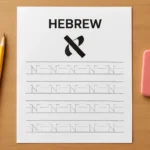
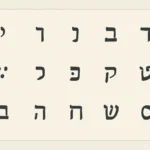
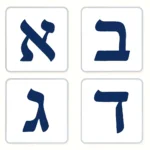
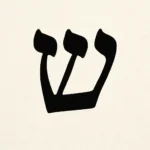
One of the first things people notice when they ask “is learning Hebrew hard” is the script. Hebrew uses a distinct alphabet of 22 consonants, with optional diacritical marks called niqqud to indicate vowels. In everyday Modern Hebrew, many students read with vowel omission and rely on context, which can initially feel strange for learners used to fully vocalized text.
The letters and basic reading
Consonants are the backbone of reading. Once you memorize the shapes, most letters have consistent pronunciations.
Vowels are often implied by context, but a beginner will benefit from learning common vowel patterns and niqqud for beginner texts.
There are five letters with unique pronunciations (e.g., ח “chet” and צ “tzadi”) that may require extra practice for non-native speakers.
Another practical consideration is how to approach reading. Some learners prefer to start with Modern Hebrew materials that include diacritics, while others jump straight into unvocalized text and rely on context. Either approach is valid; the choice often depends on your goals. If your aim is conversational fluency and listening comprehension, you may progress rapidly even with minimal emphasis on perfect reading accuracy. If you want to read newspapers or literature, a more deliberate study of vowels and word forms becomes important.
Key differences between script and sound
The right-to-left orientation affects typing, handwriting, and page layout, but it becomes natural with practice.
Some letters have similar shapes (for example, ב, כ/ך, מ, נ) and can be confusing at first; mindful study and consistent handwriting practice help.
Vowel marks (niqquot) are not always used in modern texts, but they’re essential for beginners and for learners reading unfamiliar words.
Grammar and structure: the root-and-pattern system
A common part of the question “is Hebrew hard to learn” revolves around grammar. Hebrew grammar includes patterns that derive related words from a single root (typically three consonants). This root-and-pattern morphology yields systematic relationships among verbs, nouns, and adjectives, which can feel alien at first but becomes powerful as you learn to recognize it.
Roots, patterns, and verb stems
Root-based vocabulary means you can deduce meanings of unfamiliar words by recognizing the root and the pattern. For example, the root ש-מ-ר relates to guarding or keeping in different words.
Verb stems (binyanim) convey nuances such as completed actions, habitual actions, causation, reflexivity, and more. Beginners usually start with a small set (e.g., Kal, Pa’el, Niphal) and expand gradually.
Gendered nouns and adjective agreement require matching gender and number with the noun. This is a new organizational rule for many learners but becomes automatic with practice.
While this structure might feel complex initially, it also provides a clear framework for acquiring vocabulary. Instead of memorizing thousands of unrelated words, you learn families of words that share the same roots and patterns. This can greatly accelerate progress over time, which is why many learners find that the initial phase of grammar-heavy effort pays off later with greater retention and versatility.
Pronunciation and listening comprehension are essential for real-world communication. For some learners, the question “is Hebrew hard to pronounce?” is central. Hebrew phonology is relatively compact, but there are sounds that don’t exist in English and require practice.
Sound inventory and practice tips
Consonants like ח (chet) and ה (hey) have throaty or breathy qualities that take time to master. Listening to native speech and repeating after it helps.
Vowel patterns vary by context, and in spontaneous speech vowels are often reduced or omitted. Start with clear, coached pronunciation, then gradually expose yourself to natural speech.
Intonation and rhythm in Modern Hebrew differ from English in some phrases and sentence types, such as questions and polite forms. Practice with short dialogues to internalize rhythm.
Consistent practice with listening materials—podcasts, short videos, news clips, and conversations—will improve comprehension more quickly than passive reading alone. Many learners report that their pronunciation improves notably after a few months of guided practice and feedback from a tutor or language partner.
Vocabulary: building a usable lexicon
Vocabulary is often the area where learners worry about hardness of Hebrew vocabulary. Hebrew vocabulary is not vastly larger than that of many other languages, but the roots-and-patterns system means you’ll see related words climbing quickly as you learn. The goal is practical fluency: enough words to express daily needs, interests, and basic conversations—then expansion over time.
Strategies for efficient vocabulary growth
Frequency-based vocab: focus on the most common words first (salutations, numbers, days, essential verbs, common adjectives).
Root-based learning: when you learn a new noun or verb, check its root to unlock related words and phrases.
Theme-based learning: group words around topics (grocery shopping, travel, talking about weather) to create contextual memory networks.
Spaced repetition (SRS) with flashcards can dramatically improve retention. Tools like Anki or similar apps help you review efficiently.
Active usage: try to form short sentences or dialogues using new words to solidify recall.
Be aware that some Hebrew terms have multiple meanings based on context (polysemy). This is normal in any language, but it’s helpful to learn the usual collocations and typical contexts for each word during early learning phases.
Modern Hebrew vs Biblical/liturgical Hebrew
If you’re pondering which form of Hebrew to study, you’re not alone. The two major varieties—Modern Hebrew (the language spoken in Israel today) and Biblical/Liturgical Hebrew (the language of the Hebrew Bible and Jewish prayer)—share a common script and many roots, but differ in vocabulary, syntax, and usage.
Choosing a focus
Modern Hebrew is practical for daily communication, travel, media, and work. It tends to have more straightforward verb forms for contemporary speech and emphasizes current culture and technology vocabulary.
Biblical Hebrew provides access to religious texts and historical studies, with different verb stems and vocabulary that can feel archaic but is incredibly rewarding for scholars and engaged readers.
Some learners combine both, starting with Modern Hebrew to gain quick communicative competence and then exploring Biblical or liturgical registers as a specialization.
Regardless of your path, remember that you do not have to master every register at once. A practical plan is to begin with Modern Hebrew for day-to-day communication, then add Biblical Hebrew only if your goals require it. This approach helps manage the perceived difficulty and keeps motivation high.
Is learning Hebrew hard for English speakers?
Many English speakers wonder “is learning Hebrew hard for me?” because English and Hebrew belong to different language families and have distinct grammatical features. Some learners report that the gender system, verb stems, and right-to-left script present more initial friction than learning a language with a Latin alphabet. Others find that the language’s logical structure and regular rules make it ultimately very learnable.
Key considerations for learners from English-speaking backgrounds
Alphabet is new but learnable quickly, especially with consistent practice in the first few weeks.
Phonology contains several sounds not present in English; with focused practice, these are usually mastered in months rather than years.
Grammar includes gender, agreement, and verb patterns that require deliberate practice, but many learners appreciate the logical system once the patterns click.
Vocabulary can be built efficiently with root-based learning and regular exposure to spoken Hebrew.
Overall, the question “is Hebrew hard to learn as a second language?” often depends on motivation, study habits, and access to a supportive learning environment. A well-structured plan and regular practice dramatically reduce the perceived difficulty.
Practical tips for beginners: turning difficulty into progress
Now the most helpful part: actionable strategies. The core question “how to learn Hebrew effectively if it feels hard?” has practical answers. Below is a curated set of steps and recommendations designed to help beginners progress steadily and confidently.
1. Start with clear goals and a realistic plan
Define your purpose: travel, work, study, or religious study. Having clear goals helps you choose the right materials and pace.
Set a realistic schedule. For example, 20–30 minutes a day, five days a week, yields steady gains without burnout.
Decide on a target level (e.g., able to hold a basic conversation in six months) and outline milestones (survival phrases, basic grammar, vocabulary lists).
2. Build a solid foundation: alphabet, sounds, and basic phrases
Master the Hebrew alphabet and right-to-left writing orientation early. Practice both handwriting and typing to build muscle memory.
Learn essential phrases for greetings, introductions, asking for help, ordering food, and asking for directions.
Practice pronunciation with short dialogues, then record yourself to compare with native speech.
3. Use a balanced mix of input and output
Listening: podcasts, news clips, and short videos in Modern Hebrew.
Reading: graded readers or news articles with helpful glosses or translations.
Speaking: language exchanges, tutors, or speaking prompts to produce output regularly.
Writing: short diary entries or captioning photos to consolidate new vocabulary.
4. Leverage the root-based approach for vocabulary
When you learn a new verb, look for related nouns and adjectives derived from the same root.
Create a small “family” of words around each root and practice using them in phrases.
Track patterns that recur across words to build a mental map of word formation.
5. Practice with spaced repetition and context
Use a spaced repetition system (SRS) to review vocabulary at optimally spaced intervals.
Incorporate contextual learning by studying phrases rather than isolated words when possible.
6. Embrace immersion in manageable ways
Label objects around your home with Hebrew names to create daily exposure.
Watch short Hebrew videos with subtitles, then gradually reduce reliance on subtitles as your understanding grows.
Read simple Hebrew news or social media posts to connect language with current events and culture.
7. Use structured courses and quality resources
Choose modern, learner-friendly materials focused on Modern Hebrew first, then expand into other registers as needed.
Consider a mix of self-study resources and interactive practice with tutors or language partners for feedback and correction.
Be wary of overloading with too many resources at once—consistency matters more than volume.
A practical study plan: example 12-week framework
The following is a sample plan designed for someone starting from scratch and aiming for basic conversational ability. Adjust the pace if you have more time or a tighter schedule.
Weeks 1–2: foundations
Learn the Hebrew alphabet (print and script variants) and basic vowel patterns.
Memorize 50 core words (greetings, numbers, essential verbs, pronouns).
Practice simple phrases for self-introductions and daily routines.
Weeks 3–5: basic grammar and everyday topics
Introduce basic pronouns, common verbs in present tense, and simple sentence structure (subject–verb–object).n
Study gender agreement with a small set of nouns and adjectives.
Build vocabulary around common topics: food, family, travel, and daily activities.
Weeks 6–8: listening and speaking emphasis
Increase listening practice with short dialogues and beginner news clips.
Start a weekly language exchange or tutoring session to build speaking confidence.
Learn about basic verb stems and patterns in a limited scope (e.g., Kal and Pa’el forms).
Weeks 9–12: application and expansion
Read short, graded passages with moderate vocabulary support.
Expand vocabulary to 400–600 words through thematic lists.
Engage in longer conversations on familiar topics, such as hobbies or travel plans.
At the end of this plan, you should be able to handle routine conversations, understand common prompts, and continue with targeted study in the areas you find most engaging. The exact numbers aren’t as important as consistency and practical usage.
Resources and tools: what to use and how to use them
Choosing the right resources can make the difference between a frustrating slog and steady progress. Below are categories of tools commonly recommended by learners and teachers.
Textbooks and courses
Beginner courses that emphasize Modern Hebrew and practical language use.
Beginner-friendly textbooks that explain grammar in approachable steps and provide graded exercises.
Workbooks that reinforce reading, writing, and basic composition.
Apps and digital tools
Flashcard apps with spaced repetition for vocabulary retention.
Typing and handwriting practice tools to strengthen fluency in the script.
Pronunciation apps or modules that offer phonetic feedback.
Listening and reading media
Podcasts and radio programs in Modern Hebrew.
News outlets, YouTube channels, and short films in Hebrew with captions or transcripts.
Graded readers designed for beginners to gradually increase reading difficulty.
Language communities and tutoring
Language exchange partners for real conversation practice.
Qualified tutors offering feedback on pronunciation, grammar, and comprehension.
Online communities where learners share tips, resources, and progress updates.
To maximize effectiveness, combine several resources in a cohesive plan. For example, pair a grammar-focused textbook with daily vocabulary practice via SRS and 15 minutes of listening to a Hebrew podcast. The key is to maintain balance between input (listening/reading) and output (speaking/writing).
Common mistakes to avoid and how to fix them
No learner proceeds perfectly from day one. Being aware of common pitfalls helps you adjust course quickly and stay motivated. Here are frequent missteps and practical fixes.
Pitfall: trying to memorize too much before using it
Fix: focus on functional phrases first, then gradually expand vocabulary around topics you use daily.
Pitfall: neglecting pronunciation until later
Fix: incorporate targeted pronunciation practice from the start; even short daily sessions yield results over time.
Pitfall: ignoring listening practice in favor of reading
Fix: schedule regular listening sessions once or twice a week; comprehension improves faster when you hear language in context.
Pitfall: trying to translate word-for-word
Fix: learn phrases and usage, not just individual words. Focus on meaning and function in context.
Pitfall: skipping feedback opportunities
Fix: seek feedback from tutors or native speakers, even if it’s brief. Honest correction accelerates learning.
How to track progress and maintain motivation
Keeping motivation high is essential for long-term success. Here are strategies to monitor progress and maintain momentum.
Set measurable milestones (e.g., “order in Hebrew at a cafe without English” or “hold a 5-minute conversation about weather”).
Record brief monthly reflections on what’s working and what isn’t, then adjust your plan accordingly.
Use a portfolio approach: save sentences, dialogues, or short essays you produced, and review them periodically to see improvement.
Integrate Hebrew into daily life as much as possible to maintain relevance and interest.
Frequently asked questions about Hebrew learning
Here are concise answers to common questions that learners often ask themselves or others during their studies.
Is Hebrew hard to learn for beginners? It can feel challenging at first because of the alphabet, grammar, and root-based vocabulary. However, with a structured plan and regular practice, many learners progress steadily and reach meaningful communicative competence.
How long does it take to learn Modern Hebrew? Achieving basic conversational fluency may take several months to a year depending on practice quality and immersion. Reaching advanced fluency can take longer, but steady progress is achievable with consistent study.
Do I need to learn Biblical Hebrew to speak Modern Hebrew? Not usually. Most learners start with Modern Hebrew. Biblical Hebrew is a separate specialization that you can pursue if your goals require religious study or classical literature.
What should I study first? Focus on the alphabet, essential phrases, basic grammar (pronouns, present tense, basic sentence structure), and core vocabulary for everyday situations.
Putting it all together: is Hebrew worth the effort?
Ultimately, the question “is learning Hebrew hard” should be weighed against the benefits you expect to gain. Hebrew is a gateway to Israeli culture, Jewish history, and a range of contemporary media, literature, and professional opportunities. It opens doors to people and places, and it offers a unique cognitive exercise: learning a language with a distinct script, a robust root-based vocabulary, and a vibrant modern usage. The effort you invest translates into practical communication skills, cultural insight, and a sense of accomplishment that comes from mastering a language that many learners find rewarding.
Final thoughts: turning difficulty into a path of growth
Is learning Hebrew hard? For many learners, initially yes—there are hurdles to overcome, including the alphabet, the root-based grammar, and the balance between Modern and Biblical varieties. Yet the same features that make Hebrew seem daunting also provide a structured, logical framework for building language competence. With deliberate practice, a balanced mix of input and output, and a clear plan tailored to your goals, you can turn the challenge into a productive and enjoyable journey. Remember to prioritize consistency, seek meaningful practice, and gradually widen your exposure to authentic Hebrew content. Over time, the early obstacles fade, and the language becomes a powerful tool for connection, learning, and exploration.