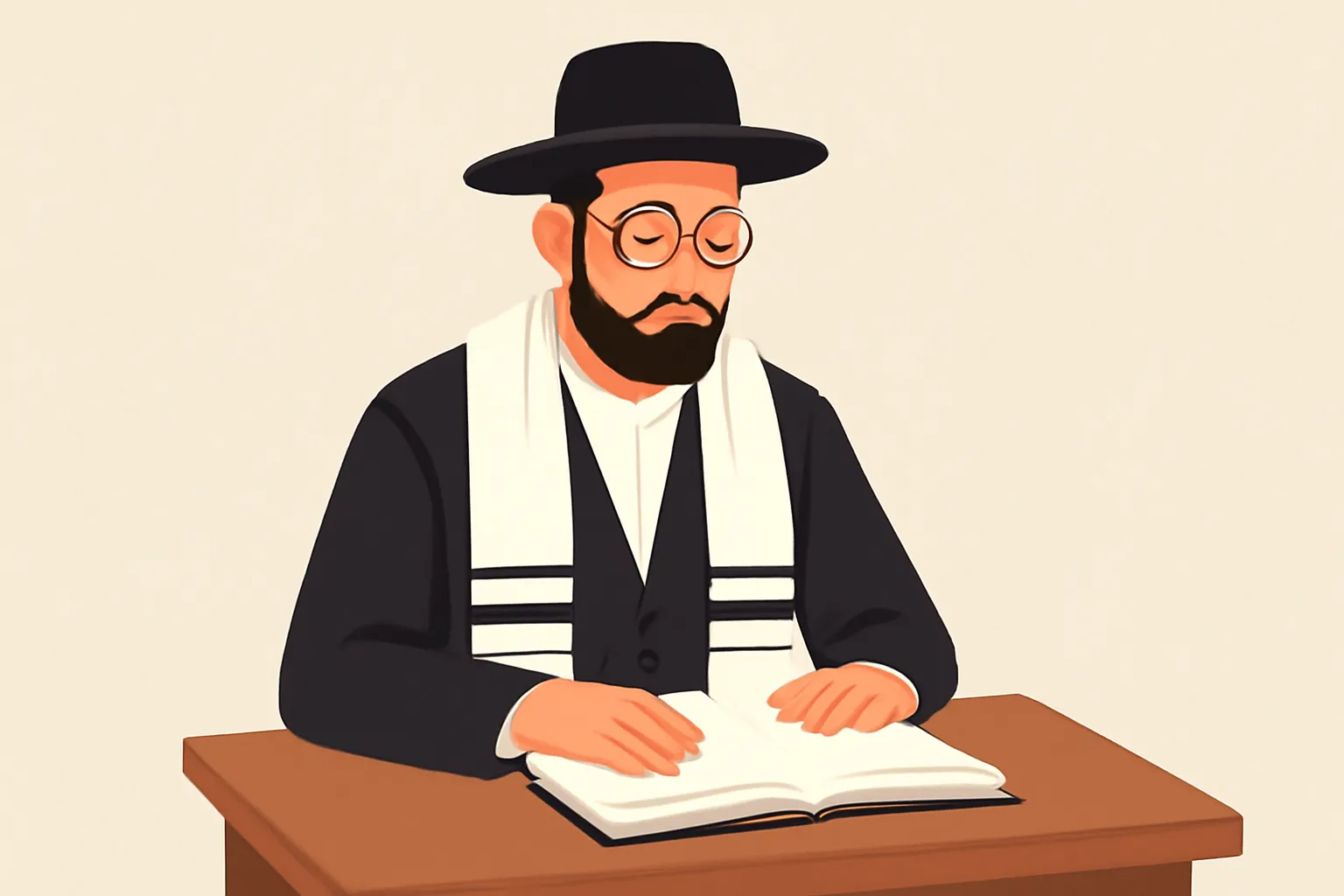
How Does One Become a Rabbi? A Comprehensive Guide to Rabbinical Training and Requirements
For many Jewish communities, the question of how does one become a rabbi is both practical and aspirational. It asks not only about the steps and credentials necessary to obtain rabbinic standing, but also about the responsibilities, ethics, and lifelong study that accompany a career in spiritual leadership. This article provides a detailed overview of the paths to rabbinic ordination, the varying requirements across denominations, the training environments, and the personal qualities that sustain a rabbi over a lifetime of service. Whether you are a student exploring vocation, a congregational leader seeking clarity for your search, or a curious reader, you will find a thorough map of what it takes to earn the title of rabbi and to fulfill the roles that such a title entails.
As you read, keep in mind that the question can be answered in several ways, depending on the denomination or community you aim to serve. The traditional concept of semicha (rabbinic ordination) has ancient roots, but modern rabbinic education has grown to accommodate diverse approaches, from the most conservative halakhic frameworks to more progressive interpretations of Jewish law and practice. The landscape is thus best understood as a family of pathways rather than a single, monolithic road.
What does a rabbi do, and why does the path to becoming one differ?
Before diving into the steps, it helps to clarify the core roles that define a rabbi in many communities. A rabbi is typically a teacher of Torah, a interpreter of halakhah (Jewish law), a spiritual leader, a communal organizer, and a counselor. Some rabbis serve primarily in synagogues, while others work in schools, universities, hospitals, interfaith settings, or in outreach and social justice organizations. Because these functions vary, the requirements and training programs are tailored to outcomes: academic study, practical pastoral care, communal leadership, or a blend of these elements. When people ask how to become a rabbi, they are often asking not only about where to study, but what kind of rabbinic role they want to pursue and which community will best support that calling.
Different denominational paths
The central truth about how to become a rabbi is that the path differs by denomination. Each stream emphasizes different aspects of study, ritual authority, and communal leadership. Here are the main trajectories you are likely to encounter:
Orthodox (often Modern Orthodox) and Haredi communities typically prize rigorous Talmudic study, strict adherence to halakhah, and ordination through established yeshiva networks. Rabbinic leadership often emerges from a formal yeshiva setting combined with semicha certified by recognized rabbinic authorities within the tradition.
Conservative/Masorti communities emphasize a balance between traditional law and modern interpretation. Rabbinic education usually occurs at a structured seminary that blends Talmudic study with courses on pastoral care, ethics, and Jewish thought, and ordination is conferred by a recognized Rabbinical Assembly framework or equivalent.
Reform and Reconstructionist approaches focus more on inclusive practice, modern Jewish thought, and liturgical innovation. Rabbinic training often occurs in schools that stress history, philosophy, social ethics, and pastoral leadership, with ordination reflecting the denomination’s evolving stance on halakhic matters.
Renewal and other contemporary streams combine spiritual practice, mysticism, and community-based leadership, with rabbinic training that may be spread across secular and Jewish studies, experiential education, and mentorship models.
Because of this diversity, someone asking how does one become a rabbi should first articulate which tradition of Jewish life they want to serve. The same question, “what does it take to become a rabbi in your community?” can yield very different timelines, curricula, and credentialing expectations. Across all paths, however, there are common elements: mastery of Jewish texts, strong teaching ability, pastoral or community leadership skills, and a commitment to lifelong learning.
Educational foundations: where does rabbinic training begin?
There are two broad educational avenues that people pursue when answering how can one become a rabbi? The first is the traditional yeshiva pathway, rooted in ancient study and talmudic methodology. The second is the formal rabbinical school route, often called seminary or rabbinic education programs, which integrate academic, pastoral, and professional training. Each path has its own prerequisites, timeframes, and environments.
Traditional Yeshiva Route
The traditional yeshiva route emphasizes immersive, long-term study of Torah and Talmud, often starting in adolescence or young adulthood. In many cases, students enter as talmidim (students) and commit to years of daily or near-daily study, paired with mentorship from senior teachers, called rebbes or morim. While this path can eventually lead to semicha, the ordination is typically conferred by recognized rabbinic authorities within the yeshiva’s networks. Key features include:
Extensive Talmud and halakhic study with analytical debate and text-centered learning.
Mentorship and spiritual formation through close relationships with scholars and rabbis.
Practical training through teaching, leading study halls, and serving as a role model in the community.
Those pursuing this route often view it as the most rigorous and tradition-forward path, ideal for individuals seeking leadership within communities that prize continuity with classical rabbinic authority and rigorous text study.
Rabbinical School Route
The rabbinical school route is a modern, institution-based pathway that assembles a structured curriculum around Jewish law, philosophy, liturgy, pastoral counseling, education, and community leadership. Programs vary by denominational alignment, but common components include:
Foundational text study (Hebrew Bible, Mishnah, Talmud, responsa)
Jewish law (halakhah) and modern ethical reasoning
Liturgy and prayer leadership (shofar, tefillin, synagogue services)
Pastoral care (counseling, crisis response, lifecycle events)
Education (curriculum development, teaching methods, youth and adult education)
Community leadership (administration, outreach, interfaith engagement)
In many communities, this route culminates in a formal ordination ceremony, often termed semicha or a denomination-specified credential. For some, the semicha is linked to a specific rabbinic body or college, while for others it is a milestone recognized by the broader rabbinic community. The school pathway is especially common for those who want to enter congregational life or chaplaincy, and it is frequently paired with field work, internships, or residency programs in real-world Jewish settings.
Post-Graduate Study and Lifelong Learning
Whether you take the yeshiva or the rabbinical school route, the training does not end with ordination. A robust rabbinic career depends on ongoing study, mentorship, and professional development. Post-graduate opportunities may include:
Clinical or pastoral internships in hospitals, schools, or community centers
Advanced text study with senior scholars
Leadership development and organizational management courses
Interfaith dialogue and social justice initiatives
In all streams, lifelong learning is a core expectation. The rabbi is often seen as a perpetual student and teacher, continually refining their understanding of Jewish law, philosophy, and communal needs.
The steps to rabbinic ordination: a practical roadmap
People often ask, how does one become a rabbi in practical terms. While the exact steps vary across denominations, there is a recognizable sequence that many aspiring rabbis follow:
Clarify denominational alignment and vocation: Decide which Jewish tradition aligns with your values and goals, since this choice shapes curricula, mentors, and the form of ordination you pursue.
Pursue undergraduate study in relevant areas (Jewish studies, philosophy, education, psychology, or a pre-seminary program) to build a strong intellectual foundation and to demonstrate commitment.
Gain Hebrew proficiency and engage deeply with Torah and rabbinic texts; many programs require proficiency in Biblical Hebrew and Aramaic, as well as Talmudic fluency.
Enter a rabbinic program or yeshiva: Enroll in a recognized rabbinical school or yeshiva program that fits your tradition, and begin a multi-year course of study that blends text, law, and pastoral training.
Complete supervised practical training: Serve as a teacher, cantorial assistant, assistant rabbi, or in other roles that provide real-world leadership experience and pastoral exposure.
Submit to ordination requirements: Satisfy denominational requirements such as exams, dissertations, fieldwork, and approved ritual leadership demonstrations.
Receive semicha or equivalent credential: Be formally recognized by the appropriate rabbinic authority or institution as a rabbi, ready for community leadership within your denomination.
Plan ongoing professional development: After ordination, participate in continuing education, mentorship networks, and community leadership training to sustain effectiveness over time.
It is important to recognize that some traditions emphasize a laboratory model of training—intensive study paired with supervised leadership—while others emphasize more formal coursework and standardized exams. The choice affects not only the rhythm and duration of study but also the kinds of opportunities that open up after ordination.
Essential academic and personal prerequisites
While how to become a rabbi can differ, there are recurring prerequisites that many programs expect. These include both academic credentials and personal attributes that enable effective leadership, teaching, and community care.
Academic foundations: Broad exposure to Jewish texts, modern Jewish thought, and related disciplines such as philosophy, history, and education. Undergraduate coursework or equivalent study is often required.
Proficiency in Hebrew and, in some cases, Aramaic or other classical languages relevant to Jewish legal texts and sources.
Commitment to Jewish practice: Regular participation in prayer services, study, and communal life; demonstrated ethics and integrity.
Pastoral and teaching skills: Experience in teaching, counseling, or community service; ability to communicate complex ideas clearly and compassionately.
Interpersonal and leadership qualities: The ability to work with diverse populations, manage congregational programs, and lead through change and conflict when necessary.
Personal qualities often mentioned as essential include humility, intellectual curiosity, courage to engage difficult questions, emotional resilience, and a commitment to justice and community welfare. These traits are as important as textual mastery when it comes to serving as a spiritual leader.
Timeframes and commitments you should expect
Because the path to becoming a rabbi is long and specialized, you should be prepared for a substantial time commitment. Typical durations can vary:
Undergraduate preparation (2–4 years) depending on prior coursework and intended focus.
Formal rabbinic study (4–7+ years), with variations by denomination and program structure. The total time from starting formal study to ordination often ranges from 6 to 12 years, though some paths may be longer or shorter.
Post-ordination programming (ongoing) to expand pastoral skills, leadership, and scholarly work.
It is also common for students to pursue concurrent professional work, internships, or family responsibilities, especially in the early years of training. The experience of balancing study with life responsibilities is itself an important part of preparing to lead a community.
Career paths after ordination
Once ordained, a rabbi may pursue a range of career trajectories. While the traditional image is a pulpit rabbi who leads a synagogue, there are many other fulfilling options that align with how to become a rabbi in today’s world. Not all rabbis serve as synagogue pastors; some focus on education, scholarship, chaplaincy, or community organizing.
Congregational rabbi: Leading religious services, educating the congregation, officiating lifecycle events, and guiding spiritual growth.
Chaplains: Providing spiritual care in hospitals, universities, prisons, the military, or government institutions.
Educators: Teaching in Jewish day schools, synagogues, or university programs, focusing on curricula development and mentorship.
Community organizers: Working on social justice, interfaith work, youth programs, and cultural initiatives.
Scholars and writers: Engaging in research, publishing, and public discourse on Jewish thought and law.
In many communities, rabbinic careers are flexible and multi-faceted. A rabbi may balance several roles over a career, shifting emphasis as community needs evolve or as personal interests grow. The ability to adapt, communicate, and collaborate is often as valuable as doctrinal mastery.
Costs, funding, and maintaining access to rabbinic study
Financial considerations are a practical reality for aspiring rabbis, and the question how does one become a rabbi must include attention to funding, scholarship opportunities, and the return on investment of such training. Factors you should explore include:
Tuition and living expenses for yeshiva or seminary programs; some institutions offer sliding-scale tuition, scholarships, and need-based aid.
Scholarships and fellowships for rabbinic study, often tied to denominational organizations, foundations, or universities.
Part-time work and internships during training to help cover expenses and gain practical experience.
Post-graduation debt management and planning for realistic income in early career years.
Given these considerations, many prospective rabbis begin planning early, explore funding options through synagogues, communities, and educational foundations, and seek mentorship from experienced rabbis who can provide guidance on balancing finances with academic and spiritual development.
Global perspectives: rabbinic training around the world
Training to become a rabbi can look different in various global contexts. In Israel, for example, there are institutions that prepare rabbis for state religious roles, while in the United States and Europe, many programs are tied to specific denominations or rabbinic associations. Each geographic context introduces distinct regulatory structures, community expectations, and opportunities for service.
Some observations about international variations include:
In Israel, ordination pathways may emphasize service within the state framework or army chaplaincy, alongside yeshiva study that connects to national institutions.
In the United States, there is a broad spectrum from Orthodox to Reform, with semicha or equivalent credentials granted by recognized rabbinic bodies or federations, and a strong emphasis on pastoral training and congregational leadership.
In Europe, programs often reflect Mixture of traditional and liberal streams, with partnerships among universities, rabbinic seminaries, and local communities.
Across all regions, the core aim remains consistent: to equip leaders who can teach, interpret, and guide Jewish life in a way that is meaningful to contemporary communities while honoring tradition and law as appropriate to their movement.
Common myths and realistic expectations
As you explore how to become a rabbi, you may encounter common myths that can misrepresent the reality of rabbinic life. Here are a few to keep in mind:
Myth: Rabbis are detached from real life and only study. Reality: Most rabbinic programs require practical training, community engagement, and ongoing pastoral work. Teaching and counseling are central to the role.
Myth: Ordination guarantees a high-status job. Reality: Securing a congregational position can be competitive, and many rabbis pursue multiple roles or choose chaplaincy, education, or administration.
Myth: All rabbis share the same beliefs. Reality: Different denominations interpret Jewish law, theology, and practice in distinct ways, and ordination reflects those particular frameworks.
Recognizing these distinctions helps in planning a realistic path and setting expectations for training timelines, career options, and daily work life.
Putting it together: making an informed decision about becoming a rabbi
If you are considering how does one become a rabbi, you should engage in thoughtful exploration of your goals, learning style, and the communities you wish to serve. Some practical steps you can take include:
Meet with faith leaders and mentors: Talk to rabbis in the denominations you’re considering to understand the day-to-day realities of their roles and the trajectories of their careers.
Attend introductory courses or fellowships: Many programs offer introductory seminars, previews of rabbinic curricula, and short-term fellowships that give a taste of life in rabbinic training.
Observe communal life: Volunteer or intern in a synagogue or Jewish organization to gain firsthand experience with worship, education, and community leadership.
Evaluate personal fit: Consider your gifts, passions, and temperament and how they align with pastoral leadership, scholarly study, or education-focused work.
Ultimately, the journey to rabbinic ordination is as much about inner growth and community responsibility as it is about credentialing. When someone asks how to become a rabbi, the answer is not only about where or what to study, but also about whether one is prepared to dedicate a life to teaching, guiding, and serving a Jewish people.
Becoming a rabbi is a journey that blends rigorous textual study, ethical formation, and practical leadership. Whether one follows the traditional yeshiva route, the modern seminary path, or a hybrid model, the essence remains: to engage with Torah, interpret and apply it in the here and now, and to guide a community with wisdom, compassion, and responsibility. The diverse range of pathways to rabbinic ordination reflects the richness of Jewish life today and the ongoing need for thoughtful, competent, and courageous spiritual leadership.
For anyone asking how can one become a rabbi, the answer is deeply personal as well as communal. It requires not only intellectual achievement but a commitment to service, a readiness to grapple with complex questions, and a sustained love for the people you will lead. With careful planning, mentorship, and perseverance, the path toward rabbinic ordination can be a transformative experience—one that bears fruit in study, teaching, and a lifetime of communal impact.