Israel Country Religion: A Guide to Faith and Identity
The republic commonly known as Israel is defined by a remarkable complexity in its religious landscape. It is a modern, democratic state with a Jewish majority, yet it sits at the crossroads of three major world faiths and several smaller yet influential communities. This article explores Israel country religion in its many dimensions—from the way faith shapes daily life and public policy to how different communities negotiate identity, legitimacy, and coexistence. By tracing the roots of faith, tracing the institutions that govern religious life, and describing the lived experiences of people who call this land home, we gain a fuller sense of the country’s spiritual fabric and its evolving identity.
Overview: The religious landscape of Israel
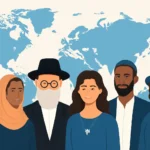
Israel’s religious makeup is diverse and multilingual. The country’s citizens include a broad spectrum of believers and non-believers, with strong ties to tradition on one end and robust secular and pluralist currents on the other. In broad terms, the population can be described as follows:
Jews constitute the overwhelming majority. Within this group, there are multiple streams—Orthodox, Modern Orthodox, Conservative, Reform, and Haredi communities—as well as a growing number of secular and culturally Jewish Israelis.
Muslims form the largest minority faith group, primarily Sunni, with a deep history on both sides of the Green Line and within Israel’s borders.
Christians—including Greek Orthodox, Roman Catholic, Armenian, Coptic, Maronite, and Palestinian Christian communities—represent a smaller but historically and culturally significant presence.
Druze form a closely knit, unique religious community in Israel, often described as a separate people with their own religious and civil codes.
There are also Baha’i adherents, especially in Haifa and the surrounding region, whose spiritual center lies within Israel’s borders.
The interplay among these groups shapes religious life in Israel in explicit policy terms (such as marriage, conversion, and certain public observances) and in everyday social practices (education, religious holidays, and public rituals). The result is a dynamic tapestry—one that includes strong traditional observance, vibrant religious innovation, and ongoing debates about secularism, equality, and civil rights.
Judaism in Israel: The spine of the country’s religious life
Judaism is not a single, monolithic creed in Israel; it is a plural framework that encompasses a range of beliefs, practices, and communal institutions. The state acknowledges Judaism as the historic core of national identity, while simultaneously navigating how to accommodate a diverse Jewish population and a secular citizenry.
Denominations and communities
Within the Jewish world in Israel, there are several central streams:
Orthodox Judaism forms the backbone of the rabbinate’s authority in many personal-status matters, such as marriage and divorce. The state sustains a formal relationship with the Chief Rabbinate, which oversees religious services, kashrut (dietary laws), and civil status in cooperation with state institutions.
Modern Orthodox and National-Religious communities blend traditional observance with a commitment to Zionism and a robust engagement with Israeli public life.
Conservative and Reform movements have grown in visibility and participation, though they operate within a framework that historically gives the Orthodox Rabbinate decisive influence over key life events.
Haredi (Ultra-Orthodox) communities maintain distinct educational systems, social norms, and religious schools, often emphasizing Torah study and a conservative approach to modern life.
There is also a rising segment of secular or culturally Jewish individuals who identify with Jewish heritage without necessarily practicing traditional rituals.
The interplay among these streams influences how Jewish life is lived in public spaces and how legal frameworks are applied. For many Israelis, Judaism in the public sphere is a living negotiation between tradition and modernity, law and liberty, and communal authority and individual conscience.
Law, state, and everyday life
A distinctive feature of the Israeli system is the informal but enduring “status quo” arrangement regarding religious affairs. Established in the early years of statehood, the status quo delineates how issues such as marriage, divorce, conversion, public observance of religious laws, and the designation of holy sites are managed. Some key points include:
Personal status (including marriage and divorce) for Jews is typically governed by the Rabbinical Court system; non-Orthodox Jewish marriages are not always performed within Israel unless performed abroad or via specific legal channels.
Public life experiences religious status decisions via public holidays, kosher food options in state institutions, and transportation scheduling on Shabbat (the Jewish Sabbath).
Religious authorities also regulate ritual purity, synagogue access, and the maintenance of ritual spaces within public institutions and hospitals to varying degrees.
The outcome is a balanced, frequently contested, ecosystem in which the government and the religious establishment try to coexist. This arrangement can be a point of tension—especially for those who advocate for broader civil liberties, equal treatment for non-Orthodox Jewish movements, or a more secular public sphere—while others defend it as a necessary framework that preserves social cohesion and accommodates a broad spectrum of views.
Islam in Israel: A robust and historical presence
Islamic life in Israel is deeply rooted in history and is marked by a broad range of practices among its Muslim citizens. The Muslim community in Israel includes Sunni Muslims who live throughout the country, as well as smaller groups with historical ties to Suriname or to other communities. The relationship between religious authority and state is shaped by both local practice and the political geography of the region.
Institutions, sacred sites, and daily practice
In Israel, Islamic institutions often operate alongside government structures. The Waqf is a religious trust that plays a central role in managing Islamic holy sites, mosques, and waqf property. The most iconic site in this context is the Temple Mount / Al-Aqsa compound, a focal point for Muslim worship and a flashpoint in political tensions, underscoring the sensitive interface between faith and sovereignty.
Daily life for Muslims in Israel ranges from mosque attendance and Ramadan observances to the more routine aspects of worship, education, and family life. For many, faith informs personal conduct, dietary practices, and charitable giving, while others balance these with secular and national commitments.
Christianity in Israel: A history of presence and coexistence
The Christian communities in Israel have ancient roots and a continued presence in cities like Jerusalem, Nazareth, and Bethlehem. Christians in the Holy Land belong to a wide array of churches and denominations, each with its own liturgical traditions, languages, and administrative structures. The legacy of Christian communities spans the earliest centuries of the church, the Crusades, the Ottoman era, and the modern period of the British Mandate—culminating in a contemporary situation where faith and national life intersect in complex ways.
Denominations and sacred spaces
Major Christian groups include Greek Orthodox, Roman Catholic, Armenian Apostolic, Syriac Orthodox, Coptic, and various Protestant communities. Key sacred sites include the Church of the Holy Sepulchre in Jerusalem, the ancient churches across Nazareth, and the many monasteries and pilgrimage routes that connect Christian pilgrims with biblical history.
Christian life in Israel is marked by a blend of liturgical diversity, Arabic and Hebrew language use, and a continued role in public life through education, culture, and civil service. The relationship between church leadership and Israeli authorities is generally characterized by cooperation, mutual respect, and ongoing dialogue on issues including education, preservation of holy sites, and social services.
Druze and other minority communities: A distinct narrative
The Druze are a unique community within Israel, often described as both a religious group and a national people with a strong sense of civic belonging. The Druze live primarily in the northern regions of the country and have long-standing ties to the Israeli state, including mandatory military service for many Druze men and women—an arrangement that reflects a particular alignment with the state’s institutions and civic identity.
Beyond the Druze, other religious minorities (such as the Bahá’í Faith in Haifa and smaller sects in different parts of the country) contribute to Israel’s multifaith mosaic. Their presence highlights the country’s global connections and the ways in which faith traditions intersect with culture, education, and diplomacy.
Holy sites, pilgrimage, and the geography of sacred spaces
Israel’s sacred geography is a central feature of its religious life. The land holds profound significance for Judaism, Islam, Christianity, and other faiths, which makes the question of access, protection, and heritage management a continuous matter of public policy and interfaith dialogue.
Jerusalem, with its complex hierarchy of holy sites, stands as a focal point for Jewish prayer at the Western Wall, for Muslim worship at the Haram al-Sharif/Temple Mount, and for Christian pilgrimage at churches and stations of the Cross.
Nazareth and Hebron are cities whose religious landscapes are shaped by Christian and Muslim communities, respectively, as well as by the historical memory of Judaism and early Christianity.
The Baha’i World Centre and its gardens in Haifa offer a different spiritual geography—one that attracts visitors and adherents from around the globe.
Managing access to and between these sites requires ongoing negotiation among religious authorities, local residents, and state agencies. The result is a system that aims to guarantee freedom of worship while maintaining public order, security, and access for diverse communities and international visitors.
Law of Return, identity, and the diaspora connection
A cornerstone of Israel’s national identity in the contemporary era is the Law of Return, which grants Jews worldwide the right to immigrate to Israel and obtain citizenship. This legal framework links the state to Jewish communities around the world in a way that profoundly shapes immigration patterns, cultural exchange, and religious life within Israel.
The Law of Return interacts with other aspects of national life—such as language, education, and communal leadership—by creating a broad, transnational sense of belonging. In practice, diaspora communities contribute to religious philanthropy, scholarly study, and cultural exchange, reinforcing a dynamic feedback loop between Israel and Jewish communities abroad.
The daily rhythm of life in Israel is deeply influenced by the country’s educational system and by the ways in which religious norms appear in public spaces. Education, in particular, reveals how the country balances its dual identity as a modern state and a place of historical faith.
There are separate streams of education, including state secular schools, state-religious schools, and groups aligned with particular religious communities. These systems shape the values, languages taught, and the curricular emphasis on history, ethics, and civic responsibility.
Public life is influenced by religious observance: for example, certain public transportation patterns, the availability of kosher food in public institutions, and the scheduling of national holidays.
For many families, religious practice remains central to family life, dietary rules, and ritual passages such as weddings and funerals, which are often conducted under the guidance of religious authorities.
At the same time, secular culture in Israel is vibrant and influential. Museums, universities, arts, and media frequently engage with religious themes, rabbinic debates, and the ethics of modern life. The result is a country that continuously negotiates faith, science, and civil rights in a shared public sphere.
Interfaith dialogue, coexistence, and the future
Israel’s interfaith dynamics are characterized by both cooperation and contestation. Across cities, scholars, rabbis, imams, priests, and lay leaders engage in dialogue aimed at reducing tensions, increasing mutual understanding, and addressing social concerns that cross religious boundaries.
Interfaith initiatives often focus on education about shared values, conflict resolution, and charitable work that benefits all communities.
In parallel, political and social debates continue around issues such as religious pluralism, civil marriage, and the role of religious authorities in public life. These debates reflect deeper questions about the balance between national identity and individual freedom.
Diaspora communities remain a powerful force in shaping how Israelis view faith, ritual, and the future of the country. The relationship between Israel and Jewish communities abroad is a crucial axis in global religious life.
The trajectory of Israel’s religious identity in the 21st century is likely to be shaped by ongoing demographic changes, evolving political coalitions, and broader global conversations about religious pluralism, human rights, and secular governance. As society modernizes, many Israelis expect a more inclusive approach to faith that still honors the country’s deep-rooted traditions.
A glossary of key terms you’ll encounter
Chief Rabbinate — The main Orthodox Jewish religious authority in Israel responsible for certain religious services, kosher standards, and civil status adjudication for Jews.
Kosher — Dietary laws observed by many Jews; in public institutions and businesses, kosher certification is common.
Shabbat / Shabbat observance — The Jewish Sabbath from Friday evening to Saturday evening; affects public life in various ways.
Waqf — An Islamic endowment responsible for managing certain holy sites and properties in the Muslim community.
Law of Return — The 1950 statute granting Jews worldwide the right to immigrate to Israel and obtain citizenship.
Status quo — The informal agreement about the division of authority between the religious establishment and the state, particularly regarding personal status and public religious matters.
Druze — A distinct religious community within Israel with a unique faith and strong civic ties to the state.
Bahá’í Faith — An independent world religion with significant institutions in Haifa and the surrounding area.
Conclusion: Israel country religion and the quest for balance
The religious identity of Israel is not a single story but a layered narrative that includes ancient traditions, modern law, and living communities with diverse religious commitments. As the country continues to grow and change, the challenge remains: how can a society that is at once profoundly historical and dynamically modern foster a sense of shared belonging while ensuring respect for pluralism, religious freedom, and individual conscience?
For students and readers seeking to understand the country’s faith journeys, it is essential to consider both the institutions that shape public life and the intimate practices through which people experience meaning. Whether through the study of religious law, the exploration of sacred sites, or the examination of everyday life in multicultural neighborhoods, the broader picture is clear: Israel’s religious life is a living, evolving phenomenon—one that continues to inform not only national identity but also the aspirations and dreams of people who call this land home, and those who see it as a homeland from afar.