Today’s Israel sits at a crossroads of ancient memory and modern transformation. This article traces a broad arc from antiquity to the present, offering a compact yet comprehensive overview of how a people connected by history, culture, and faith reconstituted themselves as a sovereign state in the modern era. Through centuries of displacement, migration, and conflict, a new social and political project emerged that redefined what it means for Israel to be a nation in the 20th and 21st centuries. This is not merely a chronology of dates; it is an exploration of ideas, institutions, and people seeking a durable sense of nations’ sovereignty after long periods of exile.
Israel: A succinct history of a nation renewed
Ancient roots and the long memory
The land known in antiquity as Eretz Yisrael has a profound historical resonance for the Jewish people. In biblical times, the region was home to powerful monarchies and vibrant centers of religious life in Jerusalem and elsewhere. The narrative of the First Temple period and the later destruction and exile shaped a persistent memory—one that would echo through generations of longing, scholarship, and ritual. Even after successive conquests by empires such as the Babylonians, Persians, Greeks, and Romans, Jewish communities continued to live in and near the land, and Jewish law, literature, and prayer woven with the landscape kept a sense of possible return alive in diaspora communities worldwide.
In parallel, the idea of a future homeland took on new form as centuries passed. The concept of a restoration of national life for the Jewish people was not only a religious aspiration but also a cultural one. The endurance of language, ritual, and memory—together with a continuing connection to the land—became the basis for a more modern conversation about political sovereignty. The long arc from antiquity to modernity thus began with a durable memory: that a people without a state could still imagine the possibility of self-government in the land of their ancestors.
From emancipation to political organization
In the 19th century, a combination of rising nationalism in Europe and sustained hardship for Jewish communities outside Europe catalyzed a new political current—Zionism. Zionism argued for the reestablishment of a Jewish home in Palestine as a response to persistent anti-Semitism and as a means of ensuring a safe political and cultural future for Jews worldwide. Delegates and thinkers debated the scope, method, and timing of national revival. The Theodor Herzl era gave political organization its modern shape, while earlier currents—covered by Hovevei Zion (Lovers of Zion) and settlement societies—pushed practical steps toward farmers and workers establishing agricultural colonies and urban centers in the region.
During this period, a broad spectrum of Jewish communities—Ashkenazi and Sephardi, European émigrés and Middle Eastern Jews—began to participate in a shared project: building institutions, fostering education, and cultivating a sense of common civic life. The practical work included establishing schools, publishing presses, constructing infrastructure, and securing land purchase under varying arrangements, often amid complex local politics. This blend of vision and grounded action created a durable platform for a future state.
World War I and the collapse of the Ottoman Empire opened a new, unsettled political field. In 1917, the British government issued the Balfour Declaration, expressing support for “the establishment in Palestine of a national home for the Jewish people.” This promise carried both hope and contention, for it also entailed careful consideration of the political rights of the Arab inhabitants and the regional balance of power. The following decades saw intense political activity, alternating waves of Jewish immigration with conflicts that sometimes escalated into violence. The Balfour Declaration and the subsequent League of Nations mandate framework set a legal and diplomatic stage for a future state, while the local Arab nationalist movement and Palestinian leadership pressed for national self-determination of a different kind.
As a result, the era was marked by dual challenges: how to realize a self-determination project for Jews while managing the aspirations and fears of the Arab population living in the territory. The pages of this period record competing narratives—each with its own moral weight and strategic calculations. Emerging institutions, such as political parties, labor unions, and educational networks, helped to transform diasporic memory into a concrete administrative and social reality in the land itself.
From mandate to independence: the road to statehood
The mid-20th century brought decisive events that shifted the trajectory from a political project to a recognized state. International diplomacy, conflict, and evolving ideas about sovereignty converged in a defining moment: the creation of a new country in the Middle East.
Partition, conflict, and international recognition
Following a UN plan in 1947 that proposed partitioning the land into separate Jewish and Arab states, the community of Jewish leaders proclaimed independence in May 1948. That transition, celebrated as a national milestone, quickly led to war as neighboring Arab states mobilized against the newborn state. The ensuing conflict produced a difficult set of early borders and a humanitarian trauma that would shape regional politics for decades. Yet the victory also laid the groundwork for a society that would prioritize security, mobilization, and collective resilience as core elements of national life.
Armistice, refugees, and the shaping of a new republic
The 1949 armistice agreements left Israel with altered borders, a sizable influx of Jewish refugees and immigrants, and an urgent need to construct a modern economy and institutions from the ground up. The early years of statehood featured rapid immigration, integration of diverse Jewish communities, and ambitious social programs—land settlement, housing, education, health services, and a robust defense posture. The juxtaposition of demographic growth with security demands created an identity for the state centered on unity under pressure, innovation in the face of scarcity, and a commitment to building the institutions that allow a democratic society to function inside a contested geopolitical environment.
Nation-building, society, and economy: consolidating the project
As the initial urgency of survival abated, Israel pressed to transform into a modern, dynamic society. This decade-long phase involved absorbing diverse immigrant streams, developing a diversified economy, and laying the foundations of an enduring multiethnic society. The narrative that emerges emphasizes resilience, ingenuity, and a commitment to education, science, and public life as central pillars of national development.
Migration waves and social transformation
Europeans and North Africans arriving in waves in the 1950s and 1960s, bringing with them varied cultural traditions and skill sets.
The emergence of Mizrahi and Sephardi communities reshaping cultural life and language use.
State-led programs to integrate newcomers through housing, labor markets, and education, which gradually forged a shared civic identity.
Economic growth and technological development
Economic policy emphasized development, with emphasis on agriculture, manufacturing, and later, high-tech industries. The state invested in infrastructure, research universities, and a robust defense industry that catalyzed broader scientific and entrepreneurial activity. Over time, Israel earned a reputation as a center of innovation in fields such as information technology, biotechnology, agriculture, and water management. The synergy between basic education, research funding, and private-sector dynamism created a distinctive model in which knowledge-based industries became central to national prosperity.
Security, conflicts, and regional diplomacy
From the 1950s onward, Israel faced recurring threats and wars that tested the durability of its political system and its social cohesion. The experience of conflict shaped security doctrine, foreign policy, and domestic debates about civil liberties and national service. Meanwhile, diplomacy offered channels for negotiation and, at times, strategic partnerships that altered the regional map.
The 1967 war dramatically altered the border landscape. Israel captured territories that had long been politically and religiously significant, creating a complex set of issues around occupation, settlement, and negotiations. The war’s consequences reverberated through decades of political life, affecting everything from education and internal politics to international relations and public opinion about peace processes.
Yom Kippur War and recalibration
The 1973 war exposed vulnerabilities in military readiness while also galvanizing political leadership to pursue new paths toward security and diplomacy. The conflict prompted a reevaluation of deterrence strategies, mobilization capabilities, and regional alliances, ultimately contributing to shifts in how Israel engaged with its neighbors and the broader international community.
The late 20th century introduced a wave of diplomacy that redefined Israel’s regional relationships and opened doors to formal peace processes. While challenges remained, successive agreements demonstrated that practical diplomacy could coexist with the enduring memory of conflict.
Camp David, Oslo, and the path toward coexistence
Key milestones included bold attempts to resolve the Israeli-Palestinian conflict through high-level diplomacy. Negotiations sought to establish mutual recognition, security arrangements, and a framework for a two-state solution. The Oslo Accords of the 1990s, while controversial and imperfect in practice, represented a landmark moment in the sense that leaders on both sides acknowledged the possibility of coexistence grounded in shared political legitimacy and negotiated boundaries. The peace process also catalyzed debates about the status of settlements, refugees, and the structure of governance in the future of the region.
Roadmaps, setbacks, and regional realignments
Subsequent years featured ups and downs: partial progress punctuated by violent episodes, political shifts within both Israeli and Palestinian leadership, and evolving international involvement. Meanwhile, regional dynamics began to shift in ways that gradually opened new channels for cooperation and exchange, including basic-level economic ties, tourism, and cultural exchanges that humanized the geography once defined primarily by conflict.
The Abraham Accords and a new regional trajectory
In the 2010s and 2020s, a series of normalization agreements redefined the Middle East’s diplomatic landscape. The emergence of formal ties with several Arab states marked a watershed moment for regional diplomacy. These moves did not resolve all historical tensions, but they introduced opportunities for trade, science, technology, and joint security concerns to be addressed through official channels. The new regional order suggested that Israel’s policy options could extend beyond conventional borders, enabling cooperation on energy, water, cybersecurity, and public health. This shift also reframed the international attention around security, economic development, and cultural exchange within the region.
Israel in the 21st century: innovation, diversity, and ongoing debates
Today, Israel presents a paradox of a robust, technologically oriented economy and a society grappling with long-standing political and territorial questions. The country’s strength lies in its institutions, its universities and research centers, its entrepreneurial ecosystem, and its military and civil defense capabilities. Yet the nation also faces enduring dilemmas related to the status of Palestinian communities in the territories, the rights of minorities within Israeli society, and the challenges of maintaining a sustainable peace process with neighboring states and non-state actors alike. The polity’s vitality can be seen in its vibrant civil society, its elections and parliamentary dynamics, and its ongoing debates about national identity and democratic norms.
Within Israeli society, debates about the balance between security and civil liberties, the role of religion in public life, and the integration of diverse immigrant communities continue to shape political life. People reflect on the meaning of nationhood in a country that is both deeply rooted in historical memory and outward-looking in its engagement with global networks. The economy, while powered by high-tech industries, also relies on traditional sectors such as agriculture and manufacturing, illustrating a modern economy that blends old and new in a single national storyline.
Key moments in a longer arc: a concise history of a nation reborn (with variations)
To echo the idea of a nation reborn, different scholars and commentators have offered varied phrasing for Israel’s historical arc. This section uses a few refrains to highlight semantic breadth while staying faithful to the historical record:
Israel: A concise history of a nation renewed captures the sense of revival grounded in tangible institutions and ongoing diplomacy.
Israel: A brief narrative of a country reborn emphasizes the readability of the story—the way in which events unfold in clear, legible steps from crisis to consolidation.
Israel, a compact history of a people restored to nationhood foregrounds the continuity of a people who maintained a collective sense of identity through diaspora and return.
Israel: A succinct chronicle of a homeland reclaimed stresses the legal and political acts that solidified sovereignty in the modern era.
A condensed history of Israel underscores the synthesis of ancient memory with modern governance, security, and society.
Across these framings, certain through-lines persist: a persistent connection to land and memory, the creation of durable political institutions, the absorption and integration of diverse populations, and a continuous negotiation of national identity amid regional volatility. The narrative of a people returning to sovereignty in a long-winding arc is not a simple triumph but a multi-faceted process that includes conflict, negotiation, resilience, and innovation.
Chronology: a compact timeline of pivotal moments
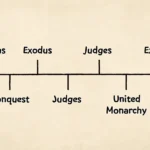
circa 1000–586 BCE – Ancient kingdoms and the Temple in Jerusalem; the exile and the enduring memory of homeland in Jewish life.
late 19th century – The birth of modern Zionism; political organization and land settlement efforts begin in earnest.
1917 – Balfour Declaration signals international support for a Jewish homeland within Palestine; British Mandate era begins.
1947–1948 – UN partition plan accepted by Jewish leadership; declaration of independence followed by regional war.
1949 – Armistice agreements shape borders and begin a sustained process of immigration and nation-building.
1967 – Six-Day War expands borders and alters security calculations; occupation and settlement policy emerge as central issues.
1979 – Israel–Egypt peace treaty; regional diplomacy shifts dynamics in the Middle East.
1993–1995 – Oslo Accords establish a framework for negotiations and a division of governance responsibilities with the Palestinians.
2000s–2010s – Persistent conflicts, settlement debates, and the rise of new regional alliances; diplomacy evolves with new partners and initiatives.
2020s – The Abraham Accords reshape regional diplomacy, promoting normalization with several Arab states and broadening regional economic and strategic cooperation.
Impact and legacies: why the story matters
The modern history of Israel has long been a thread in the broader tapestry of global politics. Beyond the headlines of wars and peace accords, there is a deeper record of institution-building, cultural revival, and economic transformation. The Israeli model—combining universal education, robust security structures, entrepreneurial vitality, and a commitment to scientific advancement—offers a case study in how a country can emerge from near destruction to become a hub of innovation and regional influence. And yet, the moral and political complexities—treatment of Palestinians, the status of refugees, the fate of territories—remain central to how the nation is understood and debated around the world. This paradox—strength and strain—defines much of the contemporary narrative about a country that has reinvented itself multiple times in a relatively short historical period.
Conclusion: tracing the arc of a people’s return to sovereignty
The arc from ancient memory to modern sovereignty is a story marked by endurance, ingenuity, and constant negotiation with a mutable regional order. The arc of Israel—encompassing exile and return, diaspora and nation-state, conflict and diplomacy—offers a powerful example of how a people can reconstitute a polity in a milieu that is both deeply historic and profoundly contemporary. The notion of a reborn nation is not a single, static moment but a living process: a dynamic conversation among memory, law, citizenship, and security. In that sense, the concise history of a nation reborn remains ongoing, as new generations reinterpret the past while shaping the future. By examining the arc of this story—its milestones, its debates, its innovations—we gain a clearer sense of what it means for a people to sustain a nation-state within a complex, ever-changing world.
For readers seeking a focused summary, the core threads are simple to identify: a people connected to a land by history and culture, the emergence of political structures to realize self-government, the recurring challenge of peace and security in a contested neighborhood, and an ongoing project of social and economic development that keeps the memory alive while building a shared future. This is the essence of Israel as a modern republic—an example of resilience and reinvention that continues to unfold in the twenty-first century.