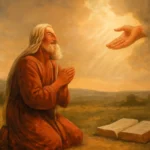
The figure commonly known as Abraham stands at a crossroads of memory, religion, and literature. In many traditions he is not merely a person but a symbolic nucleus around which themes of faith, covenant, migration, and ethical testing orbit. In scholarly and popular discussions alike, the phrase “Abraham myth” can refer to an array of narratives, traditions, and interpretive projects: a biblical story, a religious archetype, a historical hypothesis, or a literary construction that helps communities think about identity, land, and the divine. This article surveys the Abraham myth across its origins, its manifold interpretations, and the lively debates it has provoked across time, cultures, and disciplines. It uses variations in terminology—Abrahamic myth, Abrahamic narrative, Abrahamic tradition, patriarchal account, and other phrases—to reflect how readers approach the person and the story from different angles.
What follows is a survey that does not pretend to resolve all questions but aims to illuminate how the Abraham story functions as a dynamic, contested, and adaptable symbol in Jewish, Christian, Islamic, and secular contexts. Readers will encounter a mosaic of origins, textual layers, interpretive strategies, and debates about history, faith, ethics, and culture that have shaped one of the most influential narratives in world literature and religion.
To speak of the origins of the Abraham narrative is to traverse a long arc from ancient Near Eastern memory to written scripture. The story centers on a figure who migrates from a city-state environment into a broader, promise-bearing horizon. Essential threads of origin include:
Genesis 12–25 as the core scriptural locus where the life of Abram/Abraham unfolds, including his call, his journeys, his covenants, and his family dynamics.
Earlier Mesopotamian and Arabian literary and ritual motifs that shape the epic tone, including themes of divine contact, sacred spaces, and obedience to a deity who is both imperative and trustworthy.
Shared tribal-memory motifs about the patriarchal line, land, and blessing that recur across ancient Near Eastern literature, making the figure of Abraham legible to readers across cultures.
Scholars emphasize that this origin story is not a single moment of composition but a layered formation. Redactors and editors over centuries braided multiple strands: family genealogies, shifting names, treaty-like covenants, and ethical injunctions. The name change from Abram to Abraham—often linked to a new sense of mission or covenant—marks a symbolic transition from a personal ancestor to a universal progenitor for a people. In this view, the Abraham myth is less a biography and more a memory-work designed to ground religious ethic and communal identity in a shared ancestor.
Two facets deserve special attention when considering origins:
Covenantal framework: The key repeated motif is a covenant or binding promise between the divine and the human. The terms of this covenant, including blessings for offspring and land, recast human movement as part of a divine plan rather than random wandering.
Migration and hospitality: The ethnographic texture of the narrative emphasizes hospitality, foreignness, and trust in divine guidance as central to the life of a founder who becomes a progenitor of nations.
Together, these features suggest that the origins of the Abraham myth lie at the intersection of mythic storytelling, covenantal theology, and social memory—where a legendary ancestor is interpreted as the anchor for a people’s sense of belonging and destiny.
Traditions and texts: the Abrahamic narrative across faiths
What makes the Abraham story especially compelling is its migration across religious communities. Each tradition recasts elements of the narrative to articulate its own claims about God, law, ethics, and salvation. The three major traditions—Judaism, Christianity, and Islam—each endows the figure with distinctive significance, while also sharing a common inheritance that is often debated and reinterpreted in interfaith dialogue.
Judaism: the patriarch as progenitor and covenant bearer
In Jewish tradition, Abraham is the father of a people chosen to witness to God’s sovereignty and to model righteousness within a covenantal economy. The core texts for this tradition emphasize:
The virtuous trust of faith even in the absence of immediate clarity, especially in the calling of Abram and the later renaming to Abraham.
The rite of circumcision as a sign of the brit (covenant), marking belonging and responsibility within the community.
The role of Abraham in establishing a familial and ethical frame for the Land of Israel and for the people’s mission to witness to ethical monotheism.
Christianity: faith, promises, and typology
In Christian interpretation, the Abraham myth is often read through the lens of faith, promise, and the unfolding revelation in Jesus Christ. Key emphases include:
Interpretations of Abraham’s faith as a model of righteous standing before God, sometimes contrasted with works-based righteousness.
The idea that the covenant with Abraham anticipates the universal message of the gospel, extending blessings to all nations—an argument often framed through typology that links Abraham’s descendants to the believers who are grafted into the faith.
The interpretation of Ishmael and Isaac as figures that illuminate the shift from old covenant to a new covenant in Christ, while still respecting the importance of Abraham’s faithfulness.
Islam: Ibrahim and the continuity of monotheism
In Islamic tradition, the Abraham figure is known as Ibrahim, and his narrative intersects with the Qur’anic portrait of monotheism, submission (Islam), and prophetic authority. Intellectual and devotional emphases include:
Recognition of Ibrahim as a model of pure submission to the one God and as a progenitor of the prophetic line that culminates in the Prophet Muhammad.
Respect for the covenantal element but with distinct emphasis on the faith’s universal message and rejection of idol worship, rendering Ibrahim a figure who stands against polytheistic trends of the surrounding cultures.
The ritual framing of pilgrimage and obedience, including the story of Ishmael and the rebuilding of the Kaaba as a symbol of monotheistic worship across centuries.
Across these traditions, the Abraham narrative becomes a shared heritage with divergent theologies. The result is a robust field for comparative study, where scholars examine how each tradition selectively preserves, reinterprets, or reimagines biblical and Qur’anic episodes to articulate ethical, spiritual, and political aims.
Core motifs and terms in the Abrahamic myth
Several motifs recur across versions of the narrative, shaping readers’ sense of what Abraham’s life represents beyond a mere sequence of events. The most prominent motifs include:
Covenant and blessing: a reciprocal relationship between the divine and a human family, with obligations and promises that extend beyond generations.
Land and descendants: a promised homeland and a future lineage that underwrites both religious identity and political memory.
Journey and hospitality: a nomadic life marked by hospitality to strangers, testifying to ethical conduct in the face of uncertainty.
Testing of faith: episodes where obedience to a divine command (or the endurance of trial) becomes a defining moment in the leader’s integrity.
Ethics of kinship: complex family dynamics, including the relationship with Hagar and the tensions between Isaac and Ishmael, which have informed later debates about lineage and inheritance.
Rite and ritual: circumcision and related rites that formalize belonging and covenantal obligations.
These motifs interact with other literary devices, such as typology, where events in the Abrahamic saga are interpreted as foreshadowing later revelations or as moral allegories for devotion, trust, and communal responsibility.
Key episodes often cited in debates
The call of Abram and the imperative to leave his homeland, which signals the mobilization of faith as a decision to trust a divine plan beyond familiar security.
The covenant of circumcision, signifying a lifelong commitment that marks a people’s body, law, and destiny.
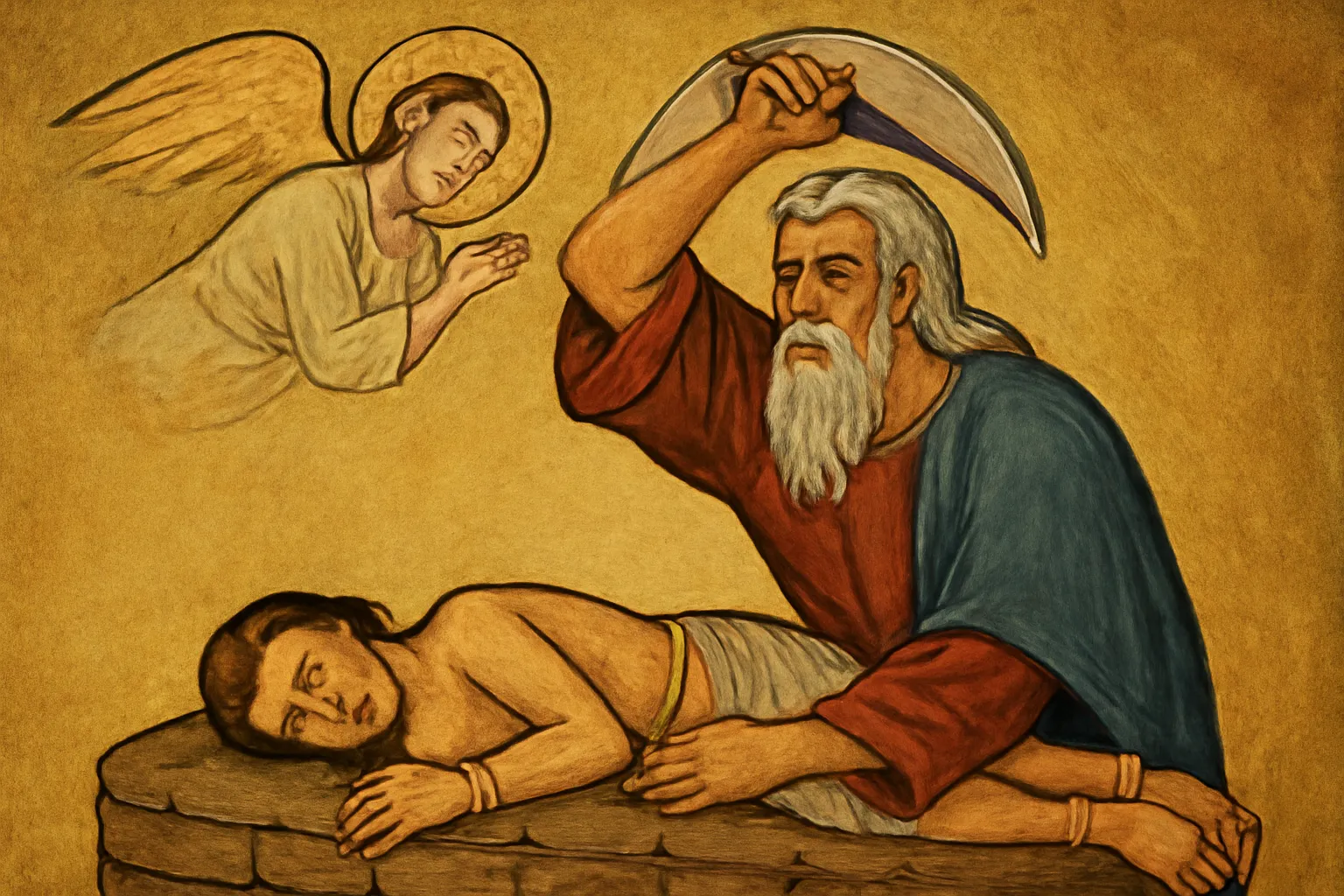
The Aakedah (binding of Isaac), a pivotal and controversial episode about faith, obedience, and the nature of divine command.
The episodes with Ishmael, Hagar, and the expanding household, which highlight issues of succession, mercy, and social ethics within families.
Interpretive frameworks: how scholars and believers read the Abraham myth
The Abraham narrative has yielded a wide spectrum of interpretations, each shaped by disciplinary method, doctrinal commitments, and cultural contexts. Here are several dominant approaches:
Historical-critical and source-critical perspectives
In modern critical scholarship, the Abraham story is often viewed as a composite text built from multiple sources and later redactions. The approach emphasizes:
Identifying distinct strands within Genesis, including the J, E, P, and D traditions, and examining how editors wove them together into a coherent narrative.
Exploring the historical plausibility of events and the historical milieu of early Israel and neighboring cultures, while acknowledging that not every event is meant to be read as a strict historical chronicle.
Examining how the narrative reflects political and social concerns of later communities who sought to articulate less-visible memories through a recognizable ancestor.
Theological and devotional readings
From a theological standpoint, readers ask what the Abraham myth says about God’s character, human obedience, and the meaning of faith. Aspects often highlighted include:
Trust in divine promises even when they appear improbable, revealing a conception of faith as trust that justifies righteousness.
The nature of divine testing and the moral tension between obedience and ethical concerns, which has influenced discussions on divine command theory and natural law in various traditions.
The way in which covenantal faith shapes identity, inclusion, and responsibility toward communities, neighbors, and strangers alike.
Feminist and postcolonial readings
Contemporary critical perspectives highlight how gender, power, and colonial or postcolonial contexts shape reception of the Abraham myth. Themes include:
The representation of Sarah, Hagar, and other women as central agents in family formation and social negotiation, challenging patriarchal readings that center only on Abraham.
Questions about agency, diaspora, and the politics of displacement as the narrative fosters a memory of nomadic life that loops into modern debates about nation, land, and belonging.
Critical views on the patriarchal framing of divine favors, reflecting on how power structures are embedded in sacred texts and how readers can reinterpret them ethically in contemporary contexts.
Historicity, myth, and the debates about the past
The question of historicity—whether the Abraham figure actually lived, and whether the events are historically verifiable—occupies a central place in scholarship and public discourse. Debates can be grouped around several axes:
Historical plausibility: Some scholars pursue the possibility of an historical core behind the narrative by comparing it with regional royal annals, treaty texts, and archaeological findings. Others caution that a literalist reading may miss the literary and symbolic functions the text is designed to perform.
Mythic memory: Others argue that the tale belongs to a mythic memory layer that communities use to shape identity and convey moral truths, rather than a chronicle of actual events.
Literary construction: A widespread view treats the Abraham myth as a literary construction whose power lies in its structure, motifs, and the way it frames questions about transcendent law and human infidelity or fidelity.
In this landscape, the term myth is not a denial of truth but a classification of genre: sacred narratives that convey meaning through symbolic truth and communal memory, sometimes independent of a strictly historical account.
Intersections with archaeology and anthropology
Archaeology and anthropology contribute to debates by highlighting how migrations, kinship structures, and covenantal obligations function in ancient societies. They offer a lens to understand why the Abrahamic family saga emphasizes nomadism, hospitality, and oath-taking, and how these practices might reflect real social patterns in the ancient Near East. Critics and supporters alike use these tools to revise and refresh the image of Abraham for contemporary readers.
Literary dimensions: how the Abraham story is told
Beyond doctrinal and historical concerns, the narrative artistry of the Abraham myth invites close examination. The text manipulates perspective, suspense, and irony in ways that shape interpretation across ages:
The use of narrative arcs—call, journey, trials, reversal, and covenantal fulfillment—that resemble epic or saga traditions.
Character development that moves from a relatively obscure figure to a universal progenitor, with the focus gradually widening from family to a people and to a divine mission for all nations.
Dialogue-rich scenes that explore trust, doubt, and the moral weight of decisions, allowing readers to inhabit the inner life of characters.
Scholars often discuss how the Abrahamic narrative uses interwoven plotlines to explore the relationship between revelation and human agency. The interplay of divine speech with human response creates a dramatic tension that has kept readers engaged for millennia.
Ethical and moral dimensions: debates sparked by the Abraham myth
The ethical questions raised by the Abraham story have generated sustained debate in theology, philosophy, and public discourse. Among the most discussed issues are:
Divine command and moral action: The narrative of the binding of Isaac (the Akedah) raises provocative questions about obedience, justice, and the limits of divine authority. How should believers understand commands that seem to require ethically problematic actions?
Faith versus works: In Christian interpretations, Abraham’s faith is frequently presented as a model of justification, prompting discussions about the relationship between belief and conduct.
Hospitality, mercy, and social ethics: The way Abraham negotiates with God about Sodom or provides hospitality to strangers informs debates about justice, mercy, and social responsibility in a communal context.
Gender and power: The roles of Sarah and Hagar reveal contested questions about female agency, patriarchal authority, and the ethics of family dynamics within sacred narratives.
Different communities approach these issues with distinct conclusions, but what remains constant is that the Abraham myth forces readers to grapple with the paradoxes that arise when devotion, law, and mercy collide in a single story.
Contemporary reception and interfaith dialogues
In modern times, the Abraham myth has become a shared symbol across religious traditions, especially in contexts of interfaith dialogue, peacebuilding, and education. Three contemporary trends stand out:
Interfaith bridges: Abraham as a common ancestor figure—often invoked in discussions of Judaism, Christianity, and Islam—serves as a bridge for mutual recognition and respectful debate about shared heritage and divergent beliefs.
Public memory and ethics: The story informs public discussions about immigration, refugee welcome, and the ethics of hospitality in pluralistic societies, drawing on the motif of welcoming strangers encountered by Abraham on his journeys.
Educating for plurality: Teachers and scholars use the Abraham narrative to illustrate how religious traditions can diverge on interpretation while still maintaining a sense of common origin, contributing to a more nuanced civic literacy about religion.
In this context, the Abrahamic tradition is often presented not as a monolithic block but as a spectrum of interpretations. The goal is less to vindicate a single orthodoxy than to understand how communities negotiate sacred memory with present-day questions about justice, identity, and coexistence.
Terminology, sedimentation, and semantic breadth: variations on Abraham myth
To capture the broad scholarly and public conversations, it helps to operate with a family of terms that signal different emphases. Not every writer uses the exact phrase “Abraham myth”, but many rely on related expressions such as “Abrahamic narrative”, “Abrahamic tradition”, “Abrahamic story”, or “patriarchal tale”. These variations signal shifts in focus: historical, theological, literary, or sociopolitical. The following glossary-like notes summarize how different terms function in debates and synthesis across disciplines:
Abraham myth with the word “myth” often signals a sacred narrative that plays a formative role in collective memory, even when not all events are taken as historical fact.
Abrahamic narrative foregrounds storytelling and plot as a vehicle for conveying theological meaning, ethical instruction, and communal identity across traditions.
Patriarchal tale or patriarchal account emphasizes the patriarchal lineage, genealogical framing, and the social structures implicit in the text, useful in sociological and anthropological readings.
Abrahamic tradition broadens the scope to include the ongoing theological and cultural processes that connect ancient memory to modern practice and policy.
Each of these terms carries implications for interpretation. When scholars compare texts, they often shift among terms to align with their methodological aims—historical, literary, ethical, or interfaith—while maintaining a core interest in the figure who becomes a key hinge in monotheistic discourse: Abraham.
Variations in the name and titles
Readers will encounter a spectrum of names and epithets for the central figure, including Abram (the earlier designation), Abraham (the expanded, covenantal name), and descriptive phrases such as “the patriarch of monotheism” or “the father of many nations.” Each label reflects a facet of the figure’s role in different communities and textual layers. The use of Ibrahim in Islamic contexts adds another dimension, underscoring the shared legacy while honoring distinct doctrinal emphases about God’s unity and prophetic succession.
Concluding reflections: why the Abraham myth endures
Why does the Abraham narrative endure across centuries and continents? Several factors help explain its resilience:
Universality of questions: The story engages timeless concerns—trust, fear, promise, family, justice, and the meaning of obedience—questions that recur in different historical and cultural settings.
Flexibility for interpretation: The tale’s richness allows multiple readings, enabling communities to claim it for their own theological agendas, moral debates, and political visions without fully surrendering its depth to any single orthodoxy.
Ethical complexity: Episodes such as the Akedah invite readers to wrestle with paradoxes rather than offering neat conclusions, a feature that keeps the discussion alive across generations.
Foundational status: As a progenitor figure in the Abrahamic covenant, Abraham anchors memory and law, which makes him a recurring reference point for discussions of legitimacy, legitimacy of claims to land, and the legitimacy of religious authority.
In sum, the Abraham myth functions as a living archive. It preserves older memory while inviting new interpreters to reframe its narratives in light of current questions about faith, identity, justice, and coexistence. Whether one reads the Abrahamic narrative as historical inquiry, ethical reflection, literary artistry, or prophetic memory, the figure remains a pivotal source for thinking about how communities understand obedience, promise, and the shared task of shaping a just and faithful life.